Category Archives: Artifacts

Laurel Shopping Center + George Wallace, 40 years later

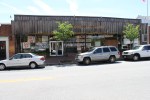
Laurel Shopping Center parking lot, May 2012 (Photo: Richard Friend)

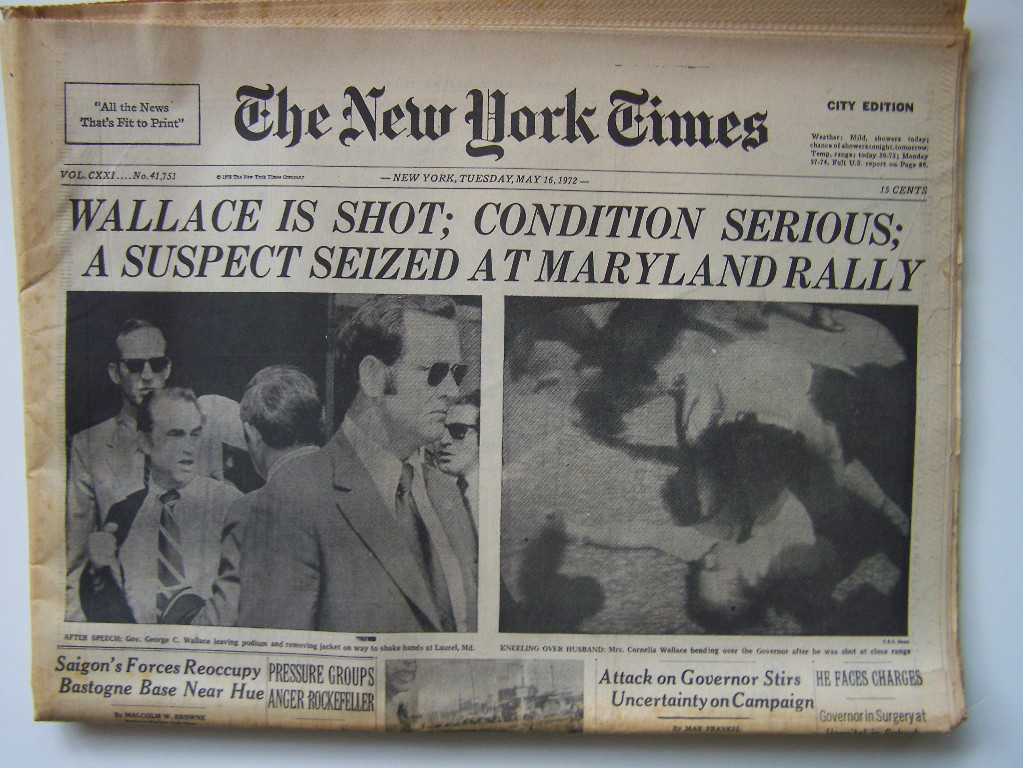
I wasn’t born until December 1972, and my family didn’t move to Laurel until 1976. But it wasn’t long afterward that I began to hear about some famous politician having been shot in the parking lot of Laurel Shopping Center on May 15, 1972.

Even as a small child, something about that fascinated me—and it has ever since. Our home town was on the map, so to speak, because of this moment of infamy. Alabama Governor George C. Wallace—a controversial presidential candidate who would actually win the democratic primary in Maryland that year—had just stepped down from the podium, removed his jacket, and begun glad-handing some of the approximately 1,000 who’d assembled to hear and/or jeer his campaign speech. Within seconds, he’d be gunned down by the proverbial lone nut—a 21-year-old would-be assassin from Milwaukee, Wisconsin named Arthur Bremer.

Wallace would survive the shooting, (in spite of a total of five wounds, including shots to the chest and abdomen) but would be confined to a wheelchair and in constant pain for the remaining 26 years of his life. He died in 1998, having spent years renouncing his segregationist past, apologizing, and attempting to rectify a general perception of him as an unvarnished racist—a view he claimed brought him more pain than the assassination attempt itself.

Arthur Bremer would spend the next 35 years in a Hagerstown, MD prison before being released (18 years early) in 2007. Now living in Cumberland, he’ll remain on supervised release until 2025. Bremer’s diary, published after his arrest, revealed that the assassination attempt was motivated by a desire for fame, rather than politics, and that President Nixon had also been an earlier target. Bremer’s actions inspired the screenplay for the 1976 movie Taxi Driver, which in turn provoked the 1981 assassination attempt on the life of President Ronald Reagan by John Hinckley, Jr..

Of course, this isn’t a political blog, so I won’t ramble on about Wallace and Bremer’s respective biographies—there’s plenty of information on them out there if you’re interested. Although as a boxing fan, I will say that I was surprised to learn that George Wallace had been a two-time State Golden Gloves champ. But I digress.

Suffice it to say, I learned at an early age that what had happened at Laurel Shopping Center that afternoon 40 years ago today was a pretty big deal. And it wasn’t just a big deal in Laurel—it had national ramifications. From that point on, it seemed that any and all references to Laurel, Maryland—be it printed in encyclopedias, or in conversation with folks from out of town—inevitably mentioned the Wallace shooting.
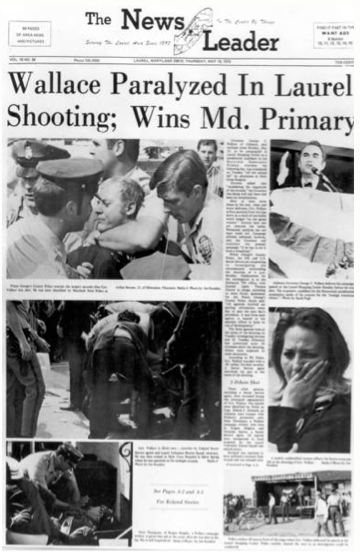
He was even on a collector’s card!

In fact, to this day, an online image search of our fair town will inevitably yield photos of George Wallace (although, more recently, Laurel has also been dubiously tied to the 9/11 hijackers—several of whom stayed here in the days leading up to that tragic day).

But on this 40th anniversary, let’s look at the Wallace shooting in the context of Lost Laurel, rather than simply recapping the event and its principal players.

One of the first questions I had as a kid was, simply, where exactly did the shooting occur? Most of the photos I’ve seen (as well as footage of the shooting itself) are so tightly cropped and non-specific, it’s difficult to discern where in the Laurel Shopping Center this actually happened.

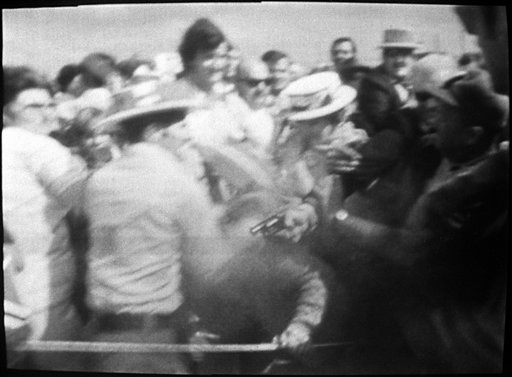
My parents, in fact, had long believed that it took place in the Montrose Ave. crosswalk beside Giant Food—probably because the stage Wallace spoke upon resembles the nativity scene that was in that location throughout the 80s. Plus, it seems like a logical place to hold the assembly. However, that was not the case.

Gov. George Wallace addresses the crowd just five minutes before the shooting. (Photo: Mabel Hobart)

The stage was actually set closer to the center of the parking lot, just behind what was at that time the Equitable Trust Bank, (currently Bank of America). It was in this area of the parking lot—between the south side of the bank and Woolworth’s—that Governor Wallace was shot.

The photos below, courtesy of John Floyd II, show the back (south side) of the bank—where the shooting took place. John, 14 years old at the time, was there that day with his mother, and estimates the actual spot of the shooting to be approximately where the white car is parked in this photo.

State Bank in 1962, and a recent photo of the building in its current guise as Bank of America. (Photos: John Floyd II)

You’ve probably noticed the name “State Bank” on the photo above. That’s what it was before it became Equitable Trust. (Hmm… banks constantly changing names—some things weren’t so different 40 years ago after all, were they?) Below is a Laurel News Leader cover photo from October 1962, which announced a $60,000 construction and improvement program to the State Bank’s Laurel Shopping Center branch, including an enlargement of the lobby and two new executive offices, a fall-out shelter in the basement, complete new heating and air-conditioning plants, as well as decorating and landscaping.

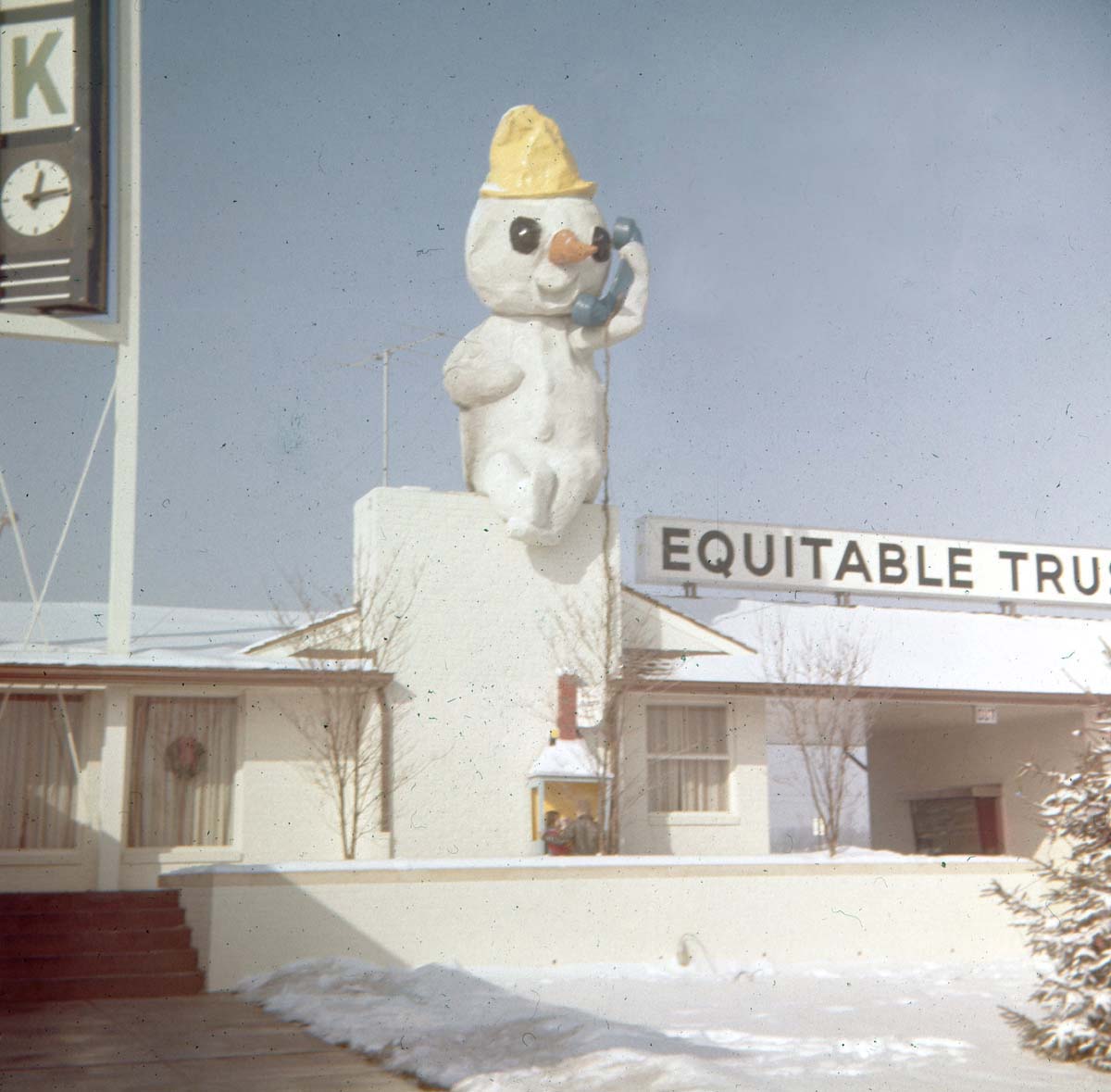
A 35mm color slide from an undated winter during the bank’s Equitable Trust era gives us a peek at the front of the building; although it’s somewhat difficult to focus on anything other than the massive, lumpy, telephone-wielding snowman perched atop the bank. During this phase, the bank had been painted white. We can also see the addition of a clock in the lower portion of the large, vertical sign—the lettering of which was also obviously changed. (I’m assuming it simply said “BANK”).
The file photo below shows the aftermath of the shooting—just after Wallace had been whisked away by ambulance. (John Floyd noted that prior to the assassination attempt, the entire parking lot between the bank and Woolworth’s was packed with spectators). In the photo, we also have a distant glimpse of some of the other businesses that were there at the time—most notably, Hecht’s in the top left corner behind the bank; the original International House of Pancakes, with its gabled roof; the Laurel Car Wash (originally owned by former Laurel Mayor Harry Hardingham, and still in business today!); a BP gas station; and a Fotomat booth.

(Photo: file, Laurel Leader)

To that point, let’s look at what else comprised Laurel Shopping Center at that time. The following directory came out a few years later, but many of the businesses listed had been open at the time of the shooting.

Greater Laurel Area Community Guide, 1976

Another view of the shopping center from this era comes from an apparent protest of, well, pants. This demonstration, apparently calling for the boycott of Farah Pants at Hecht’s, occurred in December 1973.

Photo: Reading/Simpson

It’s also worth noting that one of the more dramatic photos that came across the AP Wire—showing a motionless Wallace lying in the back of a station wagon while awaiting an ambulance—was taken by a Laurel photographer, J.A. Bowman.

Recently, I found a photo that appeared in the October 16, 1977 issue of the Washington Post, recalling the shooting five years later. The article featured Mabel and Ross Speigle, between whom the would-be assassin literally reached while firing. Ross was the gentleman in the ball cap, whose tattooed arm you can see grabbing Bremer’s arm. The couple recalled their incredible experience, and were photographed in the spot where it all happened.

Back in January, I’d noticed a discussion thread on another Laurel-themed Facebook page. Susan Poe commented on a video link of the shooting: “The man wrestling the shooter to the ground was my neighbor, when I lived on 4th Street—Ross Speigle, and his wife Mabel was beside him… for anyone who remembers. I remember that day very well.” I posted the photo for Sue, who’d never seen it. She quickly replied, “OMG! Tears in my eyes… I haven’t seen their faces in over 20 years. Thank you so much. Wow. You have no idea. They were like family to me.”

She went on to tell me that Mabel (or “Mabe”, as she was known) had passed away from cancer, and Ross followed her a few years later. It was clear that this had been a very special couple, even without their unexpected involvement in the Wallace incident. Ross had acted out of instinct in grabbing Bremer’s arm—an action that could very well have been the reason why no one was killed that day. But the Speigles’ courage didn’t end there; Mabel proved to be a dynamic witness who helped seal Arthur Bremer’s fate:

Given this significant anniversary, I thought it only fitting that Mabel and Ross accompany me (in a manner of speaking) back to the site one more time.

***

Postscript:
There’s at least one other camera angle showing the Wallace shooting—this one with a brief glimpse of the Equitable Trust Bank itself, giving the surroundings more context. In this particular upload (set to Lynyrd Skynyrd’s Sweet Home Alabama) the footage doesn’t begin in earnest until the 1:34 mark. However, it’s in color; and it has sound. You can easily get a sense of the chaos in the immediate aftermath on that incredible day.

And lastly, there was a film made about the life of George Wallace. It’s titled, (you guessed it) George Wallace. Gary Sinise starred in the title role, alongside Angelina Jolie as his then-wife, Cornelia. The filmmakers did a decent job recreating the “Laurel Shopping Center” stage from which Wallace spoke before the shooting, but anyone who’s familiar with Laurel will immediately notice the surroundings and realize that the scene wasn’t shot (no pun intended) at Laurel Shopping Center. Interestingly enough, Gary Sinise won an Emmy for the performance—on the very night that the real George Wallace passed away.
Tagged , , , , , , , , , , , , , , ,

Goodbye, Laurel Mall

Laurel Centre Mall, October 11, 1979 ~ May 1, 2012.

Photos: John Floyd II

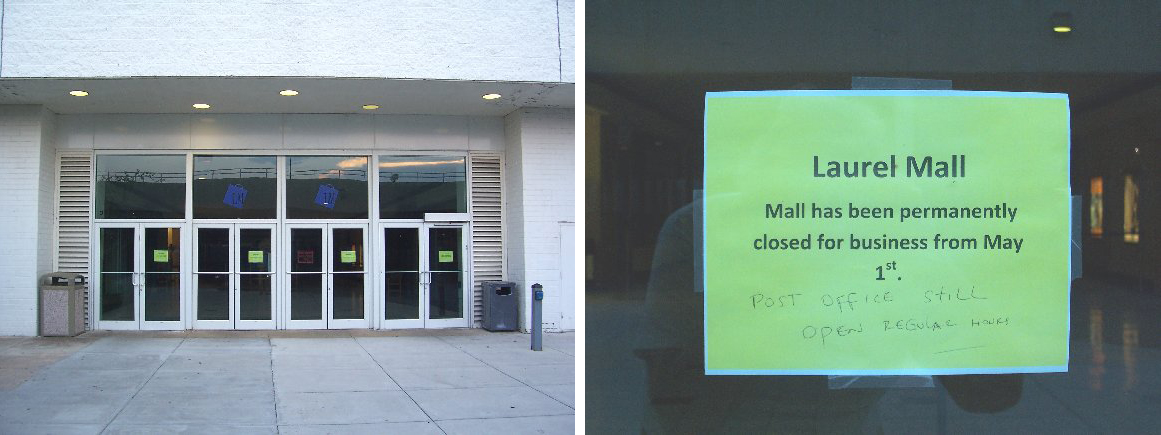
Thanks to long-time Laurel resident John Floyd II for trekking over and confirming this week’s final closure. To my knowledge, there weren’t any press releases or announcements; just a handful of bright green flyers taped to the doors announced the final closure of the long-suffering Laurel Mall.

Much more to come on the mall’s closing soon, as well as some early articles and photos trumpeting its grand opening back in 1979—when it got substantially more respect than a few bright green flyers.

Tagged , , ,

High’s Ice Cream

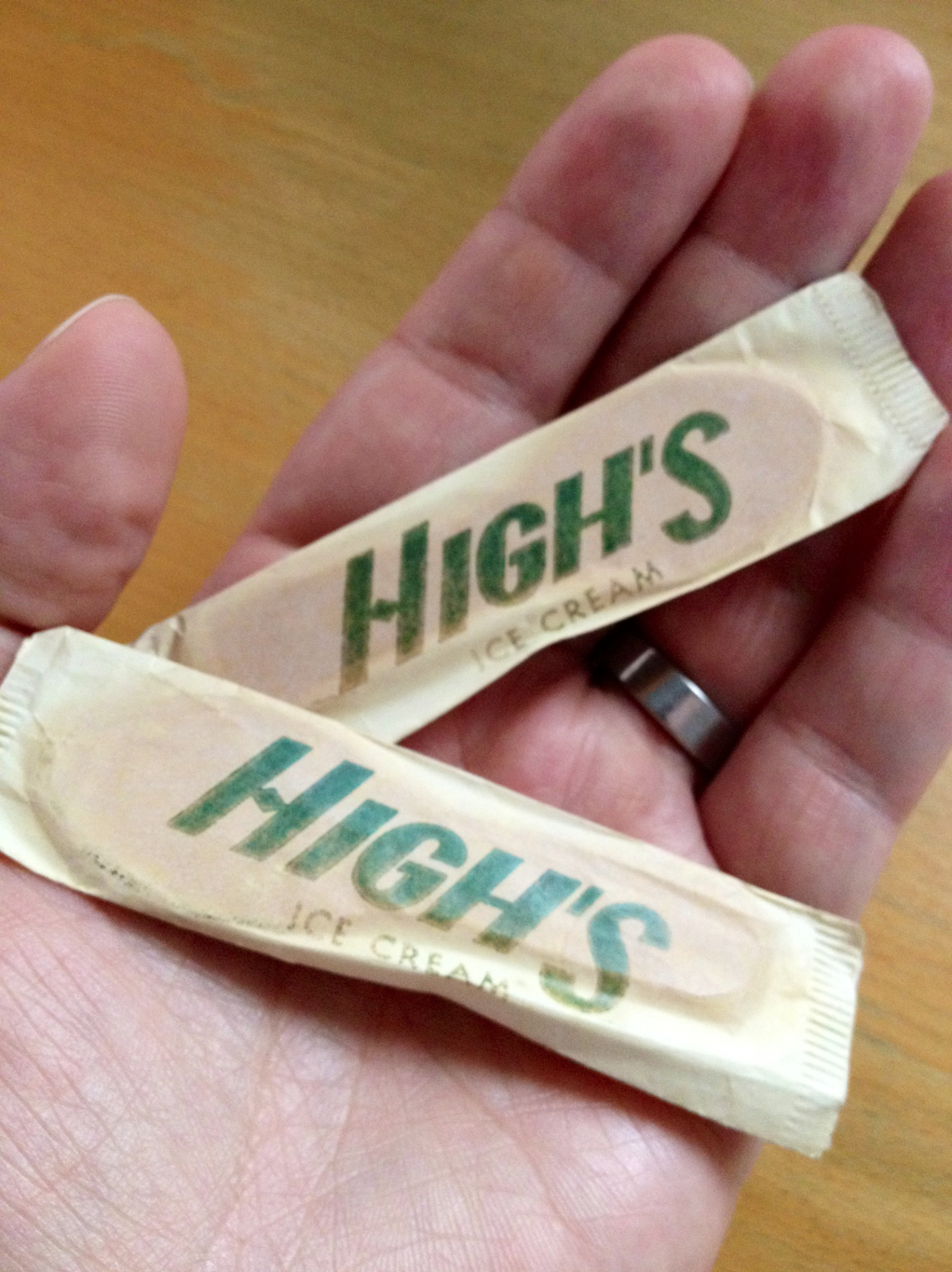
Another gorgeous day in the DMV! Ice cream, anyone?

Tagged , , , ,

Laurel Art Center: The Final Weekend

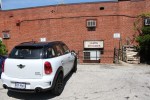
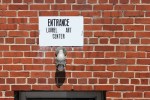
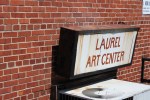
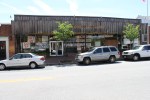
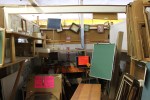
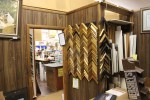
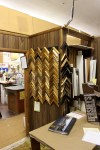
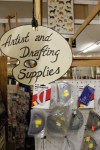
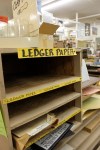
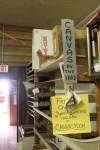
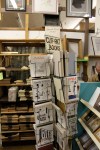
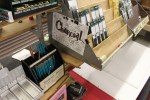
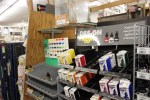
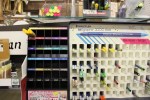
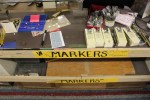
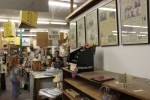
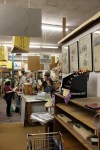
This weekend, the Laurel Art Center reopened its doors (shuttered since February, when the Emery family announced their intent to close the iconic 35-year-old business) for a massive liquidation sale.

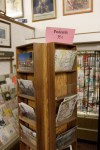
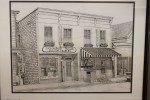
I visited with the intent of picking up copies of the few remaining Marian Quinn pen & ink reproductions of vintage Laurel landmarks that I hadn’t already purchased this past year—including one of the Laurel Art Center itself. (I’d superstitiously delayed buying it for fear that it too would become part of Lost Laurel.)

I anticipated quite a turnout after the sale was publicized in the Laurel Leader, and was right. By 10:30 Saturday morning, the line of paying customers was already to the back of the store. Needless to say, it was probably the longest line they’ve seen since the store’s inception. If only they could’ve had such lines all the time, but I digress.

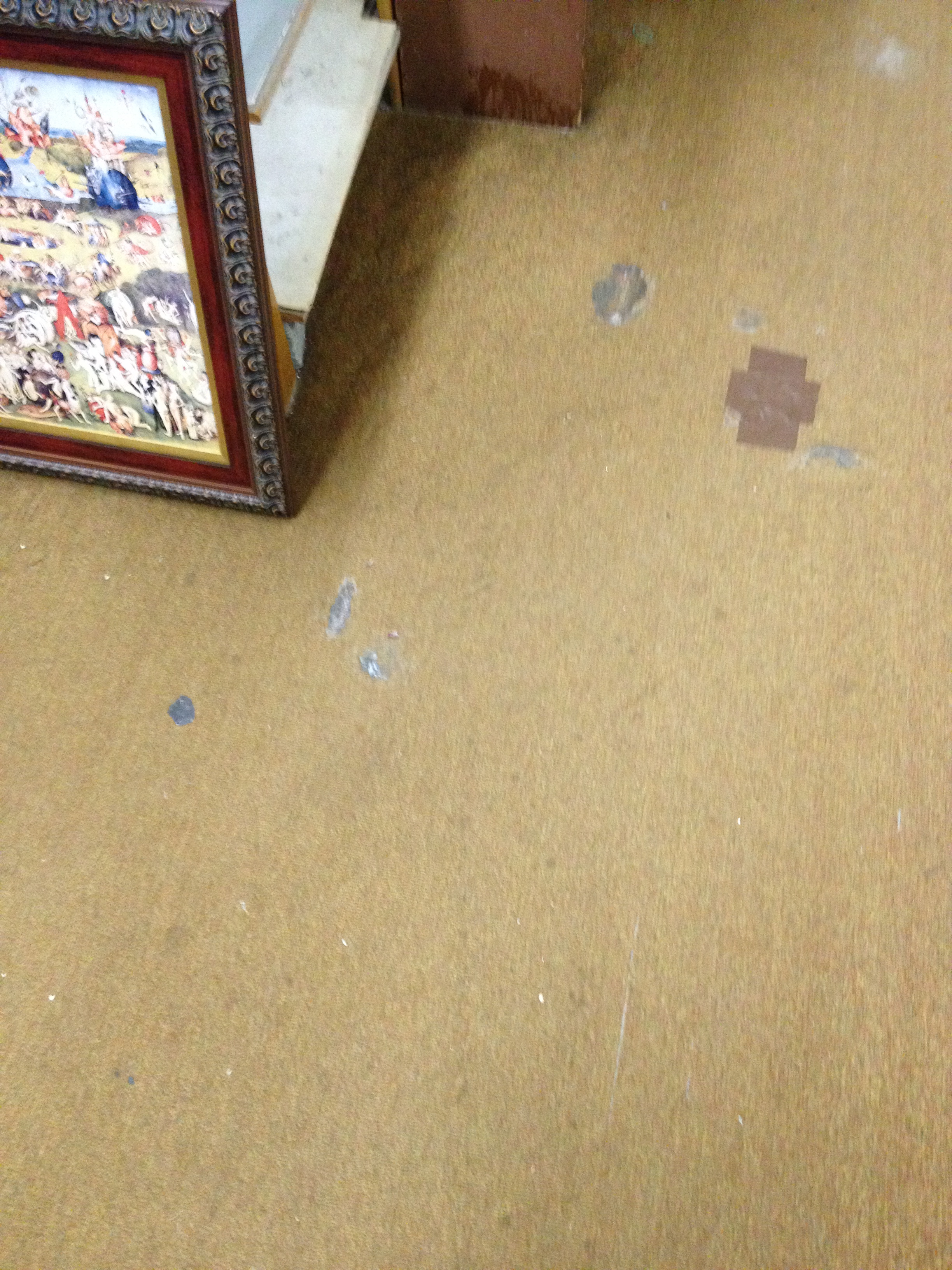
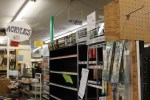
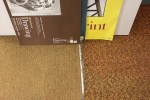
And the wait to pay at the register was upwards of 45 minutes, but worth every second—not just for the incredible 75% discount, but for the time it provided to reflect on just how many visits I’d made to this wonderful store over the years. Even the carpet—that old, patchwork of mixed fabrics—caught my eye and brought back memories.

While standing in line, it was fitting that I noticed a few remaining watercolor sets—much like the little sets my parents first bought for me back in the late 1970s and early 80s, which undoubtedly fueled my early artistic ambitions. Of course, it would eventually be this very store that provided everything I’d need for drawing and painting, including the tons of supplies I required during my time at the Corcoran College of Art + Design.

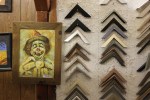
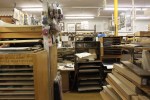
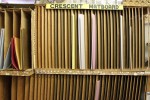
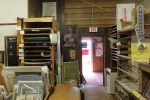
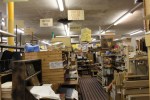
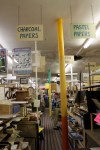
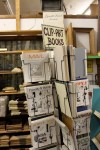
The Laurel Art Center has honestly been a key part of my life for as long as I can remember. From my early childhood love of drawing and painting, to my college and professional career as a graphic designer, and even today as a casual historian of all things Laurel. So while I couldn’t pass up the opportunity to stop by on Saturday to make sure I bought every last thing I could (and I did score some fantastic pieces, including some Marian Quinn originals for less than I’d paid for some prints), I knew I wouldn’t be able to properly photograph the store one last time with just my iPhone—not to mention with the crowds of other enthusiastic shoppers milling about. A return trip was in order today with a real camera, for one final walk through in an effort to document the countless details of the old store; to try to convey the experience of browsing through this 10,000 square foot eclectic treasure trove.

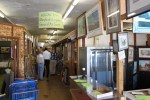
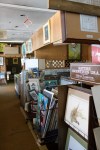
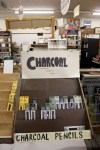
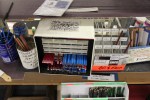
Both the inventory and the crowds were sparser, but the unmistakeable ambiance was still there.

(You can also view the complete photo set here on Flickr.)

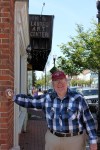
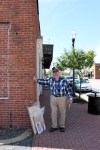
While photographing each aisle, a vaguely familiar looking gentleman approached—also with a camera. “Looks like we had the same idea today,” he said. And within seconds, I realized that this must be John Floyd, II—the long-time Laurel resident who’s provided not just me, but the Laurel Leader and many others over the years with so many great photos and insight to the town’s history! “John?” I asked. “Rich?” He replied. We’ve been corresponding via email for the past year, but hadn’t had the chance to meet in person until today. Leave it to the Laurel Art Center to create one more memorable moment for me—on its final day, no less.

Such a treat finally meeting John Floyd II, who just happened to be here at the same time!

Main Street certainly won’t be the same without the store, nor will its legions of fans ever forget what it has meant to them over all these years. As one of the youngest members of the Emery family helped bag up my final purchases, (including a Marian Quinn original pen & ink of Petrucci’s and Pal Jack’s Pizza that I got for $18.75—I can’t believe no one else spotted that on the wall before I did) I took one last look at the thank you note on the counter.

No, thank you, Laurel Art Center. For everything.

***

Postscript: One additional print I made sure to buy today was that of The Gallery—the other Emery family-owned art and framing business just one block up on Main Street. Yesterday, I stopped by and spoke with Cathy Emery, who has been pulling double duty handling the fallout from the Art Center’s closing. Since February, The Gallery has been fulfilling orders that were placed through the Art Center. I remarked, half-jokingly, that I hope they aren’t planning on leaving anytime soon. You can imagine my surprise to learn that they were actually planning to do just that—even before the Art Center pulled the plug. Yikes.

While I’d love to hope that The Gallery will persevere and continue the Emery family’s wonderful artistic legacy in Laurel, it sounds as though their time may also be short. Be sure to visit their shop at 344 Main Street for all of your framing needs, and for both originals and reprints of Cathy’s amazing work documenting Laurel’s places past.

Tagged , , , ,

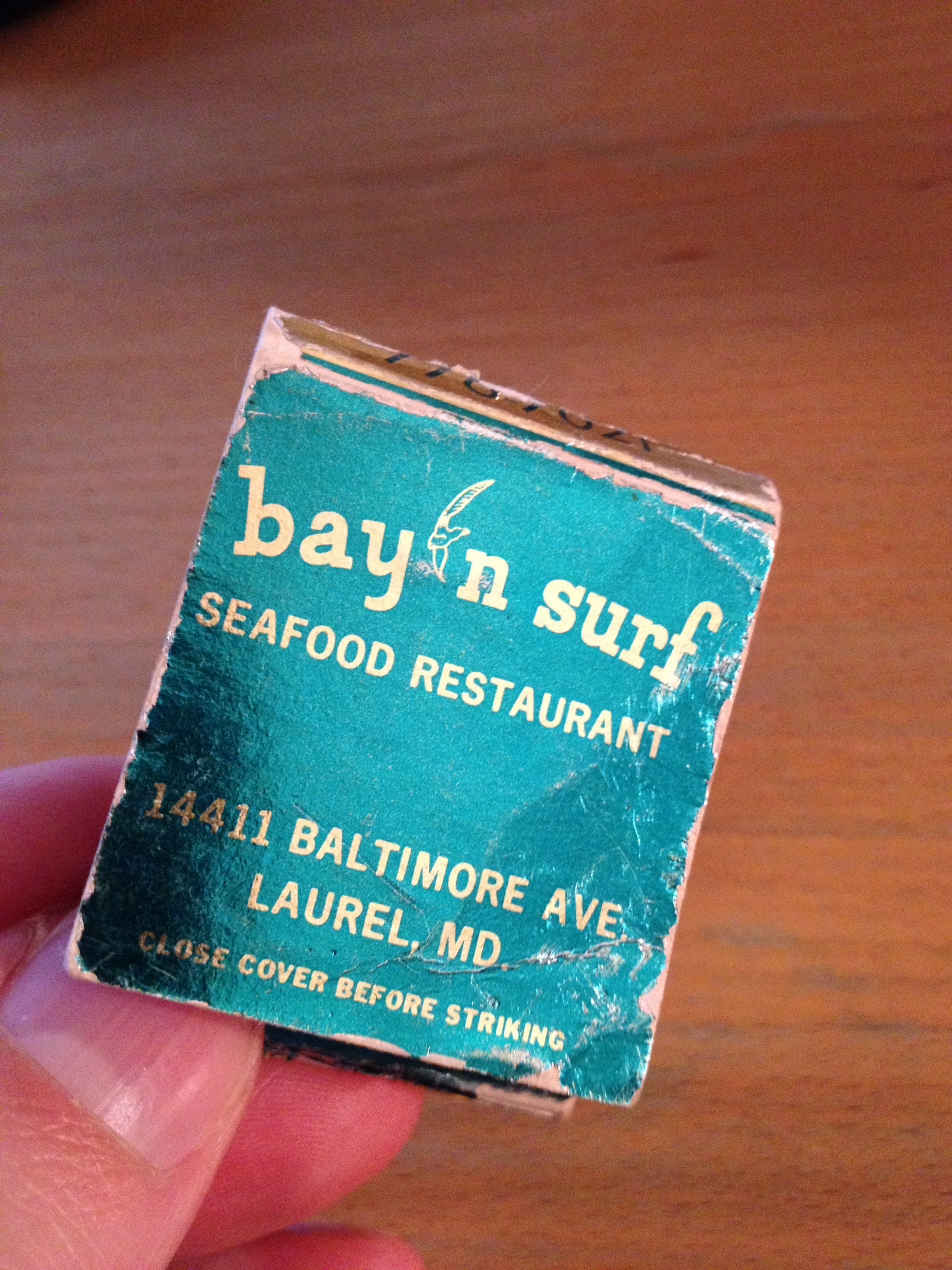
Bay ‘n Surf

Photo: Stu_Jo (Flickr)

Photo: Stu_Jo (Flickr)

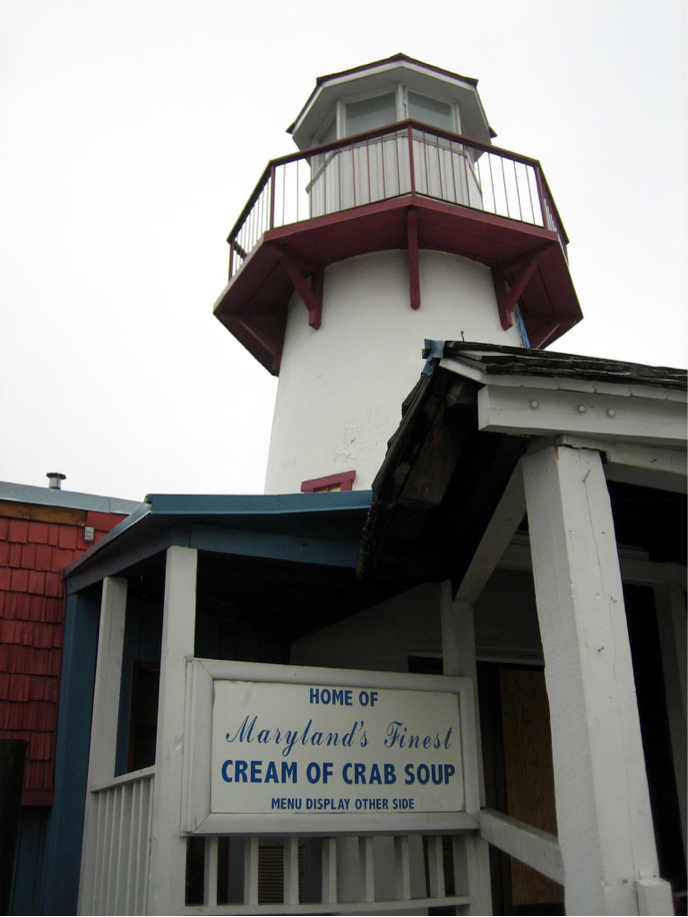
On a chilly, rainy day like today, who couldn’t use a nice bowl of Maryland’s finest cream of crab soup?

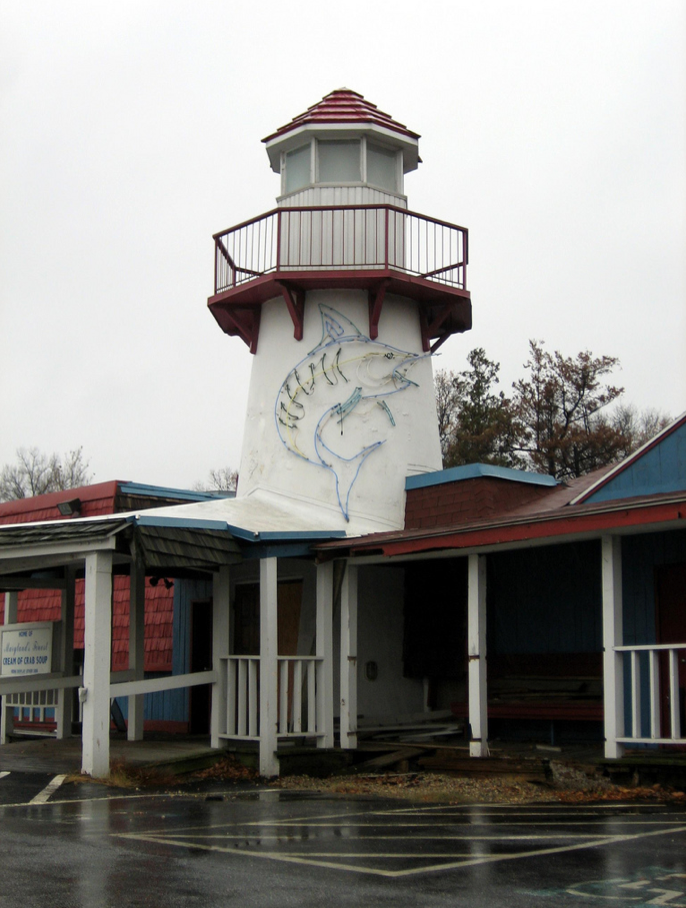
By most accounts, Bay ‘n Surf aptly advertised their signature soup, lovingly crafted in the distinctive 300-seat restaurant with decorative lighthouse at 14411 Baltimore Avenue—the location it called home since 1965. But the restaurant that had seen so many romantic Valentines Day dinners over the years did not have a happy Valentines Day in 2007, when a compressor for one of the restaurant’s walk-in refrigerators ignited at approximately 6:15 AM, setting ablaze a nearby office and parts of the kitchen. According to firefighters, the dining area was essentially untouched; and while preliminary estimates put the damage at $500,000, the owner told The Washington Post that she planned to reopen by May of that year.

Photo: WTOP

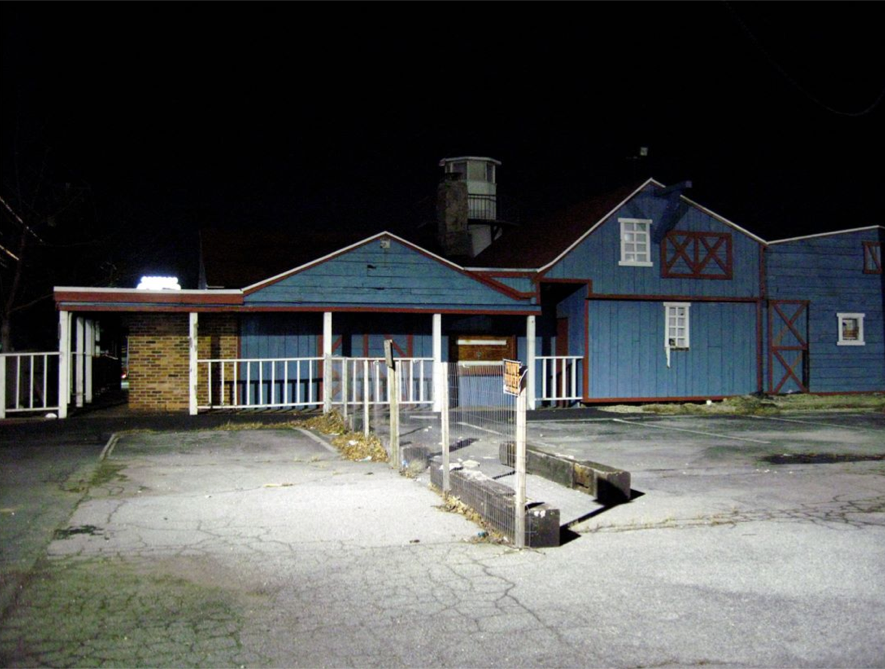
Now more than five years after the fire, the restaurant—and its distinctive lighthouse—sit eerily empty.

Despite the occasional rumor of Bay ‘n Surf returning—or, more likely, reopening in a new location outside of Laurel, nothing of the sort has materialized. The property has evidently been sold, however, but there’s been no official word on what’s to become of it. Odds are, however, whatever the new place is, the cream of crab soup just won’t be the same.

You can still experience some of those Bay ‘n Surf memories—and a decent bowl of cream of crab soup—right next door, though. Nuzback’s Bar, another Laurel landmark which has sat directly beside the old seafood restaurant all these years, (including the years before Bay ‘n Surf, when it was the notorious Oakcrest Inn!) is still going strong, and they have an outdoor seating area where you can enjoy your food and drinks while gazing over at what’s left of the Bay ‘n Surf.

When I was growing up in the 1970s and 80s, Nuzback’s had a bit of a reputation as a rough place (to put it mildly). But I doubt they’ve ever had quite the drama that the old Oakcrest Inn had—especially on August 29, 1955, when a deadly gun battle apparently broke out… between a pair of middle-aged brothers, no less. One of whom owned the place:

Washington Post, August 30, 1955

The surviving brother was later acquitted, citing self defense. You have to wonder if he ever went back, perhaps after it became the Bay ‘n Surf. After all, they did have Maryland’s finest cream of crab soup.

Tagged , , , , , , ,

Cook’s Laurel Hardware Co.

Long before Laurel’s labyrinthine Home Depot—and even Hechinger—there was a small hardware store on Main Street that seemed to carry everything. Just as importantly, they knew were everything was.

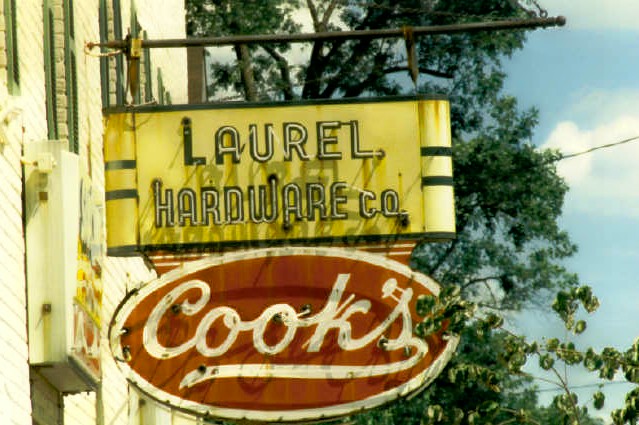
Perhaps, like me, you weren’t particularly handy with power tools (growing up in an apartment complex like Steward Manor with a highly-capable maintenance team can have that effect, you know.) But even if you’d never ventured inside Cook’s Laurel Hardware Company, chances are you remember seeing their iconic neon sign—a throwback to their 1938 origins—every time you passed by.

If you did go inside, chances are you remember the creaky wooden floors, patched together with metal flashing—also a testament to Cook’s 59 years of service to Laurel. Former customers of all ages fondly recall visits with parents, grandparents… and even dogs, which were welcomed inside.

For most of its long tenure on Main Street, the store was identifiable by that distinctive neon sign at least as much as its red brick exterior. Until 1983, however, when the store’s facade underwent a dramatic makeover—ivory and dark green paint brought new life to the Main Street classic.

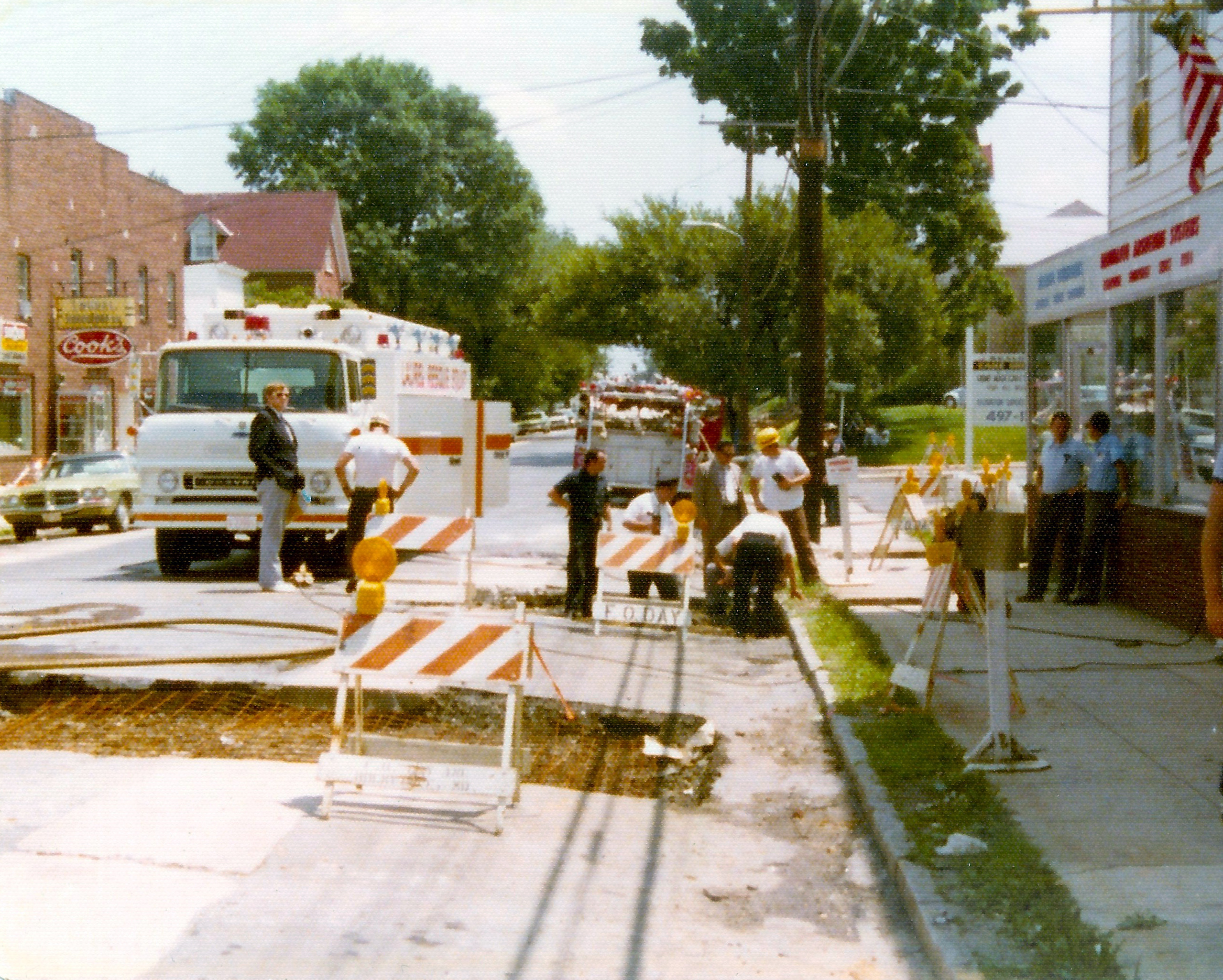
Cook's original red brick facade can be seen in this 1975 photo of Laurel Rescue 19 and Engine 101 responding to a gas leak at 5th & Main Steets. (Photo: John Floyd II)

Laurel Leader, 1983

Cook's—with it's new paint—as it appeared in a 1987 Citizens National Bank courtesy calendar (Photo: Susan L. Cave)

But by the mid-1990s, Laurel was in full transition mode—adapting to the arrival of discount retailers such as Walmart, Sam’s Club, Target, Kohl’s, and The Sports Authority, among others. Main Street’s small shopkeepers struggled to secure their niche market amid the flurry of large-scale retailers. And ironically, it wasn’t the big box stores that ultimately doomed Cook’s—not completely, anyway. Technically, it was old people. Upon closing in the summer of 1997, the building was razed to make room for a 124-unit apartment building for senior citizens—Selbourn House.
In a Washington Post article that noted the impending closure, owner Bob Cook—a longtime member and president of the Laurel Board of Trade—regretted shuttering the old hardware store that bore his name, but he remained surprisingly optimistic for the town:

While he laments the store’s closing, Cook views it as part of the transformation begun three years ago by Laurel’s government and business leaders to boost employment, spur economic development and make the most of Laurel’s location, halfway between Baltimore and the District. Cook believes the proposed senior housing complex will help draw people to city streets, where eventually they will shop with tourists who are drawn to stores selling antiques and crafts.

Washington Post, 1997

Cook’s Laurel Hardware Company has been gone now for some 15 years, but in many ways, it lives on—and not just in memories.

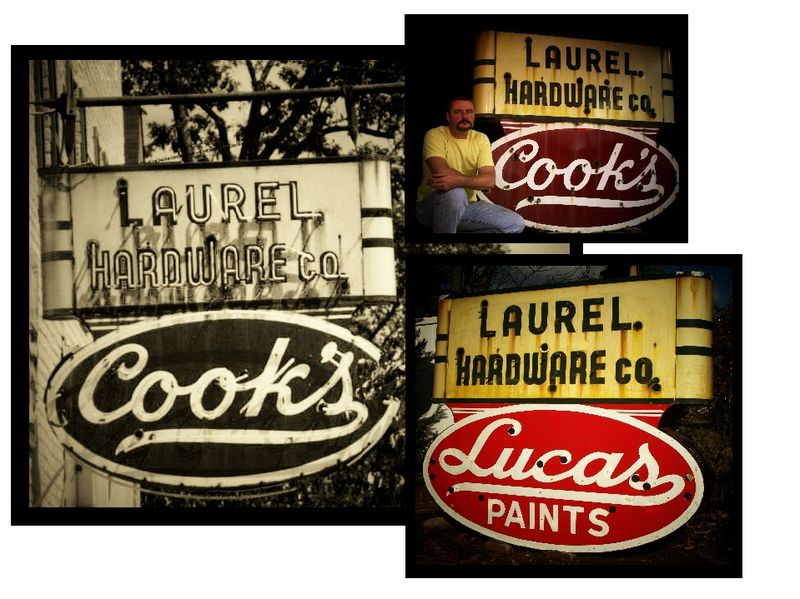
Norman James, Jr. is an accomplished sign maker whose passion is in documenting, rescuing, and restoring classic neon signs of the Baltimore/Washington area. He then showcases the old beauties he’s rescued (as well as some that he couldn’t) on his website, often with fantastic historical notes that may have otherwise been lost to the ages.

Norm lost his bid to procure the Cook’s sign in 1997; and for the next 11 years, it sat in the coffee shop just across the street from the old hardware store itself. But, fast-forward to 2008—and the coffee shop itself was closing. Better late than never, Norm was more than willing to once again give the 400-pound, 6′ x 6′ sign a good home.

Courtesy of Norman James, Jr. (http://www.normanssigngarden.mysite.com)

During his restoration, Norm uncovered (literally) an old secret behind the Cook’s sign:

“HIDDEN MESSAGE! I discovered the lower portions, or ‘Cook’s’ panels were lay-overs, concealing the original message. Lucas Paints were manufactured in Pennsylvania for about 75 years when bought out by Sherwin-Williams, in the early 1950’s. The owner of Laurel Hardware had his name added to the sign to cover over the Lucas paints portion, which only was exposed for about the first ten years of the life of the sign. I also discovered the faded nameplate of the original manufacturer of the sign…Triangle in Baltimore. The ‘John Tingen’ lettering was probably from the time the ‘Cooks’ layovers were created.”

You’ll often hear folks talk about the experience of walking through a mom & pop hardware store, and its ambiance: the smell of cut plywood and 2 x 4s; the close proximity of shelves full of nails, drywall screws, and countless other fasteners; the sound of a paint mixer. Nowhere was that experience more appreciable than Cook’s. Sure, Home Depot probably has everything and then some; but sometimes, what a customer really wants is the chance to browse at his or her own pace in a welcoming environment. Preferably one with an old, creaky wooden floor.

Tagged , , , , , , , ,

One building, two grand openings… exactly 30 years apart

Photo: Don Knieriem

Today marked the long-awaited grand opening of the new LA Fitness at Laurel Shopping Center.

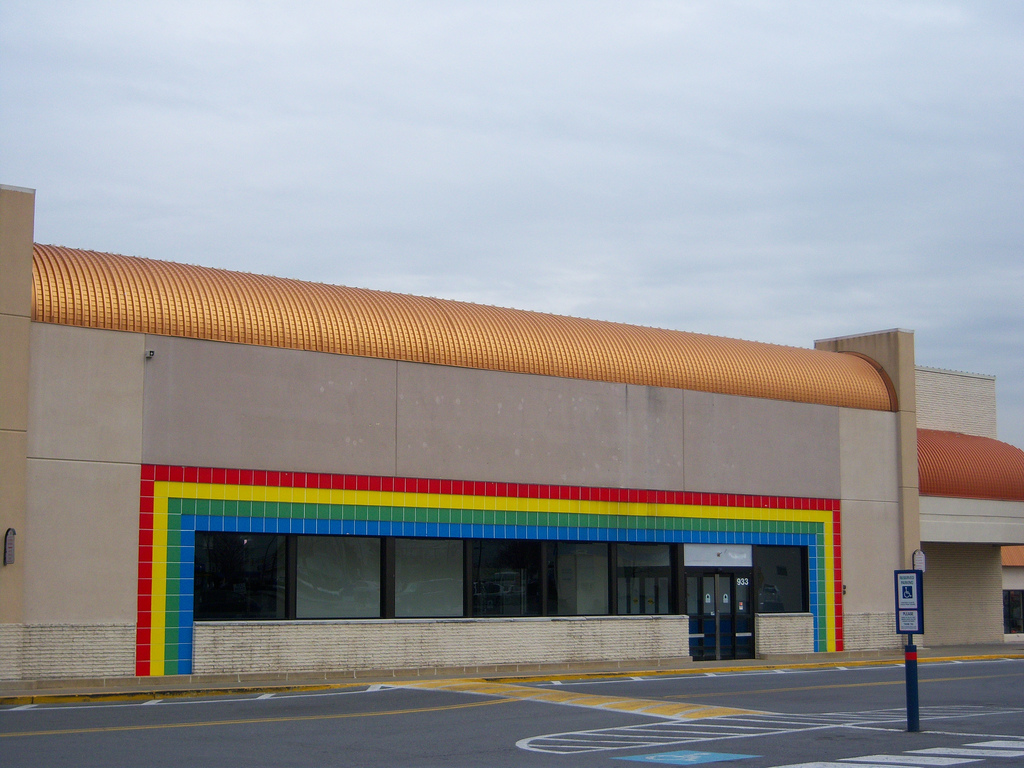
The new fitness mega-center occupies the site of the original Hecht Co. building; but with its massive architectural makeover, it bears little to no resemblance to Hecht’s—or to Toys R Us, which most recently left a lasting label scar on the building that once also housed Woolco and Jamesway.

Photo: Benoit6 (Flickr)

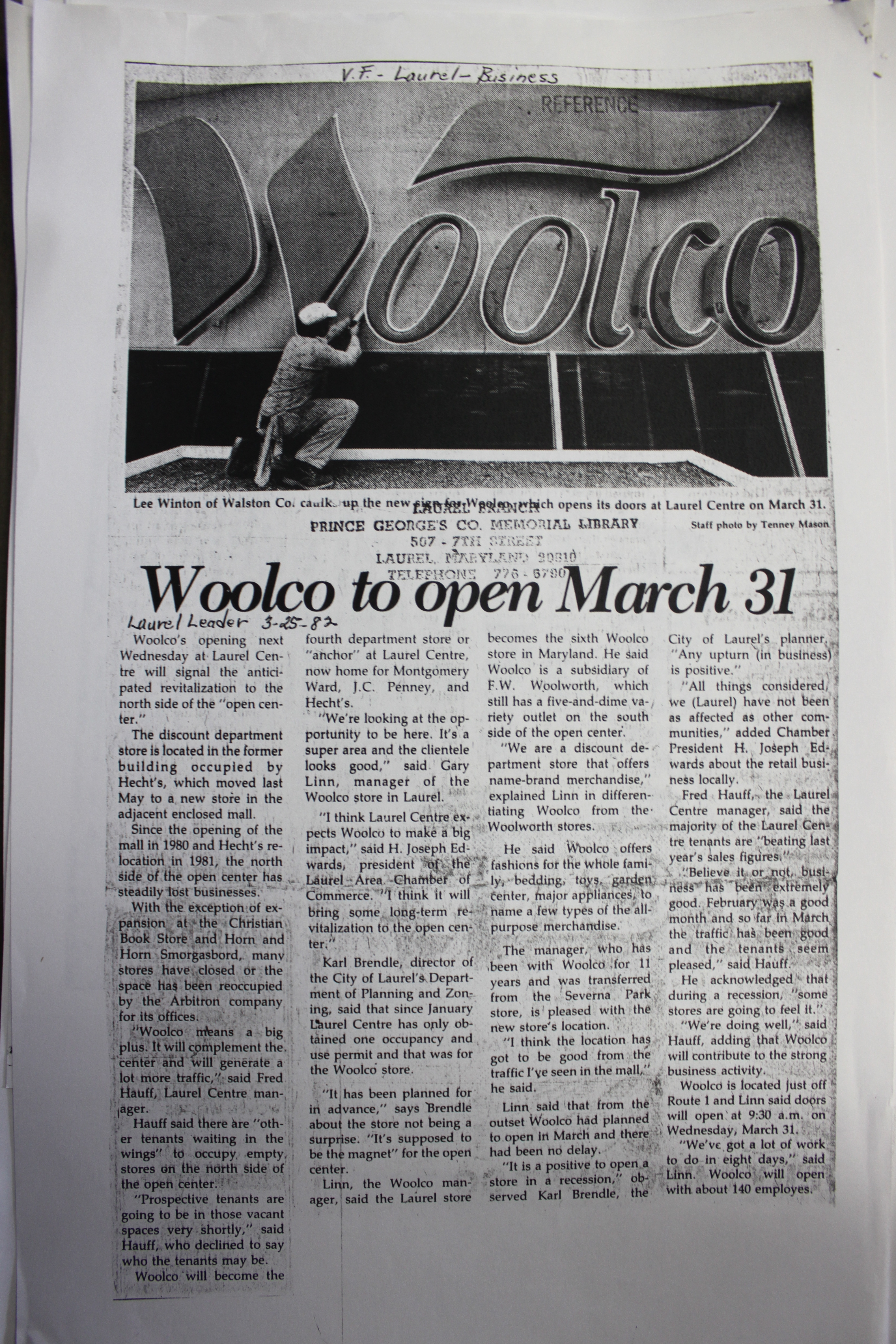
And speaking of Woolco, it was actually 30 years ago this very day when it had its grand opening in the very same building—March 31, 1982.

Let’s hope for the sake of LA Fitness (and more importantly, for the city of Laurel) that this new tenant proves to have considerably more long-term success. Woolco, unfortunately, went on to occupy the building for just one year before closing. But then again, they never had a swimming pool, basketball courts, and tons of gym equipment.

Tagged , , , , , , , , , ,

Montgomery Ward + CB Radios

Breaker one-nine, breaker one-nine… We’re cruisin’ the mall with our Montgomery Ward CB radios, good buddy.

Laurel had quite the CB radio following in the 1970s—a veritable convoy, if you will. Those in the know created an informal “CB Club” that would meet at designated spots—including the original IHOP parking lot, among others, before proceeding to hang out. The topic was getting quite a bit of radio chatter over on the Lost Laurel Facebook page today.

Bob S. remembers:
Our hang-outs were the bowling alley and the upper level parking at the mall (until security would come) Then we had “Roll Call”, about 100 of us, once a week.
And Rick K. recalls how Montgomery Ward not only sold their share of radios, but actively participated:
Back in the day, the Laurel Montgomery Ward electronics department actually maintained an operating CB radio base station. They used the handle “Monkey Base”.

Wards seemingly went all out for the fad, even offering to print your CB radio handle (up to 14 letters) for free on any T-shirt you bought—as evidenced by the coupon below (complete with stylish line art of a 1970s guy rocking a shirt that reads “Big Eddie”). Naturally, this begs the question of whether any of our Laurel CB Clubbers had a shirt printed. Breaker 1-9, Wrongway, come back? Breaker 1-9, Little Dancer, are your ears on? Hello? Anyone? 10-4.

Tagged , , , ,

American National Bank: Demolition Update

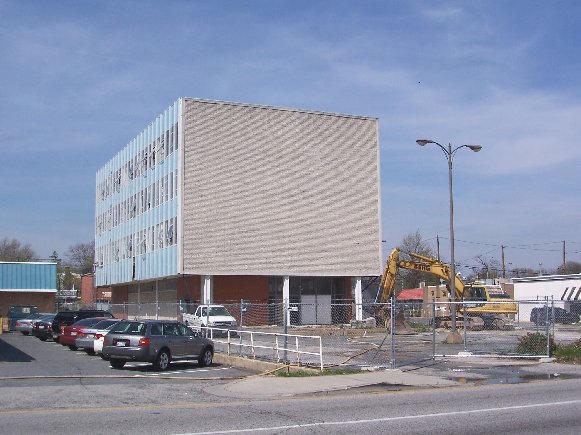
The old blue building just north of Gorman Plaza is finally coming down.

Originally the American National Bank building, it’s been vacant and doomed for some time now; but last week, demolition began in earnest—starting from the inside out, apparently. Thanks to John Floyd II for these photos that document the beginning of the end, which will likely happen this week.

Photos: J. D. Floyd II, Royal Blue Ltd. archives

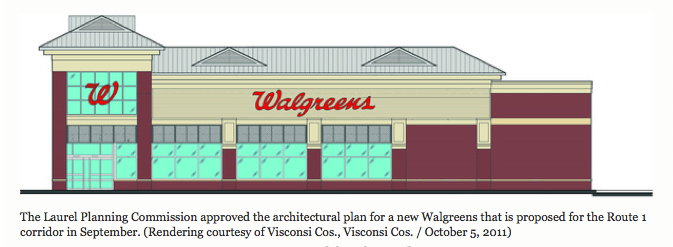
I can’t help but think that in another thirty, maybe fifty years from now, someone will spot a photo of this classic mid-century modern building in one of the Laurel Historical Society’s publications or exhibits (or on an antique roll of Laurel Leader microfilm still languishing in the library’s basement) and wonder, “Wow—why did they ever get rid of that?!” Odds are, the Walgreens that’s slated to take its spot won’t have quite the architectural pedigree.

It’s not only replacing the old blue building, but the rest of the 600 block of Washington Blvd. to its north—which most recently included Irene’s Restaurant (the former Kenny Rogers Roasters and Rustler Steakhouse), Mango’s Grill, and Ace Cash Express (a location that once housed Murry’s Steaks).

Granted, the block has certainly seen better days. In fact, it’s seen better decades. And the new Walgreens will undoubtedly be much more aesthetically pleasing than what passing motorists have been subjected to in recent years. But my real question is this—why was a building like this ever allowed to become an eyesore in the first place? This kind of architecture deserves to be repurposed, not replaced.


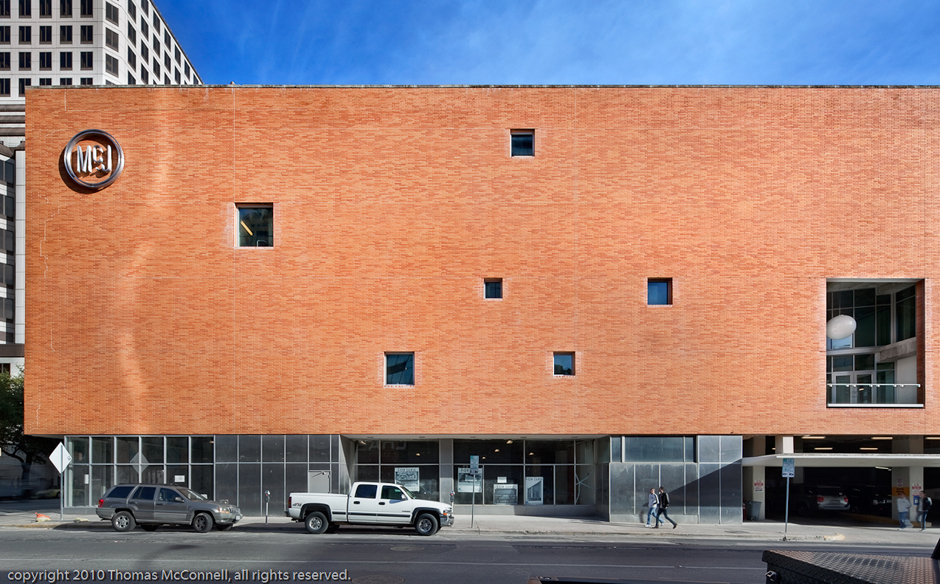
Case Study: The Starr Building, Austin TX

A very similar building in Austin, TX (also originally an American National Bank, coincidentally) recently survived a proposed demolition and is now enjoying a fitting new life as an ad agency.

A Texas preservation society recognized the The Starr Building’s architectural significance and promise, and added it to an endangered list in 2009. Later that year, Austin-based Kemp Properties purchased the building, and advertising firm McGarrah Jessee signed on as its lead tenant. It was a perfect match if there ever was one—and the ad agency literally built their own brand around the building, which clearly inspires them:

McGarrah Jessee absolutely showcases the building on its website, as it should. They include a fascinating video piece highlighting its unlikely history… an arc that could just as easily have applied to Laurel’s old American National Bank building, had the right minds been in place.

A slide in the video reads:

“Kemp Properties and McGarrah Jessee were among the few suitors who recognized that great bones lay beneath the carpet and cubicles. They had a vision that the building could be restored and rehabilitated—that it could make the same kind of statement in 2010 as it did in 1954.”

And it has. Kudos to all involved.

***

When I first heard of plans to demolish the Laurel building (and that entire block) for a Walgreens, I wasn’t surprised. But it made me wonder why the city of Laurel (or Prince George’s County, or even the state of Maryland, for that matter) apparently never considered stepping in when the building began to slide into decline—over ten years ago.

At a time when the city itself was outgrowing its own municipal buildings, did no one see the potential that lay within this distinctive blue building in the center of town—one of just a few spacious, vertical structures in the city limits?

At some point during its decline, you think the city would’ve at least considered how they might have been able to capitalize on preserving it. With a proper facelift, it could’ve been any number of municipal buildings to be proud of. Think of the facilities that were already outgrowing their original spaces: the library (even after a costly expansion in 1992) and the police department immediately come to mind. The old blue building could’ve accommodated either, and made a bold architectural preservation statement in the process.

Ironically, one of the locations considered for this latest library expansion was the former Laurel Police headquarters off of Main Street—which the police department itself had outgrown. (Coincidentally, I hear they’re also planning to demolish that soon, as well. Stay tuned.)

Getting back to the Starr Building comparison for a moment, perhaps you were wondering why it was called “the Starr Building”. Perhaps not, but just humor me for another couple paragraphs or so. There are just a few more parallels worth noting.

After the American National Bank failed in the 1990s, the State of Texas took over the building and made it the headquarters of the State Comptroller of Public Accounts. They christened it the Starr Building after James Harper Starr—physician, treasurer of the Republic of Texas, Land Commissioner, and banker. Then they did what most government agencies do to government buildings—they filled it with cubicles and bad carpet. But it got even worse. In 2005, the Comptroller’s Office moved out and gave control to the state’s General Land Office—who allowed it to sit vacant for the next four years, coming dangerously close to demolition. Interest in the building came and went; with most of the proposals involving tearing the building down and putting up something new.

Sound familiar?

Laurel isn’t exactly Madison Avenue, of course—it’s an unlikely locale for a top-level advertising agency to base its headquarters. It’s not Austin, Texas, either. And to be fair, the state of Texas didn’t do a great job stewarding the Starr Building itself. It took a preservation society and visionary developers to recognize the potential in salvaging that building.

But couldn’t Laurel’s own mid-century modern American National Bank building have been converted to something, other than a decaying eyesore? Something that could’ve inspired new tenants, rather than hinder them with repair costs and tax burdens? Did it really have to reach the point to where we’d read a quote like this from the city’s own longtime planner:

“I’m excited about getting that blue (office) building down, which was in bankruptcy,” Laurel Economic Director Karl Brendle said. “This is going to be great.”

There was a time when the city of Laurel was proud of that building, and of itself.

Tagged , , , , , ,

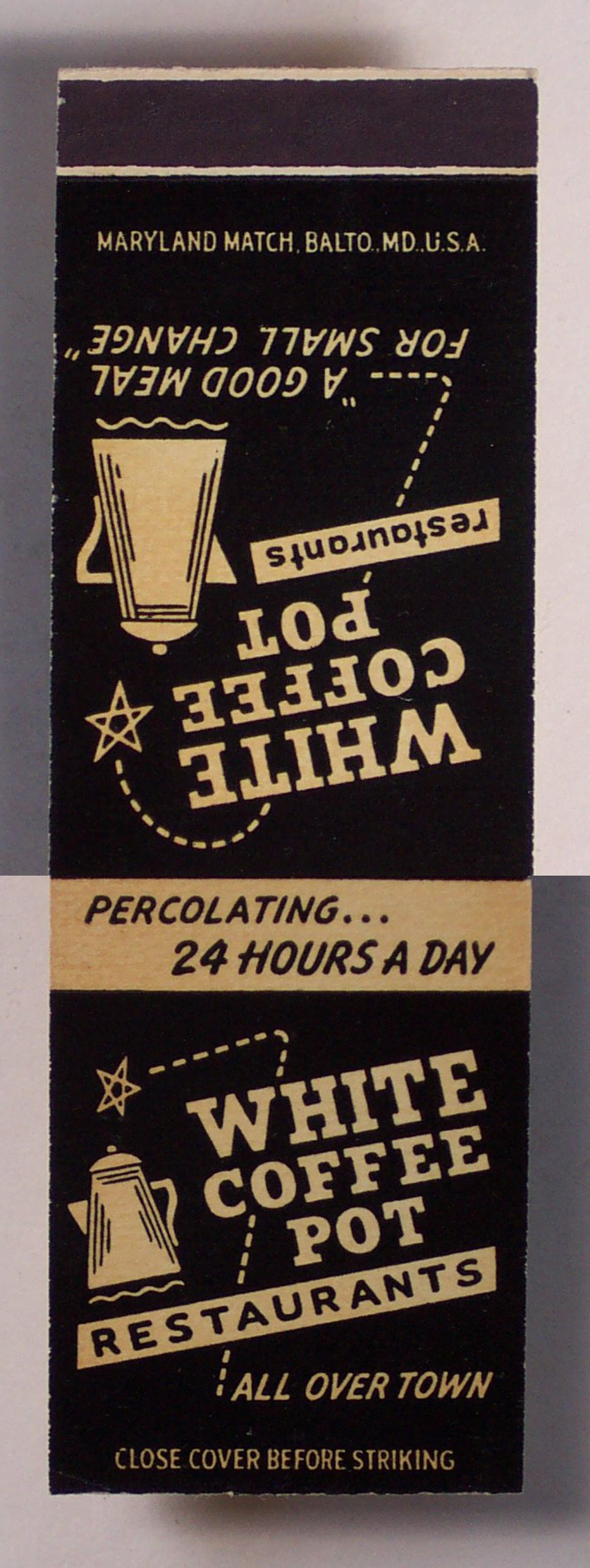
White Coffee Pot

In the southwest corner of Laurel Shopping Center, in the space eventually occupied by the former Mac’s Place Plus One restaurant, sat a White Coffee Pot restaurant.

According to Wikipedia, White Coffee Pot shared ownership with Horn and Horn Smorgasbord—which would eventually replace the Hot Shoppes on the other side of the shopping center, beside The Hecht Co. building.

Just a bit before my time in Laurel, I never had the pleasure of trying out the White Coffee Pot, but I’ve heard from a number of folks who remember it fondly—and at least one who didn’t exactly love their salads… Peggi R. says, “I embarrassed the heck out of (my dad) when I told the waitress their French Dressing tasted like pencil shavings.”

Tagged , , , , , , ,