Tag Archives: Lost Laurel

Stefanie Watson: What Really Happened 30 Years Ago?

Let me preface by saying that this post is quite a bit different than the others, and comes with the proverbial “viewer discretion advised” warning.

While it doesn’t focus on a lost business or restaurant per se, it’s a tragic story still quite relevant to Laurel’s retail history. For me, at least—because the “Missing Person” flyers I saw at Zayre, the mall, restaurants, gas stations, drug stores, and nearly everywhere else in Laurel as a child thirty years ago this week have certainly stayed with me. And a large part of what has fascinated me about this incredibly disturbing case—which remains open to this day—is how very little has actually been written about it in the thirty years since.

Like most Laurel children in 1982, I first heard about the Stefanie Watson case in brief, sanitized tidbits from my parents. It was scary stuff, to be sure—even for adults. Rumors and speculation abounded in the days and weeks after 27-year-old Stefanie Watson mysteriously vanished on July 22, 1982.

The general “facts” as I knew them at the time were stark… and terribly grim: she had worked at the Greater Laurel Beltsville Hospital; her car was found near Laurel Centre mall several days later, saturated with blood; and even more chilling, her head was discovered over a month later in the woods at the end of Larchdale Road. That’s all I knew then, and that’s really all I’d known ever since, until I began to revisit the crime myself earlier this year.

I imagine the details of Stefanie’s name and face have faded from some memories over the past three decades, but I’m positive that anyone—like me—who lived in Laurel at the time of her murder has never truly forgotten.

I was too young to read the newspapers or listen to the news reports, but word spread fast throughout Laurel in the wake of Stefanie’s disappearance. School was out for the summer at the time of her apparent abduction, but with the grisly skeletal discovery on September 3rd, I can remember Deerfield Run Elementary being on high alert. Letters were sent home to parents, advising caution—particularly for those who walked to school. Her murder came on the heels of the high-profile abduction and decapitation of young Adam Walsh just one year earlier. Deerfield Run administrators had sent letters home to parents then, as well.

I didn’t know it at the time, but one of the last places Stefanie Watson had been seen alive on July 22nd was at the Town Center Shopping Center, just a short walk away from my school on Rt. 197 and Contee Road.

That summer, I saw the missing person flyer often. I can still envision it taped to the front entrance window of Zayre, where I frequently stood for hours, hawking the wares of the fabled Olympic Sales Club—from whom I hoped to win the equally fabled prizes or cash.
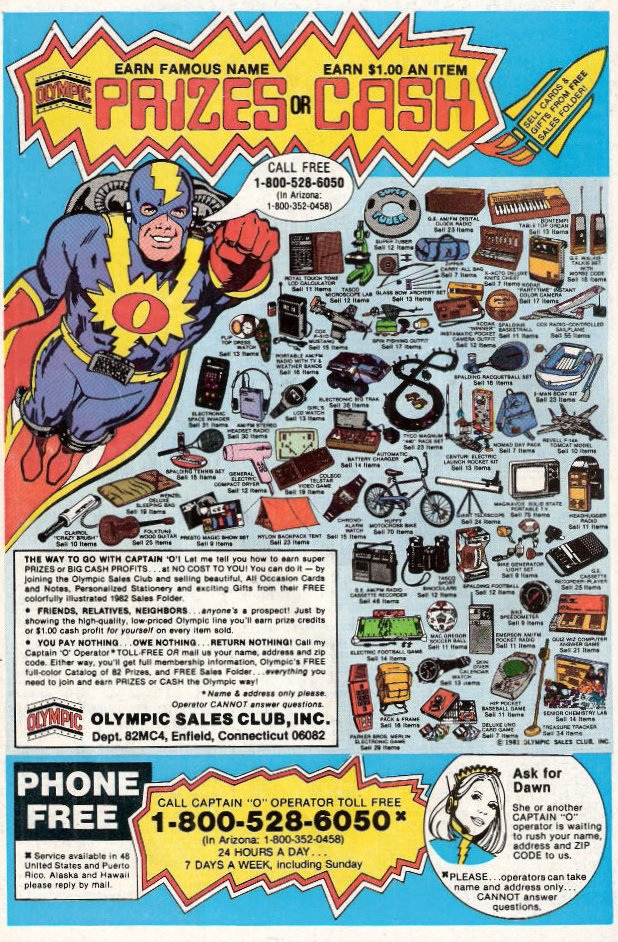
That was one of my first “jobs”, selling these Olympic greeting cards and gifts. After canvassing every building in Steward Manor, I ventured over to Zayre to catch people as they entered.

It was during the frequent lulls of approaching Zayre customers (i.e., unknowing prospective Olympic Sales Club customers) that I couldn’t help staring at the Stefanie Watson flyer; I’d read it again and again, trying to grasp what could have possibly happened to the pretty lady whose photo seemed to watch over me protectively as I timidly repeated my sales pitch to strangers—any of whom, I feared, could’ve been the person responsible for her disappearance. I walked to Zayre from Steward Manor nearly every day that August to make my sales, and Stefanie Watson’s smiling face was always the first and last thing I saw there.

I soon learned that my uncle, Art, had worked with Stefanie at the hospital and knew her casually. Between my youthful innocence and his probable shock over losing a colleague in such a traumatic way, Art didn’t really say much about the matter. Not that I could blame him. He simply remembered her as being very nice, really friendly, and well-liked; and he was working that Thursday night—part of the cleaning crew—when she failed to show up. “It was also supposed to be her last night at work,” he said. “She was getting ready to move to Texas.”

When Stefanie’s 1981 Chevette was discovered in the Middletown Apartments parking lot the Monday after her disappearance, my Steward Manor friends and I knew about it before our parents did. Some of the “big kids” had been at the mall and witnessed the flurry of police activity across 4th Street. Some ventured close enough to see the blood—and they eagerly told us what they’d seen. They were convinced, as would soon be the police, that Stefanie wasn’t going to be found alive.

(Laurel Leader)

The gruesome drama seemed to be unfolding in three acts over the course of that summer: Stefanie’s disappearance and the grisly discovery of her car were acts one and two, respectively. The third and final act came on September 3rd, when police recovered partial skeletal remains—which they delicately conceded was only the head of the victim. That shocking find was made in the wooded area at the dead end of Larchdale Road—a location that would once again haunt me some four years later during yet another childhood summer job. I was a paperboy briefly for The Washington Post, and my pickup point was outside James H. Harrison Elementary—on Larchdale Road—at midnight. Few experiences before or since have unnerved me as much as sitting there alone in the dead of night under that fluorescent din, hurriedly stuffing newspapers into plastic bags less than 100 yards from where Stefanie Watson—her head, at least—had been found. Yes, Stefanie Watson crossed my mind quite often that year.

But then the years began to pass. Decades passed, in fact. As far as I knew, nothing else had ever come of the Stefanie Watson case. No one was ever charged with her murder; and worse, the rest of her body was never recovered. At some point during my research for Lost Laurel, the spectre of Stefanie Watson’s murder once again creeped into my mind.

Still curious after all this time, I began to search online for anything related to her case—news articles, updates, blog postings—anything. I was surprised to find only one single website that even mentioned Stefanie Watson—and despite best intentions, it had misspelled her name and stated the facts incorrectly.

A footnote buried deep within an online memorial page for Maryland homicide victims. Sadly, that was all that seemed to be left of Stefanie Watson. I found it hard to fathom that such a shocking crime could go so long without at least some kind of press coverage, especially when you stop to consider the almost Hollywood-like circumstances of her murder. On paper, the case reads like a James Ellroy novel: a beautiful, young blond woman fails to show up for her last night at work before leaving town… After going missing for nearly a week, her bloodstained car is found; and several weeks later, only a partial skull is recovered. There are no apparent suspects, no arrests, and the crime quickly falls into the cold case files. To put it even more bluntly, a woman is decapitated—in a peaceful, middle-class DC/Baltimore suburb, and this crime goes virtually unmentioned all this time? Are you kidding me? This should’ve been on CNN and on magazine covers across the country. Books should’ve been written about this.

Knowing that the 30th anniversary of Stefanie’s murder was approaching, I finally started looking into it in earnest myself.

I began by speaking to friends and acquaintances who remembered the events of 1982 at least as well as I do. Online, I was only able to find brief articles in the Washington Post and Baltimore Sun‘s archives, but a treasure trove came via the Laurel Leader on microfilm. There, on the analog monochrome screen at the Laurel Library, was the full weekly saga from July to September 1982. I was about to discover the Stefanie Watson case all over again—reading the details as they emerged that harrowing summer thirty years ago.
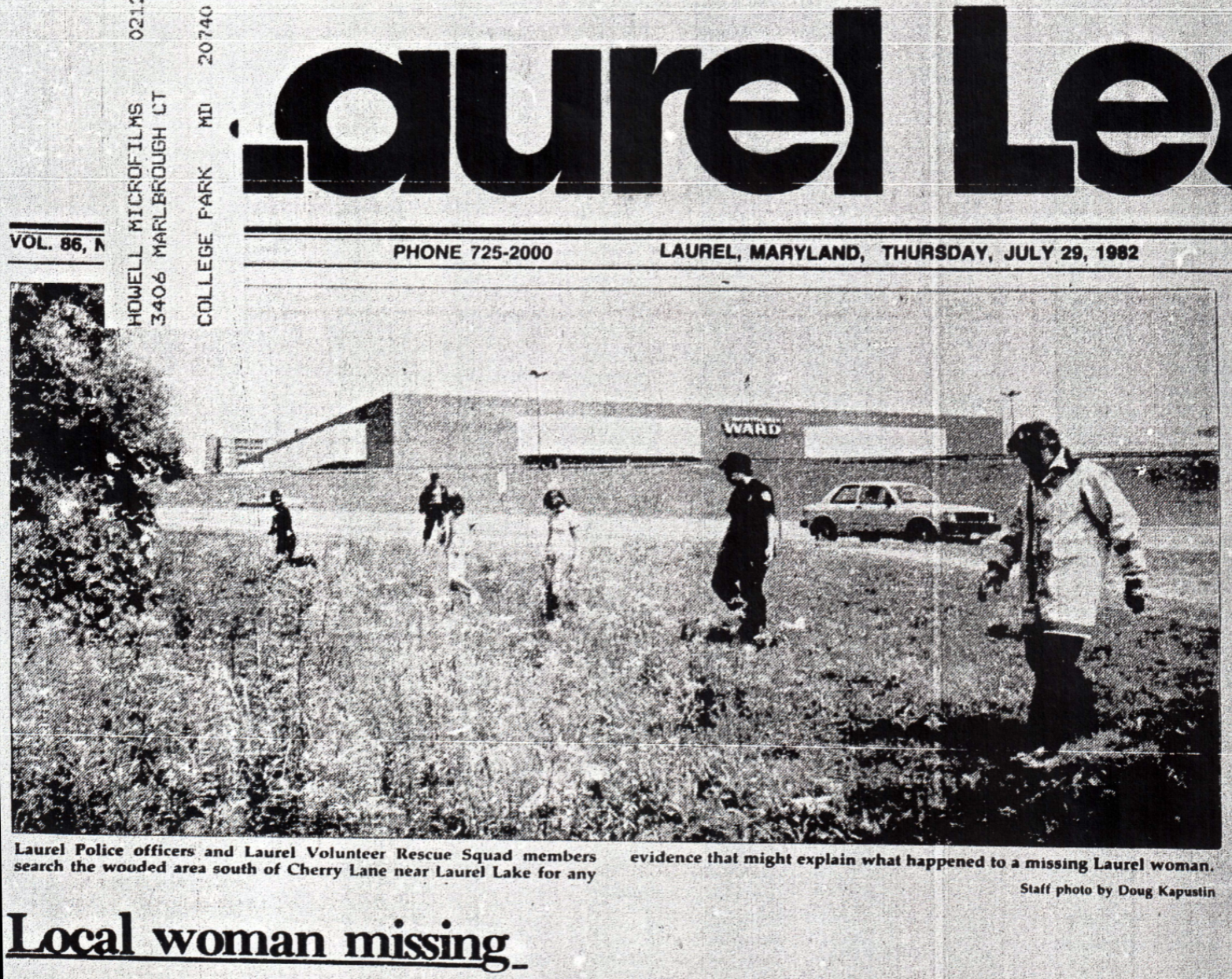
1. Who Was Stefanie Watson?

Before we get too far into this, let’s start by shedding some light on just who Stefanie was. Clearly more than just a face on a missing persons flyer, she was someone’s daughter, sister, friend, and colleague. She had also briefly been someone’s wife. By all accounts, she was a kind and gentle young woman. Her uncle, Wilhelm Mabius, remembered her as being “reserved, yet lighthearted and happy-go-lucky.”

She was born Stefanie Wilbert in Harrisburg, PA in 1955, and was 27 years old at the time of her disappearance. A graduate of Central Dauphin East High School in Harrisburg, Stefanie had also attended Harrisburg Community College. She came to the Washington, DC area to attend Columbia Union College (now Washington Adventist University) in Takoma Park in September 1981, and settled in Laurel after her brief marriage to W. Wayne Watson ended in separation. (Mr. Watson was quickly and definitively ruled out as a suspect).
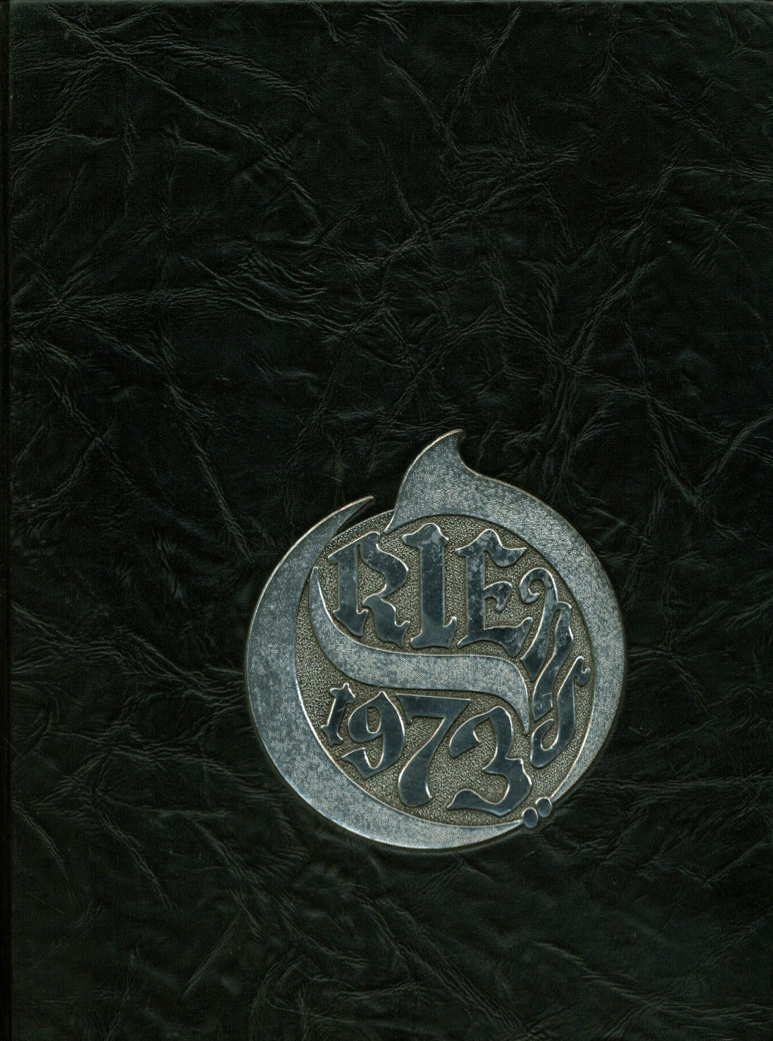
Stefanie’s 1973 high school yearbook; the year she graduated.

Stefanie’s senior yearbook photo, 1973.

Stefanie’s first name was commonly misspelled, as her previous yearbook photo (1972) attests.

Stefanie held a number of jobs, working as a clerical typist and in a dentist office prior to becoming a night admitting clerk in the busy emergency room at Greater Laurel Beltsville Hospital—a job that she rightly considered much more than simply filling out insurance forms. Colleagues recalled that she never failed to console families of the sick and injured, bringing them coffee and allowing them the chance to talk about their anxiety and grief. One staff doctor noted the countless cases of “gratuitous and senseless violence” that the emergency room saw on any given night shift; and that Stefanie Watson was always “caring and concerned for all the people she met… ingenuous and never cynical,” even when patients or their families seemed undeserving of her patience and thoughtfulness.

In Laurel—the town experiencing a renaissance of sorts in 1981, with the recent opening of Laurel Centre Mall, the newly-restored Main Street, and the advent of the annual Main Street Festival—Stefanie found a place to heal the wounds of her broken relationship. She lived alone with a large dog at 304 8th Street, Apt. 1.—a short drive from her job at the hospital.
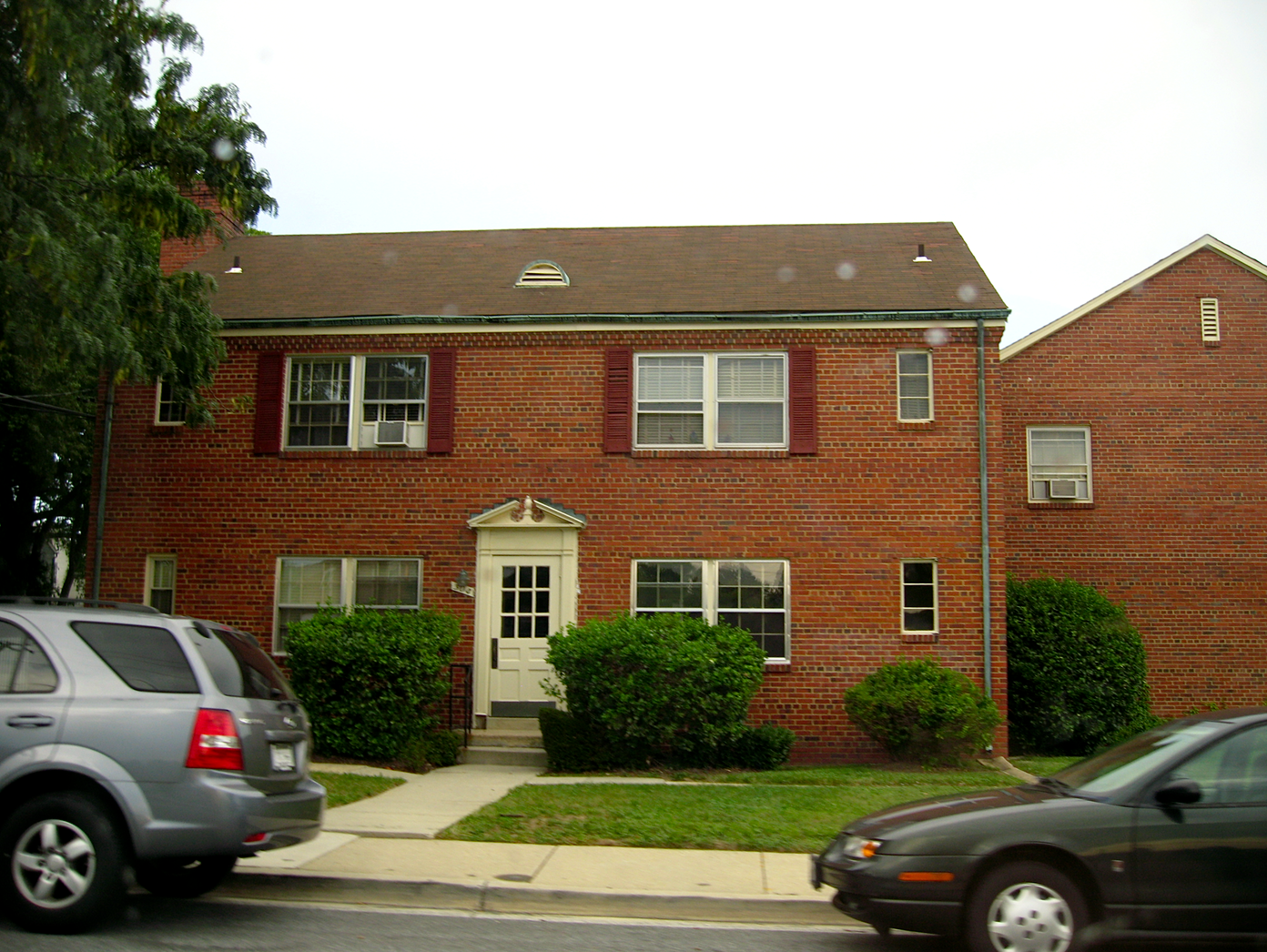
Stefanie’s apartment building today.

While Stefanie had worked there for nearly a year when she went missing, few of her hospital coworkers had gotten to know her particularly well. Still, it was these colleagues who created the missing person flyers, and with the cooperation and approval of Laurel Police, distributed them to practically every local business in sight. As they did so, a surprising number of people actually recognized Stefanie’s photo from her job at the hospital, and immediately recalled her kindness at times of their own personal crises.

Stefanie’s coworkers had given her a going-away party at the hospital on Wednesday, July 21st—the night before her disappearance. She had made the difficult decision to move to Fort Worth, Texas, where she was to begin working at the Medical Plaza Hospital on August 3rd. Stefanie’s relatives said that her decision to leave Maryland was made because she wanted to be closer to her brother and sister’s families, both of whom lived in Texas. She was also looking forward to getting to know her five young nieces and nephews, the youngest having been just six months old at the time.

Stefanie was planning to leave for Texas on Monday, July 26th. Instead, that would turn out to be the day that her blood-stained car would be found on Fourth Street.

2. Last Sightings

According to police reports, Stefanie was seen multiple times on Thursday, July 22nd—more than the Washington Post‘s report of her having last been spotted alive at the hospital that afternoon, when she picked up her paycheck.
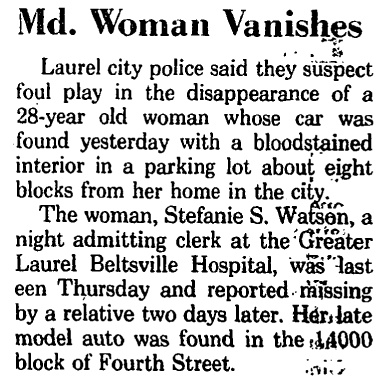
(Washington Post. July 27, 1982, p.B2)

(Washington Post. July 31, 1982, p. B2)

In fact, the Laurel Leader later reported two additional key sightings as confirmed by police: one by a hospital coworker who saw Stefanie at a bank at Town Center Shopping Center on Route 197 and Contee Road that afternoon (perhaps depositing the paycheck she’d picked up earlier at either the Citizens National Bank or John Hanson Savings and Loan that were in the shopping center at that time); and the other, more crucial sighting—detectives established that she was actually last seen at 9:00 PM, leaving her apartment.

Whatever happened to Stefanie occurred that night, after 9:00 and before she was due to report to her final night shift at the hospital.

3. Murdered.

After six long weeks of speculation and angst, the worst fears of Stefanie Watson’s relatives, friends, and all of Laurel were confirmed. On Friday, September 3rd, police discovered “partial skeletal remains” in the wooded area at the dead end of Larchdale Road.

Initial reports stated only that it was a citizen who made the grisly discovery, and on Tuesday, September 7th,  the Maryland Medical Examiner’s office confirmed that the remains were indeed those of Stefanie Watson. Positive identification was made with dental records, according to then Laurel Police Lt. Archie Cook, who had headed the investigation to that point. He tactfully declined to elaborate on the physical condition of the remains, only to say that various television reports—likely about the partial skeletal remains being only the head—were unconfirmed.

(Washington Post. September 8, 1982, p. A26)

The discovery on Larchdale Road marked a transitional phase for the investigation, as Prince George’s County Police essentially took over the case. The crime scene was determined to be in an area of Laurel under county police jurisdiction. Sgt. Sherman Baxa of the Prince George’s County Homicide Unit credited Laurel Police for “Collect(ing) a tremendous amount of data”, and for cooperating with the P.G. County detectives as they assumed the reins of the investigation.

Sgt. Baxa later released some compelling information about the citizen who’d found the partial remains. He’d witnessed a man actually throwing them into the woods.

Baxa stated that the wooded area at the end of Larchdale Road had been used as a “dumping ground” for debris for some time, but the witness who found the remains had “observed an individual throwing something in the woods.” He said that the witness became curious, later walked over to the wooded area, and subsequently made the startling discovery. The witness was never publicly identified for obvious safety reasons, but it’s presumed that he was a resident of the nearby Larchdale Woods apartments (now known as “Parke Laurel”). Whether he happened to be walking by, in his car, or looking out a window wasn’t released; and while he couldn’t positively identify “the individual” he’d seen dumping “debris” in the wooded area, he’d provided police with even more critical information: he’d seen the car the suspect emerged from… and he’d seen a second man inside.
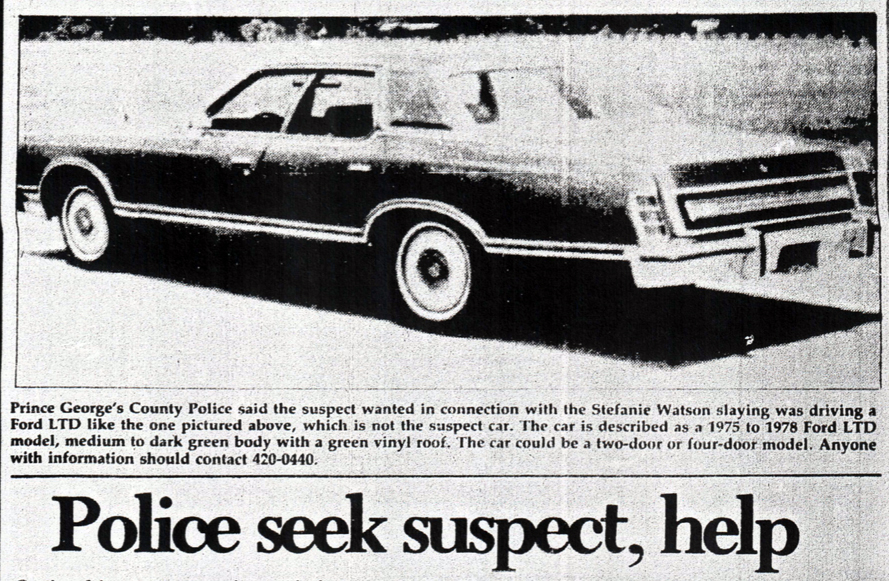
(Laurel Leader. September 16, 1982)

4. Meanwhile, thirty years later…

Let’s cut back to the present day, since it was only this year that I learned details I hadn’t previously known. As a child, I wasn’t even aware that a witness had seen the car, or that police had released a composite sketch of the man wanted for questioning—a man who never did turn up.

But going back to my initial curiosity, and first asking old friends about what they recalled from the case, it was something that one of the “big kids” (a term we still use for those in the neighborhood who were a few years older than my little clique) said that I found particularly compelling. Mark Nelson, who lived upstairs in my building at Steward Manor in the 1980s, recently told me, “I’d heard somebody say that the guy who killed Stefanie Watson was the same guy who killed Adam Walsh.”

The notion that the same man who’d murdered little Adam Walsh the previous year—all the way down in Hollywood, Florida—sounded like a long shot at best… Until I started looking more closely at just who that man actually was. And when comparing these new bits of information to those old Laurel Leader articles, I actually got chills.

Adam Walsh, 1981.

On July 27, 1981—almost exactly one year before Stefanie Watson’s murder—6-year-old Adam Walsh was with his mother at the Sears store in their local Hollywood Mall. Like any young boy in 1981, Adam was fascinated by an Atari video game display being played by a small group of older kids. Reve Walsh innocently left her son to briefly watch the gamers play while she inquired about a lamp just a few aisles away. In the seven minutes she was gone, a Sears security guard responded to bickering amongst the kids by making them all exit the store—including little Adam, who instinctively followed the guard’s orders (and the other children) and exited the nearest door. In that precise moment, Ottis Toole was in the parking lot, just looking for someone like Adam. And unfortunately, he found him.
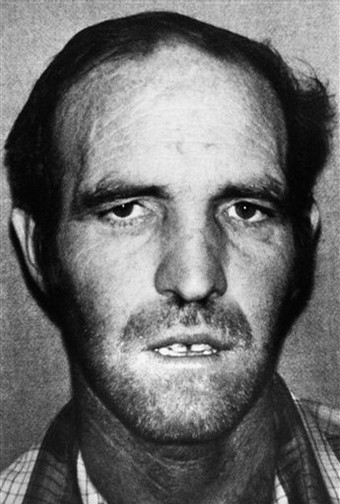
Ottis Toole mugshot, 1983.

Adam was allegedly lured into the stranger’s borrowed Cadillac with promises of toys and candy. Toole, a deviant drifter already convicted of a slew of bizarre and brutal crimes, confessed to abducting the boy with the intent of simply “keeping him” as his own. But when Adam began to cry and panic while driving north along Interstate 95, Toole punched the boy into unconsciousness. Changing plans, he drove the car onto a deserted service road, where he claimed to have strangled Adam to death before decapitating him with a machete he kept under the front seat. On August 10, 1981, a pair of fishermen discovered Adam’s head in a Vero Beach, Florida canal. The rest of his remains have never been recovered, leading credence to Toole’s claim that he incinerated the boy’s body in an old refrigerator.

Despite Toole’s initial confession as early as 1983, Hollywood police bungled the investigation—inexplicably losing Toole’s impounded car… and the machete. It wasn’t until nearly 25 years later, after an independent investigation by Det. Sgt. Joe Matthews at the behest of John and Reve Walsh, that police finally, officially closed the case—naming Ottis Toole as the murderer. While researching evidence files, Matthews had discovered rolls of film—photos taken by crime scene investigators and evidence technicians—that had never even been developed. These photos, when processed, turned out to include chilling, detailed images of the missing Cadillac. One set of photos was particularly damning, as it documented a large presence of blood on the floorboard of the driver’s seat and the carpet behind it—where Toole claimed to have callously tossed Adam’s head before discarding it in the canal. “Traced in the blue glow of Luminol was the outline of a familiar young boy’s face, a negative pressed into floorboard carpeting, eye sockets blackened blank cavities, mouth twisted in an oval of pain,” an excerpt from Matthews’ book reads. After an exhaustive review of the “new” evidence, Hollywood Police formally charged Ottis Toole with the crime in December 2008, and apologized to the Walsh family for the long, painful journey they had endured to that point.

But there’s much more to the Ottis Toole story than just the murder of Adam Walsh. Especially when it comes to his relationship with the even more notorious serial killer, Henry Lee Lucas.

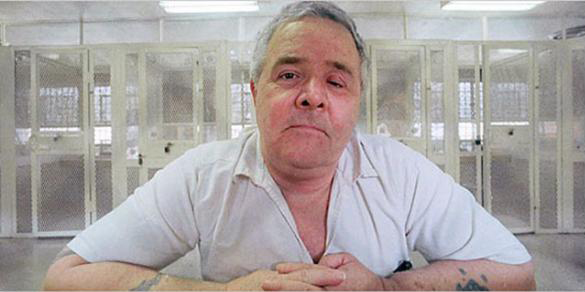
Henry Lee Lucas first met Ottis Toole in line at a soup kitchen in Jacksonville, Florida in 1976. But before joining up with his frequent traveling partner, lover, and confidant, Lucas—a diagnosed psychopath—had already killed before. His first murder, in 1960, was that of his own mother.
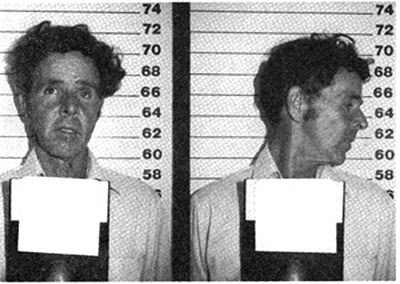
Henry Lee Lucas

Lucas was released from prison in 1970 due to overcrowding, but by 1971 he landed in a Michigan penitentiary for the attempted kidnapping of a teenaged girl and for violating his parole by carrying a gun. From there, he was released in August 1975, and took a bus to Perryville, Maryland, where he had a half-sister named Almeda Kiser. He spent the next few years as a hopeless drifter, occasionally working odd construction and mechanical jobs, but unable to work steadily. In 1975, he briefly settled in Port Deposit, Maryland—marrying a woman named Betty Crawford. But within two years, Betty accused Lucas of molesting her two daughters, and he left for Florida—setting the stage for what many believe to be one of the longest serial killing sprees in the annals of American crime.

(Washington Post. October 27, 1983, p. A6)

Beginning in 1978, Lucas and Toole embarked on a series of cross-country murder sprees. Lucas would later claim that during this period he had killed hundreds of people, with Toole assisting him in “108 murders,” by his estimation. Lucas stated that his preferred victims were young white females; Toole preferred men. Their methods of operation included everything from stabbing, shooting, strangulation, and beating to mutilations—with Lucas having been known to decapitate victims and carry body parts with him across state lines on different occasions.

Lucas and Toole went their separate ways on multiple occasions—most notably when the bisexual Henry would “run off” with Toole’s own teenaged niece, Becky Powell—whose murder he would eventually be charged with as well. It was during one of these rare solo periods in 1981 when Ottis Toole murdered young Adam Walsh. Lucas, coincidentally was imprisoned in Pikesville, Maryland between July and October 1981; and as soon as he was released on October 7th, he traveled to Jacksonville, Florida to reteam with Ottis Toole.

Ottis Toole and Henry Lee Lucas, photo booth print c.1982.

When traveling together, Henry and Ottis were virtually untraceable, making erratic treks from coast to coast. Lucas, on record, later confirmed to Texas prosecutors that in September 1982 alone, the pair had been through Missouri, Indiana, Illinois, Oklahoma… and Maryland.

Criminal profilers in various states found themselves stumped at the lack of motive and pattern in some particularly brutal crimes, as was certainly the case with the Stefanie Watson murder. Serial killers, it was commonly believed, usually work alone. The utter randomness of these crimes was virtually unprecedented, especially when they occurred in small communities.

Lucas was arrested in Texas on June 11, 1983, initially for unlawful firearm possession. He was later charged with killing 82-year-old Kate Rich, with whom he briefly stayed as a boarder, as well as the earlier stabbing death of Ottis Toole’s niece, Becky Powell. While in custody, Henry Lee began to confess to numerous other murders, as well—frequently detailing victims and crime scenes that only the killer(s) would have known. Unfortunately, he also confessed to scores of murders that he couldn’t have committed. Enjoying the extra attention warranted someone who boasts of having killed hundreds—even thousands—of people, Lucas seemingly began copping to any and all unsolved cases presented to him. He would then recant confessions just as frequently, further baffling prosecutors.

In November 1983, the “Lucas Task Force” was created in Williamson County, Texas, for the purpose of coordinating with police agencies across the country. So vast and wide were Henry’s claims, that Texas authorities gave out-of-state detectives the opportunity to interview Lucas for their own cases. One of those agencies, I’ve learned, was Prince George’s County Homicide.

Meanwhile, Ottis Toole was finally behind bars himself. Initially arrested for arson, (Toole was also an admitted pyromanic—or “powerful maniac”, as he believed was the correct term) it was a jailhouse tip from Henry Lee Lucas that shined a more sinister light on his onetime partner. In April 1984, Toole was convicted and sentenced to death in Jacksonville for the murder of 64-year-old George Sonnenberg—whom Toole had barricaded into his own home before setting the house on fire—a crime he’d committed back in January 1982. He was also found guilty of the February 1983 strangulation murder of 19-year-old Silvia Rogers, a Tallahassee, Florida resident, and received a second death sentence. On appeal, however, both sentences were commuted to life in prison.

Back in Texas, the Lucas Task Force investigation was well under way throughout 1984, when it began to receive criticism for becoming “a veritable clearinghouse of unsolved murder.” In fact, Police officially “cleared” 213 previously unsolved murders via Lucas’ confessions. Speaking out of the proverbial other side of his mouth, however, Lucas claimed that he confessed only because doing so improved his prison living conditions—and because he received preferential treatment rarely offered to convicts. It was at this time that Vic Feazell, an ambitious young District Attorney in Waco, Texas, launched a large scale investigation into the veracity of Lucas’ confessions. The result was the “Lucas Report”, an extensive timeline documenting the confirmed travel movements of Henry Lee Lucas (and Ottis Toole) that conclusively disproved many of Lucas’ confessions. In a typical instance, the report showed Lucas cashing checks in Florida while at the same time confessing to a murder in Texas.

Vic Feazell and Henry Lee Lucas (Photo: vicfeazell.com)

But ironically, it’s Feazell’s timeline that may actually implicate Henry Lee Lucas and Ottis Toole in one of the few murders that they didn’t confess to—the Stefanie Watson murder.

Feazell’s timeline shows no record of Lucas’ whereabouts during July 1982—the time when Stefanie Watson was killed. It does, however, document several of Lucas’ travels throughout Maryland.
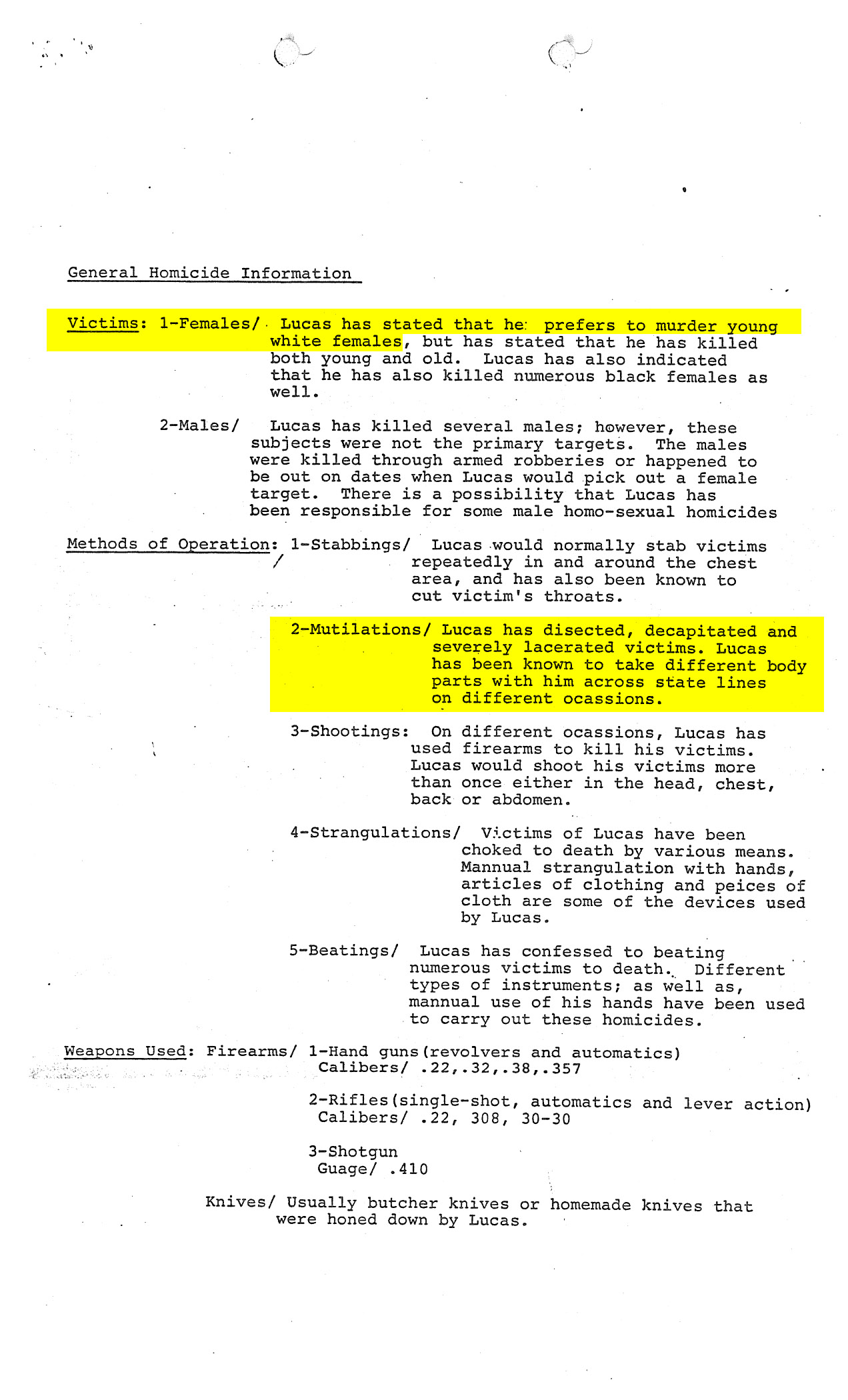
The report includes grim information about Lucas’ methods, which clearly match the Stefanie Watson murder profile.

Take a closer look at that first page—the timeline of travel movements. Did you notice anything else particularly interesting in regard to Stefanie Watson? Remember the vehicle the witness reported having seen on Larchdale Road that night? It was described as “a 1975 to 1978 Ford LTD, medium to dark green body with a green vinyl roof.” According to multiple entries in Vic Feazell’s notes, Lucas purchased a 1973 Ford LTD on January 9, 1982:

One note mentions it having been a brown car. Whether it was or not, it’s fairly easy to imagine a brown 1973 Ford LTD being mistaken for green in the darkness on Larchdale Road.

And the 1973 model did offer the darker vinyl top, a distinctive feature that the witness pointed out. What do you think? Could a 1973 Ford LTD be mistaken for a 1975-78 model?

With all these things considered, let me go ahead and spell this out completely. What are the odds that the two men seen driving the Ford LTD that night were NOT Henry Lee Lucas and Ottis Toole?

Could it really just be some amazing coincidence, and that two other guys—one of whom eerily fits the description of the 6’1, 195 lb. Ottis Toole—just happened to be driving an equally similar Ford LTD, and tossed a severed head out into a wooded area? The unique and horrific profile of this murder matches that of Henry Lee Lucas and Ottis Toole, who were known to have been traveling together through Maryland at that time, in that vehicle. It can’t be a coincidence.

What initially sounded implausible at best now strikes me as the almost certain answer to the question that has haunted Laurelites for the past three decades: who killed Stefanie Watson?


Back in March, I contacted Laurel Police in hopes of finally learning the basics of this case, and separating the facts from the many rumors I’d heard as a child. Most importantly, I wanted to find out if in fact the case was still open—and hadn’t been quietly solved at some point over the last several years. I explained that I was writing a piece for Lost Laurel on the approaching 30th anniversary of the murder, in the context of the countless Laurel businesses—most now gone—that had spread the word about this horrific crime.

I had the pleasure of speaking to Chief of Police Richard McLaughlin, who confirmed that the case was indeed still open to the best of his knowledge; he also confirmed that Prince George’s County assumed control of the case when the partial remains were discovered.

I wasn’t surprised to learn from Chief McLaughlin that all of the original investigators have since retired, but I was surprised (and flattered) to find out that he was familiar with Lost Laurel! He was also kind enough to not only encourage me to follow up with Prince George’s County Homicide’s Cold Case Unit, he even told me what to say when I called. (I had explained that “investigative journalism” isn’t something I do regularly; and despite the seriousness of all this, I actually had to pinch myself to realize that I wasn’t in an episode of Law and Order or The First 48. Having the chance to talk to the Chief of Police of one’s hometown about said town’s most notorious unsolved crime can tend to make one geek out. But I digress.)

Over the next week, I spoke to Sgt. Rick Fulginiti and Det. David Morissette, both of Prince George’s County Homicide. As I did with Chief McLaughlin, I introduced the project and carefully pointed out that I was only nine years old at the time of the murder I was inquiring about, less I suddenly become a suspect myself. Sgt. Fulginiti confirmed that the case was indeed still open, and active. And when Det. Morissette began explaining just a few of the general points that their Cold Case Unit has been investigating, I immediately got the sense that I hadn’t uncovered anything that Prince George’s County detectives didn’t already know. (Go figure). In fact, the very first name Det. Morissette mentioned was that of Henry Lee Lucas.

He confirmed that in 1984, Prince George’s County had indeed sent a team of investigators to Texas to participate in the Lucas Task Force questioning. While their suspicions have always lied with Lucas, they simply weren’t able to conclusively connect him to the crime. Apparently, their visit occurred during a rare moment when Lucas wasn’t in a confessing mood.

Nonetheless, Det. Morissette had some interesting new news to report, and it could be big: his office has “several new items for DNA testing,” and “has been in recent contact” with Stefanie’s family.

Wanting to make sure I wouldn’t only be spreading more rumors and misinformation about this tragedy, I essentially sought an off-the-record endorsement for the conclusion that I’d surprisingly come to on my own. Det. Morissette simply encouraged me to write this piece exactly as I’d planned, adding that it could even jog some long-suppressed memories, or prompt someone to finally come forward with details that they just weren’t ready to share over the past three decades.

So what comes next? Nothing will bring Stefanie back, obviously; and is any of this relevant—particularly since Henry Lee Lucas and Ottis Toole won’t be here to face any charges that might be brought?

Ottis Toole died of liver failure on September 15, 1996. He was 49. Fortunately for society, he had been wasting away in a Florida prison since April 1983—a mere seven months after that witness on Larchdale Road spotted someone who looked awfully like him discarding something in the woods. He was buried in the Florida State Prison Cemetery when no one—relatives or otherwise—would claim his body.

Henry Lee Lucas, likewise, enjoyed only brief freedom after Stefanie Watson’s murder. Locked away in a Texas prison since June 1983, he died of heart failure at age 64 on March 12, 2001.
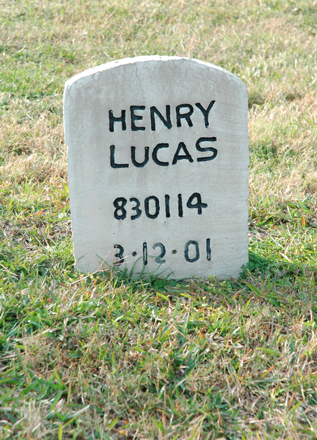
Stefanie’s complete remains have never been recovered. She has yet to receive a proper burial, or a permanent resting place. There was a memorial service for her, however, shortly after the identification was made. According to Pastor Arthur Mayer, almost 100 people filled the small Seventh Day Adventist Church in Laurel that September afternoon. And there would’ve been more. Originally scheduled for 7:00 PM, Stefanie’s family decided at the last moment to change the time to early afternoon, so her co-workers from the hospital night shift could attend. For many, including the press, news of the change in time came too late.

The hospital also honored Stefanie’s memory with a brief, but moving service attended by almost 60 members of the medical staff, plus friends and family. In a fitting tribute to the young woman who’d comforted so many worried patients there, the family room of the Greater Laurel Beltsville Hospital’s emergency room was officially dedicated to Stefanie Watson.

On September 11th, (a day that would have its own nefarious connection to Laurel 19 years later) the Washington Post ran an obituary column:

If police were to posthumously charge Henry Lee Lucas and Ottis Toole with this murder, perhaps it could bring some long-overdue measure of closure to Stefanie’s family, the way it did for John and Reve Walsh. It could also hopefully bring the memory of the real Stefanie Watson back to the public eye, reminding us that hers was a life worth remembering, rather than just the brutality with which it ended. Henry Lee Lucas and Ottis Toole, if indeed guilty, should finally be identified and held responsible for this horrific crime; and then they should be forgotten.

***

There are a number of people I need to thank for being able to share this story: Laurel Chief of Police Richard McLaughlin, for his time and encouragement; Sgt. Rick Fulginiti and Det. David Morissette of Prince George’s County Homicide, for also taking the time and making the effort to review and share a case that predates their own careers. Most importantly, the writers and editors of the Laurel Leader who originally documented this terrible event between July and September 1982—most notably Karen Yengich, Gill Chamblin, and photographer Doug Kapustin. I’m sure there were more, but unfortunately, not all stories were afforded a byline. Last but not least, the Laurel Library, for continuing to house the only known complete microfilm archive of the Laurel Leader, despite obvious space restrictions. A city’s history is literally recorded in its newspapers—please don’t ever let that archive disappear.

Tagged , , , , , , , , , , , , ,

A Neighbor’s In Need: Let’s Help!

Last Fall, I was researching the history of Steward Manor Apartments when I stumbled across a photo on eBay.

Photo: John Floyd II, 1974.

It was part of a set of ten original prints being offered, which documented various vehicles from the Laurel Volunteer Fire Department and Laurel Rescue Squad in the 1970s. This particular image featured Laurel Rescue 19 (also known as “The Heavy”) leaving its quarters and turning onto Lafayette Ave.; and there in the distance was the familiar southwest corner of my old neighborhood—Steward Manor Apartments. Even the old red Volkswagen Karmann Ghia I remember walking past so many times en route to 7-Eleven, Dart Drug, or the mall was captured—parked right there where I remember it always sitting.

I eagerly bought the photos; and having noticed several other sets for sale, I messaged the seller, John Floyd II, who manages a wonderfully eclectic eBay store—Blackpool Bertie’s Railway Shop. I wondered if perhaps he had any other vintage photos of Steward Manor in his collection. We chatted back and forth, as I explained the premise of my research. I learned that John was a former fireman, and over the years (both before and after his tenures with volunteer fire companies in Laurel and New Jersey) he had diligently photographed firefighting apparatus, training exercises, and countless fires and accident scenes. Aside from this one photo, he didn’t recall having any others of Steward Manor; because as he explained, the old complex was virtually fireproof. He promised to take a look through his archives, though, and would let me know if he came across anything.

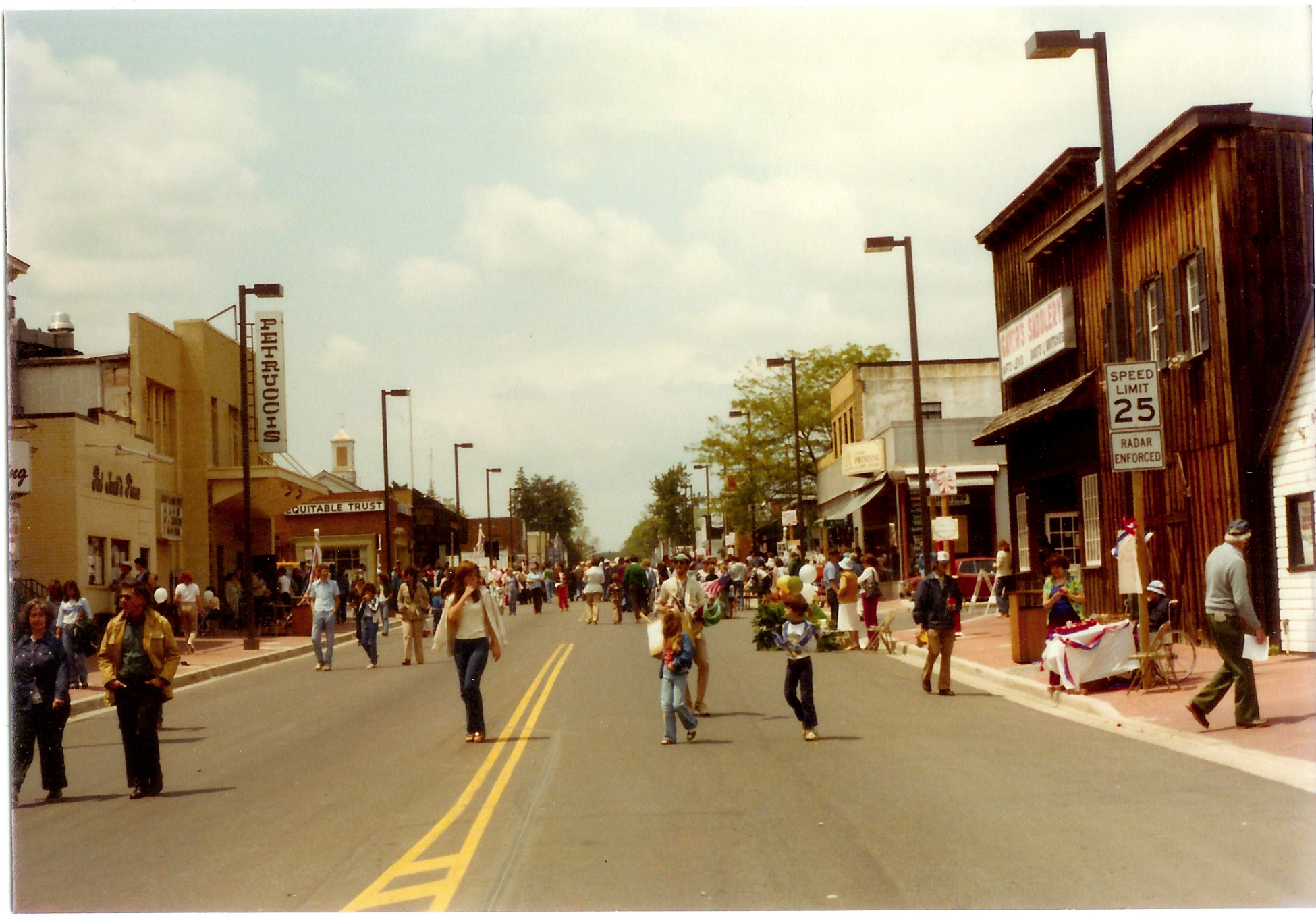
In the meantime, I began to take note of some of the other photos he was selling—photos that in a roundabout way, captured images of the Laurel, MD I used to know. Behind the firetrucks were long-gone storefronts from Laurel Shopping Center… the old Fair Lanes bowling alley sign… and a number of stunning photos from the very first Main Street Festival in 1981. I eagerly bought these, as well; and in effect, they turned out to be the inspiration for starting Lost Laurel. You’ve undoubtedly seen these photos throughout the blog and Facebook page.

Over the past several months, John has not only contributed more invaluable photos and historic information, he has become a good friend.

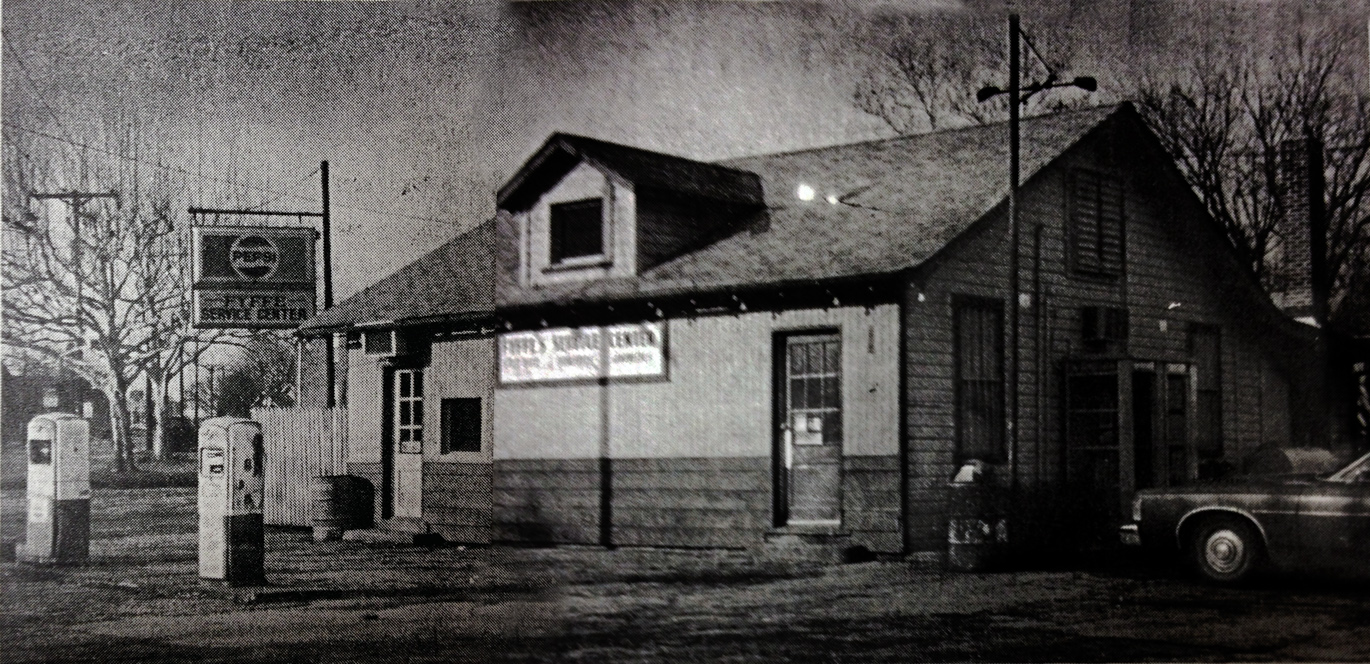
He’s also a bit of living Laurel history, himself. As a young lad, (as he might say in his subtle British accent) he and his mother came to America in 1957, settling in Laurel in 1964. Not long thereafter, his mom met and wed Mr. Harry Fyffe, co-owner (with his brother Walter) of the legendary Fyffe’s Service Center that stood at Montgomery and 10th Streets for so many years. By his early teens, John was helping out behind the bar, eagerly pulling pints for the regulars!

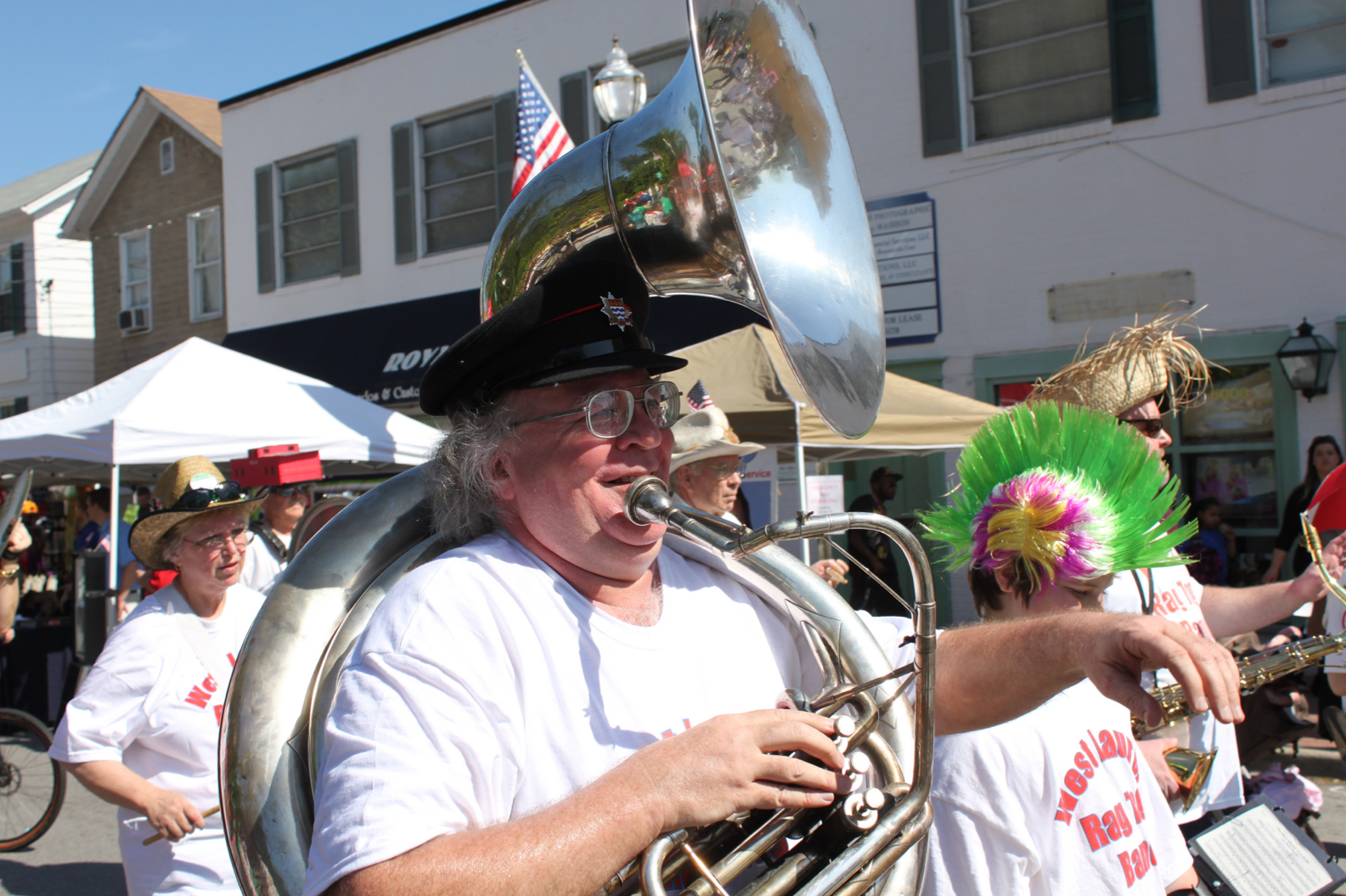
Still living in Laurel, (he’s lived in the same modest home since childhood—going on 50 years) he’s an active civic booster for the community, and for the nearby Laurel Police Department in particular. He’s also a fine horn player, as well. That was him you may have seen carrying the big antique silver Sousaphone, marching along with the West Laurel Rag Tag Band in this year’s Main Street Festival parade!

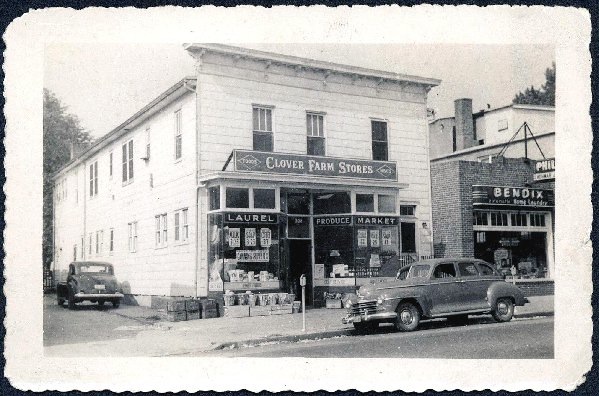
John has already shared with me a wealth of knowledge and photos of vintage Laurel—the likes of which I could not possibly have come across on my own. In fact, I’ve merely scratched the surface in terms of curating his vast contributions for Lost Laurel. Wait until you get a load of some of the treasures he’s shared from the 1960s and earlier—who knew Pal Jack’s was once a Bendix and Philco radio shop?!

Main Street in the 1940s… (Photo courtesy John Floyd II, from the collection of Harry Fyffe)

…and the same spot in 2007. (Photo: John Floyd II)

I can say with certainty that without John’s help, there wouldn’t be a Lost Laurel.

Much has happened in just the eight months since I’ve started this project. I’ve been interviewed by the Laurel Leader, and I’ve seen the Lost Laurel Facebook page grow to over 1200 fans. I’ve watched the blog soar to over 24,000 views. That was the good news. The bad news is that I’ve also seen more of the old Laurel fall—literally, in the case of the recent demolition of the blue American National Bank building. Also closing for good were my beloved Laurel Art Center, and even the Laurel Mall—something I never dreamed would’ve occurred in my lifetime, having grown up in its heyday.

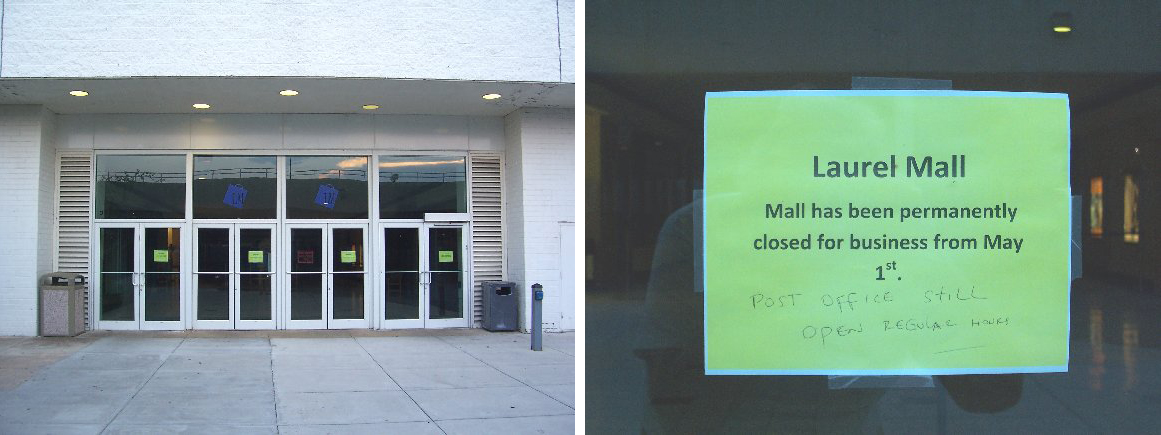
Coincidentally, who walked over to the mall to photograph and share with Lost Laurel the very first photos of the “permanently closed for business” signs on the locked doors? John Floyd did.

Photos: John Floyd II

Unfortunately, there’s more bad news looming. This one isn’t about a longtime business closing, or an iconic building being razed. This one affects John personally; and for him, it could certainly be the toughest loss of all. He’s at risk of losing his home.

After missing a property tax deadline, I’ve learned that John’s home was actually SOLD at the county’s annual Tax Auction in May. He now has a very small redemption window in which to pay off the tax penalty, otherwise he’ll lose everything.

John would never ask for any kind of charity himself, so I’m going to pitch in and try to help. In fact, I’ve already gotten an earful from him for simply suggesting this little benefit idea. But I have to believe that at least a few of the folks who follow Lost Laurel will sympathize, and find it in their hearts to contribute whatever they can. And this is just too important to not at least try.

Without going into too much detail, suffice it to say that John has been in a very tight financial spot for quite some time now. He has been without a car for nearly a decade, which not only limits his general mobility, but effectively ended his regular occupation as a musician with various orchestras and dance bands, jazz and ragtime bands, brass bands, and other vintage-style musical ensembles. It was a career he enjoyed for 26 years, working several thousand gigs overall. But without transportation, that work dried up years ago. Likewise, he’s been unable to sell his wares at firemen’s conventions and trade shows—something else that once regularly supplemented his pay.
His eBay sales have become his sole means of income, making him entirely dependent upon the computer for all of his meager earnings.

And unfortunately, his sales have dropped dramatically (by over 60%) in the current recession. An emergency veterinary bill for one of his many cats set him back a hefty sum earlier this year, and that only added to the larger problem—trying to meet the overdue property tax bill to the tune of nearly $3,300. And if it’s not paid by June 30th, the amount will increase to over $7,000 when Prince George’s County adds the 2012 tax bill (along with interest and penalties, legal and court costs, as well as “advertising costs” for the Tax Auction that has put his home at risk). Finally, if the full amount isn’t paid by July 31st, his redemption window slams shut and the new property owners will be free to initiate foreclosure and eviction proceedings. It’s a process that’s every bit as harsh as it sounds.

There’s some irony here, too. As a homeowner, John isn’t eligible for any kind of public assistance—not that he’d willingly accept it. If he were to be evicted, however, he’d likely be free to receive any number of benefits. He doesn’t want those handouts; he simply wants to pay off his debts and remain in the only home he’s known for the past 46 years. I’m hoping we can help him do that.

Unfortunately, P.G. County isn’t flexible in the least. Nor are they interested in John’s or anyone else’s problems. There’s no negotiating with them on the amounts or the due dates. It’s literally all or nothing.

Knowing that most of us are so routinely asked to contribute to various charities—we donate to our kids’ fundraisers; we contribute to relay races for cancer research; we send money to groups who build homes for homeless families in foreign countries—I realize that the bombardment of solicitations can be draining; which is why I very rarely ask for such favors. But I’m going to ask an important favor now—on behalf of a good friend in a time of need who has done so much for Lost Laurel.

If you would, kindly donate whatever you can to John Floyd. His email address is royalbluelimited@aol.com, and it is set up to receive PayPal payments. It could be a little or a lot—every dollar adds up. Most importantly, you will know that your contribution isn’t going to some anonymous organization. It’s going directly toward helping a fellow Laurelite in need—and a genuinely good bloke, as John would say. It’ll literally help him save his home.

To help kickstart this benefit, I’m also going to be offering a few special Lost Laurel incentive prizes to those who donate the most.
• All
contributions of $25 and over will receive a full-size, double-sided reproduction of a classic Jack Delaney’s Irish Pizza Pub carryout menu from 1981.
• The first two contributions of $50 or more will receive an original 24″ x 36″ lushly illustrated poster map of Laurel from 1993.
• The first contribution of $100 or more will receive a limited edition Marian Quinn print of the iconic Cook’s Hardware building, matted and framed by the Laurel Art Center.
• And the first contribution of $250 or more will receive a framed 23″ x 30″ vintage 1990s illustration of Main Street businesses—which hung hidden for years in the Laurel Art Center.

These are but a few things that I can offer for what I would consider substantial donations, but I would strongly encourage everyone who reads this to consider sending any amount they can, no matter how small. It truly will help. Imagine if each one of our 1200+ Lost Laurel Facebook friends sent just a dollar or two—John’s crisis could be averted.

There are other ways that you can help, as well. Please visit John’s eBay shop (http://stores.ebay.com/blackpoolbertiesrailwayshop) and buy his stuff! If it’s not your proverbial cup of tea, perhaps you know someone who is a railroad buff, a firefighting enthusiast, and/or a brass band, vintage jazz, and big band music connoisseur—trust me, you’ll find something they’ll appreciate! It goes without saying that John’s eBay record is a spotless one—100% with over 4,350 positive feedbacks. He takes great pride and care in shipping his items quickly and securely, too, as I can attest.

Conversely, perhaps you have some items that you could donate to John’s store that HE may sell. That would also be a major help. Please message me, or feel free to contact John directly (royalbluelimited@aol.com) to make arrangements. Those who donate the amounts listed above can also request that I give their award items to John instead, so that he may sell them.

We’ve all come to accept that Laurel is an ever-changing landscape, and a far cry from the town we once knew. Businesses and residents alike have come and gone—some of their own accord, and others due to various hardships. This, however, is a uniquely tragic situation that I believe we can actually help prevent. Please join me and pitch in what you can. Let’s make sure Laurel doesn’t lose one of its truest citizens.

John Floyd II outside the Laurel Art Center in April, where he also went to photograph the closing of another Laurel icon.

Please donate via PayPal directly to royalbluelimited@aol.com

Many thanks!!

~ ®

Tagged , , , , , , , , , , , , , ,

Laurel Shopping Center + George Wallace, 40 years later

Laurel Shopping Center parking lot, May 2012 (Photo: Richard Friend)

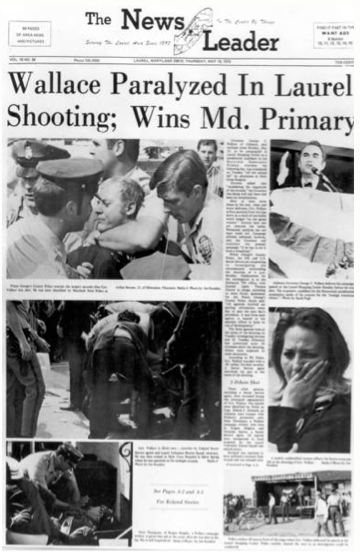
I wasn’t born until December 1972, and my family didn’t move to Laurel until 1976. But it wasn’t long afterward that I began to hear about some famous politician having been shot in the parking lot of Laurel Shopping Center on May 15, 1972.

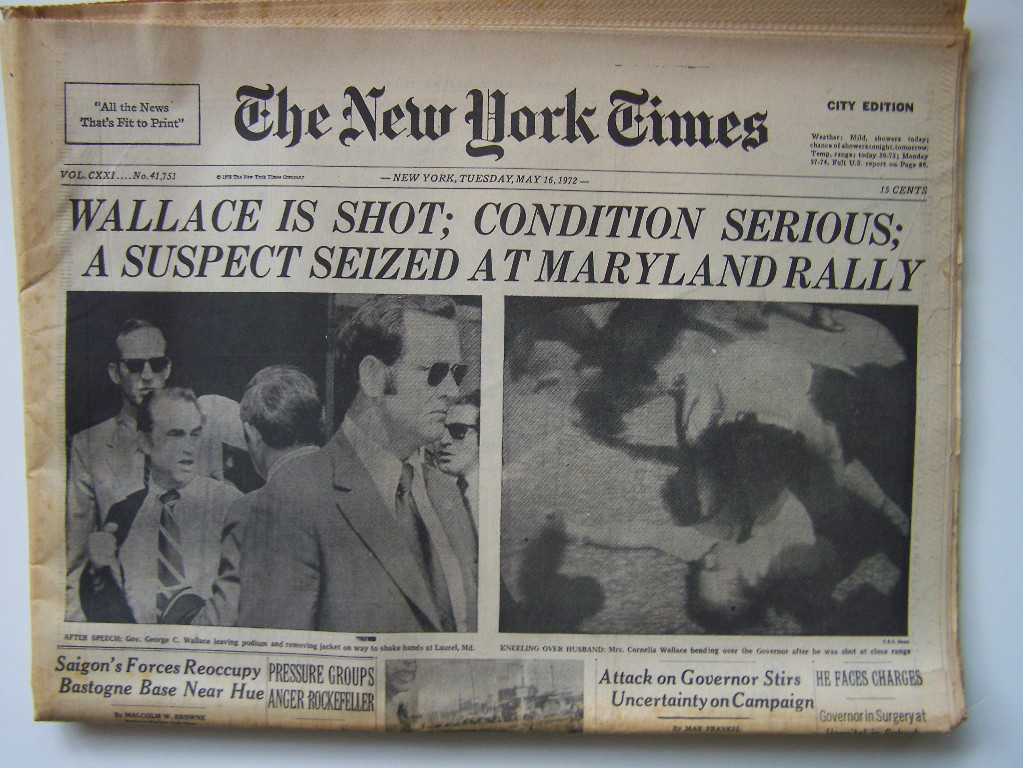
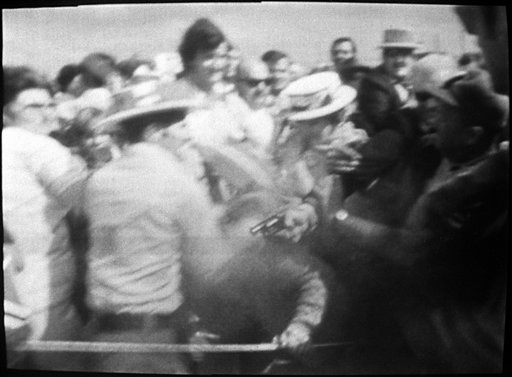
Even as a small child, something about that fascinated me—and it has ever since. Our home town was on the map, so to speak, because of this moment of infamy. Alabama Governor George C. Wallace—a controversial presidential candidate who would actually win the democratic primary in Maryland that year—had just stepped down from the podium, removed his jacket, and begun glad-handing some of the approximately 1,000 who’d assembled to hear and/or jeer his campaign speech. Within seconds, he’d be gunned down by the proverbial lone nut—a 21-year-old would-be assassin from Milwaukee, Wisconsin named Arthur Bremer.

Wallace would survive the shooting, (in spite of a total of five wounds, including shots to the chest and abdomen) but would be confined to a wheelchair and in constant pain for the remaining 26 years of his life. He died in 1998, having spent years renouncing his segregationist past, apologizing, and attempting to rectify a general perception of him as an unvarnished racist—a view he claimed brought him more pain than the assassination attempt itself.

Arthur Bremer would spend the next 35 years in a Hagerstown, MD prison before being released (18 years early) in 2007. Now living in Cumberland, he’ll remain on supervised release until 2025. Bremer’s diary, published after his arrest, revealed that the assassination attempt was motivated by a desire for fame, rather than politics, and that President Nixon had also been an earlier target. Bremer’s actions inspired the screenplay for the 1976 movie Taxi Driver, which in turn provoked the 1981 assassination attempt on the life of President Ronald Reagan by John Hinckley, Jr..

Of course, this isn’t a political blog, so I won’t ramble on about Wallace and Bremer’s respective biographies—there’s plenty of information on them out there if you’re interested. Although as a boxing fan, I will say that I was surprised to learn that George Wallace had been a two-time State Golden Gloves champ. But I digress.

Suffice it to say, I learned at an early age that what had happened at Laurel Shopping Center that afternoon 40 years ago today was a pretty big deal. And it wasn’t just a big deal in Laurel—it had national ramifications. From that point on, it seemed that any and all references to Laurel, Maryland—be it printed in encyclopedias, or in conversation with folks from out of town—inevitably mentioned the Wallace shooting.

He was even on a collector’s card!

In fact, to this day, an online image search of our fair town will inevitably yield photos of George Wallace (although, more recently, Laurel has also been dubiously tied to the 9/11 hijackers—several of whom stayed here in the days leading up to that tragic day).

But on this 40th anniversary, let’s look at the Wallace shooting in the context of Lost Laurel, rather than simply recapping the event and its principal players.

One of the first questions I had as a kid was, simply, where exactly did the shooting occur? Most of the photos I’ve seen (as well as footage of the shooting itself) are so tightly cropped and non-specific, it’s difficult to discern where in the Laurel Shopping Center this actually happened.

My parents, in fact, had long believed that it took place in the Montrose Ave. crosswalk beside Giant Food—probably because the stage Wallace spoke upon resembles the nativity scene that was in that location throughout the 80s. Plus, it seems like a logical place to hold the assembly. However, that was not the case.

Gov. George Wallace addresses the crowd just five minutes before the shooting. (Photo: Mabel Hobart)

The stage was actually set closer to the center of the parking lot, just behind what was at that time the Equitable Trust Bank, (currently Bank of America). It was in this area of the parking lot—between the south side of the bank and Woolworth’s—that Governor Wallace was shot.

The photos below, courtesy of John Floyd II, show the back (south side) of the bank—where the shooting took place. John, 14 years old at the time, was there that day with his mother, and estimates the actual spot of the shooting to be approximately where the white car is parked in this photo.

State Bank in 1962, and a recent photo of the building in its current guise as Bank of America. (Photos: John Floyd II)

You’ve probably noticed the name “State Bank” on the photo above. That’s what it was before it became Equitable Trust. (Hmm… banks constantly changing names—some things weren’t so different 40 years ago after all, were they?) Below is a Laurel News Leader cover photo from October 1962, which announced a $60,000 construction and improvement program to the State Bank’s Laurel Shopping Center branch, including an enlargement of the lobby and two new executive offices, a fall-out shelter in the basement, complete new heating and air-conditioning plants, as well as decorating and landscaping.

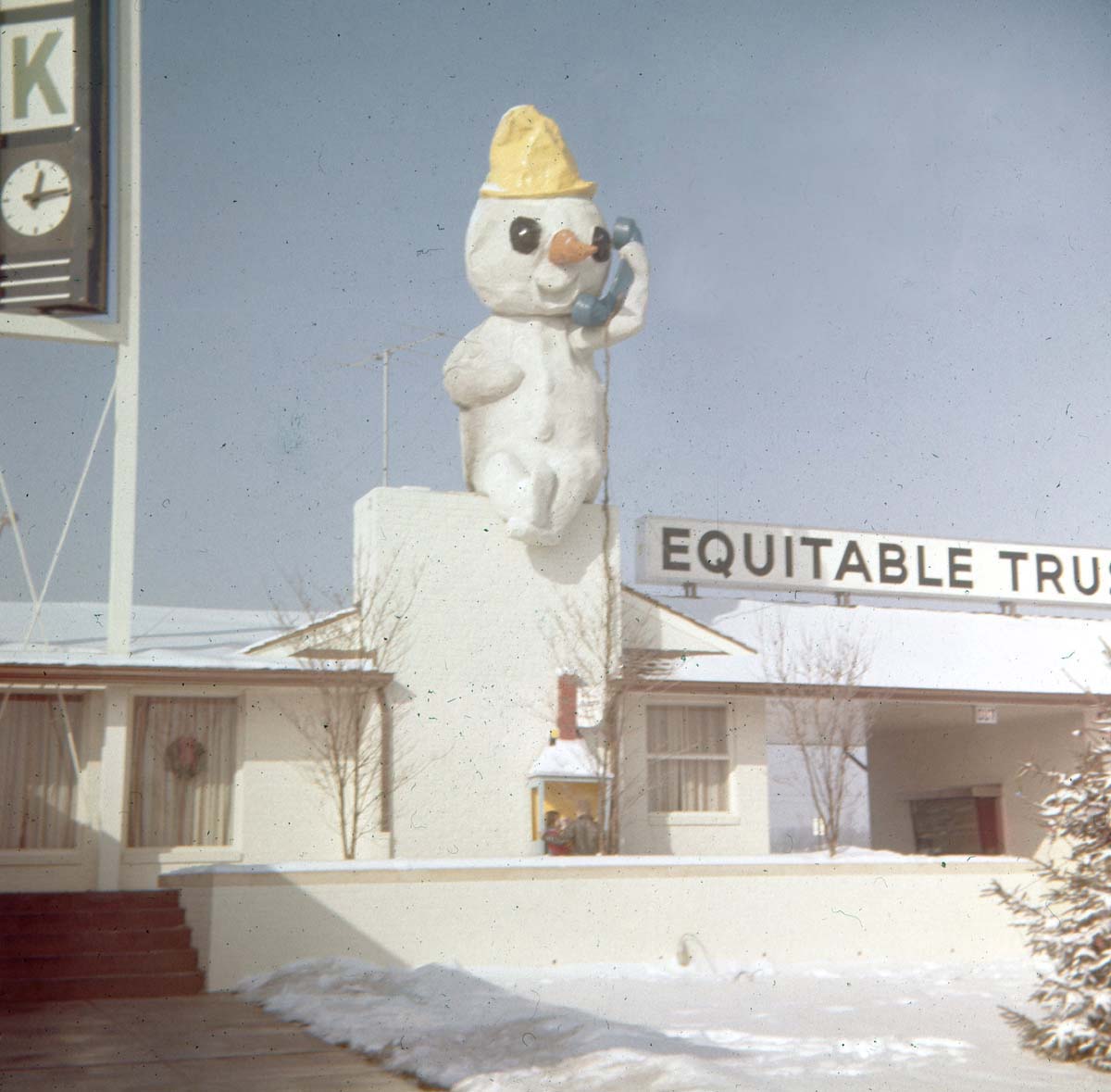
A 35mm color slide from an undated winter during the bank’s Equitable Trust era gives us a peek at the front of the building; although it’s somewhat difficult to focus on anything other than the massive, lumpy, telephone-wielding snowman perched atop the bank. During this phase, the bank had been painted white. We can also see the addition of a clock in the lower portion of the large, vertical sign—the lettering of which was also obviously changed. (I’m assuming it simply said “BANK”).

The file photo below shows the aftermath of the shooting—just after Wallace had been whisked away by ambulance. (John Floyd noted that prior to the assassination attempt, the entire parking lot between the bank and Woolworth’s was packed with spectators). In the photo, we also have a distant glimpse of some of the other businesses that were there at the time—most notably, Hecht’s in the top left corner behind the bank; the original International House of Pancakes, with its gabled roof; the Laurel Car Wash (originally owned by former Laurel Mayor Harry Hardingham, and still in business today!); a BP gas station; and a Fotomat booth.

(Photo: file, Laurel Leader)

To that point, let’s look at what else comprised Laurel Shopping Center at that time. The following directory came out a few years later, but many of the businesses listed had been open at the time of the shooting.

Greater Laurel Area Community Guide, 1976

Another view of the shopping center from this era comes from an apparent protest of, well, pants. This demonstration, apparently calling for the boycott of Farah Pants at Hecht’s, occurred in December 1973.

Photo: Reading/Simpson

It’s also worth noting that one of the more dramatic photos that came across the AP Wire—showing a motionless Wallace lying in the back of a station wagon while awaiting an ambulance—was taken by a Laurel photographer, J.A. Bowman.

Recently, I found a photo that appeared in the October 16, 1977 issue of the Washington Post, recalling the shooting five years later. The article featured Mabel and Ross Speigle, between whom the would-be assassin literally reached while firing. Ross was the gentleman in the ball cap, whose tattooed arm you can see grabbing Bremer’s arm. The couple recalled their incredible experience, and were photographed in the spot where it all happened.

Back in January, I’d noticed a discussion thread on another Laurel-themed Facebook page. Susan Poe commented on a video link of the shooting: “The man wrestling the shooter to the ground was my neighbor, when I lived on 4th Street—Ross Speigle, and his wife Mabel was beside him… for anyone who remembers. I remember that day very well.” I posted the photo for Sue, who’d never seen it. She quickly replied, “OMG! Tears in my eyes… I haven’t seen their faces in over 20 years. Thank you so much. Wow. You have no idea. They were like family to me.”

She went on to tell me that Mabel (or “Mabe”, as she was known) had passed away from cancer, and Ross followed her a few years later. It was clear that this had been a very special couple, even without their unexpected involvement in the Wallace incident. Ross had acted out of instinct in grabbing Bremer’s arm—an action that could very well have been the reason why no one was killed that day. But the Speigles’ courage didn’t end there; Mabel proved to be a dynamic witness who helped seal Arthur Bremer’s fate:

Given this significant anniversary, I thought it only fitting that Mabel and Ross accompany me (in a manner of speaking) back to the site one more time.

***

Postscript:
There’s at least one other camera angle showing the Wallace shooting—this one with a brief glimpse of the Equitable Trust Bank itself, giving the surroundings more context. In this particular upload (set to Lynyrd Skynyrd’s Sweet Home Alabama) the footage doesn’t begin in earnest until the 1:34 mark. However, it’s in color; and it has sound. You can easily get a sense of the chaos in the immediate aftermath on that incredible day.

And lastly, there was a film made about the life of George Wallace. It’s titled, (you guessed it) George Wallace. Gary Sinise starred in the title role, alongside Angelina Jolie as his then-wife, Cornelia. The filmmakers did a decent job recreating the “Laurel Shopping Center” stage from which Wallace spoke before the shooting, but anyone who’s familiar with Laurel will immediately notice the surroundings and realize that the scene wasn’t shot (no pun intended) at Laurel Shopping Center. Interestingly enough, Gary Sinise won an Emmy for the performance—on the very night that the real George Wallace passed away.

Tagged , , , , , , , , , , , , , , ,

Hecht’s, version 2.0: Laurel Centre

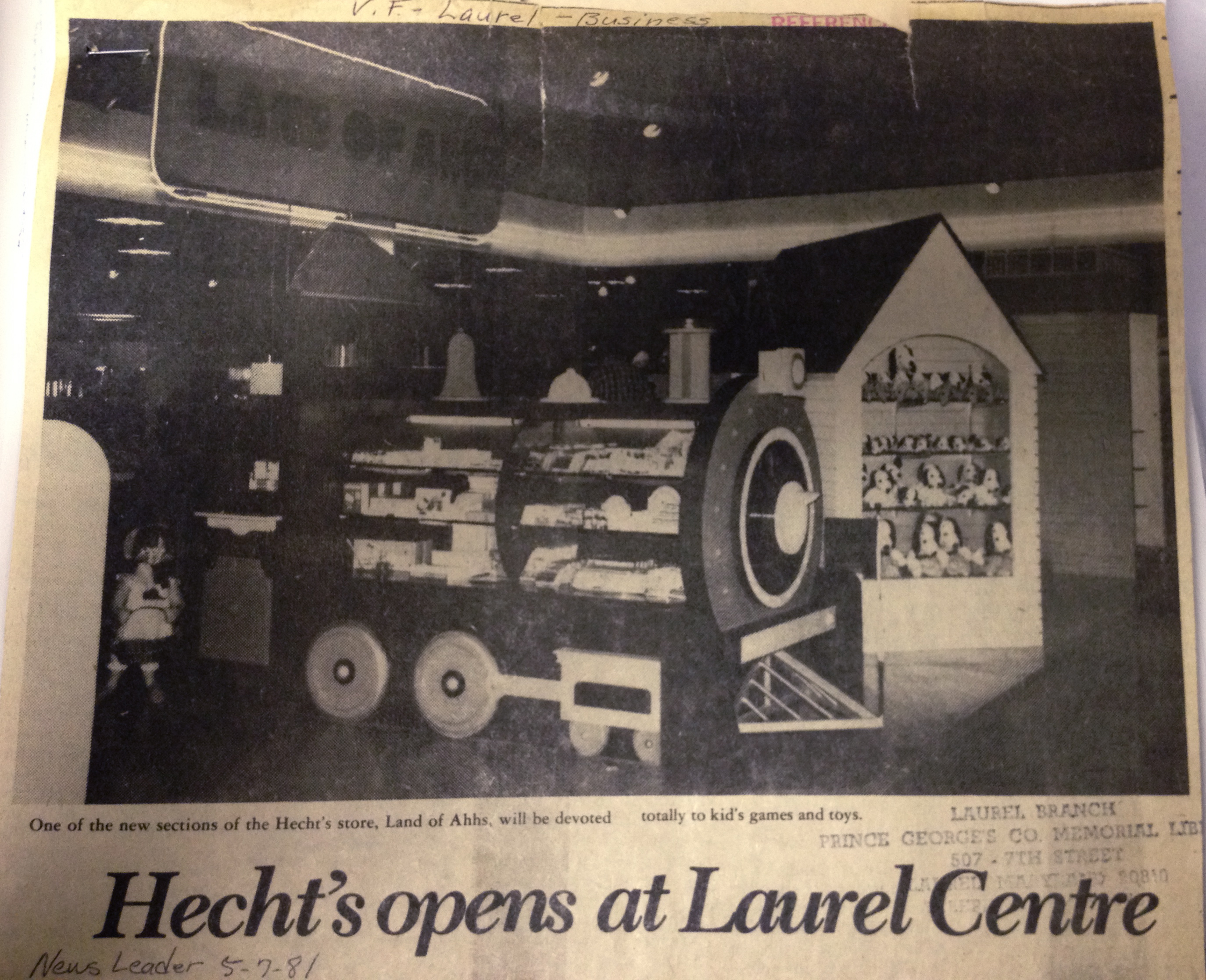
Thirty-one years ago this week, the Laurel Leader noted the opening of the brand new Hecht’s at Laurel Centre—completing the relocation from its original building in the open Laurel Shopping Center, where it had been since the early 1960s. It would go on to be the sole occupant of the new building until Hecht’s eventually folded, and became Macy’s.

The new store had upper and lower levels, and included the popular Edgar’s Restaurant and an in-house beauty salon. As the above photo will attest, it also featured a small but beguiling kids’ section called the “Land of Ahhs”, where stuffed animals and board games filled whimsical display cases, including the locomotive and Snoopy’s doghouse seen here.

A clipping from October 1980 (seven months earlier) showed the building still under construction just beyond the Laurel Shopping Center:

What I remember most about the store wasn’t so much the displays or the wares themselves, but the floors. Weird, I know.

But the distinctive parquet flooring was something new to me as a child; something I’d probably only seen on TV during Boston Celtics games before. And the flooring layout in the new Hecht’s wasn’t traditional, either. Other department stores had rudimentary walkways; typically around the perimeter of the store and intersecting at central points throughout. The new Hecht’s, however, utilized these new parquet pathways differently—weaving throughout the store in short straight lines and 45-degree angles. In a video posted on YouTube in late March of this year, (shortly after Macy’s closed) I was surprised to see that the flooring was, in fact, still there. You can also get a sense of how these angling pathways once encouraged shoppers to explore the countless nooks and crannies the store had to offer.


Screenshots from “Tour of the Dead Laurel Centre Mall”, by CaltecCenter (YouTube)

Apparently, Macy’s didn’t do a whole lot of upkeep over the years after inheriting the building.

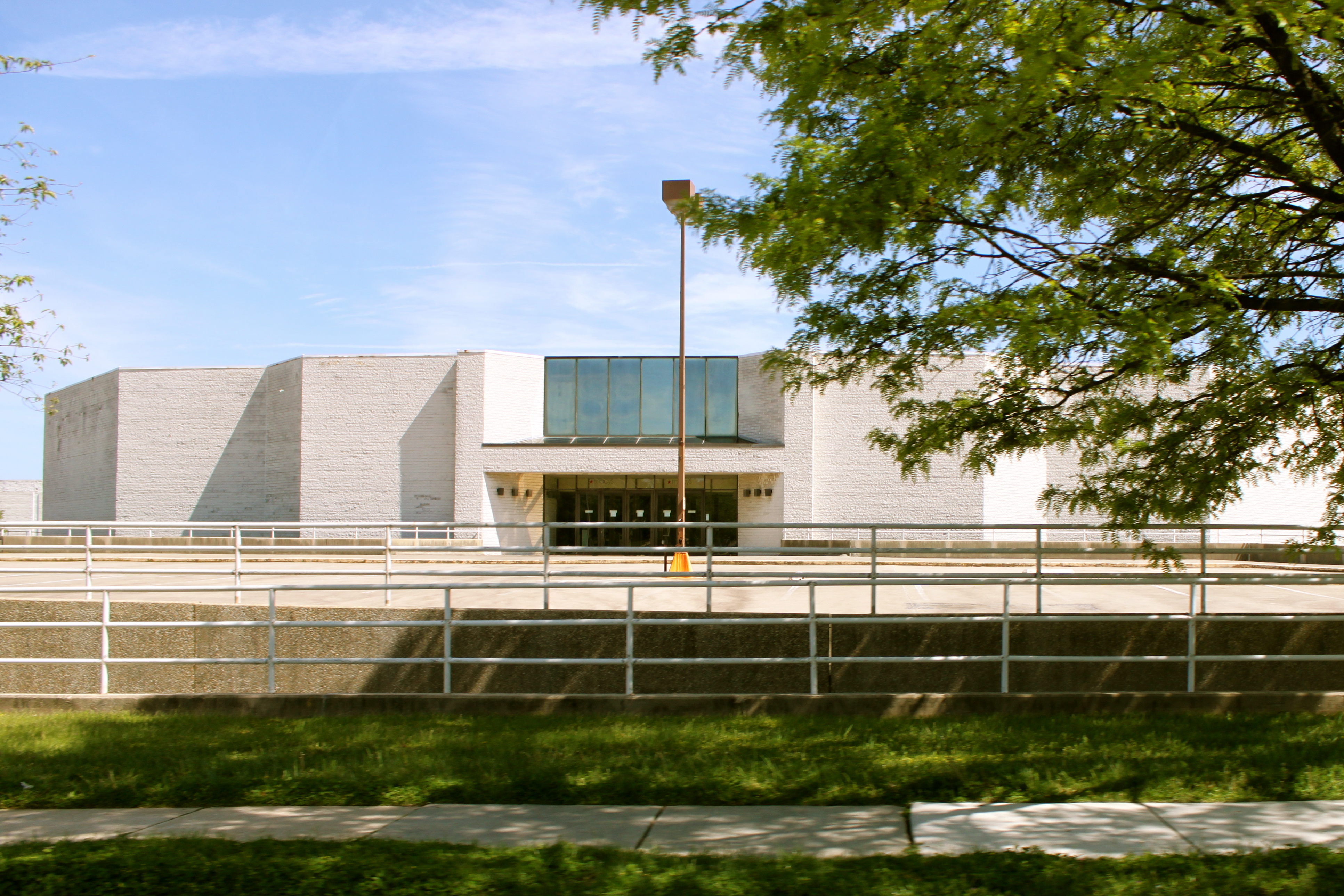
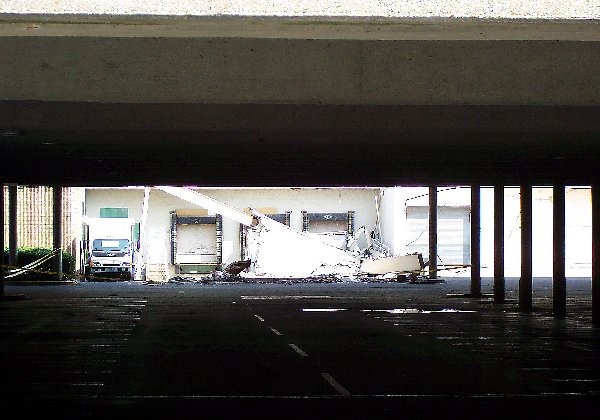
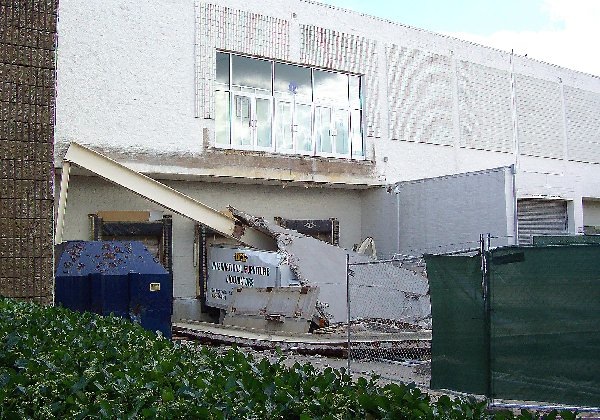
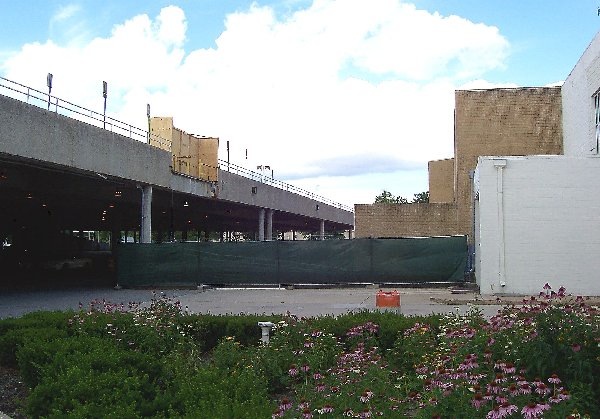
And driving past the old mall last week—just days after its official May 1st closing—the building looked essentially as it has since that upper parking deck spectacularly collapsed back in July 2005. Empty.


(6 digital images by John Floyd II, 2005)

Now that mall has been formally closed, (and just as ominously, a double-wide construction crew trailer set up in the parking lot) the building that once housed both Hecht’s and Macy’s will probably be disappearing soon. More likely, what’s left of those fragile parking decks surrounding it will be the first to go.

But oddly enough, one Hecht’s-related item that never seems to completely disappear are those cardboard gift boxes, especially at Christmas. I’m kind of glad for that. It’s like seeing an old friend.

Tagged , , , , , , , , , , , ,

Goodbye, Laurel Mall

Laurel Centre Mall, October 11, 1979 ~ May 1, 2012.

Photos: John Floyd II

Thanks to long-time Laurel resident John Floyd II for trekking over and confirming this week’s final closure. To my knowledge, there weren’t any press releases or announcements; just a handful of bright green flyers taped to the doors announced the final closure of the long-suffering Laurel Mall.

Much more to come on the mall’s closing soon, as well as some early articles and photos trumpeting its grand opening back in 1979—when it got substantially more respect than a few bright green flyers.

Tagged , , ,

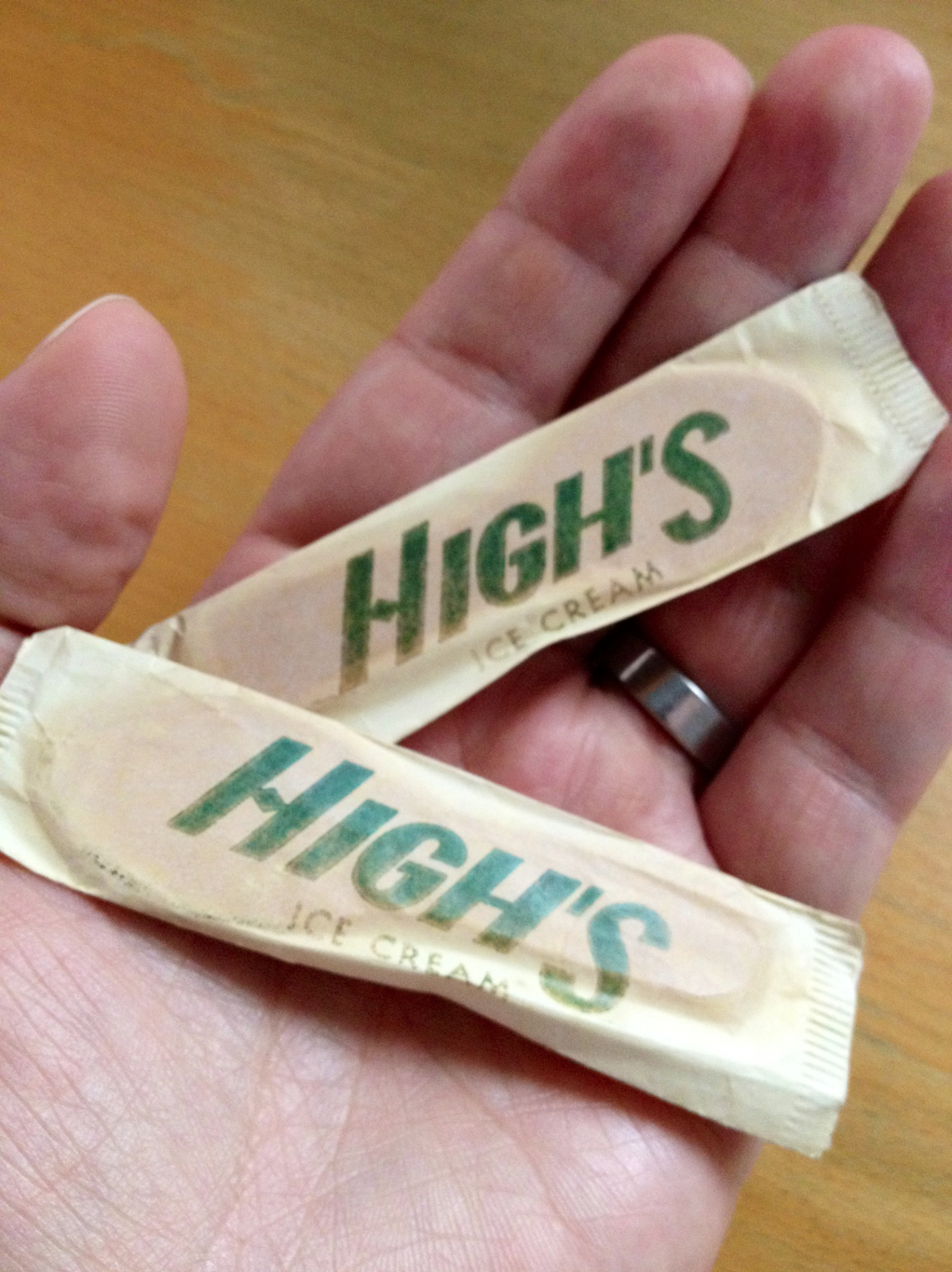
High’s Ice Cream

Another gorgeous day in the DMV! Ice cream, anyone?

Tagged , , , ,

Laurel Art Center: The Final Weekend

This weekend, the Laurel Art Center reopened its doors (shuttered since February, when the Emery family announced their intent to close the iconic 35-year-old business) for a massive liquidation sale.

I visited with the intent of picking up copies of the few remaining Marian Quinn pen & ink reproductions of vintage Laurel landmarks that I hadn’t already purchased this past year—including one of the Laurel Art Center itself. (I’d superstitiously delayed buying it for fear that it too would become part of Lost Laurel.)

I anticipated quite a turnout after the sale was publicized in the Laurel Leader, and was right. By 10:30 Saturday morning, the line of paying customers was already to the back of the store. Needless to say, it was probably the longest line they’ve seen since the store’s inception. If only they could’ve had such lines all the time, but I digress.

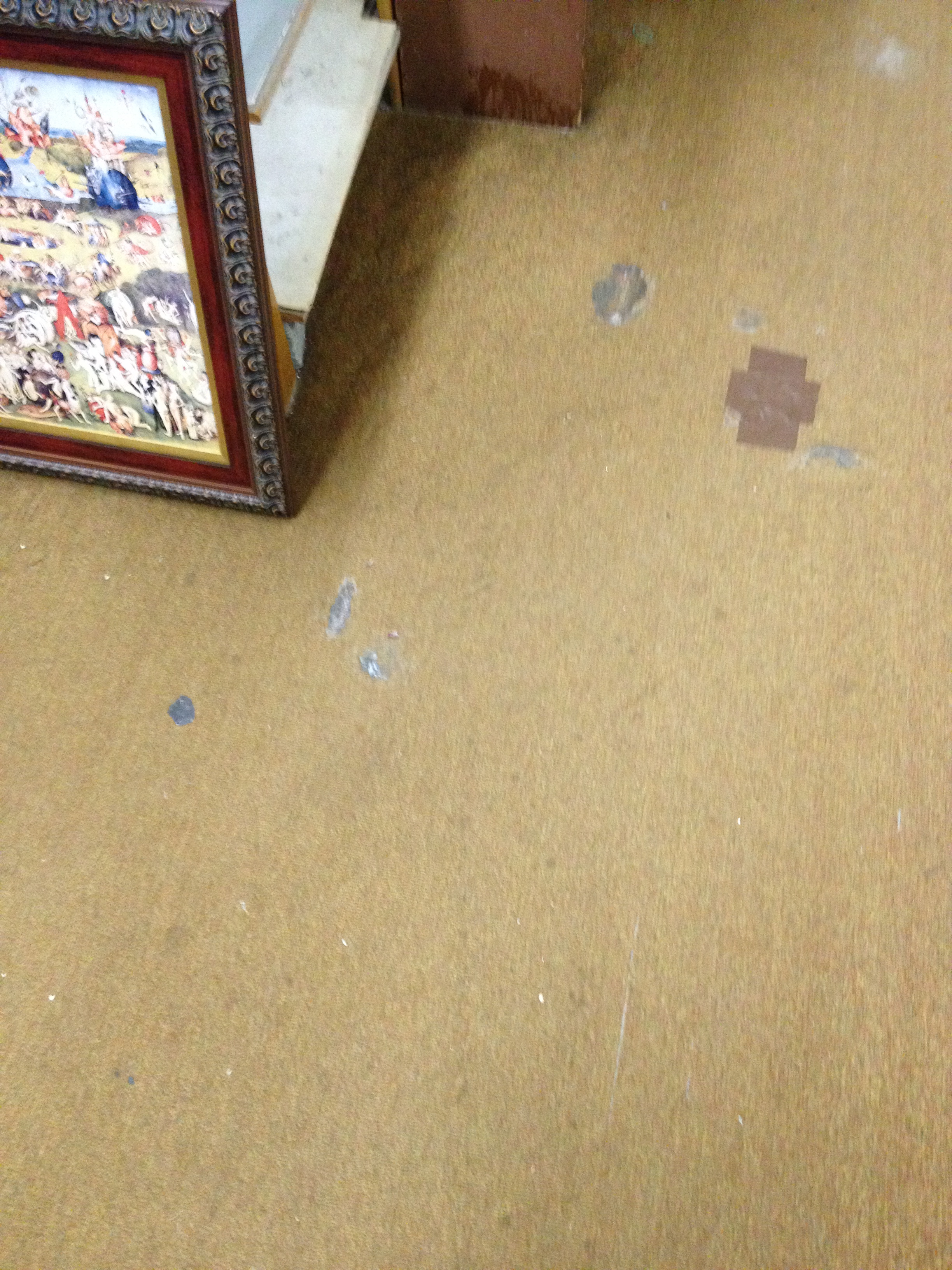
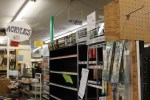
And the wait to pay at the register was upwards of 45 minutes, but worth every second—not just for the incredible 75% discount, but for the time it provided to reflect on just how many visits I’d made to this wonderful store over the years. Even the carpet—that old, patchwork of mixed fabrics—caught my eye and brought back memories.

While standing in line, it was fitting that I noticed a few remaining watercolor sets—much like the little sets my parents first bought for me back in the late 1970s and early 80s, which undoubtedly fueled my early artistic ambitions. Of course, it would eventually be this very store that provided everything I’d need for drawing and painting, including the tons of supplies I required during my time at the Corcoran College of Art + Design.

The Laurel Art Center has honestly been a key part of my life for as long as I can remember. From my early childhood love of drawing and painting, to my college and professional career as a graphic designer, and even today as a casual historian of all things Laurel. So while I couldn’t pass up the opportunity to stop by on Saturday to make sure I bought every last thing I could (and I did score some fantastic pieces, including some Marian Quinn originals for less than I’d paid for some prints), I knew I wouldn’t be able to properly photograph the store one last time with just my iPhone—not to mention with the crowds of other enthusiastic shoppers milling about. A return trip was in order today with a real camera, for one final walk through in an effort to document the countless details of the old store; to try to convey the experience of browsing through this 10,000 square foot eclectic treasure trove.

Both the inventory and the crowds were sparser, but the unmistakeable ambiance was still there.

(You can also view the complete photo set here on Flickr.)

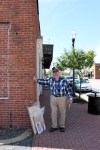
While photographing each aisle, a vaguely familiar looking gentleman approached—also with a camera. “Looks like we had the same idea today,” he said. And within seconds, I realized that this must be John Floyd, II—the long-time Laurel resident who’s provided not just me, but the Laurel Leader and many others over the years with so many great photos and insight to the town’s history! “John?” I asked. “Rich?” He replied. We’ve been corresponding via email for the past year, but hadn’t had the chance to meet in person until today. Leave it to the Laurel Art Center to create one more memorable moment for me—on its final day, no less.

Such a treat finally meeting John Floyd II, who just happened to be here at the same time!

Main Street certainly won’t be the same without the store, nor will its legions of fans ever forget what it has meant to them over all these years. As one of the youngest members of the Emery family helped bag up my final purchases, (including a Marian Quinn original pen & ink of Petrucci’s and Pal Jack’s Pizza that I got for $18.75—I can’t believe no one else spotted that on the wall before I did) I took one last look at the thank you note on the counter.

No, thank you, Laurel Art Center. For everything.

***

Postscript: One additional print I made sure to buy today was that of The Gallery—the other Emery family-owned art and framing business just one block up on Main Street. Yesterday, I stopped by and spoke with Cathy Emery, who has been pulling double duty handling the fallout from the Art Center’s closing. Since February, The Gallery has been fulfilling orders that were placed through the Art Center. I remarked, half-jokingly, that I hope they aren’t planning on leaving anytime soon. You can imagine my surprise to learn that they were actually planning to do just that—even before the Art Center pulled the plug. Yikes.

While I’d love to hope that The Gallery will persevere and continue the Emery family’s wonderful artistic legacy in Laurel, it sounds as though their time may also be short. Be sure to visit their shop at 344 Main Street for all of your framing needs, and for both originals and reprints of Cathy’s amazing work documenting Laurel’s places past.

Tagged , , , ,

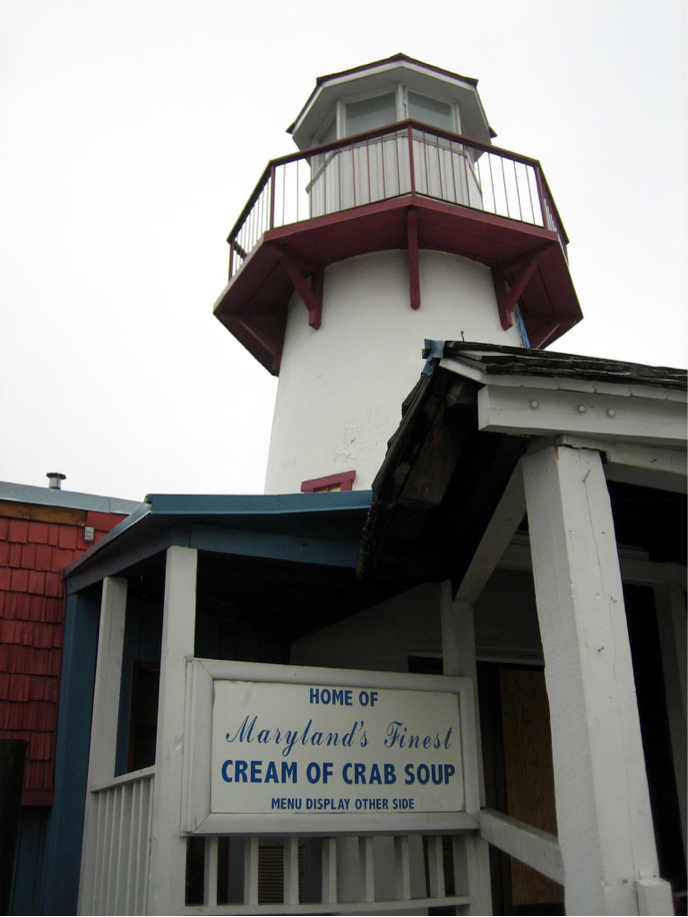
Bay ‘n Surf

Photo: Stu_Jo (Flickr)

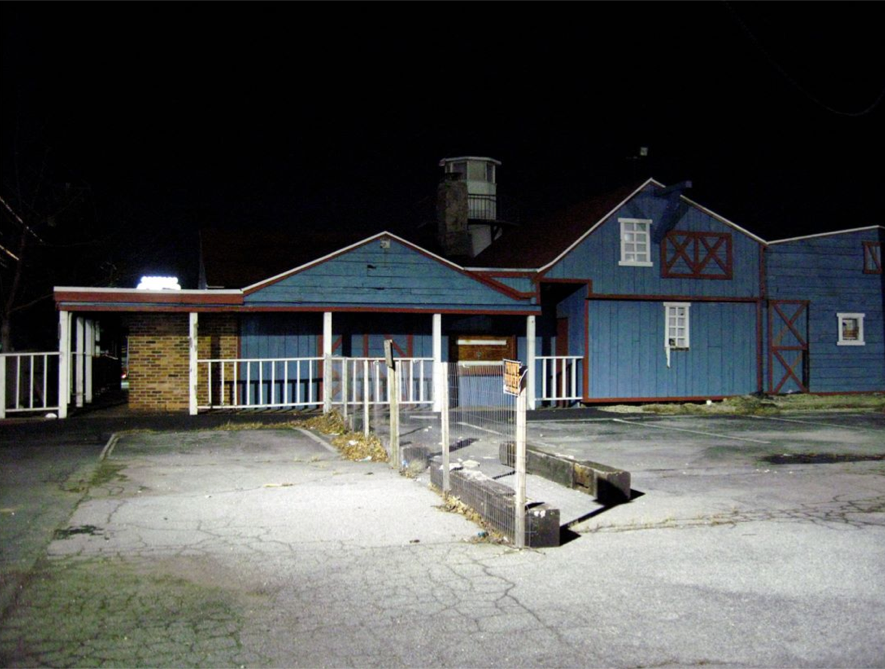
Photo: Stu_Jo (Flickr)

On a chilly, rainy day like today, who couldn’t use a nice bowl of Maryland’s finest cream of crab soup?

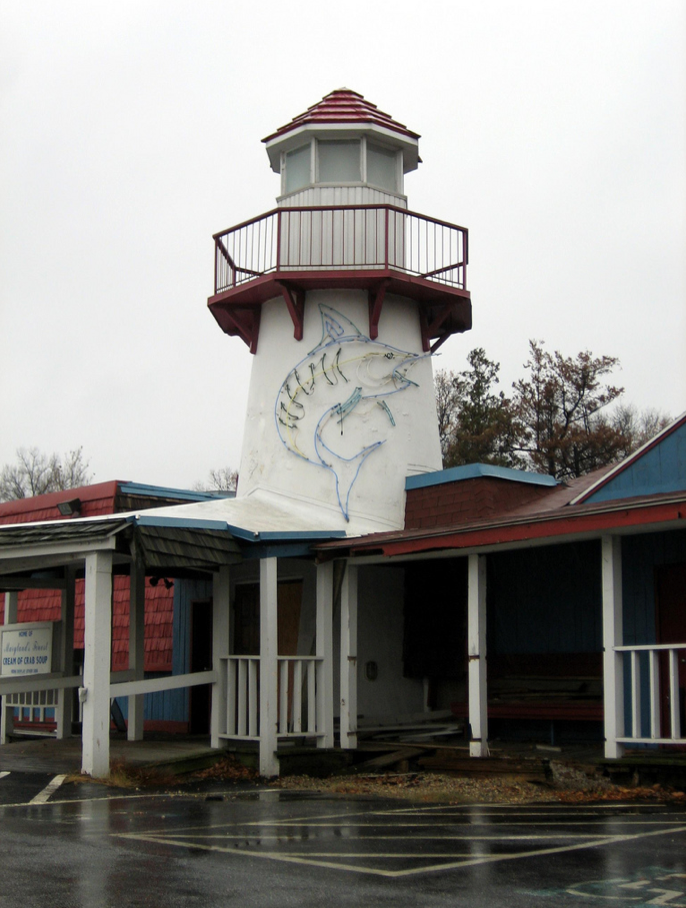
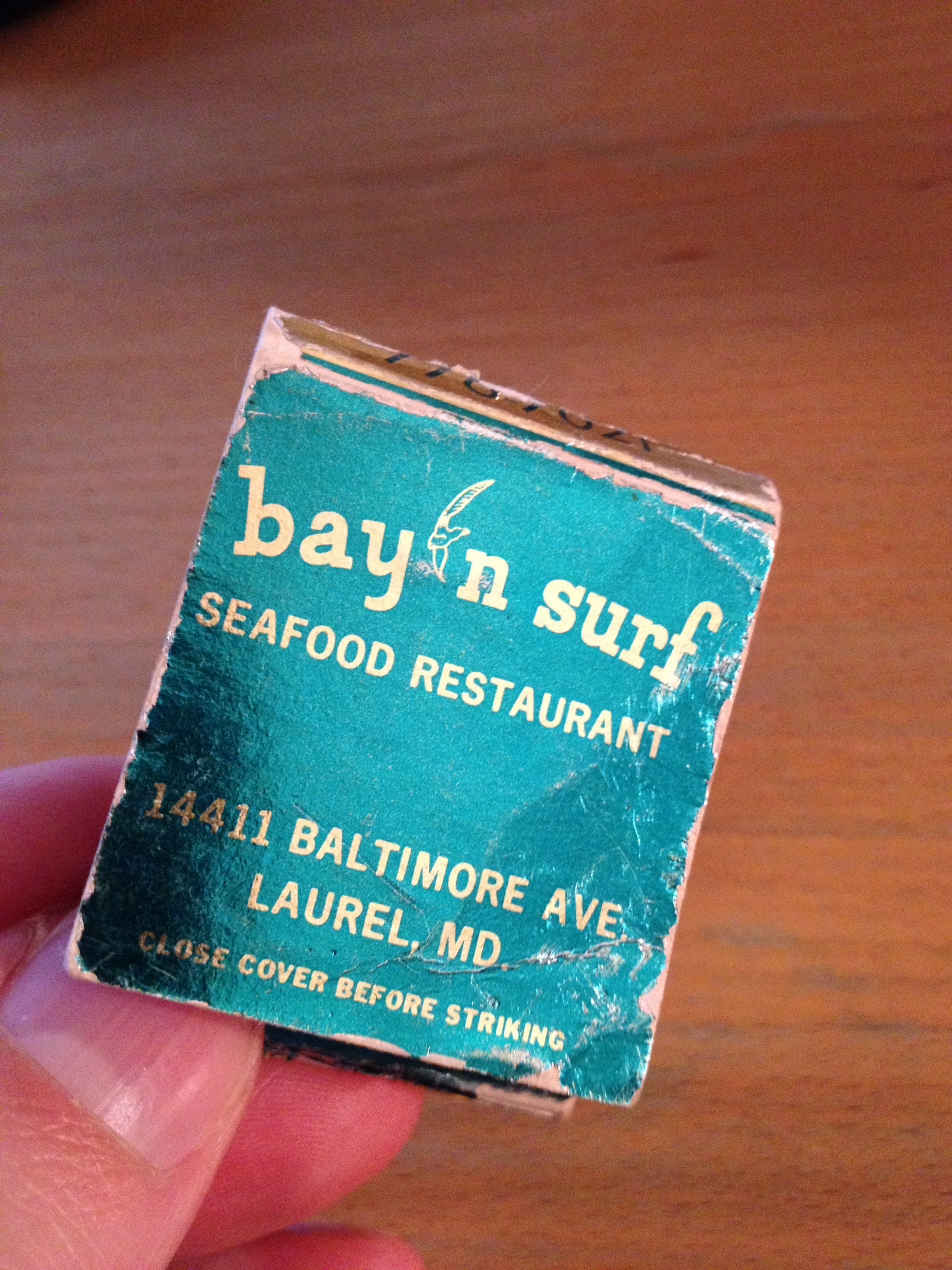
By most accounts, Bay ‘n Surf aptly advertised their signature soup, lovingly crafted in the distinctive 300-seat restaurant with decorative lighthouse at 14411 Baltimore Avenue—the location it called home since 1965. But the restaurant that had seen so many romantic Valentines Day dinners over the years did not have a happy Valentines Day in 2007, when a compressor for one of the restaurant’s walk-in refrigerators ignited at approximately 6:15 AM, setting ablaze a nearby office and parts of the kitchen. According to firefighters, the dining area was essentially untouched; and while preliminary estimates put the damage at $500,000, the owner told The Washington Post that she planned to reopen by May of that year.

Photo: WTOP

Now more than five years after the fire, the restaurant—and its distinctive lighthouse—sit eerily empty.

Despite the occasional rumor of Bay ‘n Surf returning—or, more likely, reopening in a new location outside of Laurel, nothing of the sort has materialized. The property has evidently been sold, however, but there’s been no official word on what’s to become of it. Odds are, however, whatever the new place is, the cream of crab soup just won’t be the same.

You can still experience some of those Bay ‘n Surf memories—and a decent bowl of cream of crab soup—right next door, though. Nuzback’s Bar, another Laurel landmark which has sat directly beside the old seafood restaurant all these years, (including the years before Bay ‘n Surf, when it was the notorious Oakcrest Inn!) is still going strong, and they have an outdoor seating area where you can enjoy your food and drinks while gazing over at what’s left of the Bay ‘n Surf.

When I was growing up in the 1970s and 80s, Nuzback’s had a bit of a reputation as a rough place (to put it mildly). But I doubt they’ve ever had quite the drama that the old Oakcrest Inn had—especially on August 29, 1955, when a deadly gun battle apparently broke out… between a pair of middle-aged brothers, no less. One of whom owned the place:

Washington Post, August 30, 1955

The surviving brother was later acquitted, citing self defense. You have to wonder if he ever went back, perhaps after it became the Bay ‘n Surf. After all, they did have Maryland’s finest cream of crab soup.

Tagged , , , , , , ,

Herb’s Carry-Out

Image

Five-dollar footlong, you say? Herb’s Carry-Out wasn’t *quite* as expensive as Subway, back in the day.

The vintage (and greasy) Laurel icon, brilliantly captured here in watercolors by artist Cathy Emery, was a longtime, late night staple just a block south of Main Street at 126 Washington Blvd.

The sight of its unique facade brought back a flood of food memories on Facebook, as Laurelites recalled their favorite dishes—and memories—from Herb’s. Several mentioned the shrimp and gizzard boxes, while others cited the cheesesteaks, footlong hot dogs, and soft shell crab sandwiches—often after a night out at the nearby B & E Tavern.

Others recalled even simpler fare, like Michelle Atkins:

“My father used to take me here when I was a little girl, i would get a grilled cheese & donald duck orange juice!”

And Richard Pierce, who hailed Herb’s shrimp and gizzard boxes, also pointed out another ever-present feature of the establishment:

“Remember all the empty carryout boxes stacked up in the front widows?”

Cathy Emery apparently remembered them, too, as they appear to be lovingly included in the painting.

The Laurel Centennial Souvenir Historical Booklet has a small photo of Herb’s from circa 1970, and includes an interesting background on the building before all the gizzard boxes and cheesesteaks came.

Image

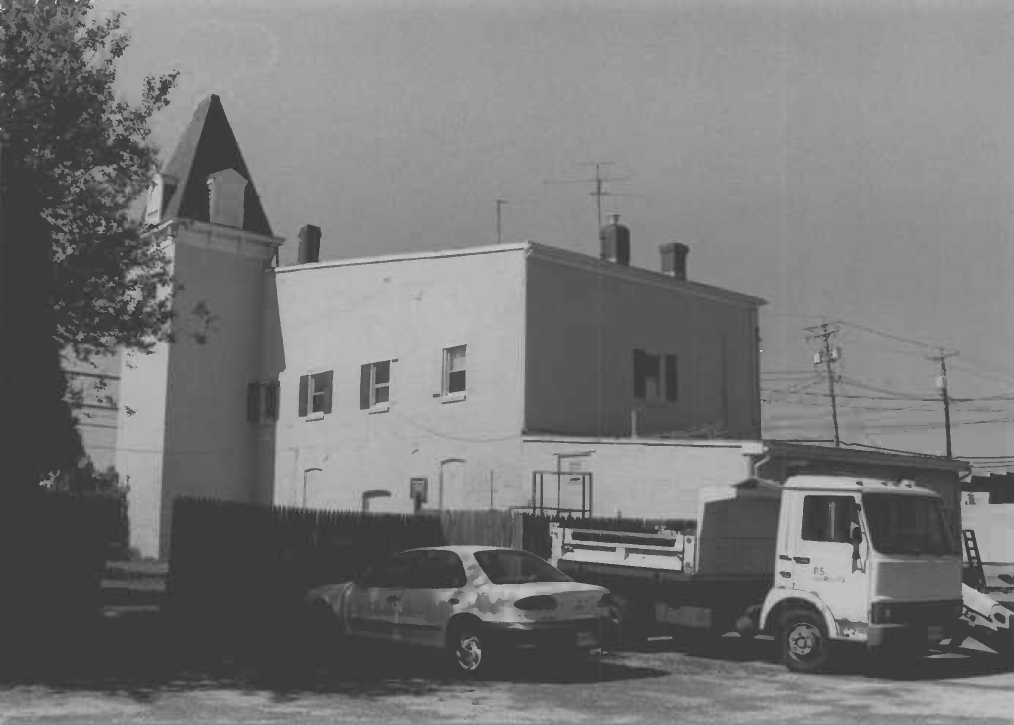
The Maryland Drug Company was a long-time tenant before Herb’s occupied the street level store. (The upper floors were converted into apartments at some point.) But its history goes back much further. In fact, according to the Maryland State Archives (who produced a fairly extensive capsule summary sheet on it in 1998), The Free Quill Building, as it was originally known, was constructed circa 1885 on land owned by James A. Clark, the editor of the Free Quill—Laurel’s first long-term weekly newspaper.

The Laurel Centennial booklet includes an 1887 illustration that was used in the Free Quill’s masthead. And while there aren’t any storefront windows with stacks of carryout boxes visible, the building is still recognizable as Herb’s:

Image

From the capsule summary sheet, a more detailed history of the structure:

The upper floor of the building was an open hall which was used for public meetings and dances (Centennial Booklet 1970: 54). The Free Quill eventually became the Laurel News Leader, but it is unknown where the paper was produced after Clark sold the property. The property was conveyed to Charles Shaffer in 1895, and was sold to Edmund Hill in 1898.Edmund Hill ran a butcher shop out of the building, and continued to use the upper hall as a public meeting space. The heirs of Edmund Hill sold the property in 1919 to Ormand Phair. Ormand Phair had purchased the adjoining residential property in 1910 from Charles Shaffer. Trustees for Ormand Phair sold both properties to the Maryland Drug Company in 1958. The current owners purchased the property in 1973.

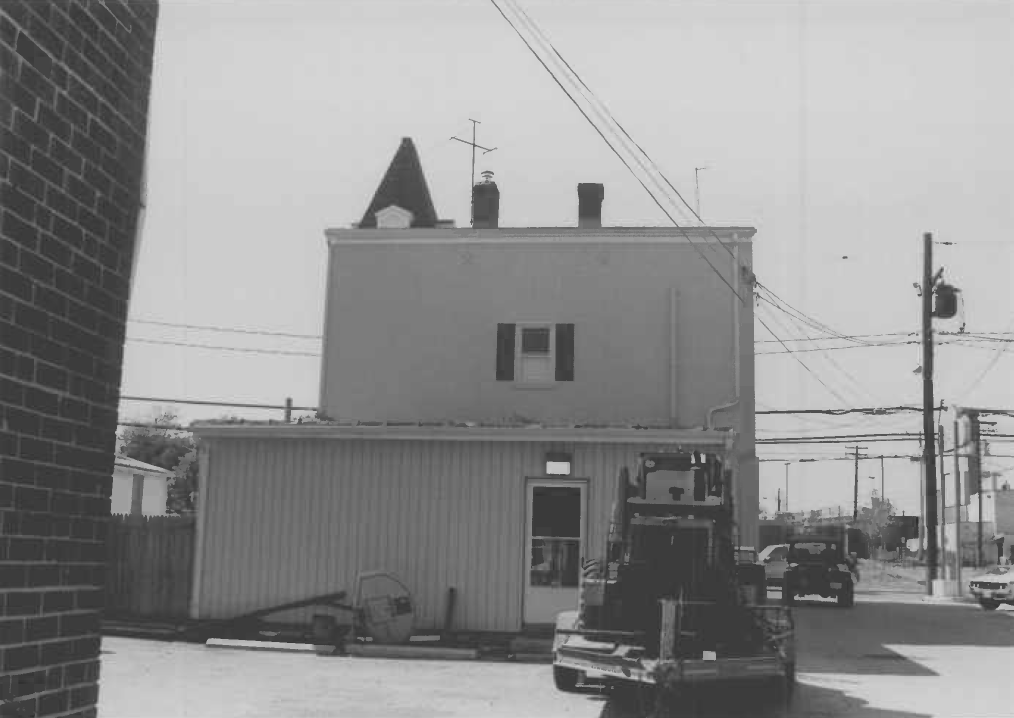
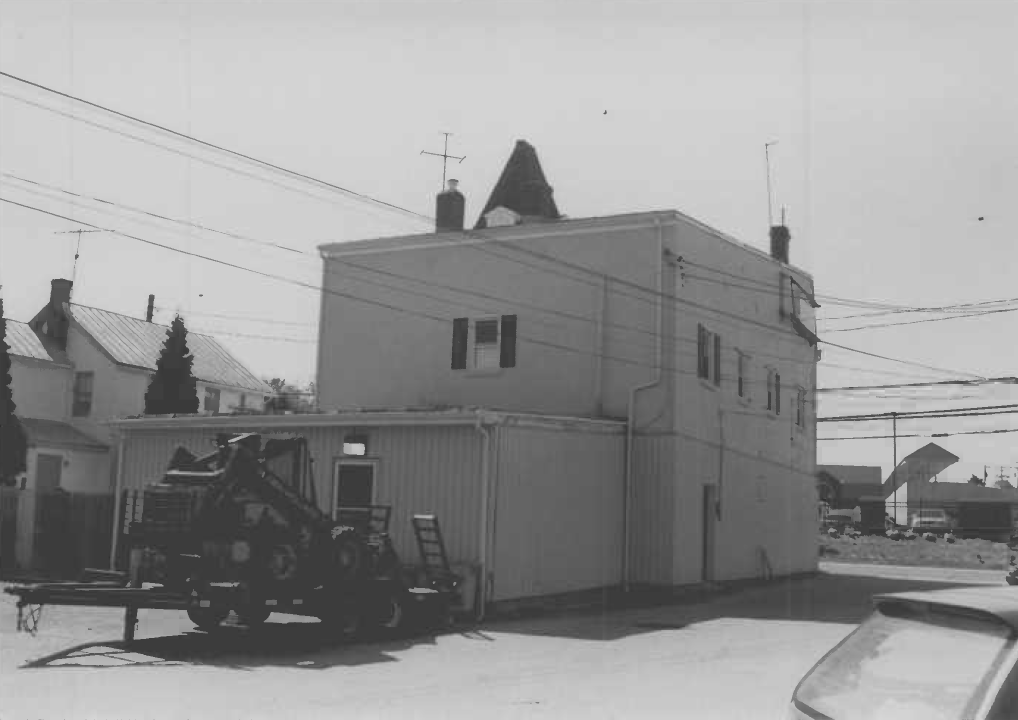
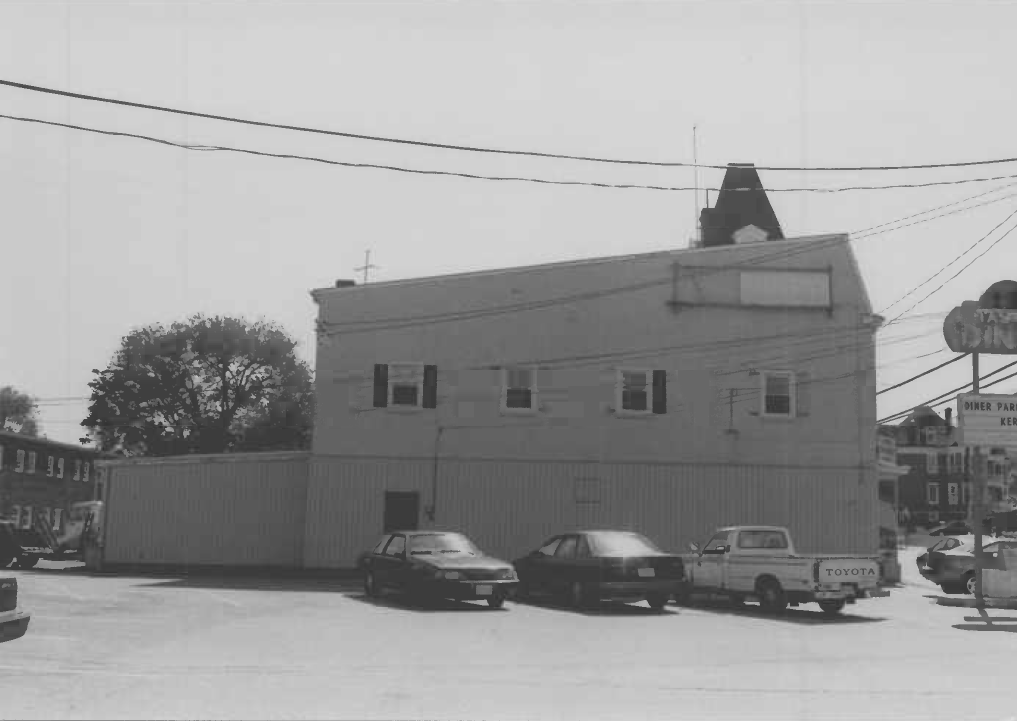
Also included in the summary is a series of elevation photos taken in May 1998—when the street level storefront bore the rather generic name, “Laurel Convenient Mart”. At the time, fittingly, the building was vacant.

Image
Image
Image
Image
Image
Image
Image
Image

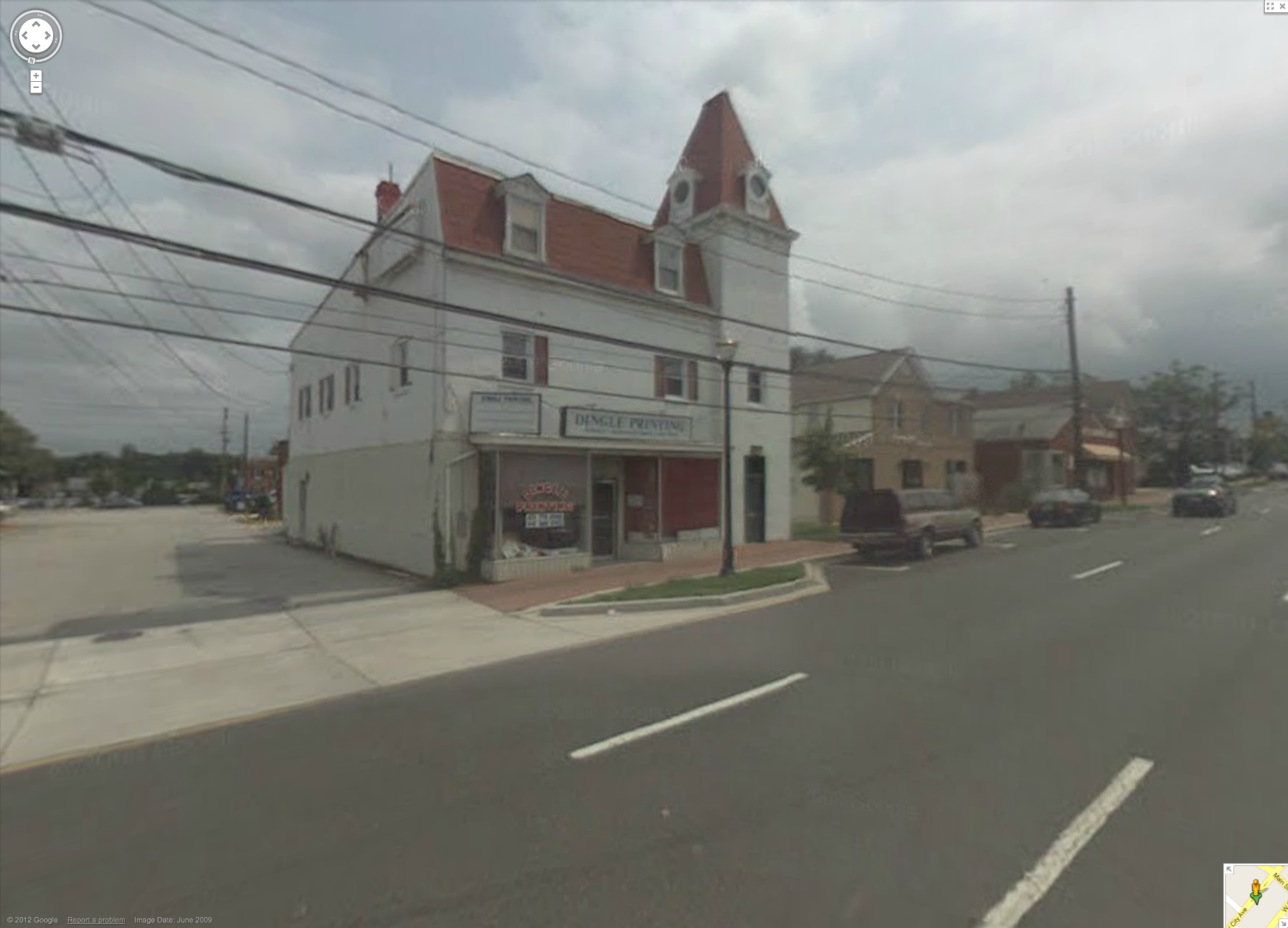
The old turreted building still stands, albeit empty once again, since its last incarnation as Dingle’s Printing.

Image

I remember thinking it was odd to see a printing company in the space I always associated with Herb’s Carry-Out, but as it turns out, the building was originally used for printing purposes. In addition to the Free Quill, the Illustrated Residence and Business Directory of 1894 (only two complete copies of which are still known to exist), was also printed in this building. That directory, another Laurel first, was thankfully reprinted in the Centennial booklet for posterity.

As for the building itself, it unfortunately isn’t eligible for the National Register of Historic Places. According to a Maryland Historical Trust State Historic Sites Inventory Form,

The property is not eligible under Criterion A, as research conducted indicates no association with any historic events or trends significant in the development of national, state, or local history. Historic research indicates that the property has no association with persons who have made specific contributions to history, and therefore, it does not meet Criterion B. It is not eligible under Criterion C, as it is a highly altered example of an late-nineteenth century commercial building in Laurel. The first floor facade has been greatly altered with a modern storefront, and all the windows have been replaced and the larger openings filled in. The upper story which once served as a meeting hall has been converted into apartments. The building no longer retains its integrity of materials, design, workmanship, feeling, or association. Finally, the structure has no known potential to yield important information, and therefore, is not eligible under Criterion D.

Ouch. That’s some tough criteria.

Historical significance has a funny way of recording itself, doesn’t it? This odd, old building may or may not have a long-term future. It’s not likely ever going to be protected by any preservationists. And its only noted contributions to the community occurred over 120 years ago. But if you talk to the people who knew Laurel in the gritty 1970s and early 80s, they remember it for something else entirely—Criterion E, if you will. That’s “E” for Eat at Herb’s.

And as for “specific contributions to history”, etc., I offer this: in 125 years, nobody cared enough to paint a portrait of that building in any incarnation other than Herb’s Carry-Out. And I’d venture to say that there are at least a few buildings on historic preservation lists that haven’t been as lovingly painted, or painted at all. But then again, nobody ever bought a shrimp and gizzard box from their establishment.

Tagged , , , , , ,

Cook’s Laurel Hardware Co.

Long before Laurel’s labyrinthine Home Depot—and even Hechinger—there was a small hardware store on Main Street that seemed to carry everything. Just as importantly, they knew were everything was.

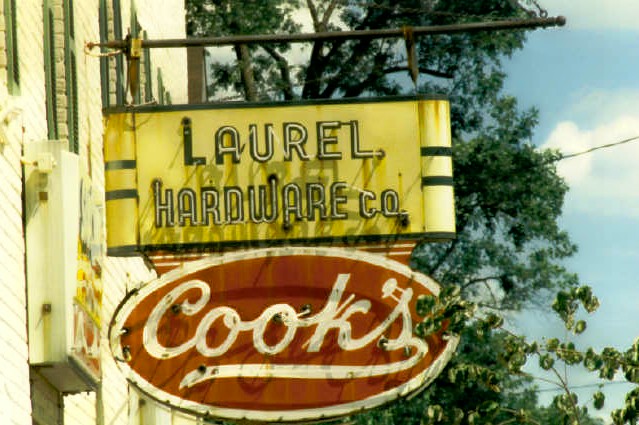
Perhaps, like me, you weren’t particularly handy with power tools (growing up in an apartment complex like Steward Manor with a highly-capable maintenance team can have that effect, you know.) But even if you’d never ventured inside Cook’s Laurel Hardware Company, chances are you remember seeing their iconic neon sign—a throwback to their 1938 origins—every time you passed by.

If you did go inside, chances are you remember the creaky wooden floors, patched together with metal flashing—also a testament to Cook’s 59 years of service to Laurel. Former customers of all ages fondly recall visits with parents, grandparents… and even dogs, which were welcomed inside.

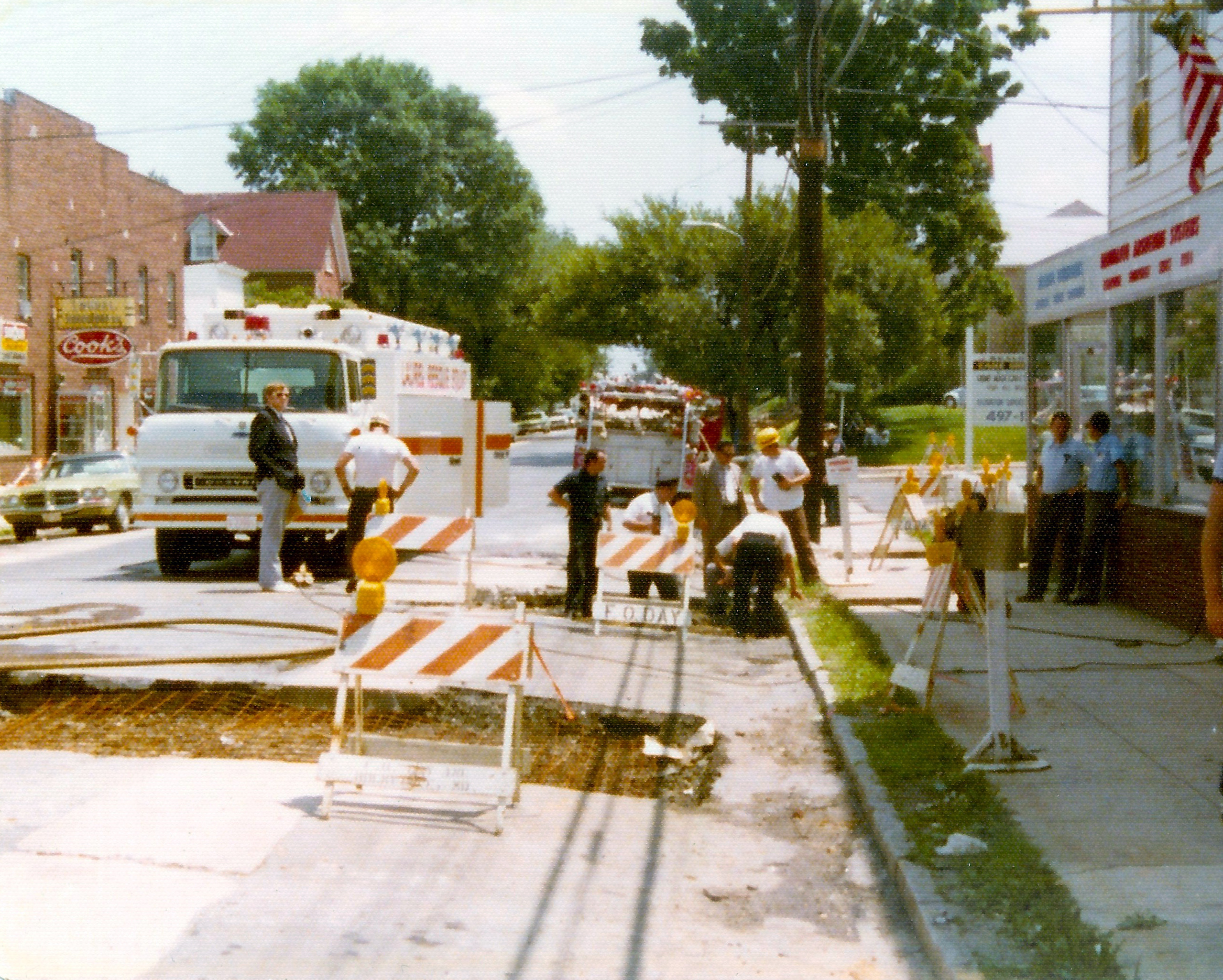
For most of its long tenure on Main Street, the store was identifiable by that distinctive neon sign at least as much as its red brick exterior. Until 1983, however, when the store’s facade underwent a dramatic makeover—ivory and dark green paint brought new life to the Main Street classic.

Cook's original red brick facade can be seen in this 1975 photo of Laurel Rescue 19 and Engine 101 responding to a gas leak at 5th & Main Steets. (Photo: John Floyd II)

Laurel Leader, 1983

Cook's—with it's new paint—as it appeared in a 1987 Citizens National Bank courtesy calendar (Photo: Susan L. Cave)

But by the mid-1990s, Laurel was in full transition mode—adapting to the arrival of discount retailers such as Walmart, Sam’s Club, Target, Kohl’s, and The Sports Authority, among others. Main Street’s small shopkeepers struggled to secure their niche market amid the flurry of large-scale retailers. And ironically, it wasn’t the big box stores that ultimately doomed Cook’s—not completely, anyway. Technically, it was old people. Upon closing in the summer of 1997, the building was razed to make room for a 124-unit apartment building for senior citizens—Selbourn House.

In a Washington Post article that noted the impending closure, owner Bob Cook—a longtime member and president of the Laurel Board of Trade—regretted shuttering the old hardware store that bore his name, but he remained surprisingly optimistic for the town:

While he laments the store’s closing, Cook views it as part of the transformation begun three years ago by Laurel’s government and business leaders to boost employment, spur economic development and make the most of Laurel’s location, halfway between Baltimore and the District. Cook believes the proposed senior housing complex will help draw people to city streets, where eventually they will shop with tourists who are drawn to stores selling antiques and crafts.

Washington Post, 1997

Cook’s Laurel Hardware Company has been gone now for some 15 years, but in many ways, it lives on—and not just in memories.

Norman James, Jr. is an accomplished sign maker whose passion is in documenting, rescuing, and restoring classic neon signs of the Baltimore/Washington area. He then showcases the old beauties he’s rescued (as well as some that he couldn’t) on his website, often with fantastic historical notes that may have otherwise been lost to the ages.

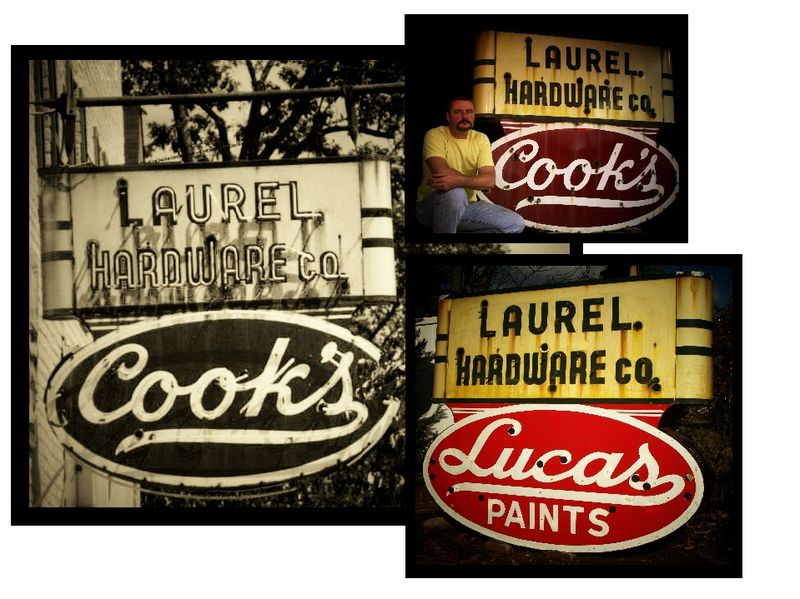
Norm lost his bid to procure the Cook’s sign in 1997; and for the next 11 years, it sat in the coffee shop just across the street from the old hardware store itself. But, fast-forward to 2008—and the coffee shop itself was closing. Better late than never, Norm was more than willing to once again give the 400-pound, 6′ x 6′ sign a good home.

Courtesy of Norman James, Jr. (http://www.normanssigngarden.mysite.com)

During his restoration, Norm uncovered (literally) an old secret behind the Cook’s sign:

“HIDDEN MESSAGE! I discovered the lower portions, or ‘Cook’s’ panels were lay-overs, concealing the original message. Lucas Paints were manufactured in Pennsylvania for about 75 years when bought out by Sherwin-Williams, in the early 1950’s. The owner of Laurel Hardware had his name added to the sign to cover over the Lucas paints portion, which only was exposed for about the first ten years of the life of the sign. I also discovered the faded nameplate of the original manufacturer of the sign…Triangle in Baltimore. The ‘John Tingen’ lettering was probably from the time the ‘Cooks’ layovers were created.”

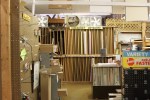
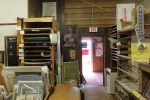
You’ll often hear folks talk about the experience of walking through a mom & pop hardware store, and its ambiance: the smell of cut plywood and 2 x 4s; the close proximity of shelves full of nails, drywall screws, and countless other fasteners; the sound of a paint mixer. Nowhere was that experience more appreciable than Cook’s. Sure, Home Depot probably has everything and then some; but sometimes, what a customer really wants is the chance to browse at his or her own pace in a welcoming environment. Preferably one with an old, creaky wooden floor.

Tagged , , , , , , , ,