Category Archives: News

R.I.P., Two of Laurel’s Finest

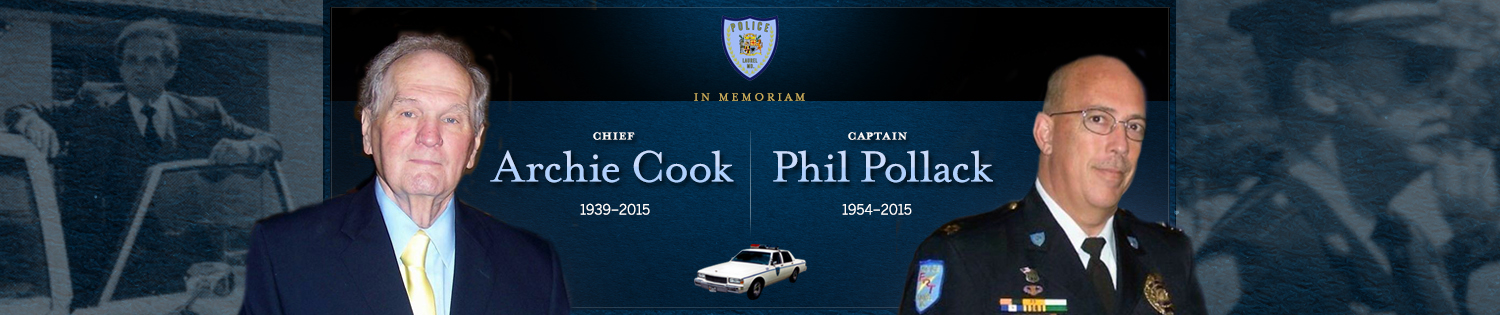
lpd-tribute-wide

Unless it involves a particular photo or artifact that’s relevant to the retail history of Laurel, I really don’t write a lot about the town’s police, fire, or rescue personnel. But I’ve certainly always had the greatest respect for them all.

This past Sunday, I had the chance to chat with Chief Rich McLaughlin at the city’s annual Mayor’s Open House event, and learned some sad news: the Laurel Police Department had just heard of the passing of not one, but two important members of their family: retired Chief Archie Cook, and retired Captain Philip Pollack.

Both have always been very familiar names to me, having grown up in the era in which they served. I remember Archie Cook’s name being in the Laurel Leader perpetually; and Phil Pollack was the officer I’d most often see cruising through my Steward Manor neighborhood in the early 1980s, keeping a kind but watchful eye on things.

Both of these gentlemen dedicated years—some of them dangerous years—keeping Laurel’s residents and businesses safe. When you reminisce about the places you frequented between the 1960s and 2000s, I hope you’ll take a moment to remember Chief Cook and Captain Pollack, who collectively served in Laurel’s line of duty for nearly half a century.

My thanks to them, and my condolences to their families, friends, and colleagues. Many thanks also to Chief McLaughlin for supplying photos for the above tribute graphic, and the following information on both men’s careers and respective funeral services:

Chief Archie Cook started his career at the Laurel Police Department in August of 1965, being promoted to Private First Class in 1968 and Corporal in 1969. In 1972, Cook was one of the officers who threw themselves on Alabama Governor George Wallace after an assassination attempt during a presidential campaign event at Laurel Shopping Center. Cook was promoted to Sergeant in 1976, Lieutenant in 1981, acting Chief in 1986, and was appointed Chief in July of 1987. He served as the Chief until his retirement in September of 1994. After his retirement, Chief Cook continued to serve the Laurel community as a security officer at Laurel High School. He later became the program coordinator for the Leadership Development Institute at the Maryland Police and Correctional Training Commissions. Chief Cook was a well-rounded and highly respected officer and administrator, earning many awards and praise throughout his career. Chief McLaughlin said “Archie was a true leader, he was great friend who was always available to provide advice and guidance. He helped to make the Laurel Police Department what it is today.” Chief Cook is survived by his wife Deborah, his daughter Shannon Stastny, and granddaughter Michelle Stastny.

Funeral services for Chief Archie Cook
Thursday, March 26, 2015

2–4 and 6–8 PM
Connelly Funeral Home of Dundalk
7110 Sollers Point Road
Dundalk, Maryland

A service to celebrate Archie’s life will be held on Friday, March 27th at 10:00 AM, also at the funeral home.

Interment following the service will be at Gardens of Faith Cemetery.

In lieu of flowers, please make donations to St. Jude Children’s Research Hospital: 501 St. Jude Place, Memphis, TN 38105.

* * *
Captain Phillip Pollack began his career as a police officer at the University of Maryland College Park in November 1976 when he left to join the Laurel Police Department in the spring of 1980. He was promoted to Corporal in 1986, but left the department to pursue business interests. However, he returned to serve Laurel in 1990 and was again promoted to Corporal in 1995. He quickly advanced to Sergeant in 1998, Lieutenant in 2000, and Captain in 2007 before retiring in June of 2008. After his retirement, Captain Pollack worked as a project manager for a private security company. During his career Captain Pollack was a highly decorated officer and served in almost every unit of the agency, including the Emergency Response Team, Criminal Investigations, and Community Policing. Chief McLaughlin said “Phil will truly be missed, he was a great police officer, mentor and friend. He will never be forgotten.”

Captain Pollack is survived by his wife Carolin, children Matthew (Jen), Kimberly (Pat), Nathaniel (Kristen), and six grandchildren.

Funeral services for Captain Philip Pollack:
Wednesday March 25, 2015  
1:30 PM
University of Maryland Memorial Chapel – College Park
7600 Baltimore Avenue
College Park, Maryland
Inurnment will be private at a later date.

Tagged ,

Stefanie Watson Case: Indictment

Somewhere, I’d like to think that Stefanie Watson is looking down on us, smiling at the latest news—news that I first heard today from her cousin, Christy, who has been waiting 32 years for justice.

Two years have already passed since I first wrote about her murder, marking the 30th anniversary of a Laurel cold case that had somehow received next to no press throughout the decades. Then, last summer, the breakthrough finally came: Prince George’s County cold case detectives took the initiative to send DNA from the seat of Stefanie’s 1981 Chevette for analysis (the complete, blood-soaked chair had been kept in evidence all this time). Blood on the back unequivocally matched that of an inmate—John Ernest Walsh—who’s been incarcerated since 1989.

Walsh, who had been incomprehensibly released from Jessup’s now-defunct Patuxent Institution—despite having served only 8 years of a 72-year sentence for an unrelated kidnapping, rape, and attempted murder—committed this horrific crime during his brief period of freedom, before violating his parole in 1989 and returning to jail. He’s been a guest of Eastern Correctional Institution for the past 25 years; but until last summer, the thought of ever facing charges in Stefanie Watson’s murder had probably never crossed his mind.

Last June, Prince George’s County Police announced that a warrant was filed against Walsh. And today, after taking nearly 15 months to bolster their case, they announced the official indictment.

We’re also finally getting a chance to see what Walsh looked like around the time of his fateful encounter with Stefanie.

john-ernest-walsh-1970s-mugs

Nope. Not much improvement.

So, the next step will be the actual trial—where John Ernest Walsh will finally answer for the murder of Stefanie Watson during that unforgettable summer of 1982.

Laurel hasn’t forgotten Stefanie, and never will. Those of us who lived there in the days following her disappearance; in the weeks after young Todd McEvers made that grisly discovery in the woods at the dead end of Larchdale Road; and in the three decades it’s taken to find the man responsible for her death. We’re finally ready to see justice, and hopefully get even more answers.

stefanie-winking

(Family photo)


Tagged , , , ,

(Lost) Laurel TV?

lost-laurel-tv


If you like Lost Laurel and you like TV, boy are you in for a treat. Let’s hope so, anyway… Looks like we’re about to see how well I do presenting this stuff on the small screen!

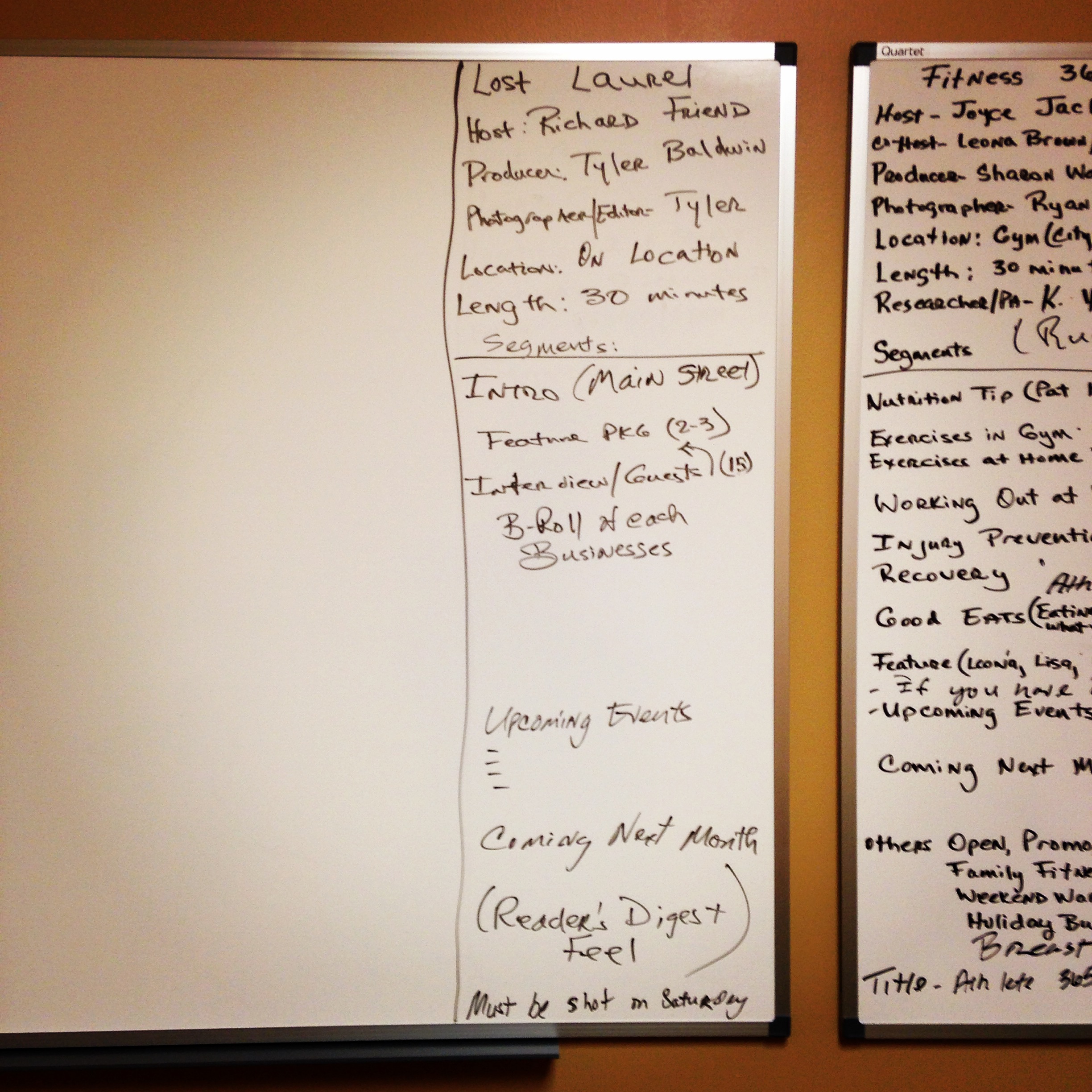
I was recently approached by Laurel TV (the city’s public access channel that’s in the process of being completely revamped) about producing a series of half-hour shows based on Lost Laurel. This past Saturday, I had the pleasure of meeting Joyce Jackson, the station’s wonderful new Media Coordinator, and putting together a rough outline format.

Laurel TV whiteboard

Basically, it’ll be me on location in town introducing each week’s feature—a popular topic from the pages of Lost Laurel.  We’ll meet people who lived and worked in these places past who have relevant stories to tell; and we’ll show plenty of “then and now” photos as well as artifacts from the locations being covered. You’ll also see what some of these former businesses have become today.

We’re planning to start filming by the end of this month, and the episodes will eventually be available on YouTube, as well. So, you don’t have to actually live in Laurel to be able to see the show. (Which is good, since I don’t live there anymore, either!)

Now admittedly, my first thought when I heard “public access television” was Wayne’s World. As much fun as it would be to cruise around Laurel in a 1976 AMC Pacer, this will actually be more of a documentary-style show. 😉

I’ve obviously got some some ideas of what I’d like to cover, but I’m always interested to hear what you guys would like to see more of—so please leave a comment and let me know.

Stay tuned… This is going to be fun!

Endangered Main Street: Laurel Theatre / Petrucci’s

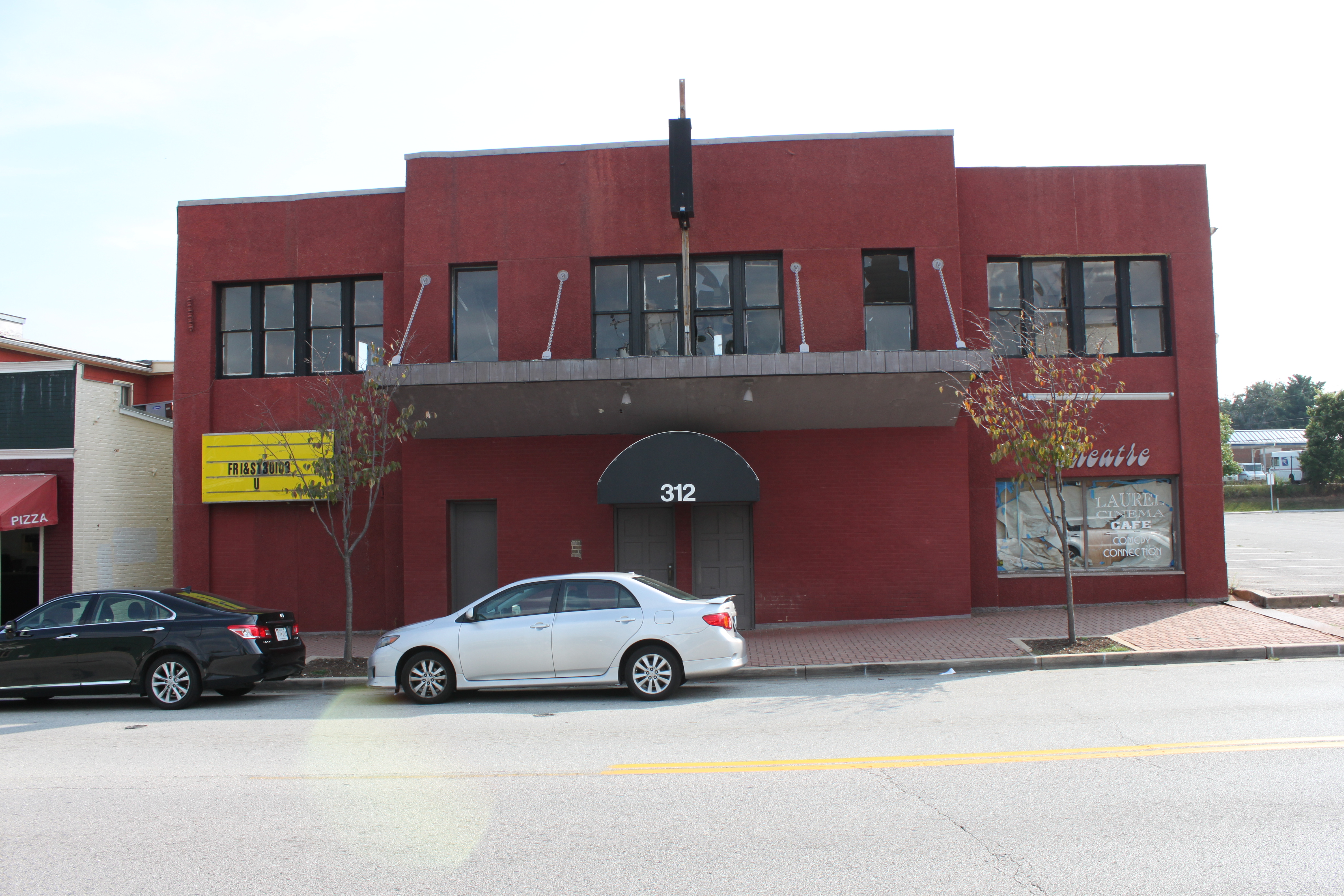
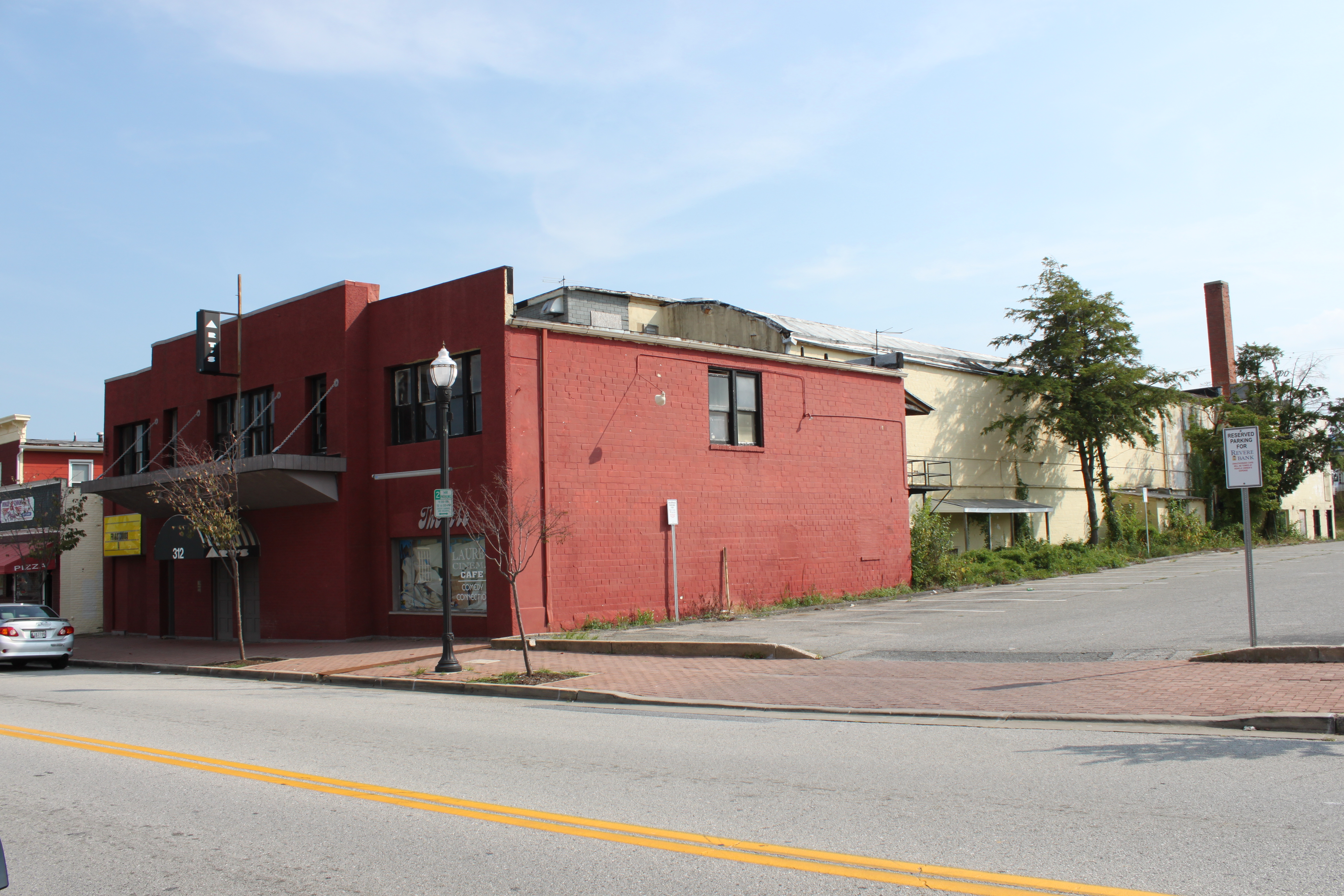
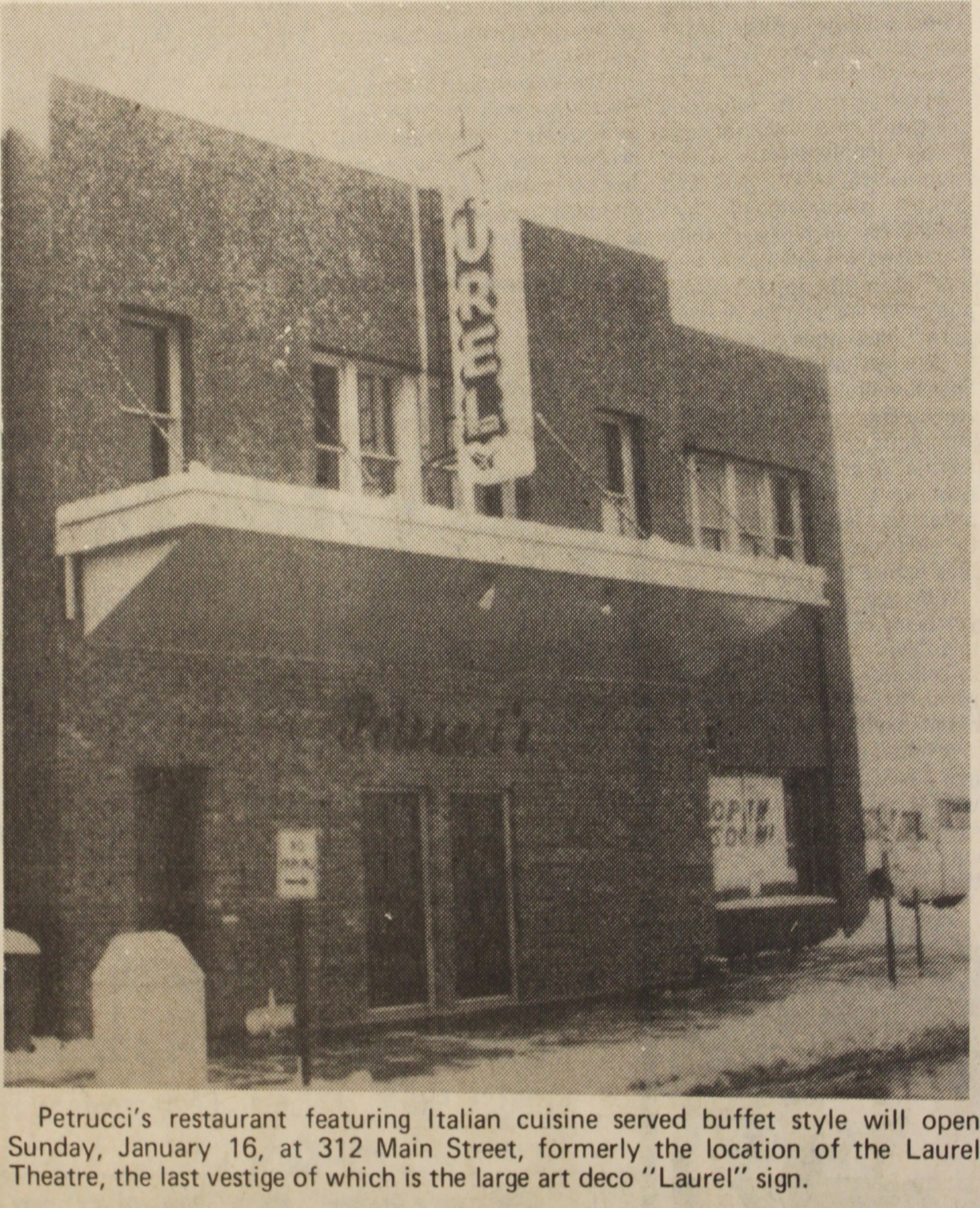
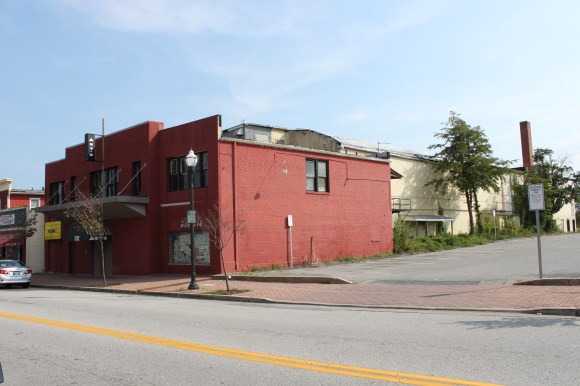
The old red building at 312 Main Street has sat empty and derelict for a few years now, and according to the City of Laurel—its new owners—it’s too far gone to be salvaged.
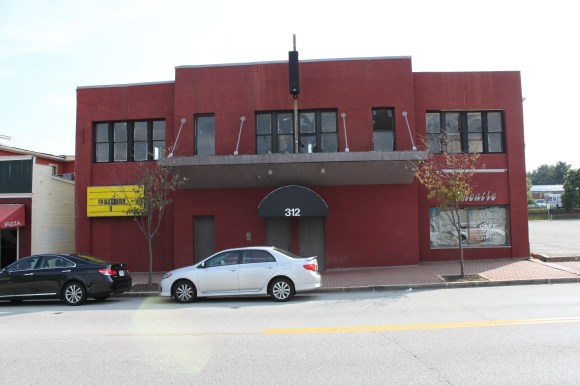
IMG_6512

IMG_6519

(Photos: Richard Friend)

(Photos: Richard Friend)

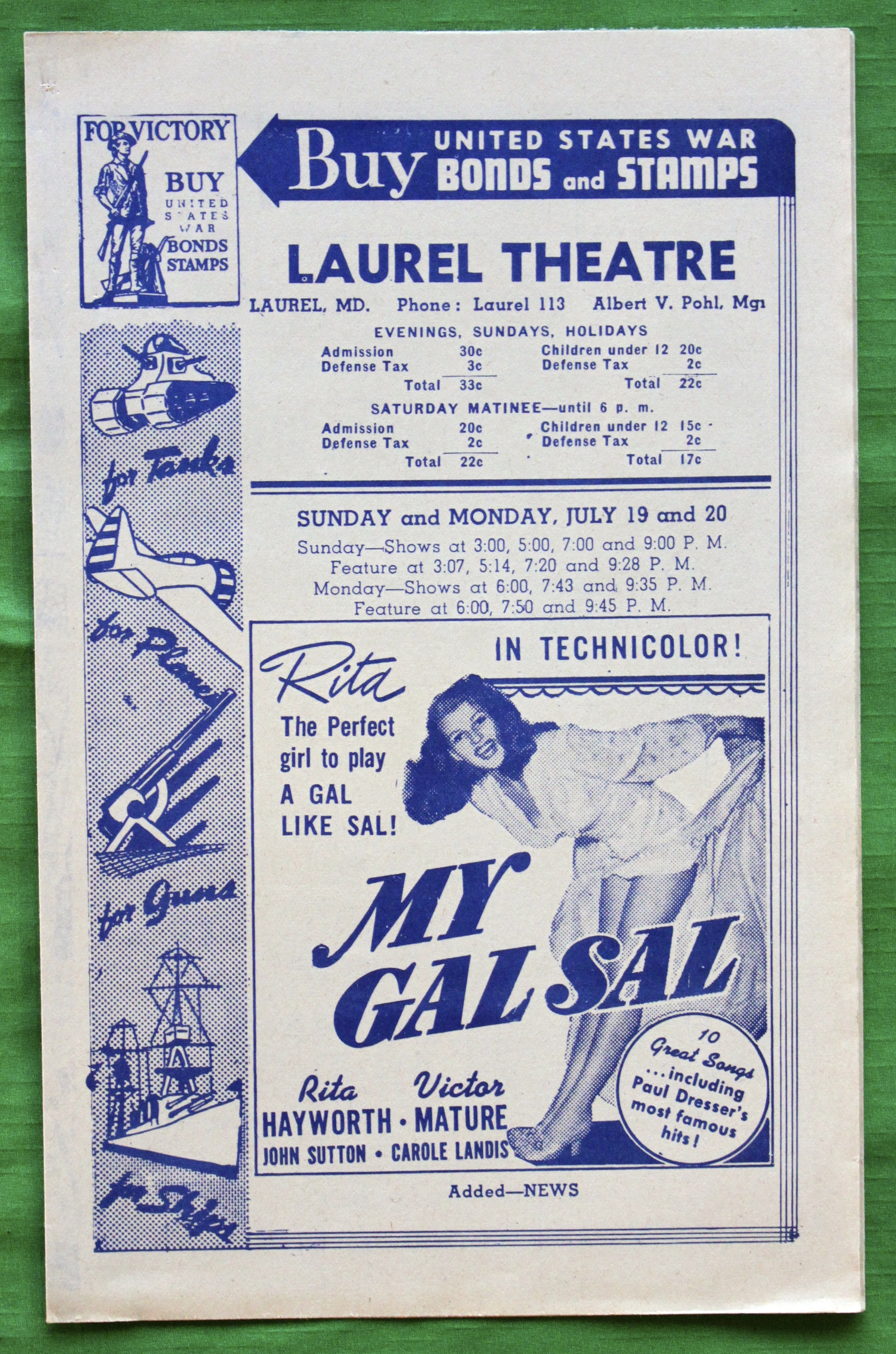
After no other buyers came forward, The city bought the building for $250,000 and plans to demolish it and resell the property. According to multiple sources, the interior has a festering mold problem that’s at least as problematic as its many structural issues, and would require in excess of $2 million to save it. And given its recent history, there’s little hope of resurrecting it. The multiple comedy clubs that inhabited it since the Petrucci family sold its popular Dinner Theatre in 1992 never lived up to expectations, despite drawing some high-profile names in the early years—including Dave Chappelle and Richard Jeni.

Before I get into that, though, let’s take a look at the deeper history of this Main Street landmark.

Laurel Theatre, 1938

A postcard image from 1938. (Laurel Historical Society archives)

To date, these are the earliest photos I’ve come across. The Leader article mentioned that it had been built in 1935, but the 1934 film named on the marquee (You Belong to Me) disproves that:

(Laurel Historical Society archives)

(Laurel Historical Society archives)

In fact, according to the Laurel, Maryland Centennial Souvenir Historical Booklet, the Laurel Theatre opened on October 16, 1929 under Sidney B. Lust, and was built by C. Ernest Nichols. The first film shown was Noah’s Ark. It briefly closed in 1948 to undergo a renovation, at which point it reopened with The Mating of Millie. (Box Office magazine, September 4, 1948).

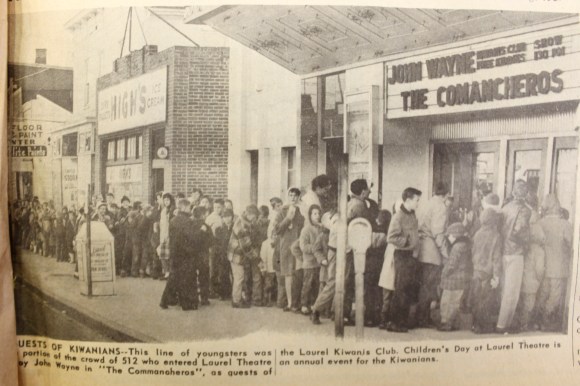
This 1962 Laurel Leader photo literally shows ’em lined up around the block. (Notice, too, that there was a High’s Dairy where Pal Jack’s Pizza would soon be!)
IMG_1108

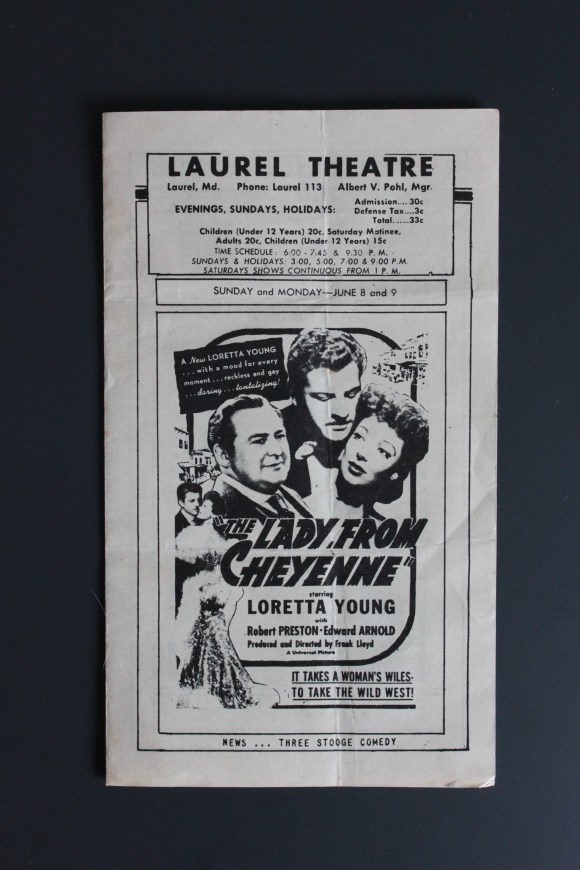
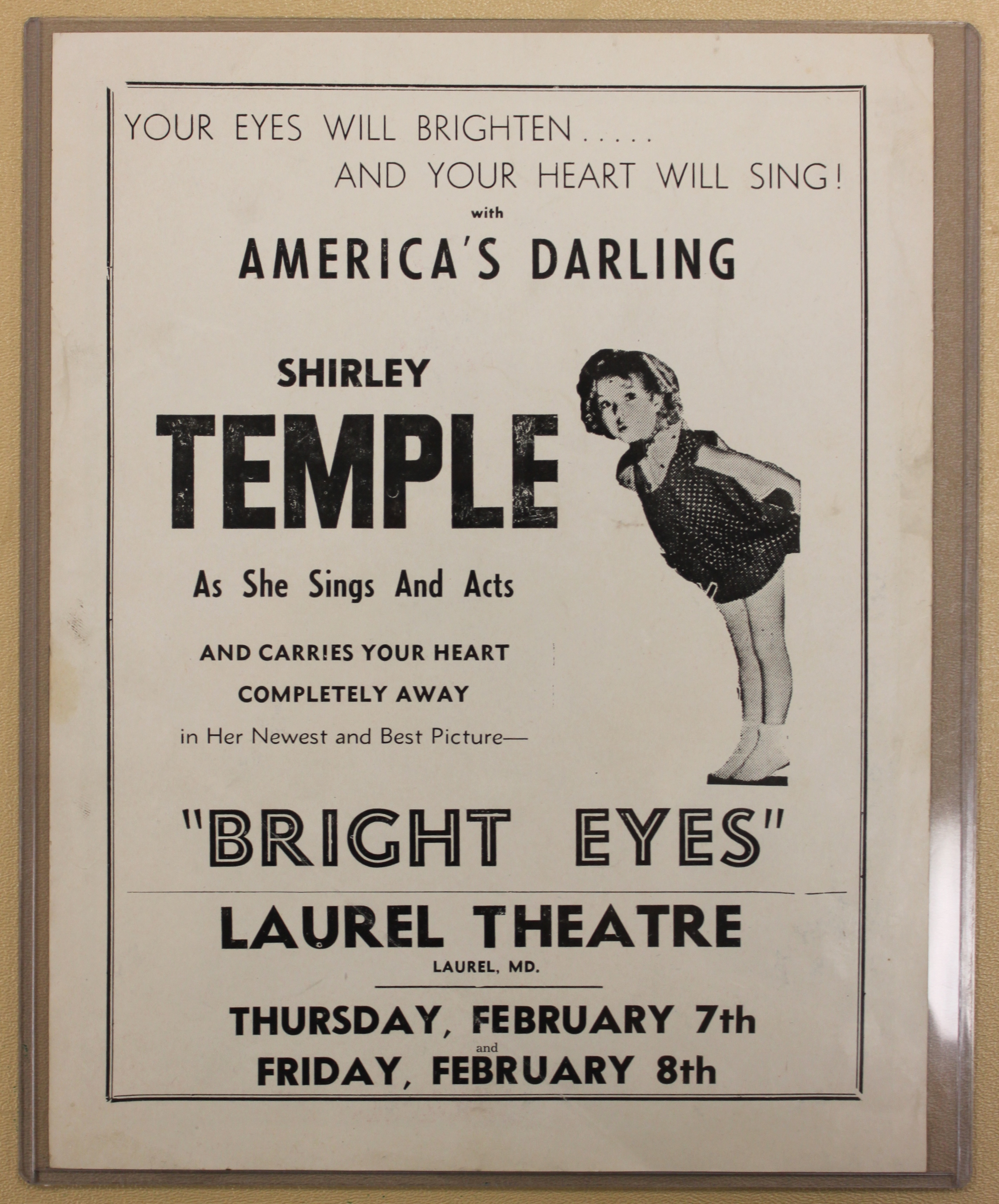
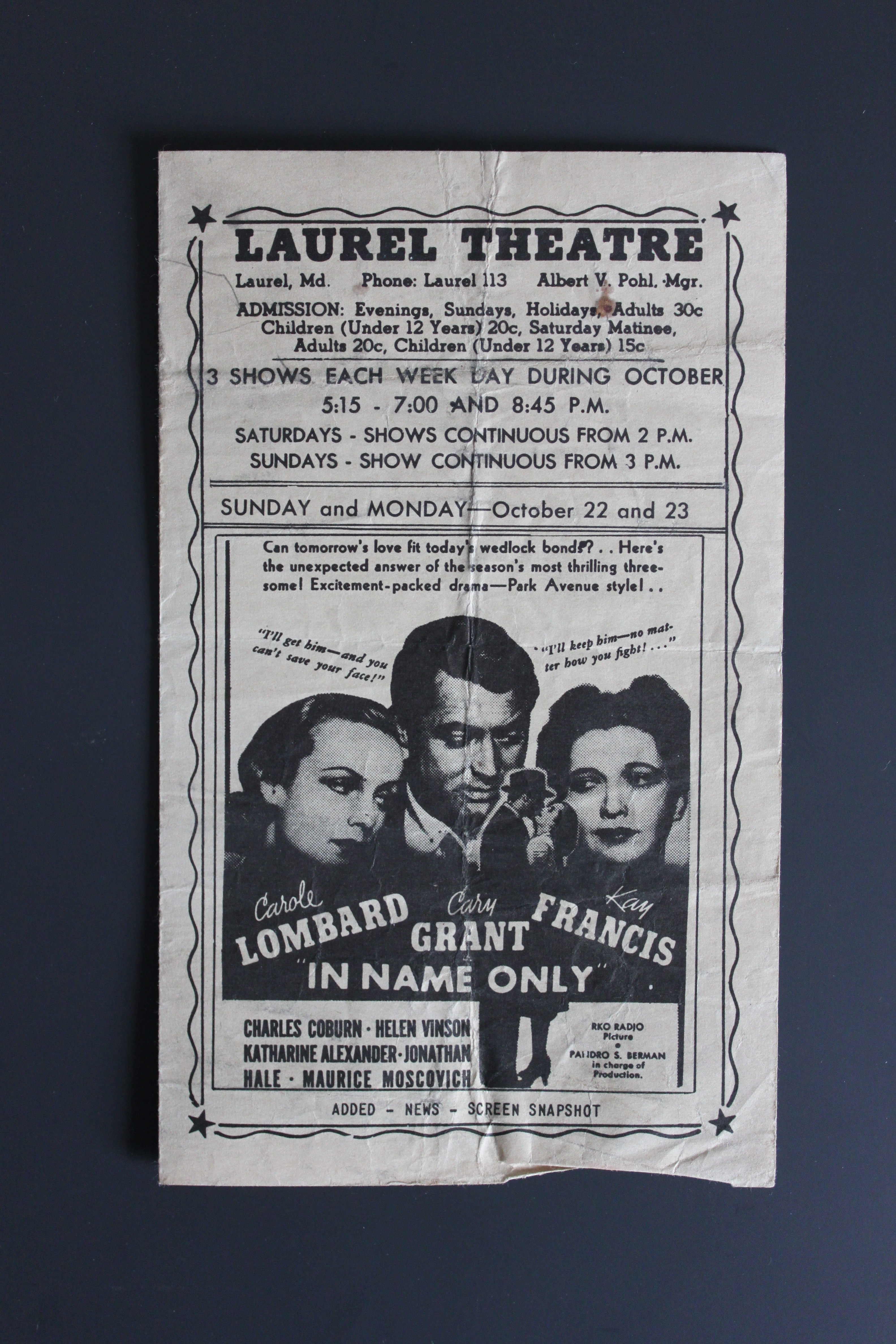
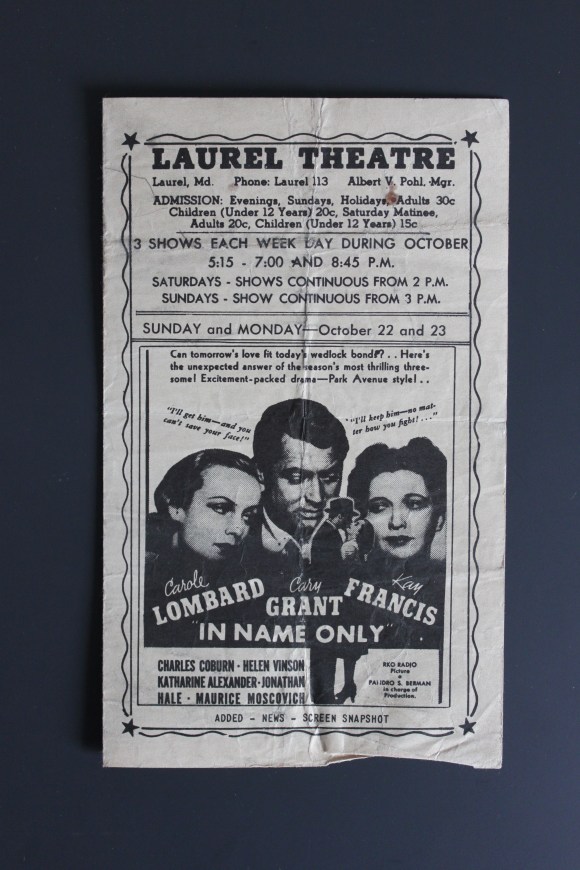
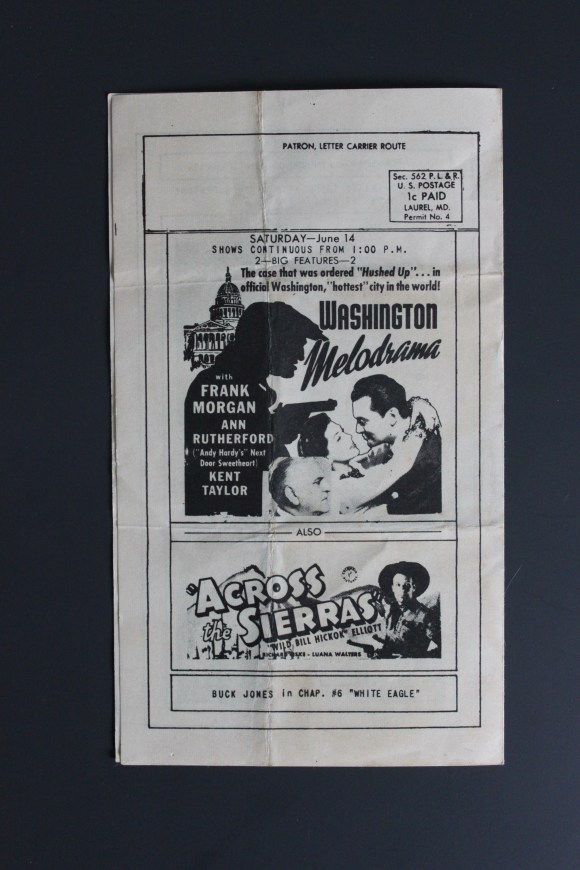
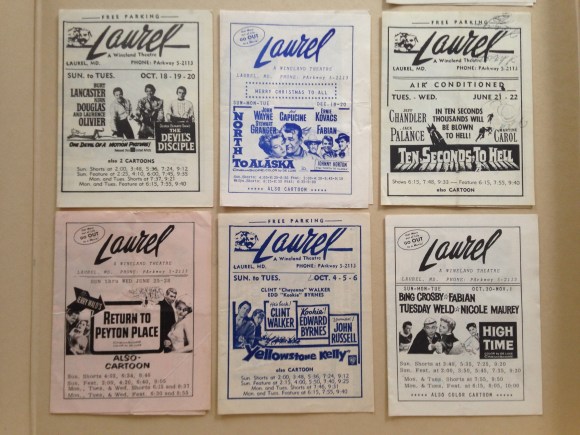
I’ve collected a few later (but still pretty darn early) programs from the theater, as has the Laurel Historical Society and collectors Peter and Martha (Kalbach) Lewnes. Here are a few:

1934 lobby card. (Peter and Martha (Kalbach) Lewnes collection)
1934 lobby card. (Peter and Martha (Kalbach) Lewnes collection)

IMG_6532

Program from 1939. (Lost Laurel collection)

IMG_6533

IMG_6536

Program from 1941. (Lost Laurel collection)
IMG_6537

1942 program. (Peter and Martha (Kalbach) Lewnes collection)
1942 program. (Peter and Martha (Kalbach) Lewnes collection)

IMG_9394

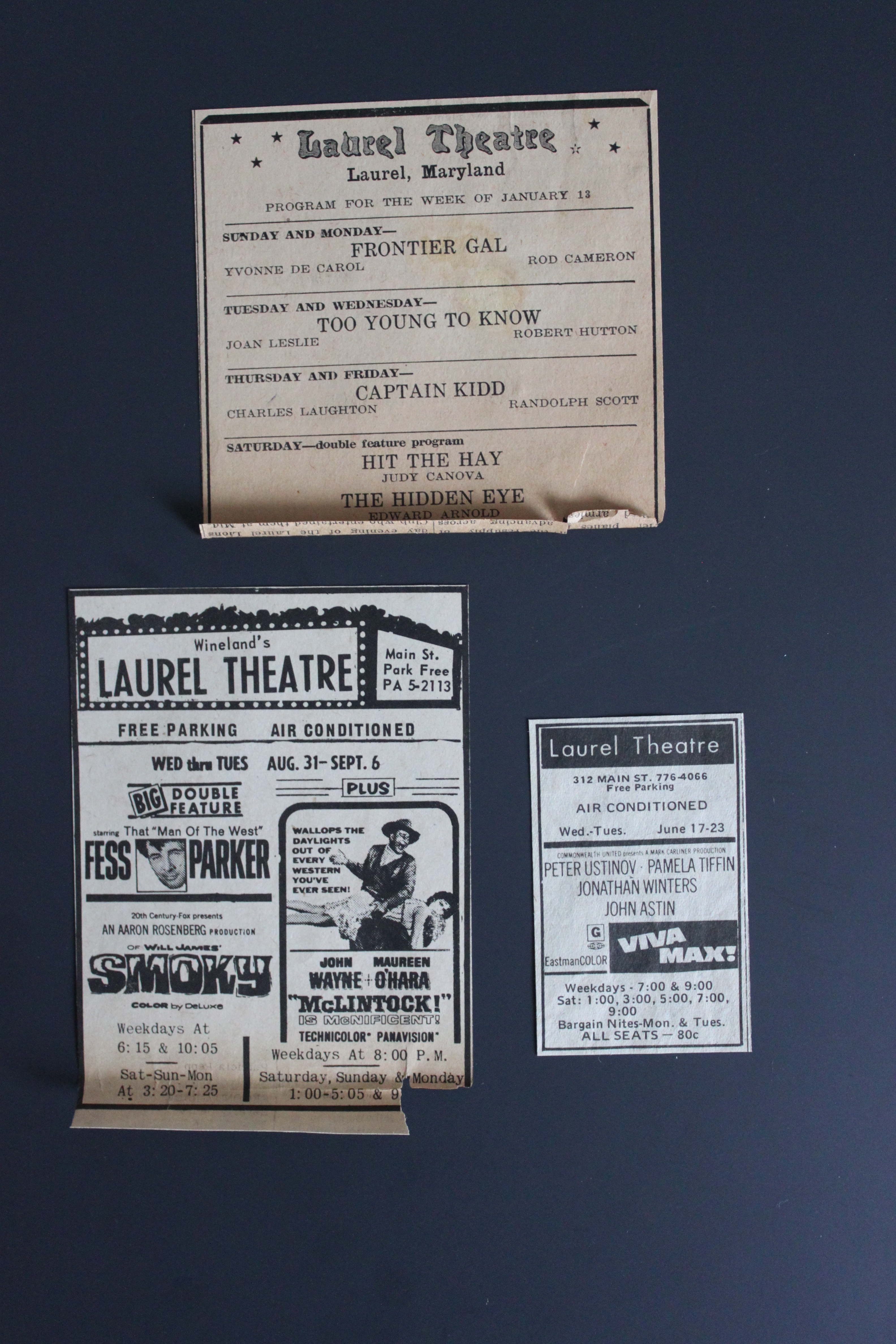
Programs from 1959–61. (Laurel Historical Society archives)

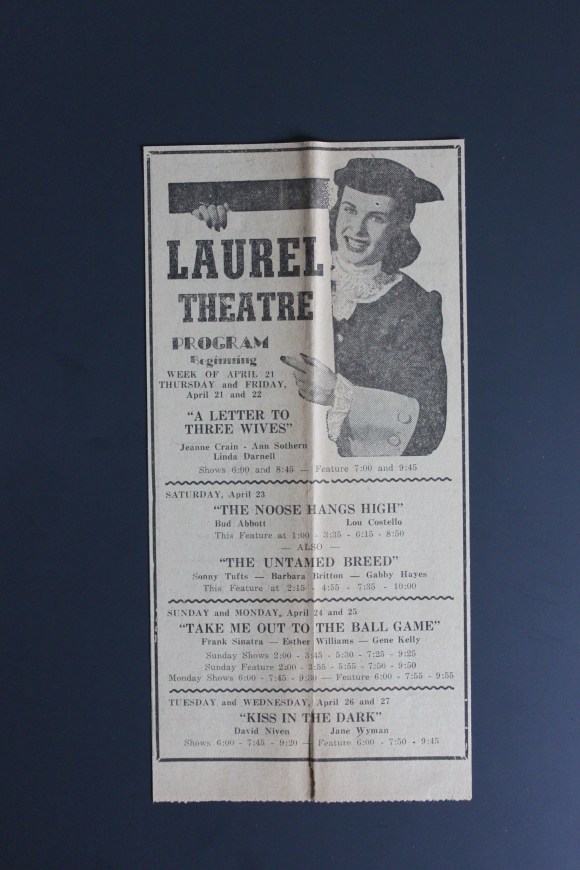
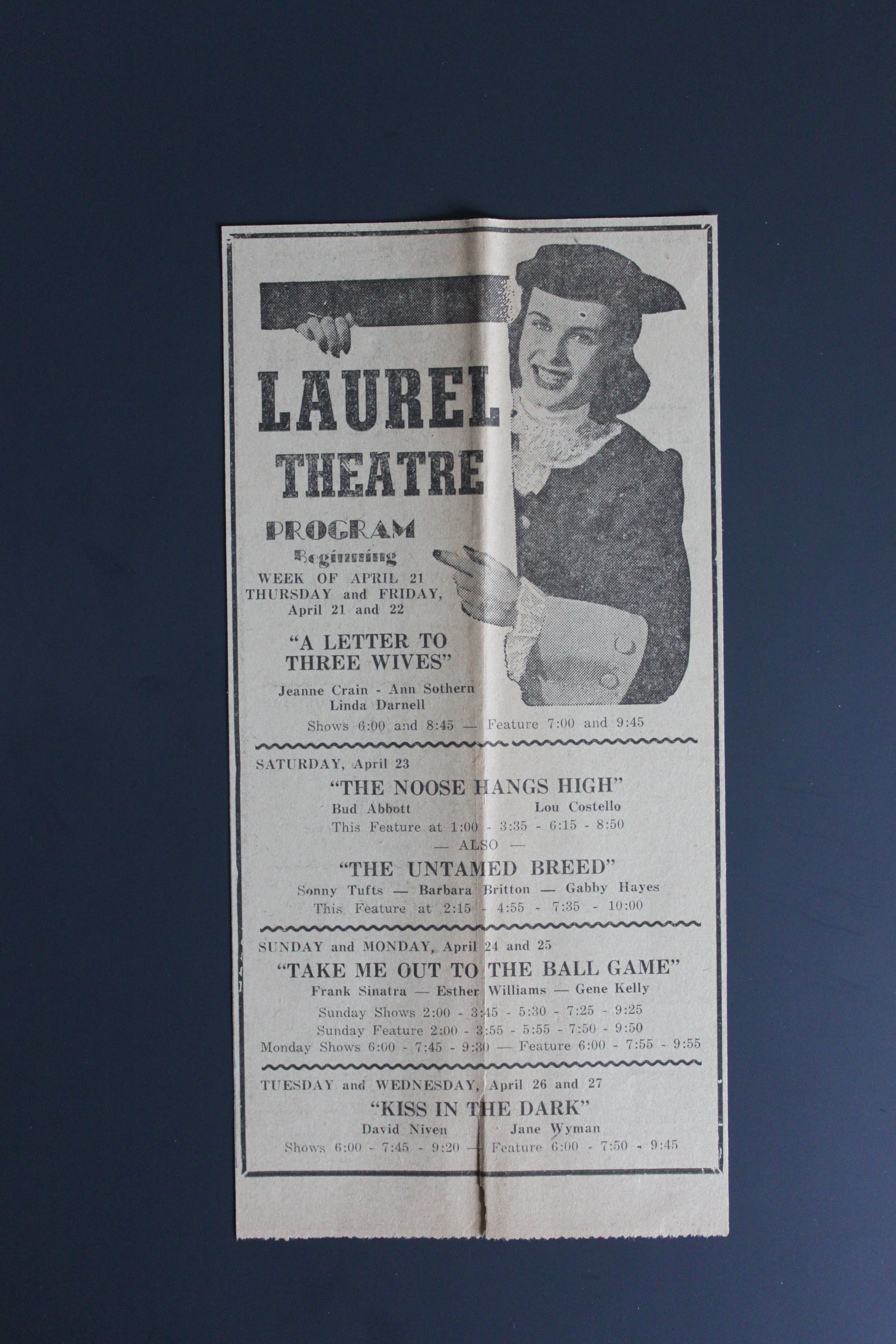
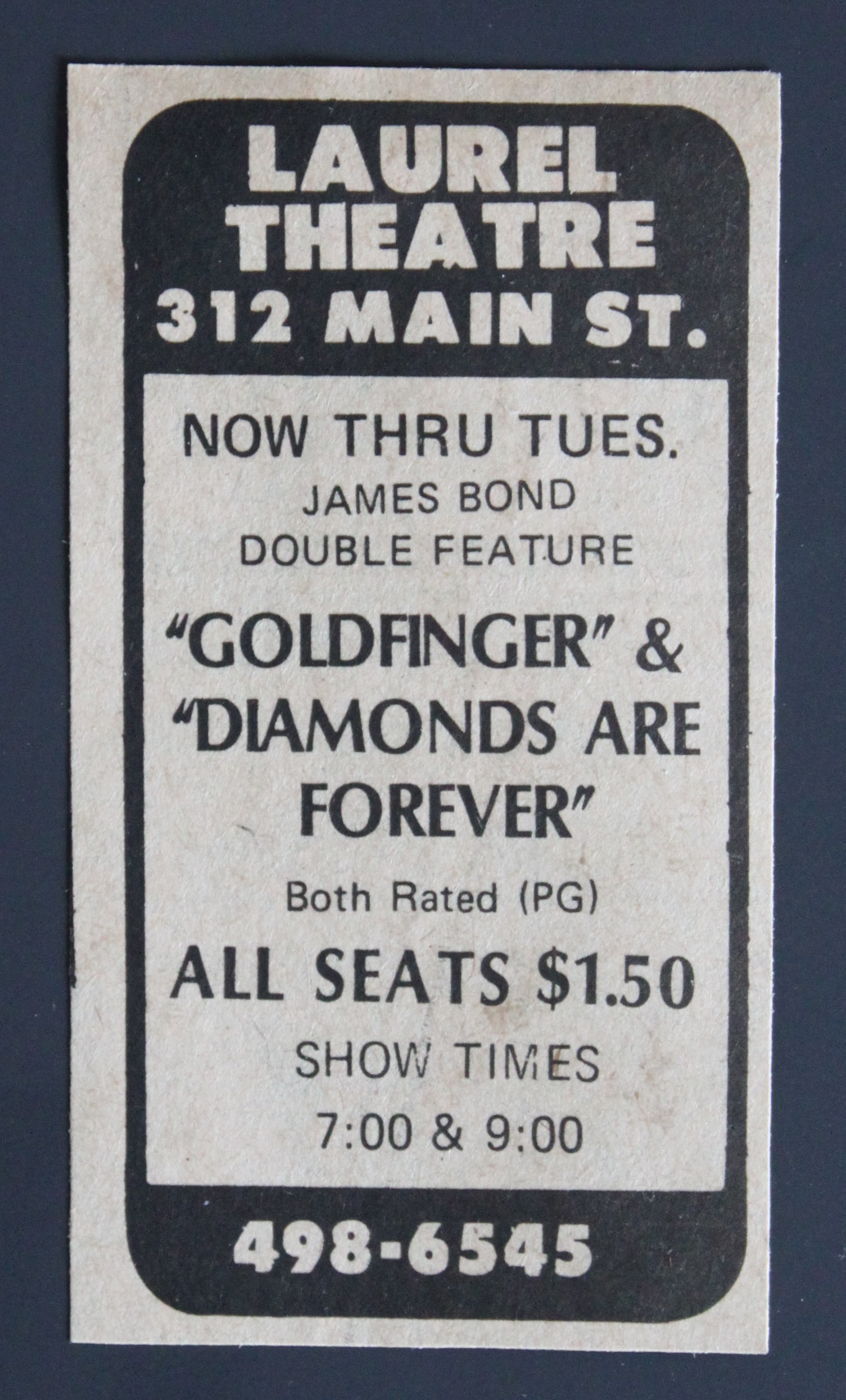
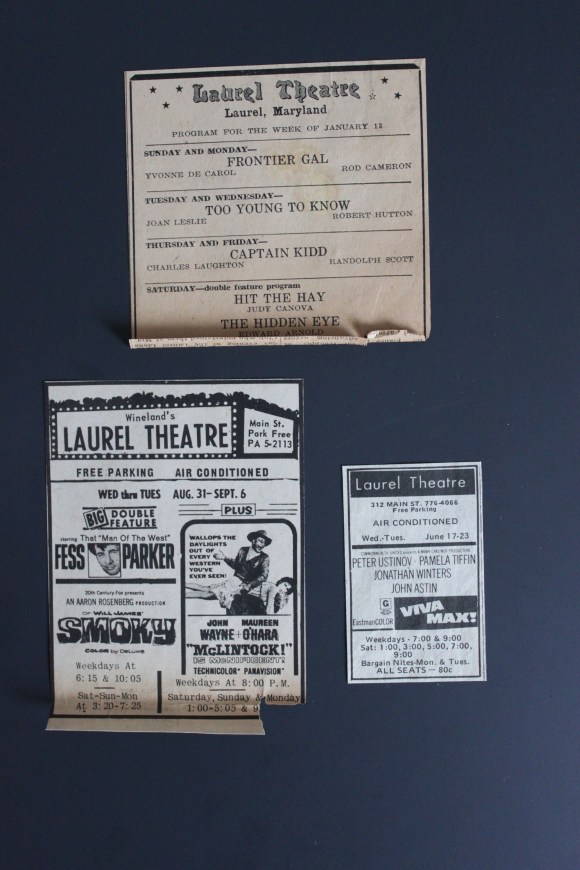
Here, too, is an assortment of Laurel Leader newspaper ads through the years:
IMG_6550

IMG_6544

IMG_6554

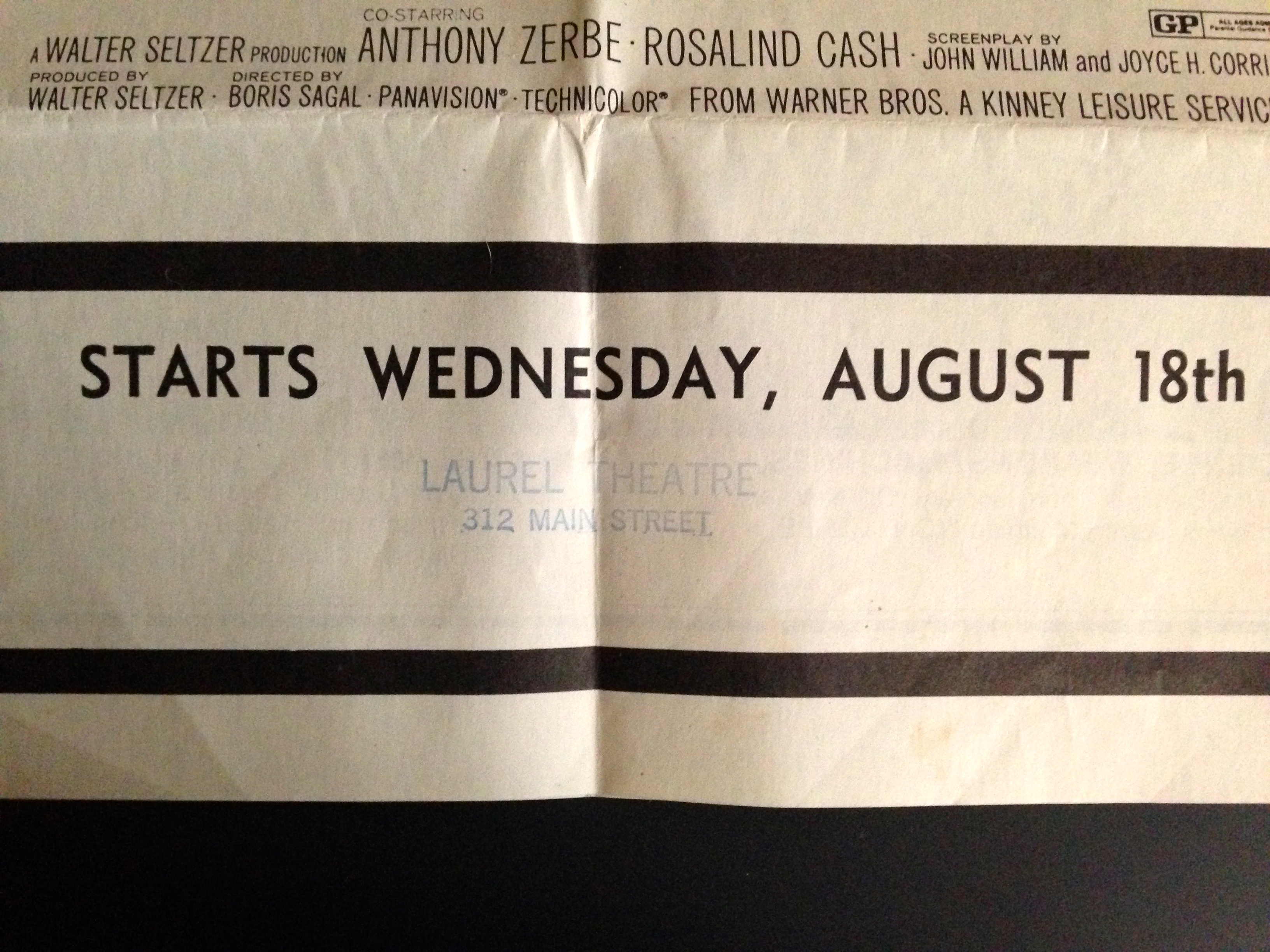
And a poster:

Poster for The Omega Man, 1971. (Lost Laurel collection)

Poster for The Omega Man, 1971. (Lost Laurel collection)

IMG_9367

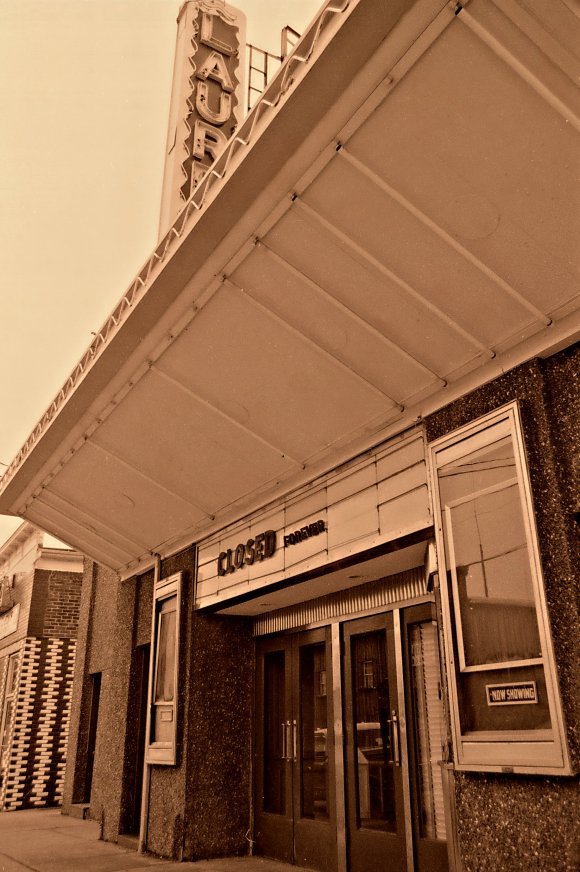
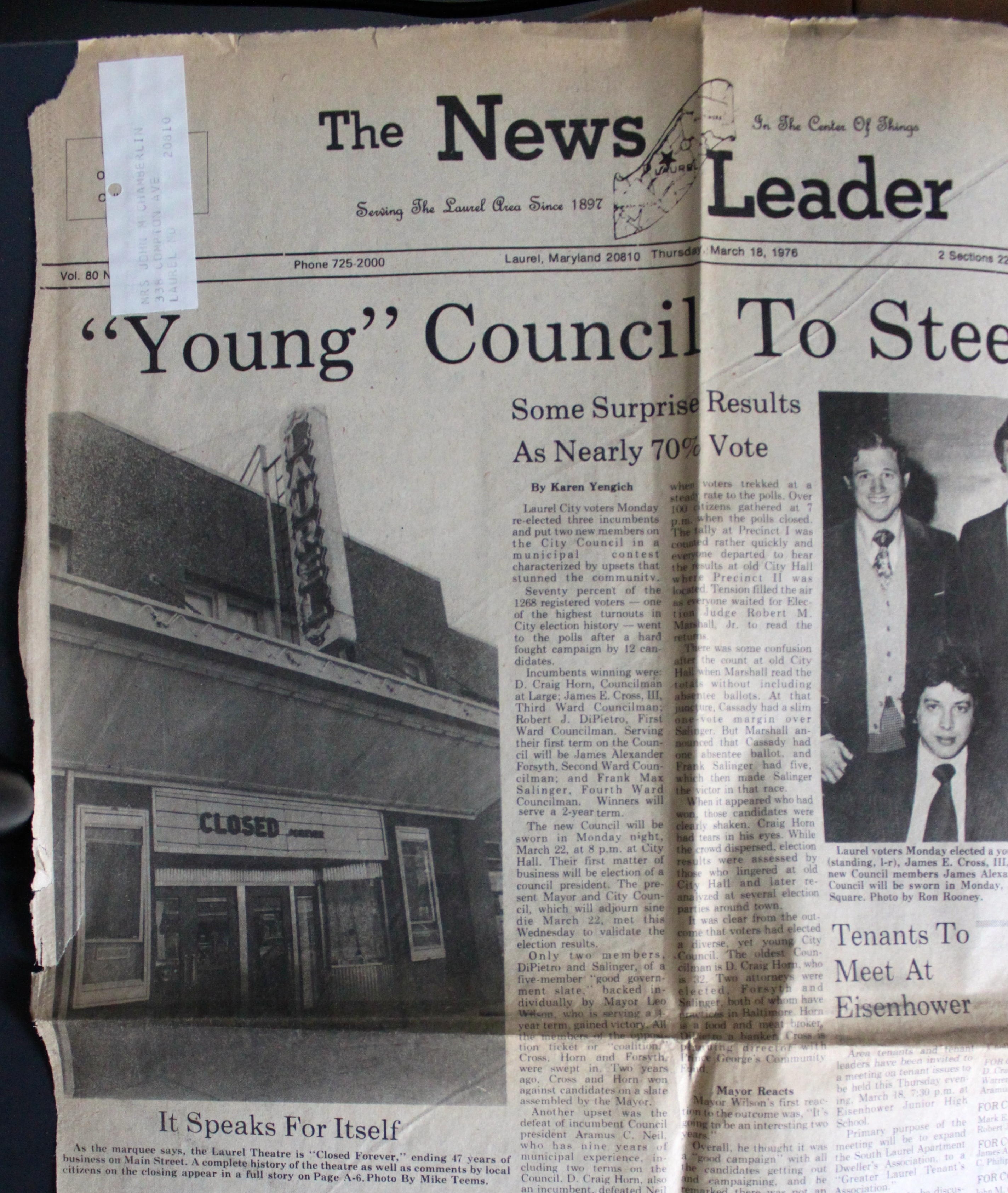
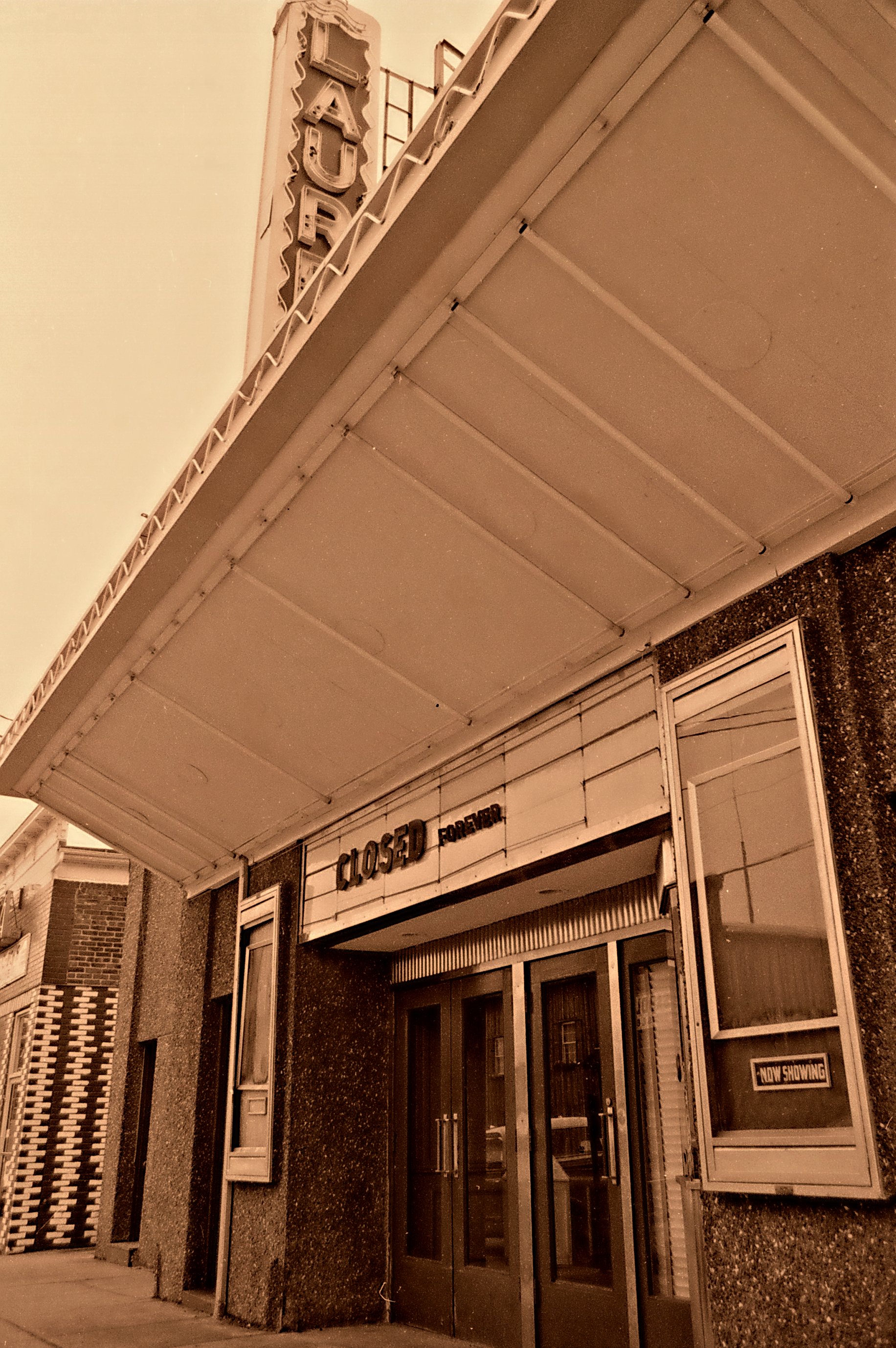
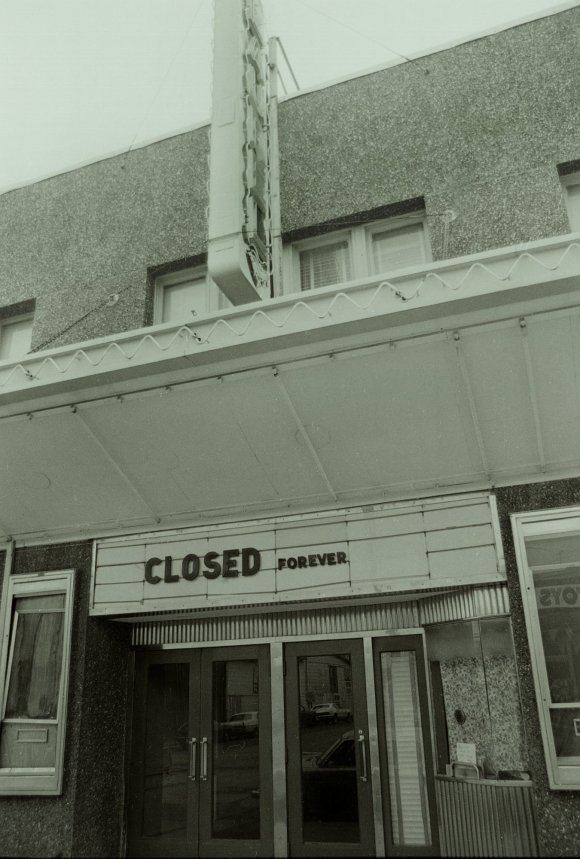
The theater was Laurel’s first and only movie house until the summer of 1966, when both Wineland’s Laurel Drive-In and Laurel Cinema opened at Laurel Shopping Center. The newer venues (and a minor fire in 1975) took their toll; and in 1976, the iconic Main Street theater called it quits.

PTDC0034

IMG_6549

(Photo: Robert Marton)

(Photo: Robert Marton)

(Photo: Ralph Bull)

(Photo: Ralph Bull)
(Photo: Ralph Bull)

(Photo: Ralph Bull)

(Photo: Ralph Bull)

(Photo: Ralph Bull)

“Closed Forever” was a bold statement, and one that fortunately ended up not being entirely accurate.

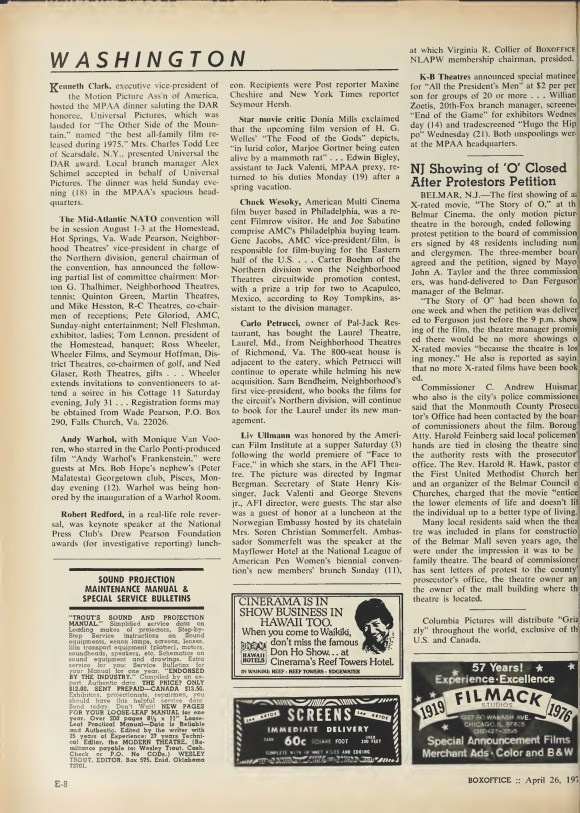
That same year, Carlo Petrucci—who’d already bought the adjacent Pal Jack’s Pizza at 310 Main Street back in 1970—purchased the building. The sale was noted in the April 26, 1976 issue of Box Office magazine:
boxoffice-mag-apr26-1976

The Petrucci family made a valiant attempt to keep the theater going, and did reopen it with the blockbuster Jaws. They announced it with this personalized ad in the Laurel Leader:

IMG_1799 - Version 2

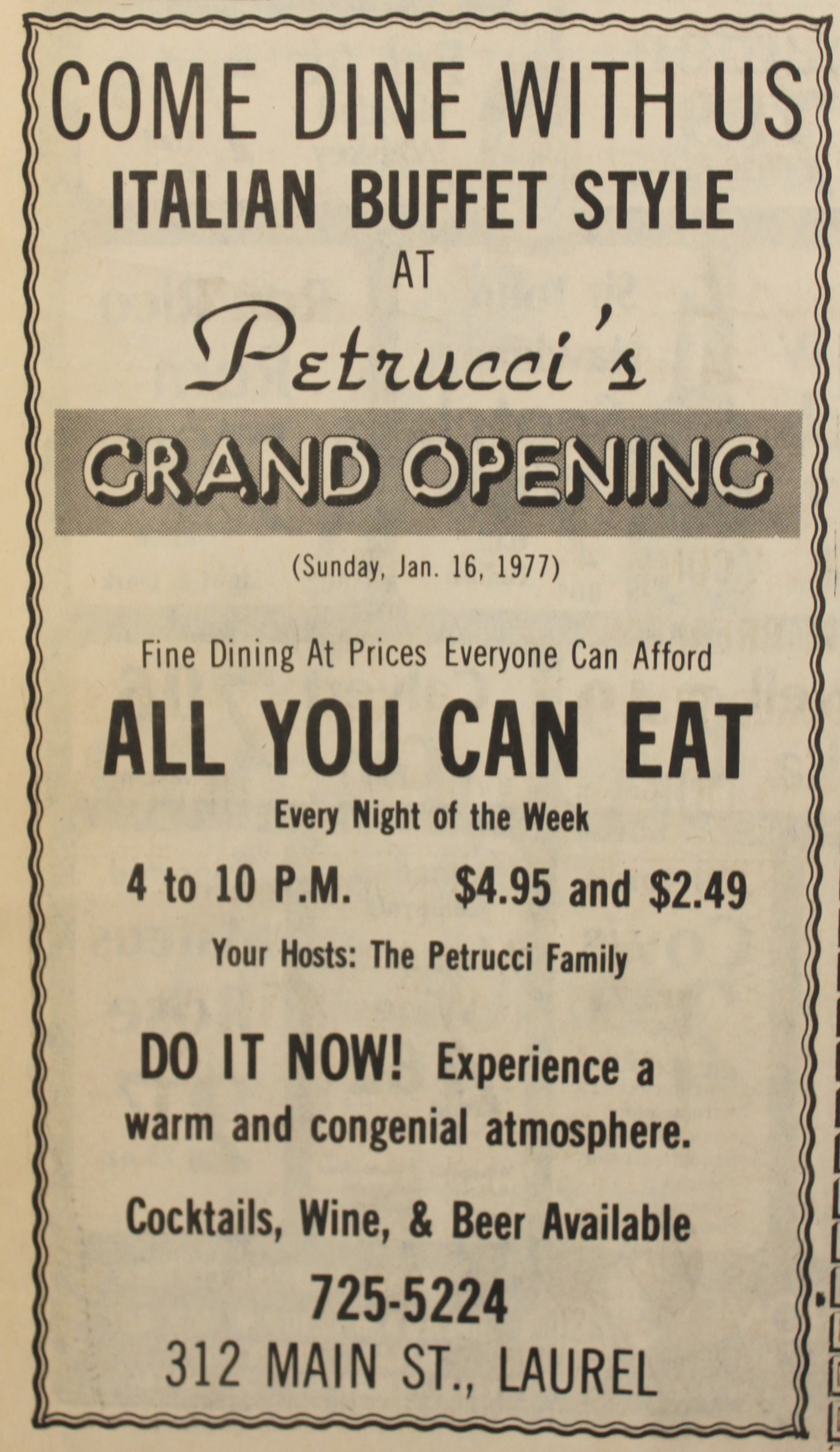
But the family had more ambitious plans for the building, and in the spring of 1977 came the arrival of Petrucci’s restaurant.

IMG_1468 IMG_1469 IMG_1470IMG_1472

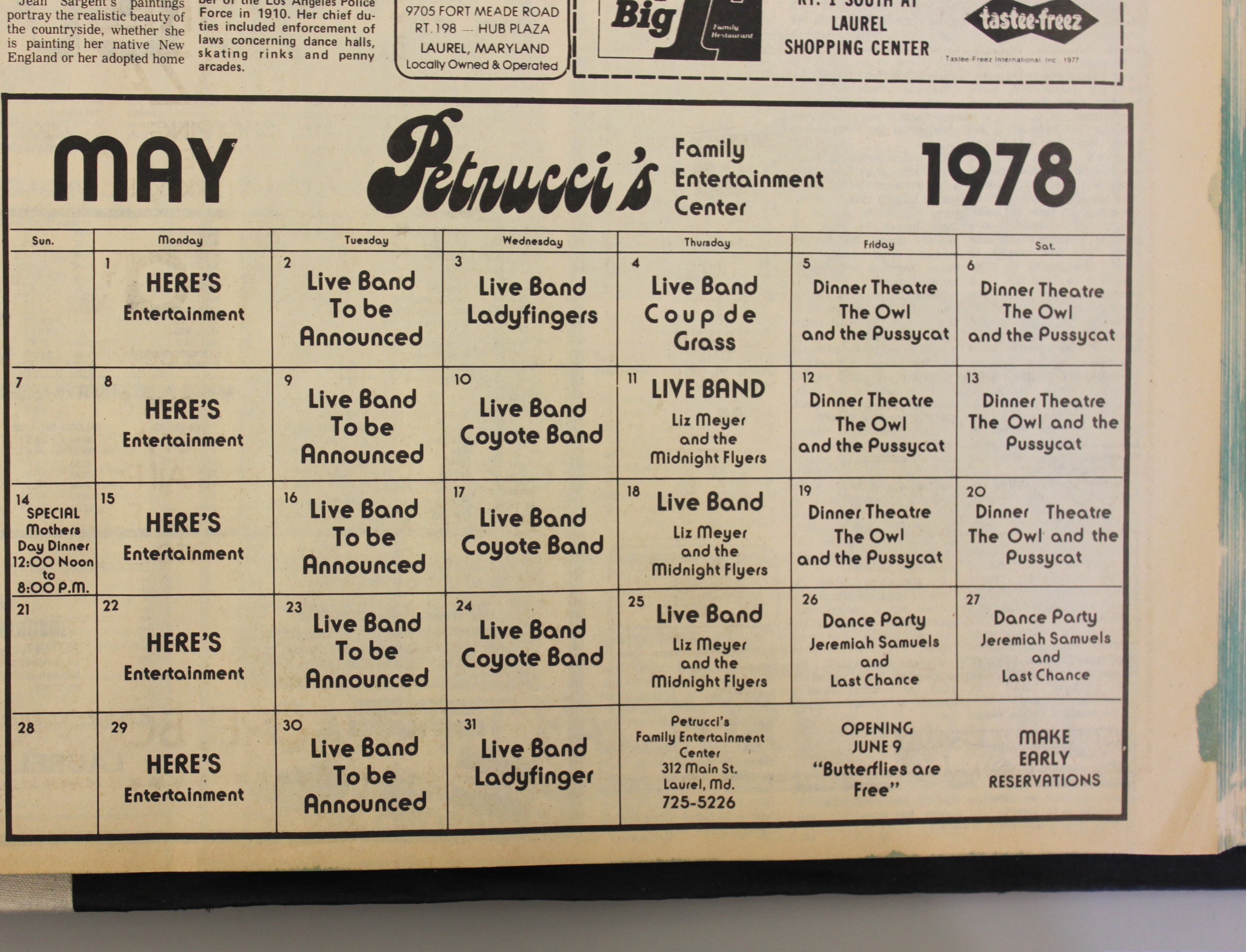
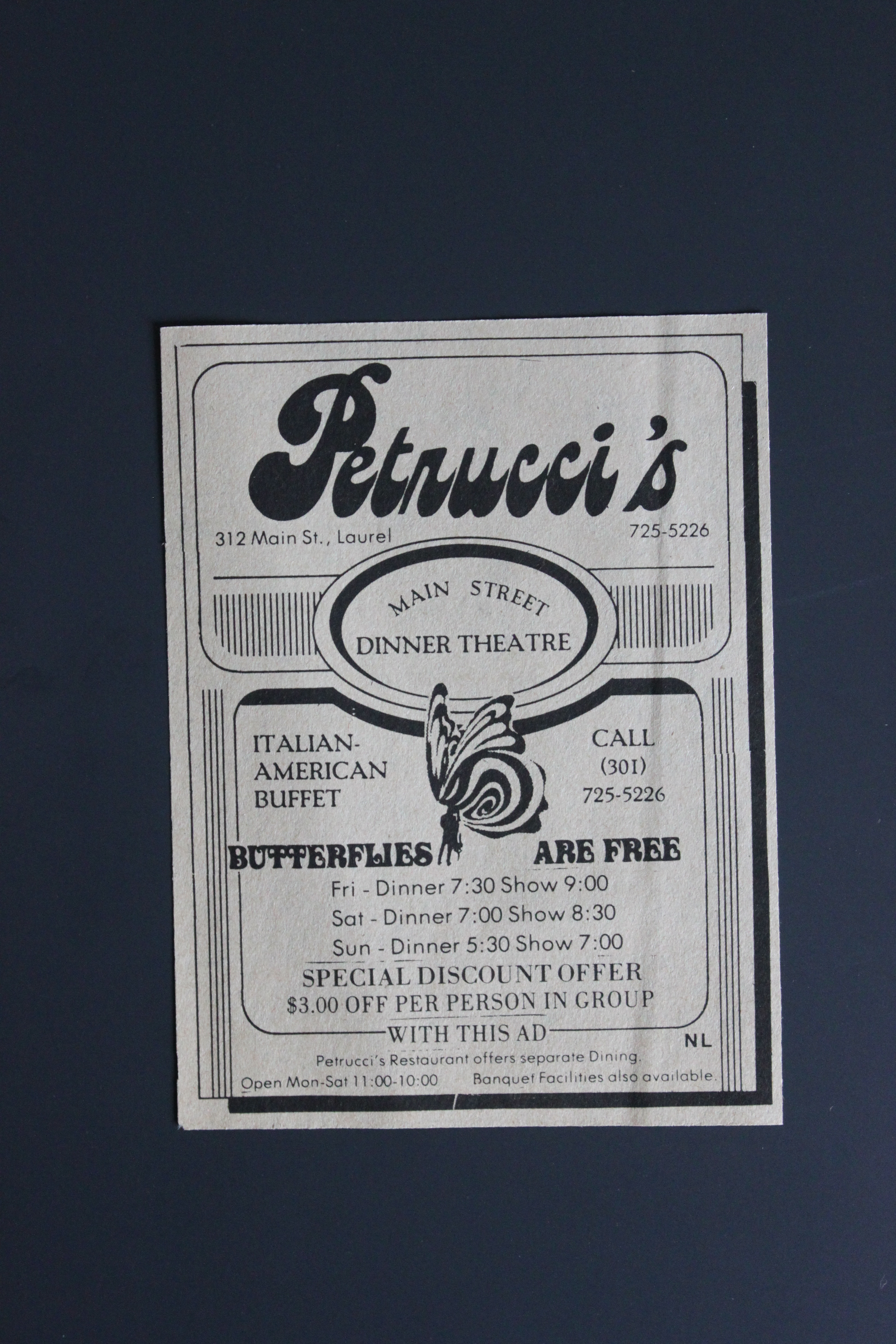
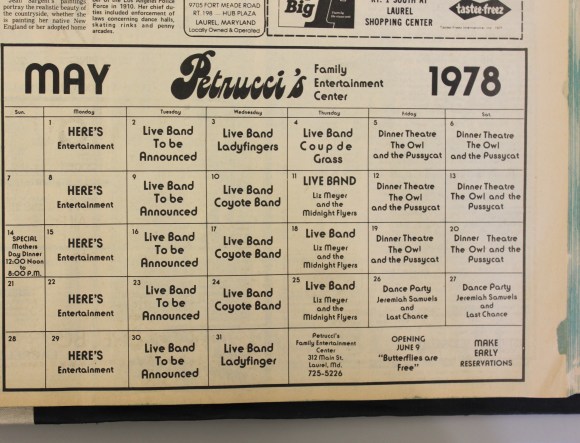
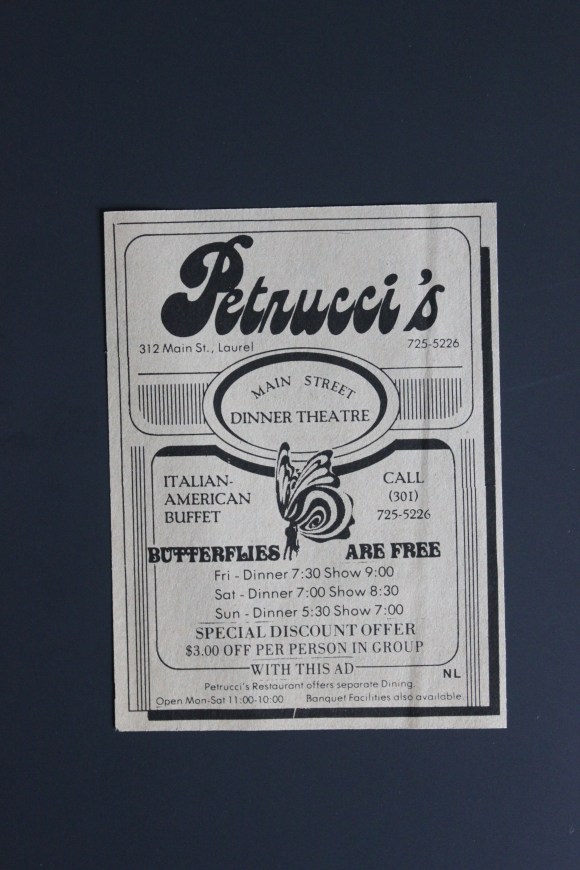
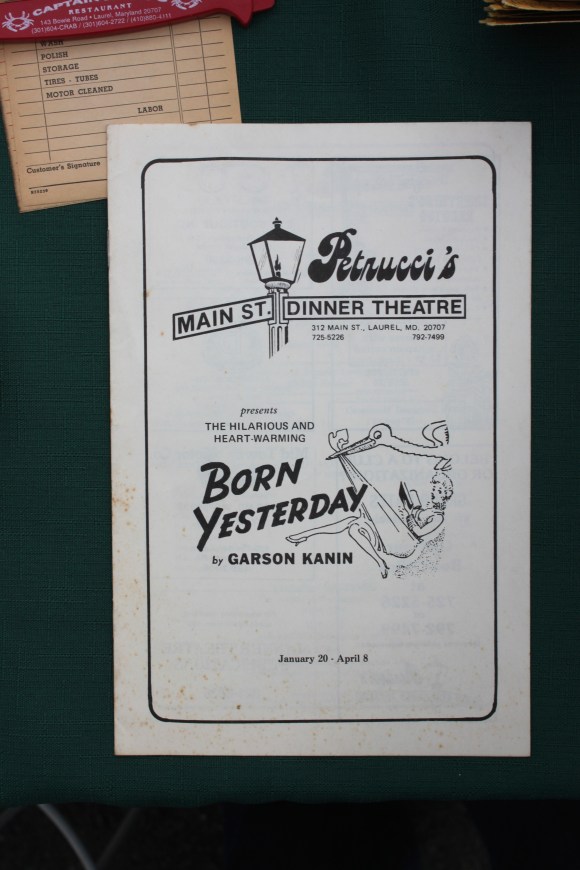
In less than a year, Petrucci’s was already experimenting with the idea of a full-fledged dinner theater—a concept never before tried in the area. And by the early 1980s, Petrucci’s Dinner Theatre was one of the indisputable highlights of Main Street.
(Laurel Leader ad)
(Laurel Leader ad)

Laurel Leader ad, July 27, 1978. (Lost Laurel colletion)
Laurel Leader ad, July 27, 1978. (Lost Laurel colletion)

1984 program. (Peter and Martha (Kalbach) Lewnes collection)

1984 program. (Peter and Martha (Kalbach) Lewnes collection)

Circa 1989. (Laurel Historical Society archives)

Circa 1989. (Laurel Historical Society archives)

But even for the successful Petrucci family, the good times only lasted for about 15 years. Shortly after closing, this quote appeared in the July 25, 1992 Washington Post:

“We realized that to stay open through the summer would have been an exercise in futility,” explains David Petrucci, the sole member of this family-owned operation who has not yet given up on the business.

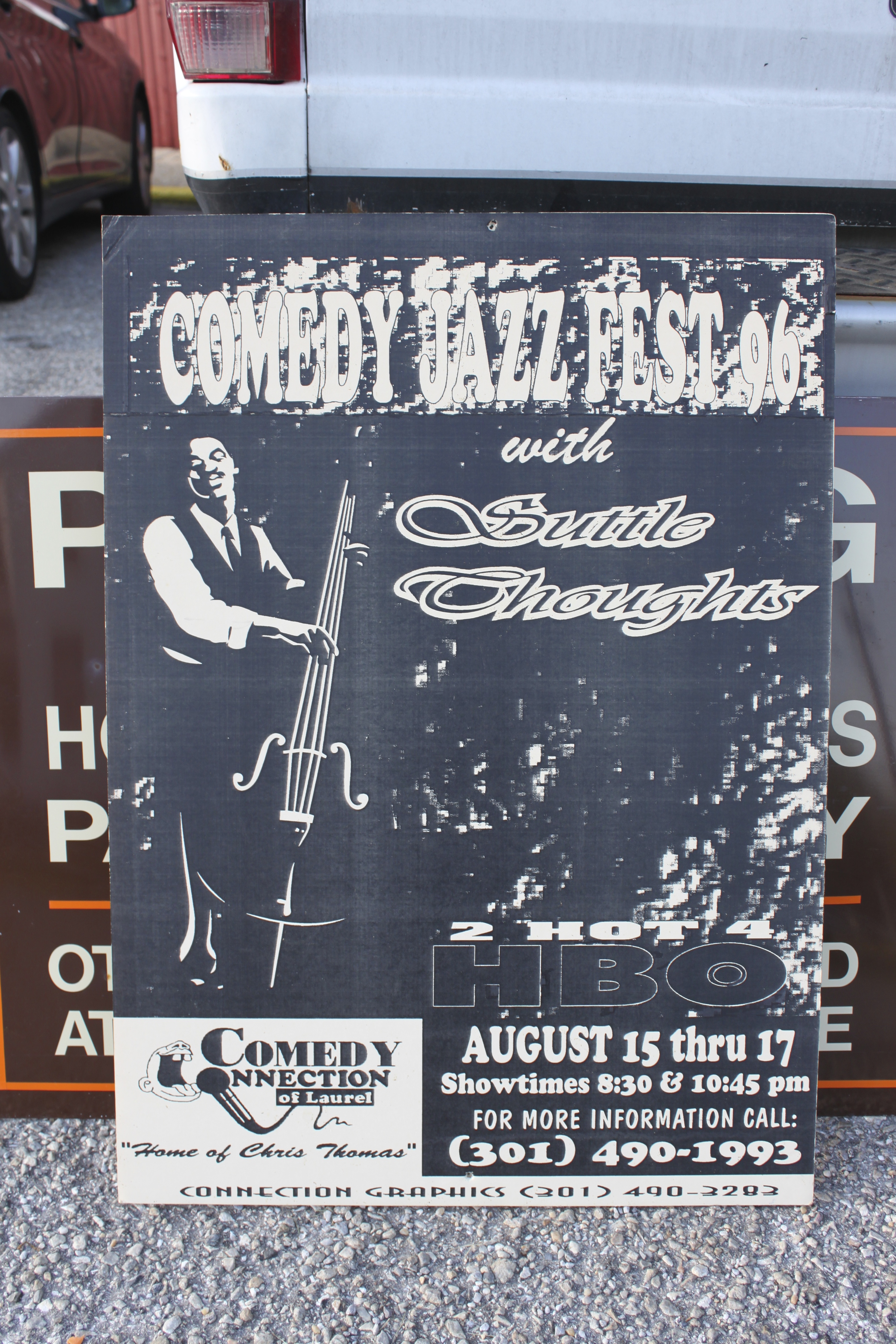
Thus began the series of hybrid comedy clubs, including Art’s, the Comedy Connection, the Laurel Cinema Cafe, and most recently, The Jokes on Us (aptly named, perhaps).

A 1996 Comedy Connection window display. (Lost Laurel collection)

A 1996 Comedy Connection window display. (Lost Laurel collection)

IMG_6564

Comedy Connection payment folder, c.1990s. (Lost Laurel collection)

There’s a stunning series of photos on Flickr that show the interior of the building in 2011. While the photographer has given it a different name, this is definitely the interior of 312 Main Street. (It may have been an urban exploration shoot—at any rate, the shots are eerily fantastic).

(Photos: Flickr user tmdtheue)

(Photos: Flickr user tmdtheue)

So that brings us to today, where the old building stands—but likely for not much longer.

There’s already been some discussion on the Lost Laurel Facebook page, as well as other local social media sites about the future of the old theater. Complicating the matter is the fact that it sits right in the heart of the city’s own designated “Arts District”—which took another blow in 2012 with the closing of the Laurel Art Center (another building that remains vacant as of this writing).

Many have called upon the Laurel Historical Society to intervene and protect the building, and discussions are underway about possible options other than the inevitable empty lot if it is indeed demolished.

I’ve mentioned that it’s not at all uncommon in cases like this to salvage the façade of the building—just the recognizable front of it—restore it and incorporate that into a brand new, mixed-use building that pays homage to the past. But truth be told, the façade of the old Laurel Theatre was never particularly remarkable, unfortunately, despite its great sentimental value. This would also place significant limits on whatever is constructed behind it.

I have a better idea, albeit probably a farfetched one. Imagine for a moment that it was possible to completely rebuild the Laurel Theatre, just as it was when it first opened in 1929. Now, imagine if it was possible for the city to do it without incurring any cost to itself. (I told you it was farfetched, but bear with me…)

I see this as a chance for the city of Laurel to up their game and create something truly special; and if done properly, I think there’s actually a very good chance that people would help. Lots of people—and not just from Laurel.

They could create an online fundraiser via Kickstarter and/or Indiegogo, where they present the opportunity to not only save the town’s original theater, but to create a genuine, functional showpiece in the heart of the Arts District: a completely rebuilt Laurel Theatre in the 1929 style, but with modern amenities—which could also serve as a type of cultural center for any number of events. Frankly, I can’t think of a more effective way to revitalize Main Street as a whole.

Since it wouldn’t be a privately owned venture, something like this could also likely qualify for a grant from the National Endowment for the Arts, or similar organizations.

Clearly, the city doesn’t have $2 million to spend on remodeling the theater—even if they wanted to. The $250,000 purchase was an investment toward something—anything–other than the decaying structure that’s been sitting dormant all this time. But if they at least explored the possibility that a national/international fundraiser (plus grants) could actually yield a significant amount of money to do something really special, that’s worth talking about.

Just for comparison’s sake, let’s look at a more famous (or should I say, infamous) theater: Ford’s Theatre in Washington, DC.

When you visit Ford’s Theatre today, you probably assume it’s maintained its original appearance all these years, right? Not at all. With the exception of its outside walls, the entire theater is a complete reconstruction.

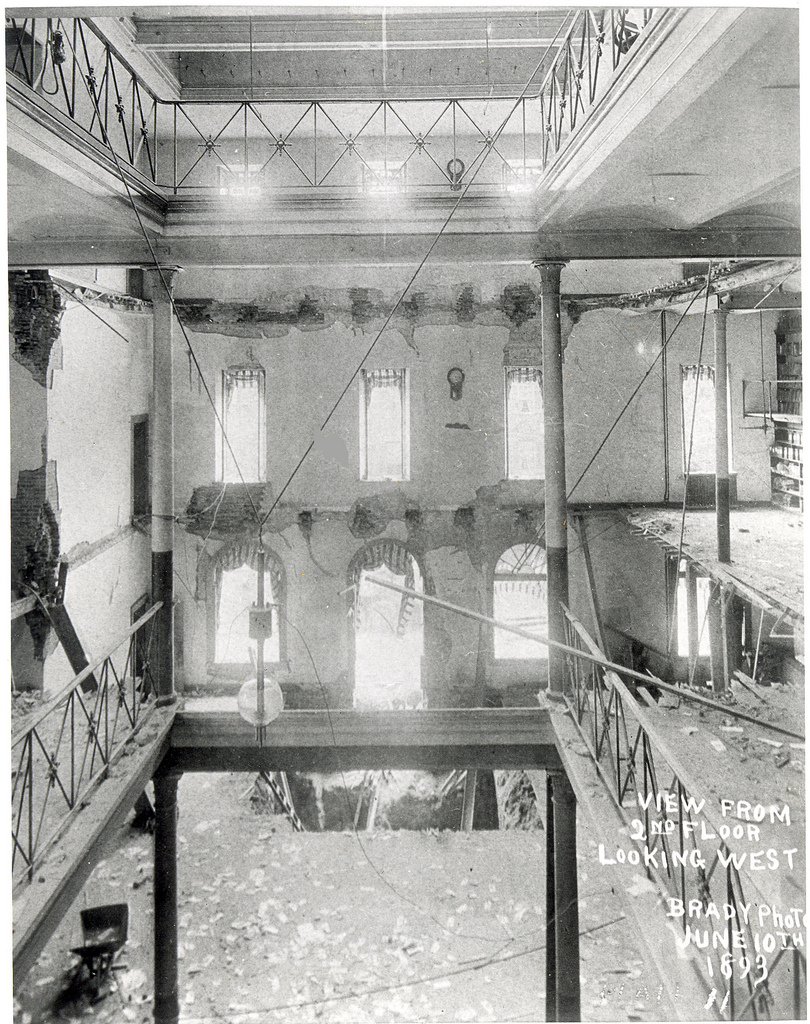
After the 1865 assassination of President Lincoln, the building understandably closed as a functioning theater. The government purchased it from John T. Ford, and promptly converted it into a three-story office building for the War Department, primarily. In 1893, the unthinkable happened: another tragedy. Load-bearing beams in the basement gave way under the excess weight, causing sections of all three floors above to completely collapse. In what must have been a horrific moment, 22 government employees were killed and at least another 65 were seriously injured.
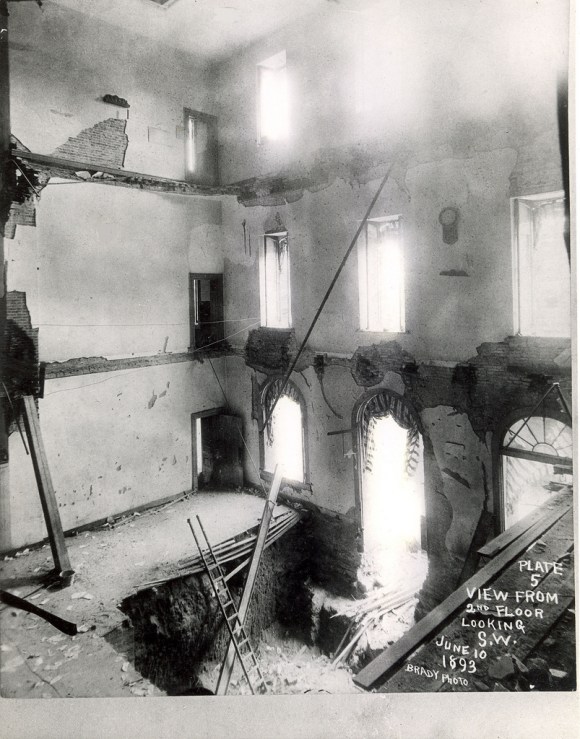
fords-1893-collapse-2

(Photo: NPS)

fords-1893-collapse-1

(Photo: NPS)

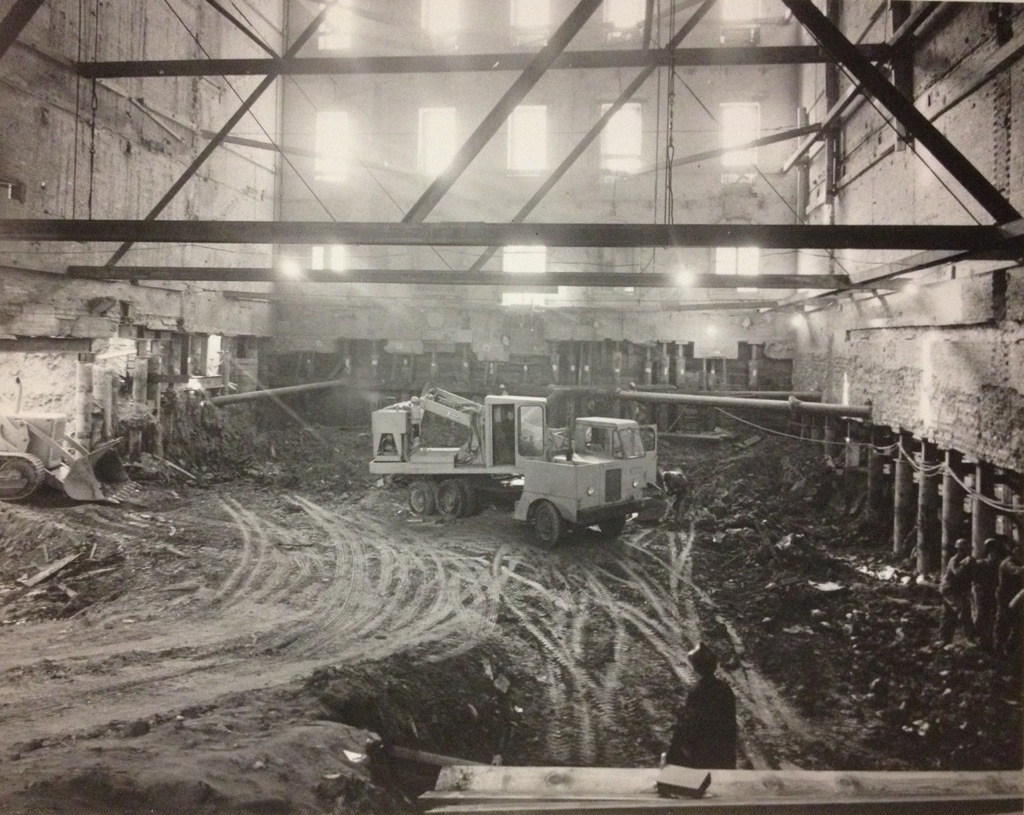
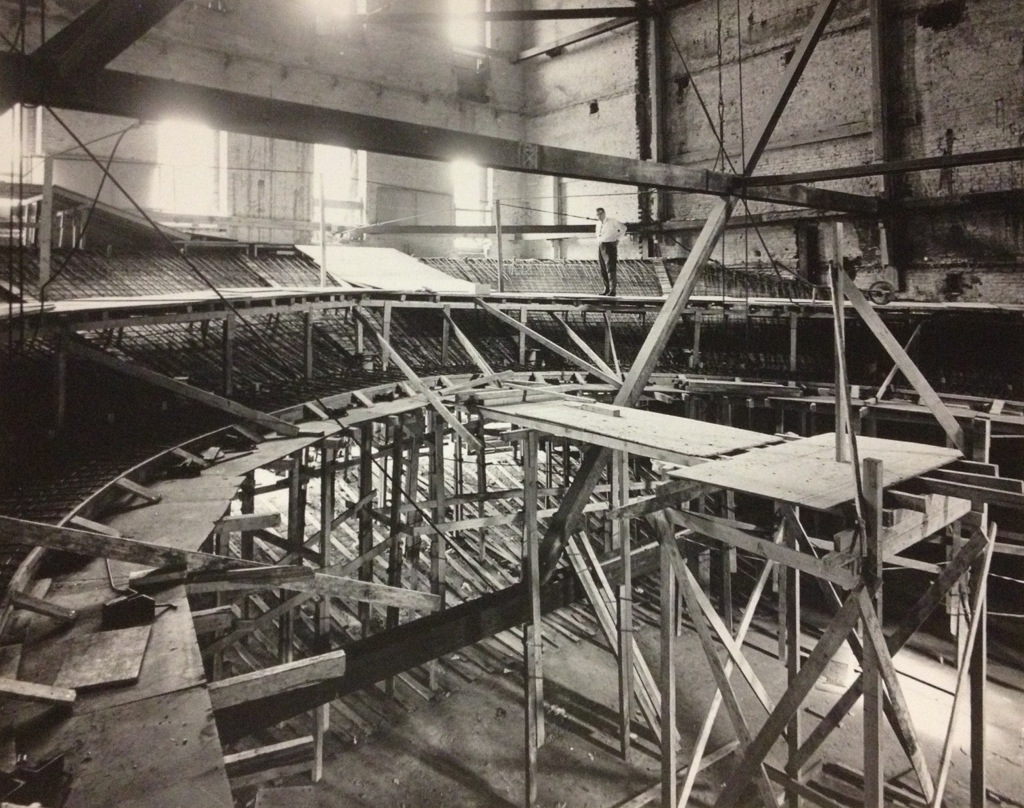
The building languished until the 1930s, when it was briefly used as a warehouse for the Department of the Interior before being turned over to the National Park Service as “The Lincoln Museum”—where only the first floor was open to the public. Then, in the 1950s, Congress approved a bill that would fund a complete restoration of Ford’s Theatre to its 1865 appearance. And in 1968, the famous theater opened once again as a historic landmark. These dramatic photos (found on the blog, BoothieBarn) show just how gutted it actually was.

20130825-193935 20130825-194034 20130825-194712

Granted, I’m not suggesting that the old Laurel Theatre is on par with a national treasure; but I wanted to show that it’s entirely possible to gut the interior of a historic building—or level it completely, if need be—and rebuild it to its original specifications. That’s something that should indeed be considered by the city of Laurel before deciding to sell the property—particularly if they can receive funds to do so.

On the much smaller end of the spectrum, take a look at some of the “save our theater” campaigns that actually are on Kickstarter at the moment. I recently pitched in for one near me in Fairfax, VA. The University Mall Theatres is in dire need of new seats, and has raised over $111,000 in a matter of days with their grassroots campaign. That’s a private business, too—the city of Laurel stands to qualify for considerably more if it goes the non-profit route. And as far as non-profit models go, there’s none better than Silver Spring’s AFI Silver Theatre.

The Silver Theatre in 1938 and 2003 (http://silverspringhistory.homestead.com/theatre.html)

The Silver Theatre in 1938 and 2003 (http://silverspringhistory.homestead.com/theatre.html)

It, too, was dangerously close to meeting the wrecking ball when both citizens and politicians stepped in and capitalized on the opportunity to create something remarkable. The non-profit theater and cultural center now hosts films, film festivals, musical events, and much more. It’s also available for private rentals, further increasing its revenue.

The dedication plaque that hangs in the lobby of the AFI Silver says it all—and could easily be applied to Laurel if you think about the similarities:

THROUGH THE TIRELESS EFFORTS OF
THE SILVER SPRING COMMUNITY, INCLUDING
ITS ELECTED OFFICIALS AND APPOINTED LEADERS,
THE PAST HAS BEEN PRESERVED FOR THE BENEFIT
OF THE FUTURE. AS A CORNERSTONE OF
A REVITALIZED DOWNTOWN, THE AFI SILVER
IS A CENTER OF CULTURAL AND EDUCATIONAL
EXPLORATION, UNITING THOSE WHO VISIT
THROUGH THE POWER OF THE MOVING IMAGE
 
APRIL 4, 2003
 
DOUGLAS M. DUNCAN
MONTGOMERY COUNTY EXECUTIVE
 
JEAN PICKER FIRSTENBERG
DIRECTOR AND CEO, AFI

***

So, the city of Laurel now owns the building at 312 Main Street, and has a very big decision to make in the coming weeks. Much like the doomed Laurel Centre Mall, anything they do with it will likely be an improvement over the past decade. But I hope the city planners will at least take a very careful look at this opportunity before selling the property outright. The elusive key to revitalizing Main Street and creating a legitimate Arts District centerpiece may actually be sitting in their hands as we speak.

IMG_9415

Matchbook, c.1950s. (Lost Laurel collection)

Tagged , , , , , ,

Lost Laurel Books… Thank You!

After nearly 20 lengthy trips to my local post office, I’m happy to report that all* of the Lost Laurel books have finally been mailed! (Cue applause!)

Most of you should have already received your books and Kickstarter rewards by now, but the final batch went out today—so everyone who pre-ordered should have their books in hand before the end of this week.

If you’ve ever wondered what the collective receipts for nearly 500 packages looks like, here’s a glimpse:

post office receipts

I greatly appreciate everyone’s patience, as I know this has been a long time coming. As I’ve mentioned, I had to package and mail each book myself, and did so in the order in which I received payment. So, there was a lengthy list of Kickstarter supporters who came first—many of which required boxes, with things like fragile Little Tavern coffee mugs carefully packed inside along with the book itself. I then moved on to the later pre-orders placed via PayPal.

The unexpected snafus from the printer really threw more than just a wrench in the works, as I’ve detailed before. Aside from their shipping delays, the limited-edition hardcover books inadvertently became even more limited when they mistakenly only printed 100 rather than the 200 I’d ordered. I ended up receiving a total of 143, which unfortunately still wasn’t enough. A few customers who pre-ordered hardcovers via PayPal late in the game will have to settle for a signed softcover instead—along with a Lost Laurel postcard pack and a portion of your payment refunded to the softcover price. (This has already been done, so if you didn’t receive a PayPal partial refund, your order wasn’t affected).

That drama aside, I’m glad to hear that the books are arriving and people are pleased with them! I even received an actual thank you card from someone recently! That wasn’t necessary, but it made my day, and I certainly appreciate it.

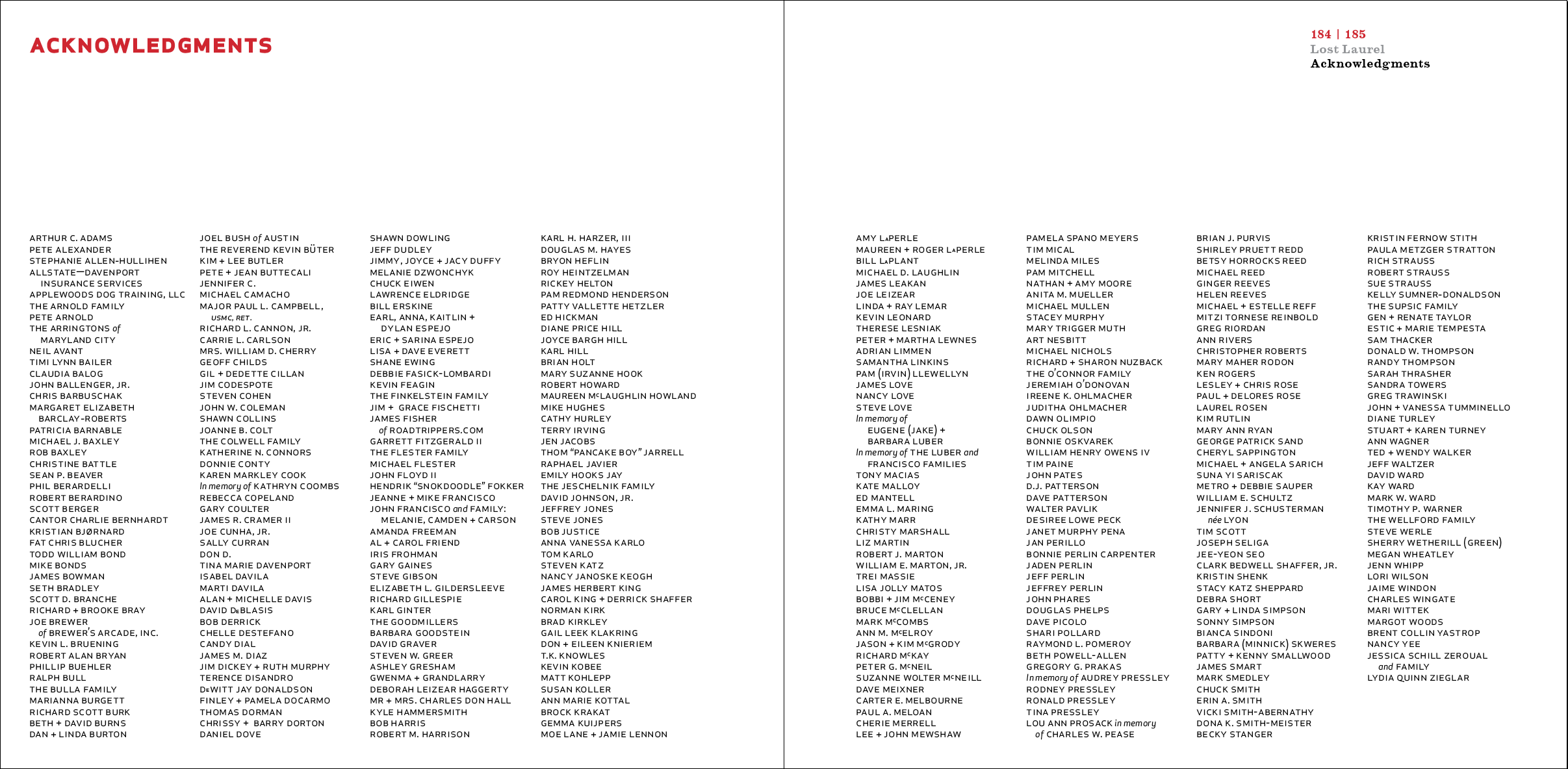
Going back to the very start of this project, I want to reiterate my appreciation of the generous contributions from so many of you–contributions that ultimately were the difference in this book getting made. As you’ll see in the book itself, there are two spreads of acknowledgments thanking everyone who pitched in during the Kickstarter campaign, and I’d like to publish those names here, as well. A very big thank you to you all, indeed!


Thank you spread 1

Thank you spread 2


*There are still a couple of you who ordered books, but haven’t sent me your mailing addresses: Anita M. Mueller and Geoff Childs! If you’d like to pick them up in person, I’ll be at the Laurel Municipal Pool Room (9th & Main Street) this Thursday night (April 10th) at 7PM for Kevin Leonard’s “History Matters Expanded” presentation.

The Laurel Museum will also be open that night from 6–7, and their gift shop has the remaining supply of Lost Laurel books for anyone wishing to buy extra copies. They also have exhibit posters available in two sizes, and designed by yours truly! I’ll be on hand Thursday night, signing copies. Stop by and say hello!

Tagged , , , , , ,

March 13th Lecture & Book Signing (…fingers crossed!)

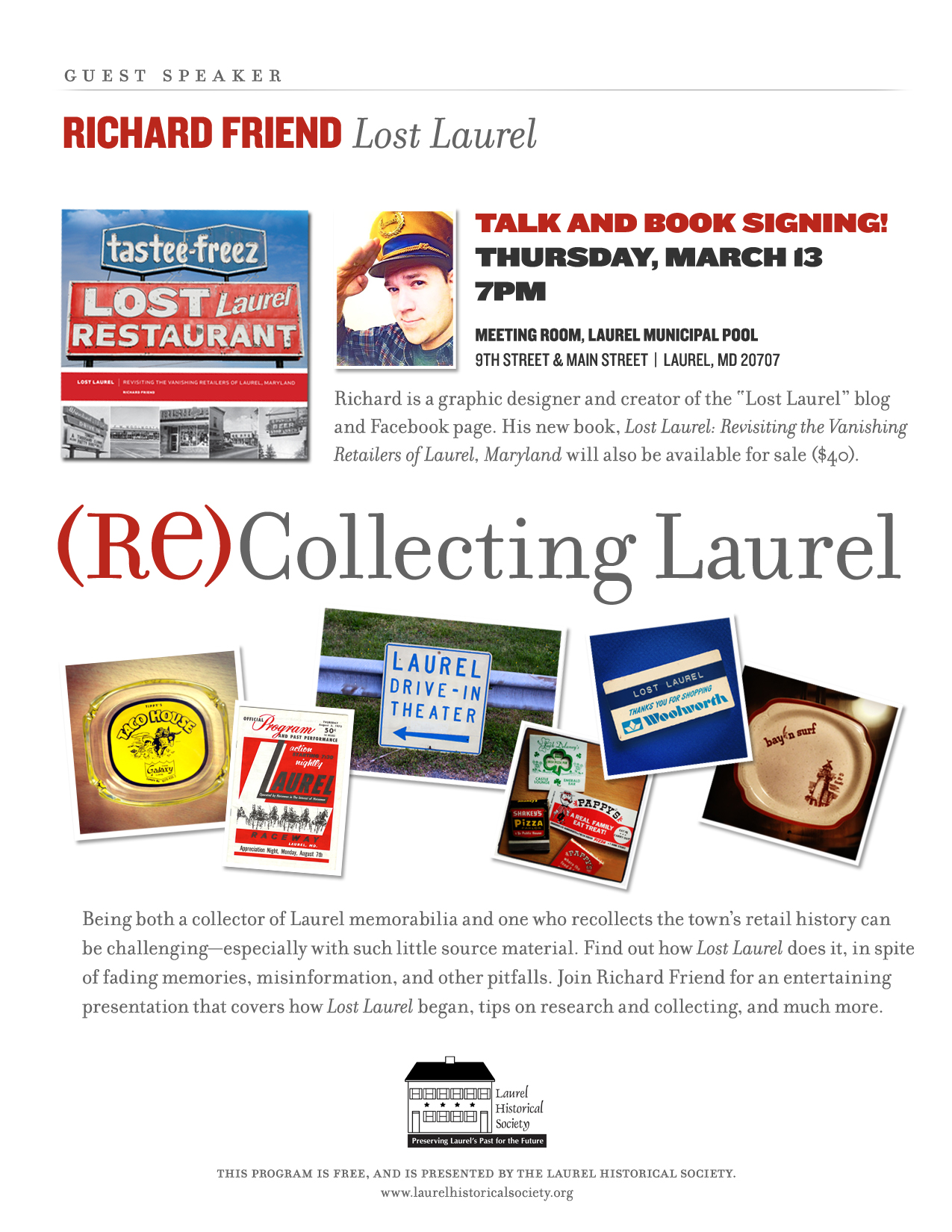
If you haven’t heard, I’m giving a presentation next Thursday, March 13th at the Laurel Municipal Pool meeting room at 7PM. It’s a fun, interactive talk called (Re)Collecting Laurel, that discusses how Lost Laurel began, collecting Laurel memorabilia, and more. It’s totally free, and is presented by the Laurel Historical Society.

lost-laurel-booksigning-flyer

The plan is to also do a book signing that night… provided the books actually get here in time. (!!!)

As I’ve mentioned, I had been told to expect the books around the middle of February, at which point I had planned to mail them out, so everyone would have them in time for this event—which the Laurel Historical Society and I have been planning for months. However, I found out on February 19th that the cargo container the books arrived in (along with countless other imports) was being held for random inspection by U.S. Customs at the NY/NJ port.

Nancy Heinonen, the production manager I’ve been dealing with at Four Colour Print Group, has been providing me with updates that range from optimistic to maddeningly frustrating. Her emails have literally gone from “…that would put delivery at the first week of March”, to “I’m certain you’ll have books for your March 13th event,” to “Since this is such a rare, extreme situation, I no longer feel comfortable giving you any educated guesses as to what will happen, or when books will arrive.”

The latest delay, of course, is the extreme weather that’s compounding things at ports all over the east coast. This isn’t just affecting their company—even the likes of Walmart and Target aren’t getting their goods any faster, despite their large influence.

She’s assured me that their freight broker has flagged my delivery as top priority, and is well aware of my March 13th deadline; but apparently that’s the extent of what they can do. Fortunately, she hasn’t given up hope—especially with the considerably warmer weather coming over the next week, which can only be a good thing. But that’s the fun situation I’m in: sitting, waiting, and hoping the books make it here in time.

She mentioned the possibility of “grabbing some cartons and shipping them by air”, and wanted to know a minimum quantity—but I made it clear that I need to have enough books on hand for those who’ve pre-ordered them as well as extras for sale.

I’ll keep everyone posted over these next few days via Kickstarter, Facebook, and this blog. And if the books do indeed arrive in time, I’ll ask that you kindly let me know if you plan to attend the event and pick up your copy in person. Otherwise, I’ll still plan on mailing the pre-ordered books out as soon as possible.

Also, after I’ve delivered all of the pre-ordered books, the remaining paperback supply will ultimately be for sale at the Laurel Museum gift shop—so you’ll be able to buy extra copies when you check out the new Lost & Found Laurel exhibit—which opened on February 9th to a fantastic crowd! While the Museum isn’t usually open on Thursdays, they will be open for visitors next Thursday night from 6–7, before the lecture.

I greatly appreciate everyone’s patience, and look forward to finally getting these books in-hand very soon. Hope to see many of you at next Thursday’s event!

Tagged , , , ,

Stanley Memorial Library: What’s In a Name?

UPDATE: 3/8/14

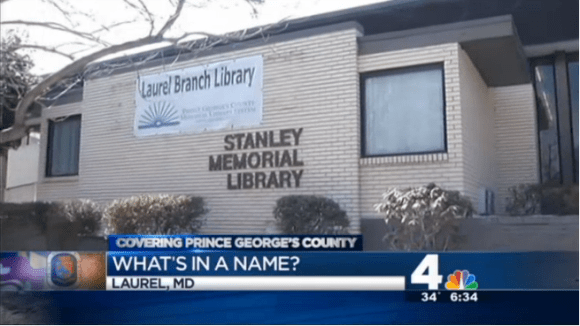
Shortly after stories were published about opposition to the Prince George’s County Memorial Library System’s plan to drop the “Stanley Memorial” name from the new library, Laurel resident Maureen Johnson wrote a letter to the editor of the Laurel Leader, in favor of changing the name. She brought to light an important historical detail that had been readily available in Charles H. Stanley’s online biography, but until now, hadn’t so much as raised an eyebrow: he fought for the Confederacy.

She raised the point that it’s not necessarily the fact that a library is named after a Confederate veteran that troubles her; it’s the location of the library that is going to undoubtedly rub many residents the wrong way—Laurel’s historically African-American neighborhood, The Grove. Moreover, the new building will occupy an even larger portion of Emancipation Park than the current building does.

Maureen gave an interview with NBC4’s Tracee Wilkins last night that explained her position well:

NBC4 News screenshot

Click image for link to video and story on NBCWashington.com

It’s crucial that I include this update, because much has changed over the last few days—and it’s in the interest of fairness that I add Maureen’s voice to the story.

When I wrote the original post below—and subsequently launched a petition urging the Library Board to keep the Stanley name, it was solely in response to the news that the PGCMLS was planning to drop the name “in order to make the library easier to find”—which I think we can all agree was a universally absurd reason.

As far as I was concerned at the time, the only issue at hand was the library’s potential breach of contract with the Stanley family—the descendants of Charles Stanley, who generously donated the land for which a library in his honor was constructed.

For whatever reason, it seems that the idea of actually researching the complete life history of Mr. Stanley himself has just never manifested until now. And in the heat of the moment, reading what little information was posted about him, the innocuous mention that he served as a private in the Confederate army admittedly didn’t have anywhere near the emotional effect on me as it did Ms. Johnson; and that resulted in some spirited back-and-forth on Facebook earlier this week.

I’m happy to report that I had the chance to meet Maureen in person yesterday, and found her to be a wonderful, engaging lady who’s clearly passionate about her hometown. She’s also acutely aware of the sensitivity of this entire situation, and acknowledges that it’s complicated on so many levels.

We discussed my concern that Stanley’s legacy of extensive service to Laurel shouldn’t be tarnished outright without significantly more research. There are snippets emerging of other potentially important and redeeming deeds that Stanley may have done in his lifetime that specifically benefited the African-American community, too—if verifiable, those types of things would certainly have to be taken into consideration, as well. By the same token, should more troubling details surface about his Civil War experience, it needs to come to light for history’s sake, and particularly for the sake of the surrounding community in which his namesake library has stood for nearly half a century.

The PGCMLS has a difficult task ahead, and I hope they’ll reach out to the Stanley family—or vice versa—and work together to reach a solution that’s in Laurel’s best interest.

We’ve hardly heard the last of this story. In the meantime, the Laurel Leader‘s Luke Lavoie has written the first extensive piece on it, which you can read here. There are plenty of good points within.

And if all that isn’t enough library action for you, don’t forget that today, March 8th, is actually the last day that the old building will be open to the public. Stop by and soak it all in, one last time.


***

The original post appears below.

***

(Laurel Historical Society collection)

(Laurel Historical Society collection)

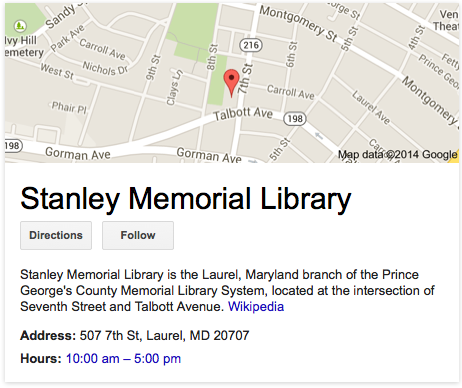
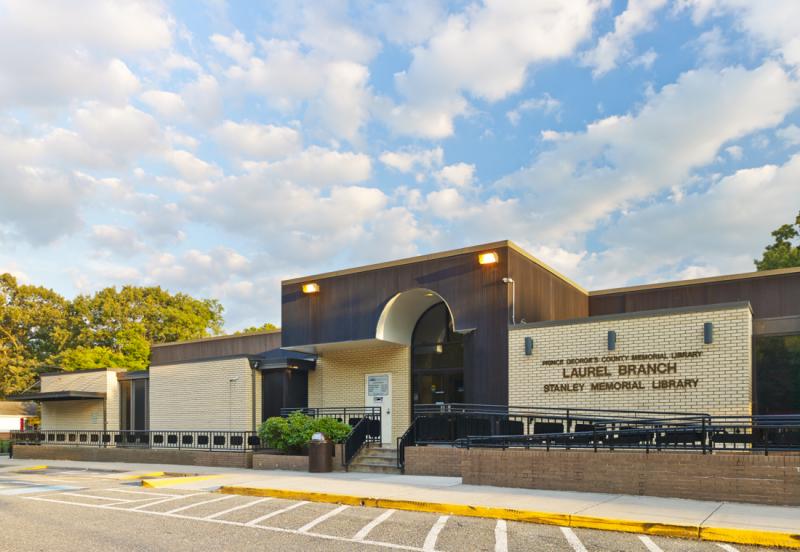
The final week of Laurel’s Stanley Memorial Library is nearly upon us, as the building that opened in 1967 is scheduled to close on March 10th. After next Saturday, March 8th, patrons will have to wait until March 31st for the opening of a temporary facility behind the Municipal Center—as the old building will be demolished and construction set to begin on the town’s brand new facility.

The new library will be on the same site, situated at the corner of 7th & Talbott. So while Laurel isn’t technically losing its library, it will be losing the recognizable building that so many have utilized in its nearly 47 years. And that’s the toughest part for me, personally—having worked there as a clerical aide from 1987–97, I’m just not looking forward to seeing the place I knew so well torn down. I was part of the staff who, way back in 1993, physically moved every book, shelf, and table around during the expansion.

(Richard Friend/Lost Laurel collection)

(Richard Friend/Lost Laurel collection)
Make no mistake, getting a new library is a very big deal. And it’s good for Laurel. The branch desperately needed the expansion 21 years ago, and has since outgrown that, as well. And this year is shaping up to be one of a renaissance for the town, what with the opening of the new Town Centre at Laurel this Fall, and the library construction.

But one of the issues recently being brought to light is the name of the library itself—something that has been a bit blurred over the decades, and something which the Prince George’s County Memorial Library System has done little to clarify.

Most of us—myself included, as well as the very librarians and staff who’ve worked there for years—have always referred to the building as “the Laurel Library”. It’s how they answer the phones there, and it’s simply an accepted informal name. In fact, most people don’t even use “Laurel” when referring to it; because if you’re in Laurel and you’re going to “the library”, there’s only one you’re going to.

But at the same time, most of us who use these abbreviated names are still conscious of the fact that the building does have a proper name gracing its exterior—the Stanley Memorial Library. And now, for whatever reason, the Prince George’s County Board of Library Trustees is planning to formally drop Stanley’s name from the new building entirely. And they’re doing so under the auspices of “helping the public find the library”—as if A) people in Laurel have forgotten that there’s been a library at this location for nearly half a century, and B) you couldn’t Google directions in a matter of seconds—in this Internet age that has, in effect, almost made libraries obsolete.

(Wikipedia)

Charles H. Stanley (1842–1913) was the second mayor of Laurel, as well as the founder and president of Citizens National Bank on Main Street. A quick perusal of his biography at the Maryland State Archives will show that he was much more—not only in the Laurel community, but to Prince George’s County and the state of Maryland itself.

(Maryland State Archives)

(Maryland State Archives)

(Maryland State Archives)

(Maryland State Archives)

He lived and died in Laurel, and is buried at Ivy Hill Cemetery—where he could soon be spinning in his grave, should his name be unceremoniously dropped from the library that was always intended to bear his name.

stanley-grave

According to Sylvia Bolivar, president of the Prince George’s County Board of Library Trustees:

“The Board believes that naming a branch library according to its location helps the public to find libraries close to their neighborhoods, whereas a building named after a person, tends to render a library harder to find.”

She wrote this in a January 22nd response to Laurel Mayor Craig Moe, who had respectfully contested the change. PGCMLS director Kathleen Teaze supported her position in the name of “…(keeping) consistency among the system”—the system, of course, being a simple naming convention based on the branch location.

The Laurel Historical Society also supports keeping the name intact, and Executive Director Lindsey Baker not only submitted an editorial letter in this week’s Laurel Leader, but wisely pointed out this important tidbit:

In the 1963 deed transferring the land where the library currently sits, it specifically states that the Board of County Commissioners for Prince George’s County will erect “a Public Library Building to be known as ‘The Stanley Memorial Library’ ” on the land deeded from the Stanley family.

That fact alone should be legally ironclad, for as long as any library sits on the parcel of land at the corner of 7th and Talbott. And the Board of Library Trustees’ plan to “commemorate Stanley with a photo and memorial in the library lobby” is an embarrassingly poor compromise, when the man’s name was always intended to be much more prominently associated.

I know what some of you are probably thinking. “Who cares, right? It’s just a library.” I’m sure the Stanley family cares, having deeded the land for the library in the first place. Clearly Mayor Moe and the Laurel Historical Society care. I care, and you should care. Most of all, the Prince George’s County Board of Library Trustees had better start caring.

What I find most ironic in this is the complete lack of recognition of their own name, the Prince George’s County MEMORIAL Library System. Maybe they should consider changing that, if they’re no longer concerned with memorializing those who made the branches possible.

In fairness, I understand to some degree what they’re trying to do. Naming the libraries by location makes perfect sense; and again, people are inherently going to revert to calling them that anyway. It happens with many building dedications, including schools and government facilities. How many DC tourists do you think ask for directions to the “J. Edgar Hoover Building”? They don’t. They say, “Where’s the FBI building?” And that’s fine, because Mr. Hoover’s name is still on it, regardless.

If PGCMLS wishes to refer to the new building as the “Laurel Library”, I see no reason why they shouldn’t. The public can refer to it that way, as well. But the new building should nonetheless still prominently bear the name “Stanley Memorial Library”, as its original land deed intended. That part is non-negotiable. And ultimately, it would be no different than it’s always been.

(Laurel Leader, May 14, 1981)

(Laurel Leader, May 14, 1981)

(Photo: PGCMLS)

(Photo: PGCMLS)

***

I’d like to get back to the Board of Library Trustees’ idea of commemorating Mr. Stanley with a photo and memorial in the lobby for a moment, though. Because while it isn’t appropriate for Mr. Stanley himself in this circumstance, I certainly don’t mean to belittle a lobby tribute—to the right person. In fact, it might be unconventional, but there’s someone in particular I’d really like to see receive that honor.

A lot of wonderful people have worked at the Laurel branch since 1967, and sadly, some of them are no longer with us. One such person I’ll forever associate with the library is a gentleman named Tom Acra.

Tom Acra, January 1993. (Photo: Richard Friend)

Tom Acra, January 1993. (Photo: Richard Friend)

Tom Acra and librarian Brenda Hill, January 1993. (Photo: Richard Friend)

Tom and librarian Brenda Hill, January 1993. (Photo: Richard Friend)

Tom was the quintessential jack of all trades. Admittedly, I don’t recall what his official job title was—whether it was “maintenance supervisor” or “building superintendent” or something along those lines; one thing was clear—Tom took care of the Laurel Library like it was his home, and the employees and patrons like they were his family. He was the first person to open the building each morning and the last to lock up and leave; and from his modest workshop in the basement, he had the tools and skills necessary to handle any task at hand. A pipe burst? Tom could fix it. He was always there for any such maintenance emergency, but more routinely, he handled custodial duties: buffing the tiles, vacuuming the carpets, washing the windows, dusting and wiping down the shelves, and more. In the winter, there were no snow plow teams to clear the parking lot—there was only Tom, with a single shovel, a bucket of ice melt, and that familiar, friendly voice of his, cautioning everyone who approached to be careful not to slip. “Aww yeeeaah… watch your step, there…”

Tom was one of the first friends I made when I started working at the library, and no matter how busy he was, he always had time to chat about the Redskins, an upcoming election, the weather, or a particular history book that had caught his eye over in section 973. (Yes, after all these years, I still can’t shake the Dewey Decimal System…)

Tom had started working at the library straight out of high school himself, and simply kept at it year after year—learning the nuances of the building and caring for it like no one else. He’d been part of the first massive rearrangement of books in 1977, and spearheaded the laborious task again in 1993 when the library expanded.

(Laurel Leader, August 4, 1977)

(Laurel Leader, August 4, 1977)

As the years went on and the PGCMLS budget tightened, Tom was utilized even more. I can recall clerical aide hiring freezes that lasted for a year or longer; during which time Tom would help our depleted team by reshelving books and stamping date due cards. More often than not, we never even had to go out to unload the book drop, because Tom had beaten us to it.

Before long, he’d even been recruited to man the circulation desk, and seemed to relish the time spent helping patrons check out their books and other materials. His was a familiar face at checkout time on Sundays, especially—when most staff members opted for Sundays off. (Yes, the library was actually open on Sundays back then—during the school year, at least.)

And it was with the patrons that Tom really connected, ironically. He wasn’t a librarian, or someone you’d expect to be a “people person”, but that’s precisely what he was. In fact, he was a natural at it—and he connected with people of all ages. Kids from the neighboring Grove would occasionally come into the library for a drink from the water fountain and a brief respite from the outside heat, and their voices would inevitably get louder—a bit too loud for a library. Whereas most adults would blow a gasket, Tom had a gentle way of approaching the kids; for one thing, he knew them all by name, and they knew him. And in a matter of seconds, he’d have them quietly perusing a book or magazine, and then happily on their way.

Yes, Tom Acra was much more to the Stanley Memorial Library than just a maintenance man. Taking care of the building and its denizens was more than just a job to him.

Tom passed away unexpectedly in February 2003 at the age of 50. And when his beloved old library is torn down in the next few weeks, I’m kind of grateful he won’t have to be here to witness it.

tom-acra-grave

But in closing, I would like to offer these simple suggestions to the Prince George’s County Board of Library Trustees:

  • Continue to honor the legacy of Charles H. Stanley by placing the rightful name, “Stanley Memorial Library” on the new building. If you wish to refer to it within the system as the “Laurel Library”, by all means do so—just as you always have. But please don’t try to remove or relegate his name and think people won’t notice… or mind.
  • If you’re considering honoring someone from the community with a small memorial plaque in the lobby, honor someone who truly did give their all to the library. Tom Acra wasn’t a wealthy benefactor or politician, and you won’t readily find his name in books or newspapers; but he certainly invested a lifetime of care and stewardship into our library, and I have no doubt he’d do the same for the new building.
Tagged , , , , , , ,

We’re In the News… and Then Some!

laurelleader.com front page

If you’ve been perusing the front page of the Laurel Leader‘s online edition this week, you’ve seen something extraordinary—a LOT of coverage of the new Lost & Found Laurel exhibit, which enjoyed a tremendously successful grand opening this past Sunday at the Laurel Museum!

Most importantly, the reviews are unanimously positive. An unprecedented 150+ attended the opening, and their enjoyment could be both seen, heard, and felt in the oldest house in Laurel. Jeff Dudley, who manages the Tastee Diner and writes the “Old Town Laurel” column for the Leader said it best:

“…it felt more like a family reunion than a museum event.”

Here’s a selection of articles that have come out so far:

Digging the Past at “Lost & Found Laurel” (by Patti Restivo, Laurel Leader)

For Richard Friend, Finding Lost Laurel is “Labor of Love” (by Patti Restivo, Laurel Leader)

Exhibit Proves You Don’t Know What You’ve Lost, ’til It’s Found (Editorial, Laurel Leader)

Lost & Found Laurel—Pictures (Photo gallery by Nate Pesce, Laurel Leader)

Lost & Found Laurel Opens Sunday at Laurel Museum (by Melanie Dzwonchyk, Laurel Leader)

And this comes on the heels of last week’s media coverage leading up to the grand opening:

Collectors Find Plenty of Laurel Memories (“History Matters” by Kevin Leonard, Laurel Leader)

Laurel History Memorabilia—Pictures (Photo gallery, Laurel Leader)

Amateur Historian Inspires Laurel Museum Exhibit (by Emilie Eastman, The Gazette)

The Museum is open Wednesdays and Fridays from 10AM–2PM and Sundays from 1PM–4PM, and the exhibit runs until December 21st. And even if you’ve seen it once, you’ll want to go back—plenty of “new” pieces will be rotated in throughout the year.

Tagged , , , , , ,