Tag Archives: Laurel Leader

A Neighbor’s In Need: Let’s Help!

Last Fall, I was researching the history of Steward Manor Apartments when I stumbled across a photo on eBay.

Photo: John Floyd II, 1974.

It was part of a set of ten original prints being offered, which documented various vehicles from the Laurel Volunteer Fire Department and Laurel Rescue Squad in the 1970s. This particular image featured Laurel Rescue 19 (also known as “The Heavy”) leaving its quarters and turning onto Lafayette Ave.; and there in the distance was the familiar southwest corner of my old neighborhood—Steward Manor Apartments. Even the old red Volkswagen Karmann Ghia I remember walking past so many times en route to 7-Eleven, Dart Drug, or the mall was captured—parked right there where I remember it always sitting.

I eagerly bought the photos; and having noticed several other sets for sale, I messaged the seller, John Floyd II, who manages a wonderfully eclectic eBay store—Blackpool Bertie’s Railway Shop. I wondered if perhaps he had any other vintage photos of Steward Manor in his collection. We chatted back and forth, as I explained the premise of my research. I learned that John was a former fireman, and over the years (both before and after his tenures with volunteer fire companies in Laurel and New Jersey) he had diligently photographed firefighting apparatus, training exercises, and countless fires and accident scenes. Aside from this one photo, he didn’t recall having any others of Steward Manor; because as he explained, the old complex was virtually fireproof. He promised to take a look through his archives, though, and would let me know if he came across anything.

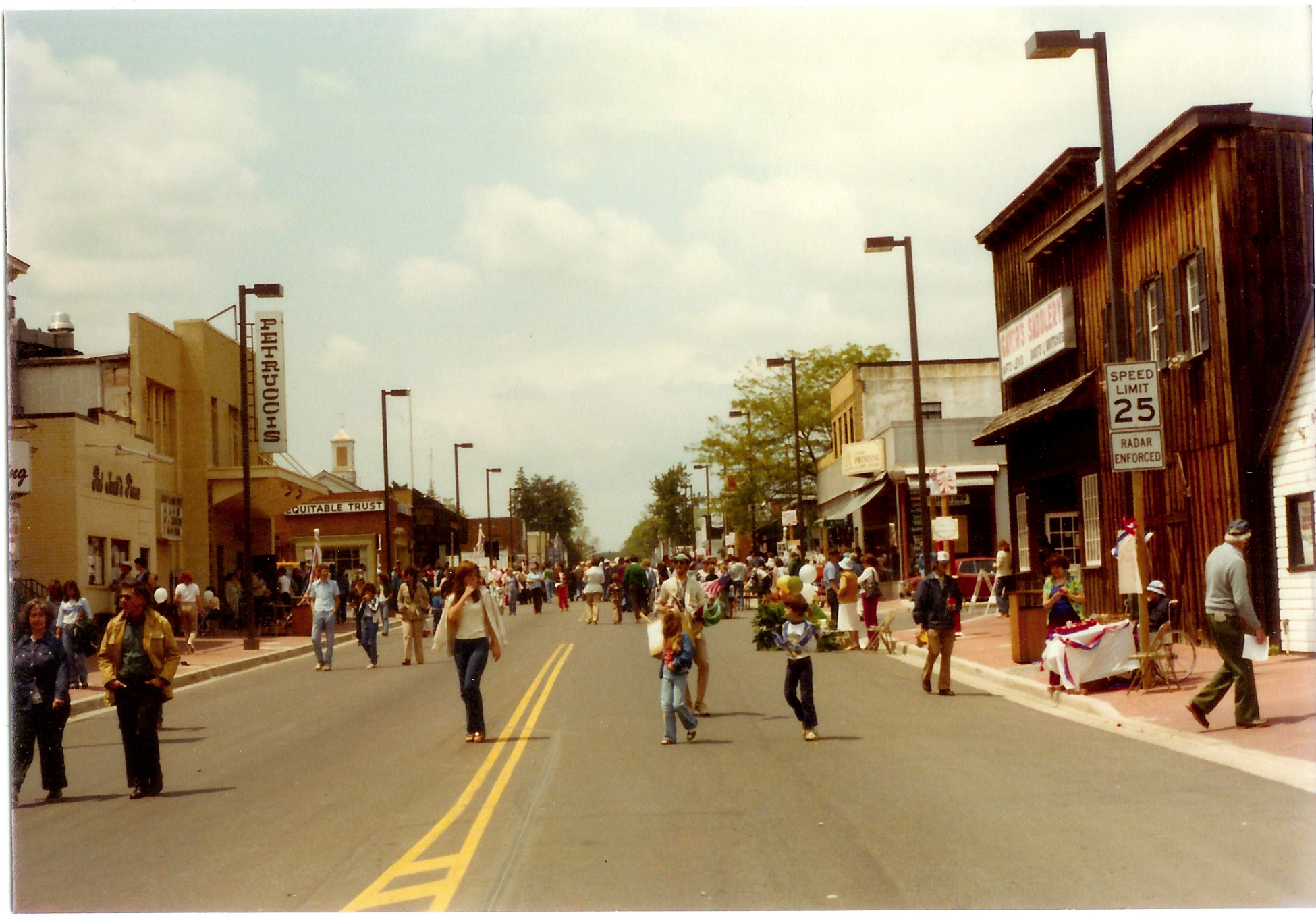
In the meantime, I began to take note of some of the other photos he was selling—photos that in a roundabout way, captured images of the Laurel, MD I used to know. Behind the firetrucks were long-gone storefronts from Laurel Shopping Center… the old Fair Lanes bowling alley sign… and a number of stunning photos from the very first Main Street Festival in 1981. I eagerly bought these, as well; and in effect, they turned out to be the inspiration for starting Lost Laurel. You’ve undoubtedly seen these photos throughout the blog and Facebook page.

Over the past several months, John has not only contributed more invaluable photos and historic information, he has become a good friend.

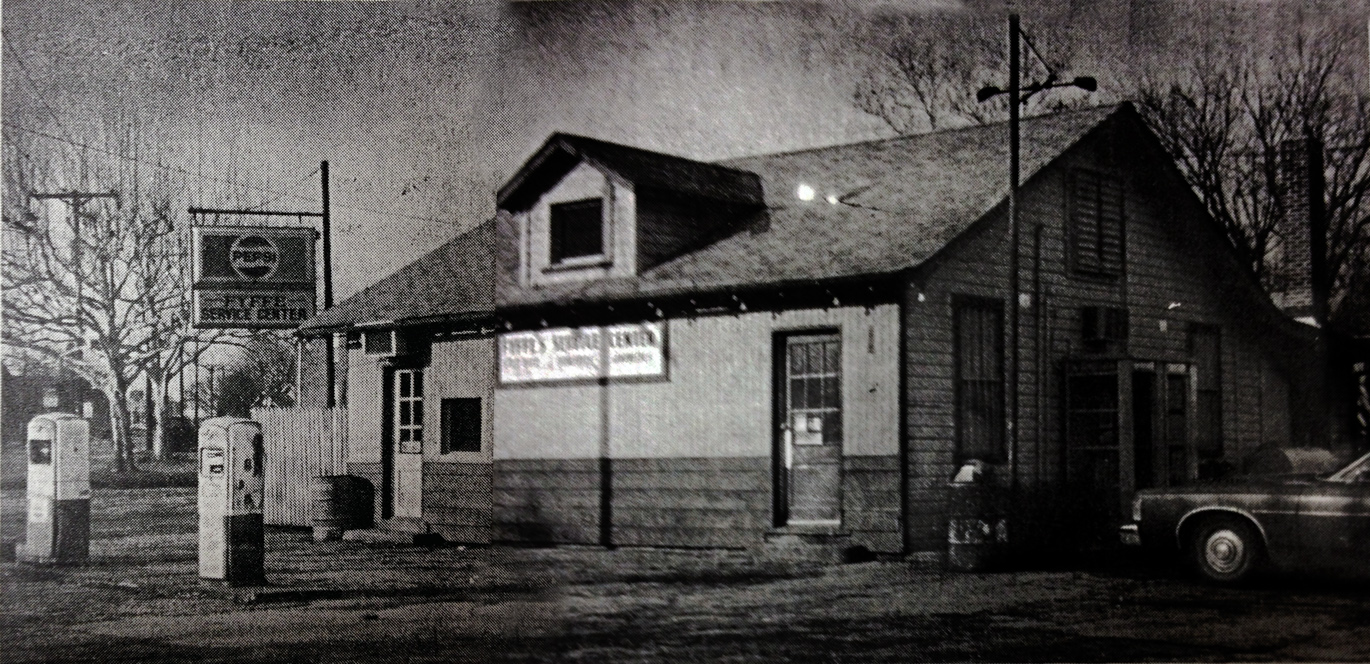
He’s also a bit of living Laurel history, himself. As a young lad, (as he might say in his subtle British accent) he and his mother came to America in 1957, settling in Laurel in 1964. Not long thereafter, his mom met and wed Mr. Harry Fyffe, co-owner (with his brother Walter) of the legendary Fyffe’s Service Center that stood at Montgomery and 10th Streets for so many years. By his early teens, John was helping out behind the bar, eagerly pulling pints for the regulars!
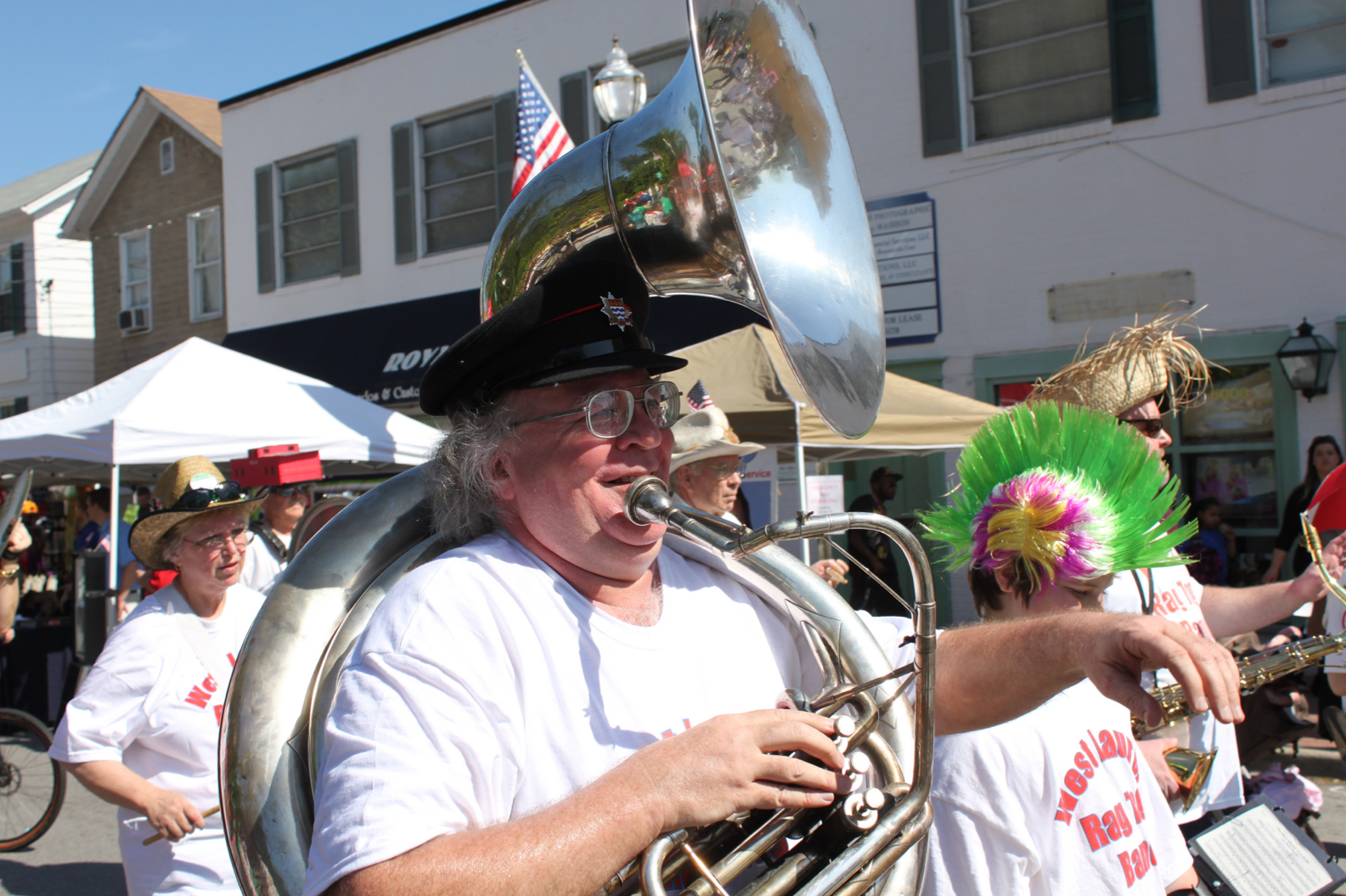
Still living in Laurel, (he’s lived in the same modest home since childhood—going on 50 years) he’s an active civic booster for the community, and for the nearby Laurel Police Department in particular. He’s also a fine horn player, as well. That was him you may have seen carrying the big antique silver Sousaphone, marching along with the West Laurel Rag Tag Band in this year’s Main Street Festival parade!
John has already shared with me a wealth of knowledge and photos of vintage Laurel—the likes of which I could not possibly have come across on my own. In fact, I’ve merely scratched the surface in terms of curating his vast contributions for Lost Laurel. Wait until you get a load of some of the treasures he’s shared from the 1960s and earlier—who knew Pal Jack’s was once a Bendix and Philco radio shop?!
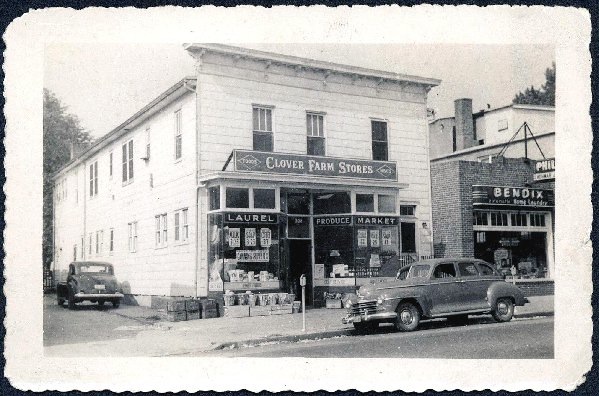
Main Street in the 1940s… (Photo courtesy John Floyd II, from the collection of Harry Fyffe)
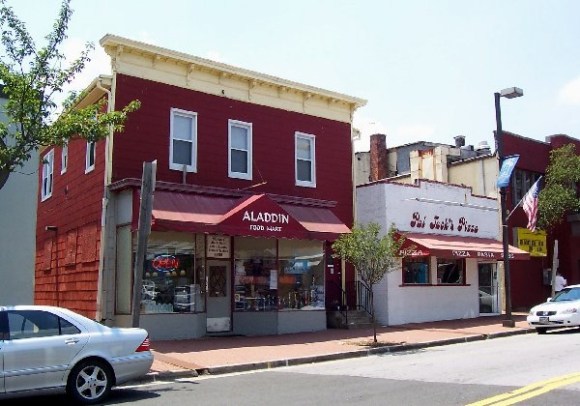
…and the same spot in 2007. (Photo: John Floyd II)

I can say with certainty that without John’s help, there wouldn’t be a Lost Laurel.

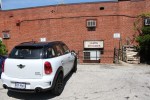
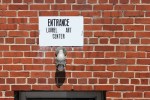
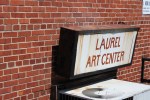
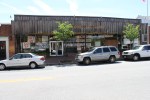
Much has happened in just the eight months since I’ve started this project. I’ve been interviewed by the Laurel Leader, and I’ve seen the Lost Laurel Facebook page grow to over 1200 fans. I’ve watched the blog soar to over 24,000 views. That was the good news. The bad news is that I’ve also seen more of the old Laurel fall—literally, in the case of the recent demolition of the blue American National Bank building. Also closing for good were my beloved Laurel Art Center, and even the Laurel Mall—something I never dreamed would’ve occurred in my lifetime, having grown up in its heyday.

Coincidentally, who walked over to the mall to photograph and share with Lost Laurel the very first photos of the “permanently closed for business” signs on the locked doors? John Floyd did.
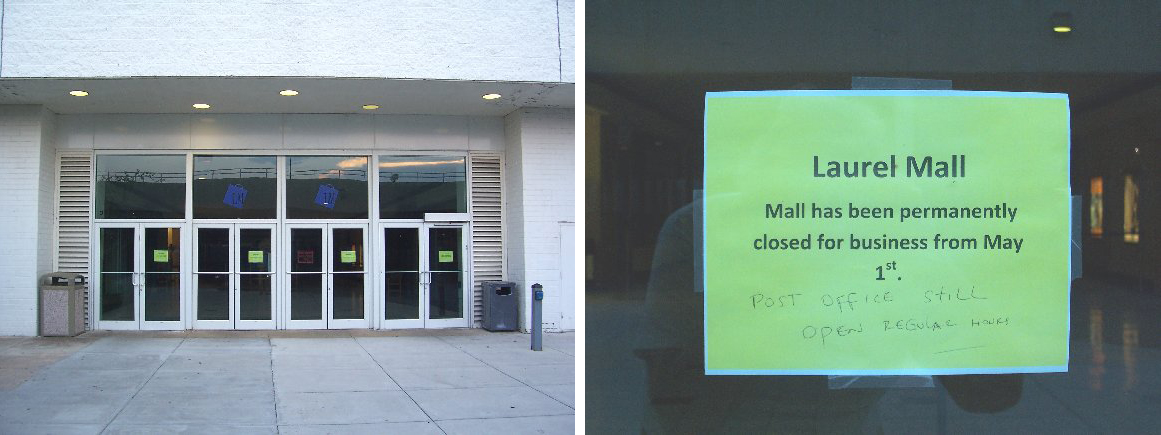
Photos: John Floyd II

Unfortunately, there’s more bad news looming. This one isn’t about a longtime business closing, or an iconic building being razed. This one affects John personally; and for him, it could certainly be the toughest loss of all. He’s at risk of losing his home.

After missing a property tax deadline, I’ve learned that John’s home was actually SOLD at the county’s annual Tax Auction in May. He now has a very small redemption window in which to pay off the tax penalty, otherwise he’ll lose everything.

John would never ask for any kind of charity himself, so I’m going to pitch in and try to help. In fact, I’ve already gotten an earful from him for simply suggesting this little benefit idea. But I have to believe that at least a few of the folks who follow Lost Laurel will sympathize, and find it in their hearts to contribute whatever they can. And this is just too important to not at least try.

Without going into too much detail, suffice it to say that John has been in a very tight financial spot for quite some time now. He has been without a car for nearly a decade, which not only limits his general mobility, but effectively ended his regular occupation as a musician with various orchestras and dance bands, jazz and ragtime bands, brass bands, and other vintage-style musical ensembles. It was a career he enjoyed for 26 years, working several thousand gigs overall. But without transportation, that work dried up years ago. Likewise, he’s been unable to sell his wares at firemen’s conventions and trade shows—something else that once regularly supplemented his pay.
His eBay sales have become his sole means of income, making him entirely dependent upon the computer for all of his meager earnings.

And unfortunately, his sales have dropped dramatically (by over 60%) in the current recession. An emergency veterinary bill for one of his many cats set him back a hefty sum earlier this year, and that only added to the larger problem—trying to meet the overdue property tax bill to the tune of nearly $3,300. And if it’s not paid by June 30th, the amount will increase to over $7,000 when Prince George’s County adds the 2012 tax bill (along with interest and penalties, legal and court costs, as well as “advertising costs” for the Tax Auction that has put his home at risk). Finally, if the full amount isn’t paid by July 31st, his redemption window slams shut and the new property owners will be free to initiate foreclosure and eviction proceedings. It’s a process that’s every bit as harsh as it sounds.

There’s some irony here, too. As a homeowner, John isn’t eligible for any kind of public assistance—not that he’d willingly accept it. If he were to be evicted, however, he’d likely be free to receive any number of benefits. He doesn’t want those handouts; he simply wants to pay off his debts and remain in the only home he’s known for the past 46 years. I’m hoping we can help him do that.

Unfortunately, P.G. County isn’t flexible in the least. Nor are they interested in John’s or anyone else’s problems. There’s no negotiating with them on the amounts or the due dates. It’s literally all or nothing.

Knowing that most of us are so routinely asked to contribute to various charities—we donate to our kids’ fundraisers; we contribute to relay races for cancer research; we send money to groups who build homes for homeless families in foreign countries—I realize that the bombardment of solicitations can be draining; which is why I very rarely ask for such favors. But I’m going to ask an important favor now—on behalf of a good friend in a time of need who has done so much for Lost Laurel.

If you would, kindly donate whatever you can to John Floyd. His email address is royalbluelimited@aol.com, and it is set up to receive PayPal payments. It could be a little or a lot—every dollar adds up. Most importantly, you will know that your contribution isn’t going to some anonymous organization. It’s going directly toward helping a fellow Laurelite in need—and a genuinely good bloke, as John would say. It’ll literally help him save his home.

To help kickstart this benefit, I’m also going to be offering a few special Lost Laurel incentive prizes to those who donate the most.
• All
contributions of $25 and over will receive a full-size, double-sided reproduction of a classic Jack Delaney’s Irish Pizza Pub carryout menu from 1981.
• The first two contributions of $50 or more will receive an original 24″ x 36″ lushly illustrated poster map of Laurel from 1993.
• The first contribution of $100 or more will receive a limited edition Marian Quinn print of the iconic Cook’s Hardware building, matted and framed by the Laurel Art Center.
• And the first contribution of $250 or more will receive a framed 23″ x 30″ vintage 1990s illustration of Main Street businesses—which hung hidden for years in the Laurel Art Center.

These are but a few things that I can offer for what I would consider substantial donations, but I would strongly encourage everyone who reads this to consider sending any amount they can, no matter how small. It truly will help. Imagine if each one of our 1200+ Lost Laurel Facebook friends sent just a dollar or two—John’s crisis could be averted.

There are other ways that you can help, as well. Please visit John’s eBay shop (http://stores.ebay.com/blackpoolbertiesrailwayshop) and buy his stuff! If it’s not your proverbial cup of tea, perhaps you know someone who is a railroad buff, a firefighting enthusiast, and/or a brass band, vintage jazz, and big band music connoisseur—trust me, you’ll find something they’ll appreciate! It goes without saying that John’s eBay record is a spotless one—100% with over 4,350 positive feedbacks. He takes great pride and care in shipping his items quickly and securely, too, as I can attest.

Conversely, perhaps you have some items that you could donate to John’s store that HE may sell. That would also be a major help. Please message me, or feel free to contact John directly (royalbluelimited@aol.com) to make arrangements. Those who donate the amounts listed above can also request that I give their award items to John instead, so that he may sell them.

We’ve all come to accept that Laurel is an ever-changing landscape, and a far cry from the town we once knew. Businesses and residents alike have come and gone—some of their own accord, and others due to various hardships. This, however, is a uniquely tragic situation that I believe we can actually help prevent. Please join me and pitch in what you can. Let’s make sure Laurel doesn’t lose one of its truest citizens.

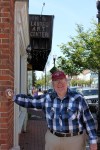
John Floyd II outside the Laurel Art Center in April, where he also went to photograph the closing of another Laurel icon.

Please donate via PayPal directly to royalbluelimited@aol.com

Many thanks!!

~ ®

Tagged , , , , , , , , , , , , , ,

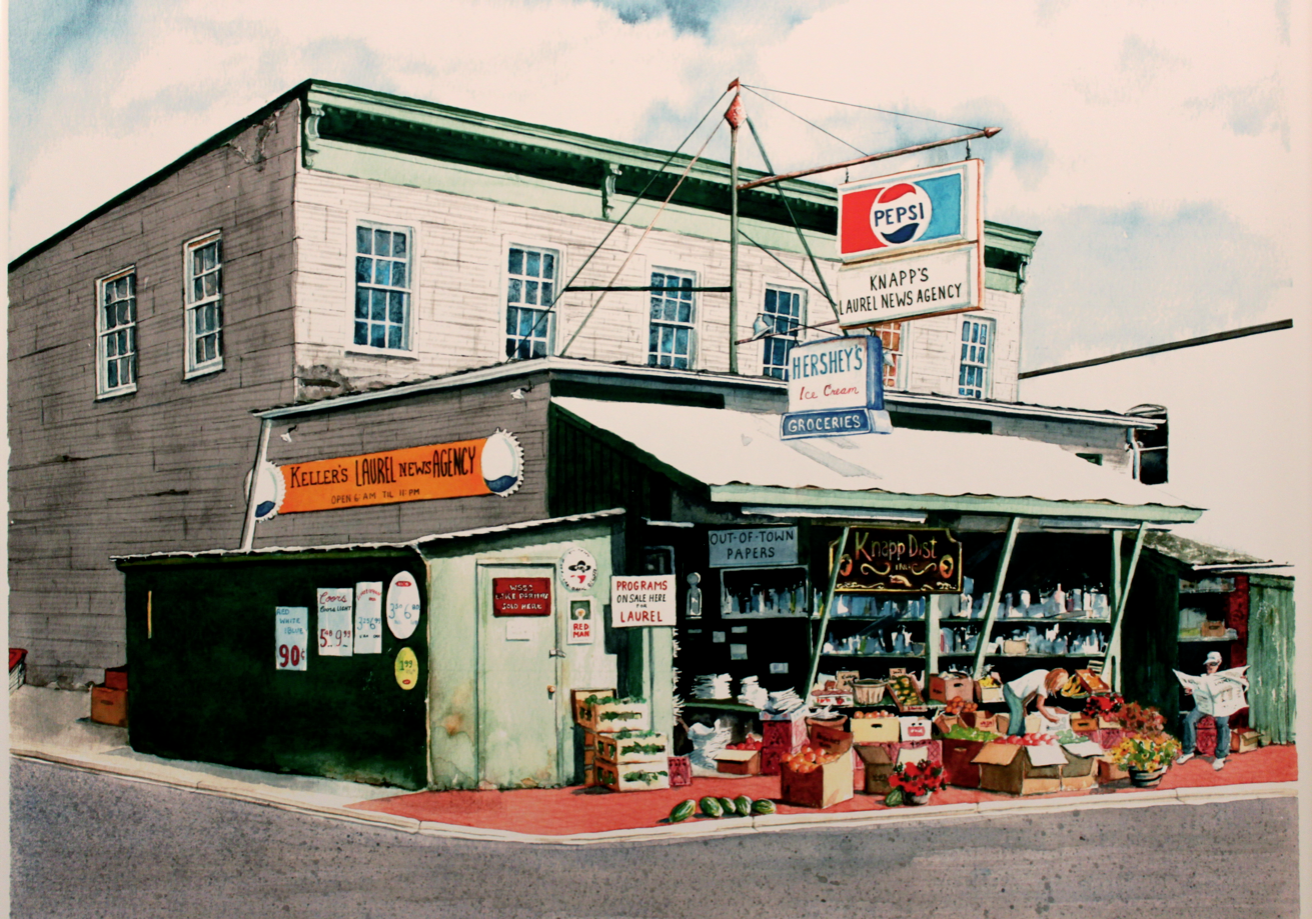
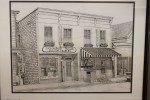
Keller’s/Knapp’s Laurel News Agency

Watercolor by Cathy Emery

Every so often, you come across a picture—or in this case, a painting—that just instantly transports you back. And, more often than not, it’s a picture of something simple; something that was once a mundane part of your everyday life… which you naively assumed would be there forever.

Such was the case with Cathy Emery’s painting of Keller’s/Knapp’s Laurel News Agency. If you’d told me 30 years ago—when I was a kid, frequently stopping in Keller’s/Knapp’s for magazines, Chiclets fruit gum, Hostess pies, and the like—that there would one day be a painting of the establishment, (let alone that I would actually want it) I never would’ve believed you. But after the store that had graced (perhaps “graced” isn’t quite the word for it) the corner of Main and B Streets since the late 1940s had finally closed down and given way to the new Revere Bank building, that painting hits home.

It’s exactly as I remember it—the view from across the street, where you could already smell the mingling aroma of produce and newspapers. It may not sound like it, but it was a good smell.

A photo from the same angle appeared in the 1987 Citizens National Bank complimentary calendar (Photo: Susan L. Cave)

As wonderful as it was to see that familiar exterior again after all these years, it didn’t compare to the joy of getting to look inside.

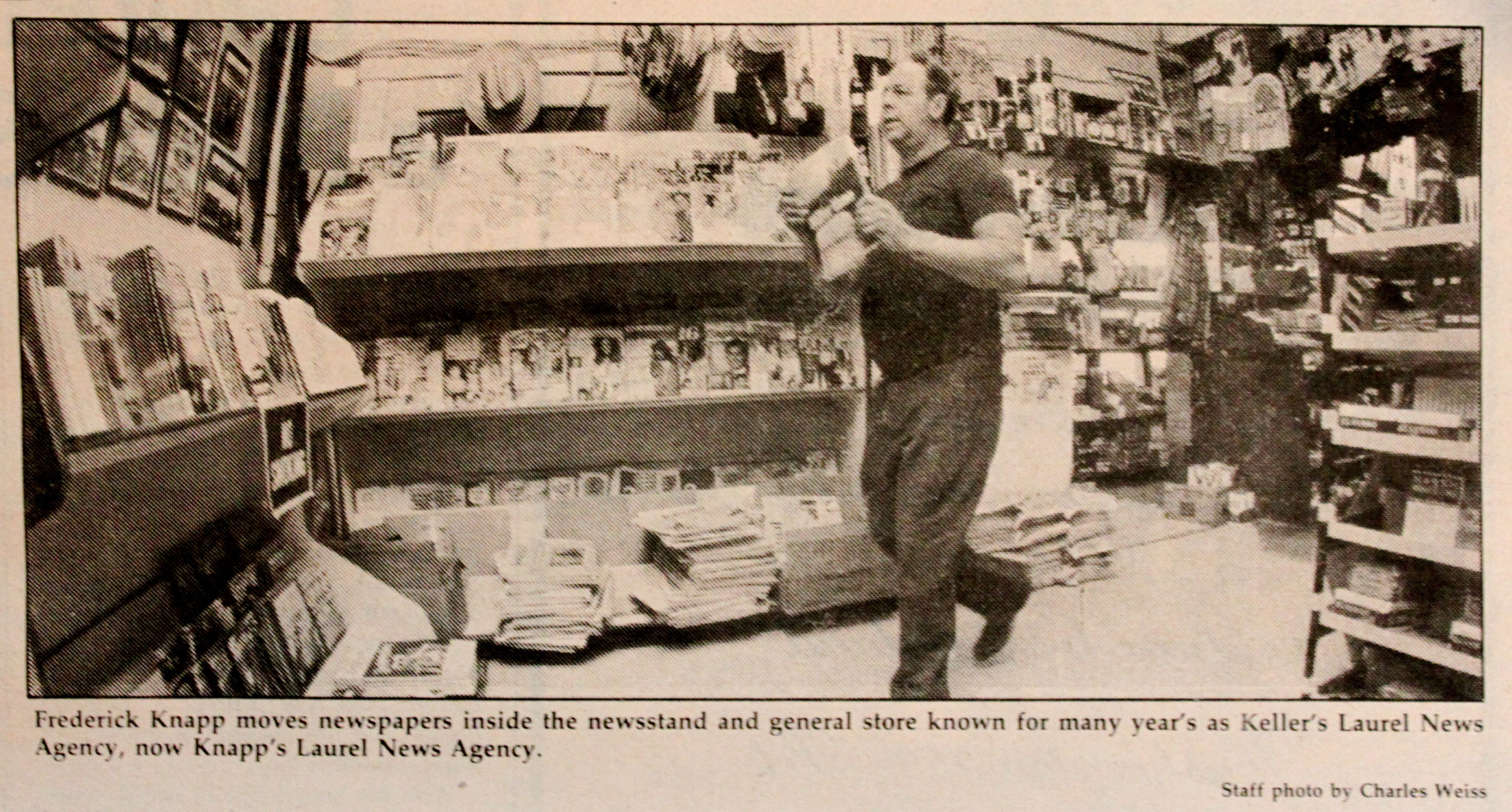
On a recent visit to the Laurel Library, there in the March 14, 1985 issue of the Laurel Leader—appropriately headlining the Our Town section of the paper—was the smiling, laughing face of one Fred Knapp himself. And there he was, standing at his familiar post behind the cluttered counter of Knapp’s.

Fred Knapp. Laurel Leader Staff Photo by Tenney Mason, March 14, 1985

Venerable Leader writer Tony Glaros painted a warm portrait of Mr. Knapp and his memorable old store, and reading it now brings a smile and laugh as big as the one Mr. Knapp is shown enjoying in that photo. The article mentions his penchant for “dazzling his customers”:

“I know what they want before they get here, ” says Fred. “I look out the window and play this game. If I see a guy coming and I know what kind of cigarettes he gets or whatever, I have them ready when he gets here.”

This trait is reiterated later in the article in even more detail:

Fred already knows who smokes what brand, eats what candy and reads what newspaper. He greets them, firing off terms of affection in staccato fashion. “Hey, maestro!” “What else, love?” “Good morning, doctor.” “Thank you, darlin’. Have a good day and be careful out there.”

That’s the part that stuck with me the most. I can vividly recall being referred to as both “Maestro” and “Doctor” by Mr. Knapp. I remember thinking that was particularly cool, given that I was barely ten years old at the time.

The article included some interesting historical data, too. According to this, the newsstand had been operating out of the same location since June 21, 1947*, when Charlie Keller (Fred’s Knapp’s late father-in-law) first opened it. Fred worked for Mr. Keller “on and off” for thirty years, commuting by bus during the day to his job as an Army engineer at Fort Belvoir, VA, and helping Keller out at night. Mr. Keller died in 1978, and Fred took over the business—where it would remain a family affair until the end.

Fred, who was 52 years old at the time of the article, conceded that the hours were the toughest part of the job. “I come in at six o’clock in the morning, five in the summertime so I can catch the fishermen who want worms and beer and sodas and ice and all the junk like that.” It was a routine that he adhered to an astounding 13 hours a day, seven days a week, 365 days a year. His only respite, he said, were Sundays—when he’d sleep in until 10:30 before heading back to the store.

I also happened upon a Laurel Leader supplement from 1982, which featured an even wider view of the newsstand’s interior—with Mr. Knapp diligently restocking his ample periodical section:

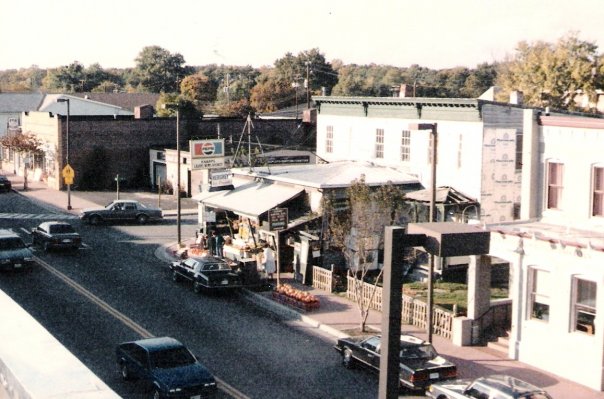
And in a truly unique view, Tom Jarrell shared this shot from atop Petrucci’s Dinner Theatre in October 1988:

Photo: Tom Jarrell

Earlier this week, I posted the photo of Fred Knapp on the Lost Laurel Facebook page, where it yielded a flood of fond memories. But the best news of all came from Debbie Welch-Foulks, who is Mr. Knapp’s stepdaughter. She tells us that he is living in Elkridge, MD these days, and doing well! She added:

I just got him on the phone and was reading all the posts to him—he was laughing up a storm. He misses everyone….

Laurel misses you, too, Mr. Knapp. Very much so.

Postscript:
*Various ads cited “Since 1948”, but the Laurel Leader article is the only reference I’ve found that mentions an actual starting date of June 21, 1947.

A desolate view in 2007. (Photo: spork232, panoramio.com)
Tagged , , , , ,

Laurel Art Center: Liquidation Part II

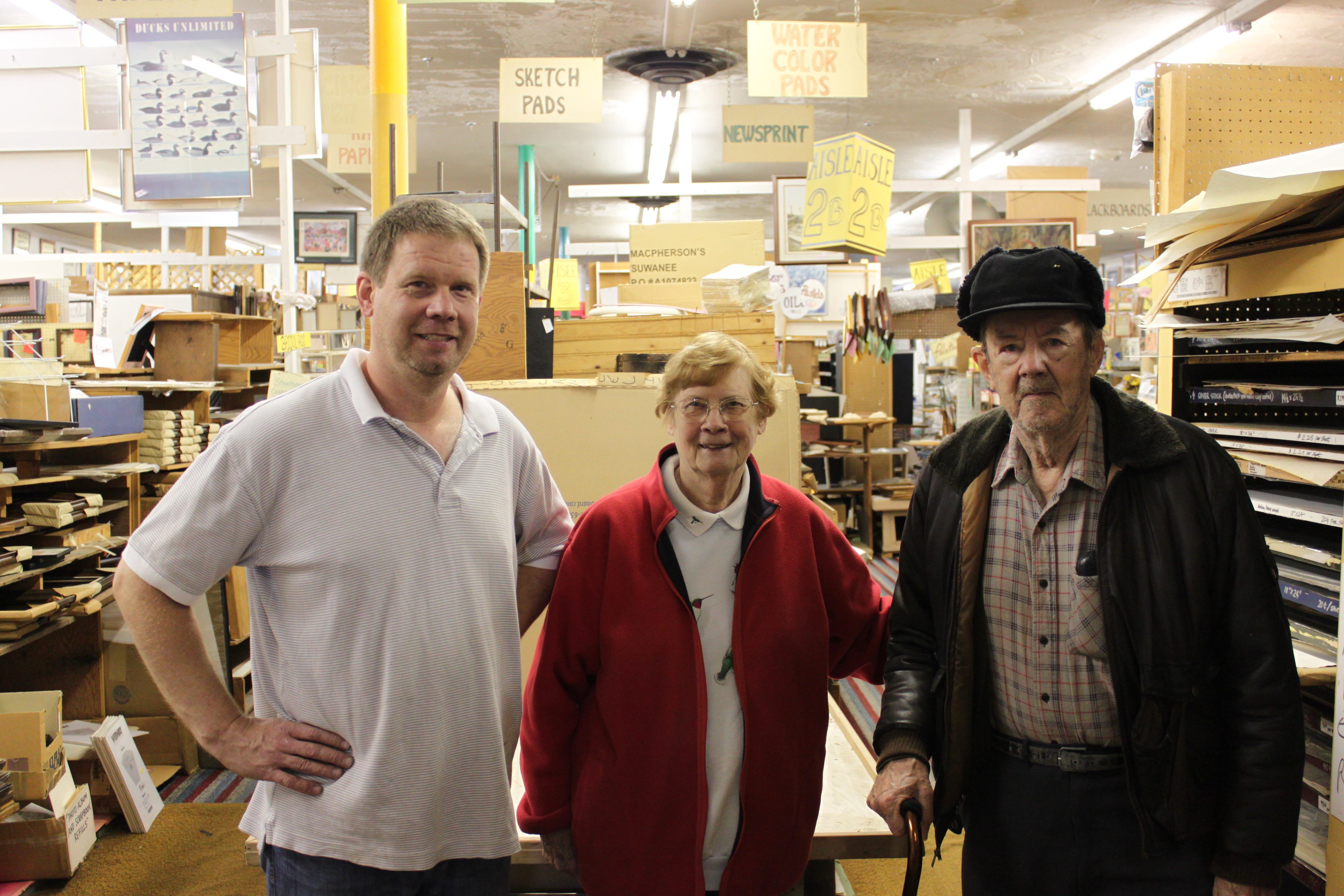
Matt Emery, with his parents, Joyce and Leo—founders of the Laurel Art Center. (Photo: Richard Friend)

Well, there’s good news and bad news. Let’s start with the bad news first.

The bad news is that the Laurel Art Center as we know it is indeed closing for sure. Last month’s two-day liquidation sale drew a record number of sale-seekers, artists, and nostalgia buffs—many of whom, like myself, fit that combined description.

The good news is that if you missed the chance to visit the store that one last time, don’t fret—there’s going to be one more opportunity after all:

For immediate release, 5/24/12
Contact:    Matt Emery, Laurel Art Center Representative

Laurel Art Center to Liquidate

Main Street’s Laurel Art Center will hold its final liquidation sale Memorial Day Weekend from 10:00-5:00 each day.

Last month, the store held a similar sale which drew over 1500 people to its eclectic inventory of framed artwork, picture frames, and art supplies.

There still remains thousands of pieces of artwork.  Framed artwork will be discounted 80%.  Unframed prints and posters will sell for $2.00 each.

There are also over 2,000 ready-made frames for sale in many sizes and styles.  All frames will be $4.00 each or buy any 8 frames for $20.00.

Art supplies are limited and will sell in lots only.  A typical lot will have about $200.00 worth of supplies and will sell for $20.00.  Racks, shelving, and furnishings are also being liquidated.

The store is owned by longtime Laurel residents, Leo & Joyce Emery.  The liquidation is being handled by their son, Matt.  Matt believes this upcoming sale presents even greater values than the last.  He also adds that he welcomes anyone to stop by even if they aren’t shopping and just want to say goodbye to a Laurel landmark.

Having stopped by the store last week, I can assure you—there’s a lot of great stuff left. Clearly, it takes more than one marathon weekend of sales to liquidate 10,000 square feet of legendary art supply awesomeness.

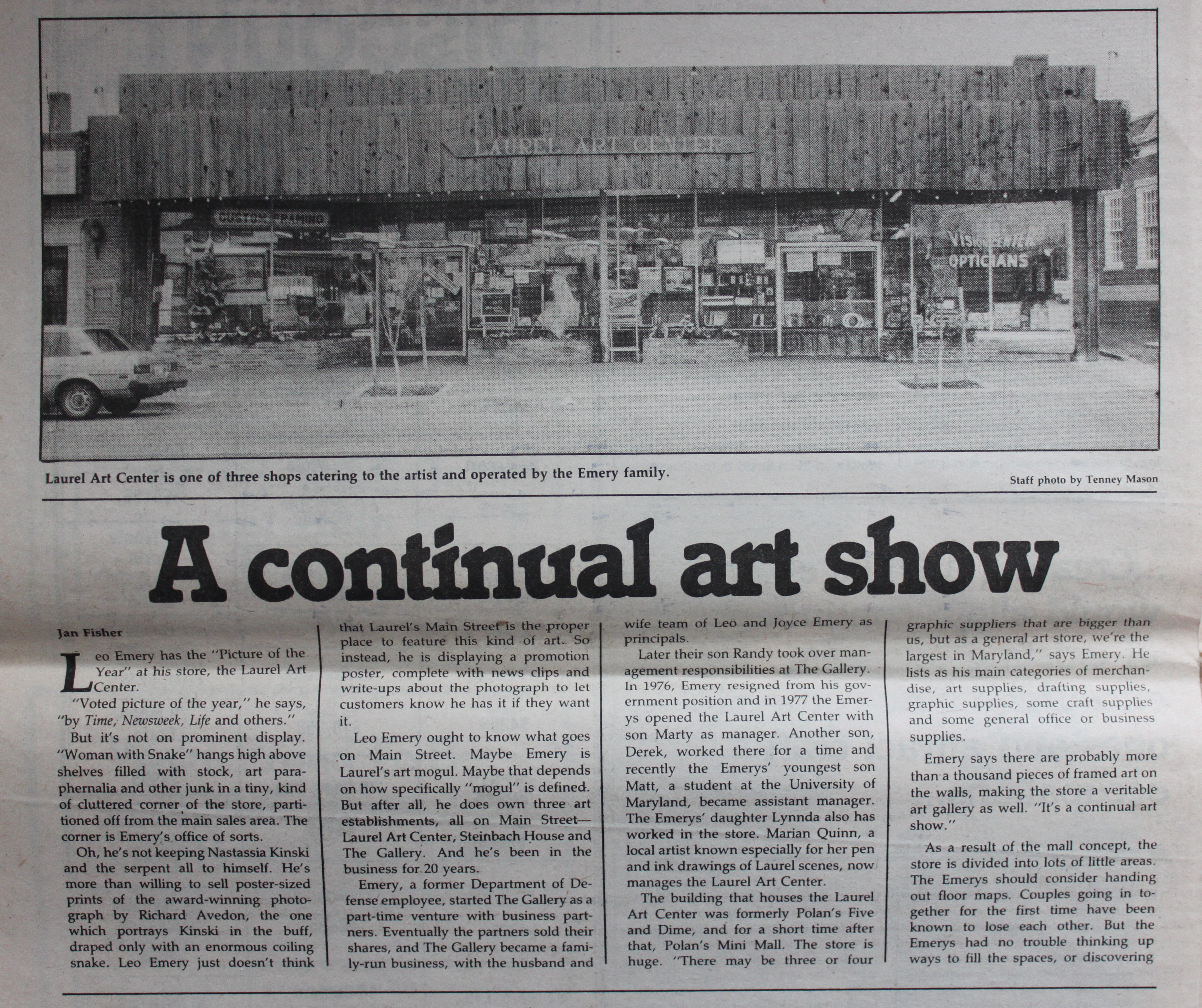
Coincidentally, I just discovered the following article today in a May, 1983 Laurel Leader supplement; it gives a nice overview of the Emery family’s retail legacy on Main Street, and an almost tangible account of this wonderful store. I thought I’d said my goodbyes, but knowing the doors will be open for one last time, how can I resist going back?

Tagged , , , ,

Laurel Shopping Center + George Wallace, 40 years later

Laurel Shopping Center parking lot, May 2012 (Photo: Richard Friend)

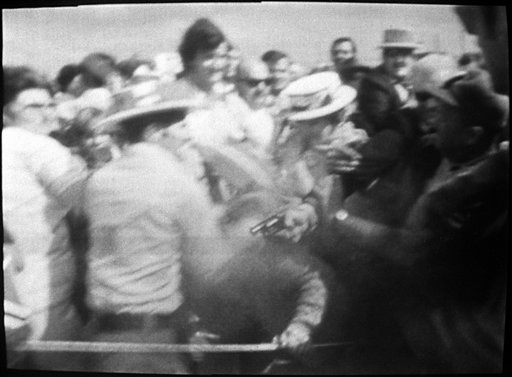
I wasn’t born until December 1972, and my family didn’t move to Laurel until 1976. But it wasn’t long afterward that I began to hear about some famous politician having been shot in the parking lot of Laurel Shopping Center on May 15, 1972.

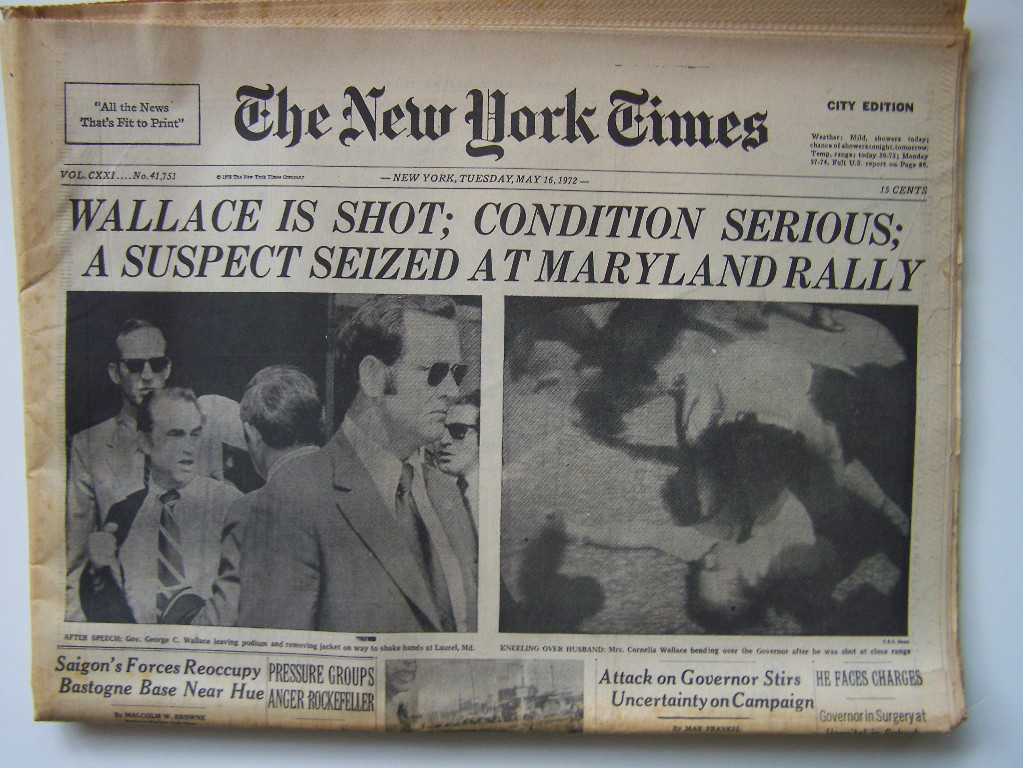
Even as a small child, something about that fascinated me—and it has ever since. Our home town was on the map, so to speak, because of this moment of infamy. Alabama Governor George C. Wallace—a controversial presidential candidate who would actually win the democratic primary in Maryland that year—had just stepped down from the podium, removed his jacket, and begun glad-handing some of the approximately 1,000 who’d assembled to hear and/or jeer his campaign speech. Within seconds, he’d be gunned down by the proverbial lone nut—a 21-year-old would-be assassin from Milwaukee, Wisconsin named Arthur Bremer.

Wallace would survive the shooting, (in spite of a total of five wounds, including shots to the chest and abdomen) but would be confined to a wheelchair and in constant pain for the remaining 26 years of his life. He died in 1998, having spent years renouncing his segregationist past, apologizing, and attempting to rectify a general perception of him as an unvarnished racist—a view he claimed brought him more pain than the assassination attempt itself.

Arthur Bremer would spend the next 35 years in a Hagerstown, MD prison before being released (18 years early) in 2007. Now living in Cumberland, he’ll remain on supervised release until 2025. Bremer’s diary, published after his arrest, revealed that the assassination attempt was motivated by a desire for fame, rather than politics, and that President Nixon had also been an earlier target. Bremer’s actions inspired the screenplay for the 1976 movie Taxi Driver, which in turn provoked the 1981 assassination attempt on the life of President Ronald Reagan by John Hinckley, Jr..

Of course, this isn’t a political blog, so I won’t ramble on about Wallace and Bremer’s respective biographies—there’s plenty of information on them out there if you’re interested. Although as a boxing fan, I will say that I was surprised to learn that George Wallace had been a two-time State Golden Gloves champ. But I digress.

Suffice it to say, I learned at an early age that what had happened at Laurel Shopping Center that afternoon 40 years ago today was a pretty big deal. And it wasn’t just a big deal in Laurel—it had national ramifications. From that point on, it seemed that any and all references to Laurel, Maryland—be it printed in encyclopedias, or in conversation with folks from out of town—inevitably mentioned the Wallace shooting.

He was even on a collector’s card!

In fact, to this day, an online image search of our fair town will inevitably yield photos of George Wallace (although, more recently, Laurel has also been dubiously tied to the 9/11 hijackers—several of whom stayed here in the days leading up to that tragic day).

But on this 40th anniversary, let’s look at the Wallace shooting in the context of Lost Laurel, rather than simply recapping the event and its principal players.

One of the first questions I had as a kid was, simply, where exactly did the shooting occur? Most of the photos I’ve seen (as well as footage of the shooting itself) are so tightly cropped and non-specific, it’s difficult to discern where in the Laurel Shopping Center this actually happened.

My parents, in fact, had long believed that it took place in the Montrose Ave. crosswalk beside Giant Food—probably because the stage Wallace spoke upon resembles the nativity scene that was in that location throughout the 80s. Plus, it seems like a logical place to hold the assembly. However, that was not the case.

Gov. George Wallace addresses the crowd just five minutes before the shooting. (Photo: Mabel Hobart)

The stage was actually set closer to the center of the parking lot, just behind what was at that time the Equitable Trust Bank, (currently Bank of America). It was in this area of the parking lot—between the south side of the bank and Woolworth’s—that Governor Wallace was shot.

The photos below, courtesy of John Floyd II, show the back (south side) of the bank—where the shooting took place. John, 14 years old at the time, was there that day with his mother, and estimates the actual spot of the shooting to be approximately where the white car is parked in this photo.

State Bank in 1962, and a recent photo of the building in its current guise as Bank of America. (Photos: John Floyd II)

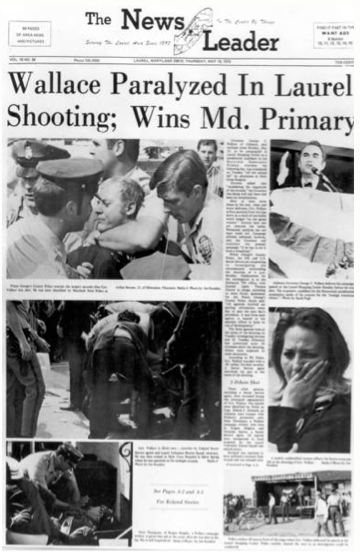
You’ve probably noticed the name “State Bank” on the photo above. That’s what it was before it became Equitable Trust. (Hmm… banks constantly changing names—some things weren’t so different 40 years ago after all, were they?) Below is a Laurel News Leader cover photo from October 1962, which announced a $60,000 construction and improvement program to the State Bank’s Laurel Shopping Center branch, including an enlargement of the lobby and two new executive offices, a fall-out shelter in the basement, complete new heating and air-conditioning plants, as well as decorating and landscaping.

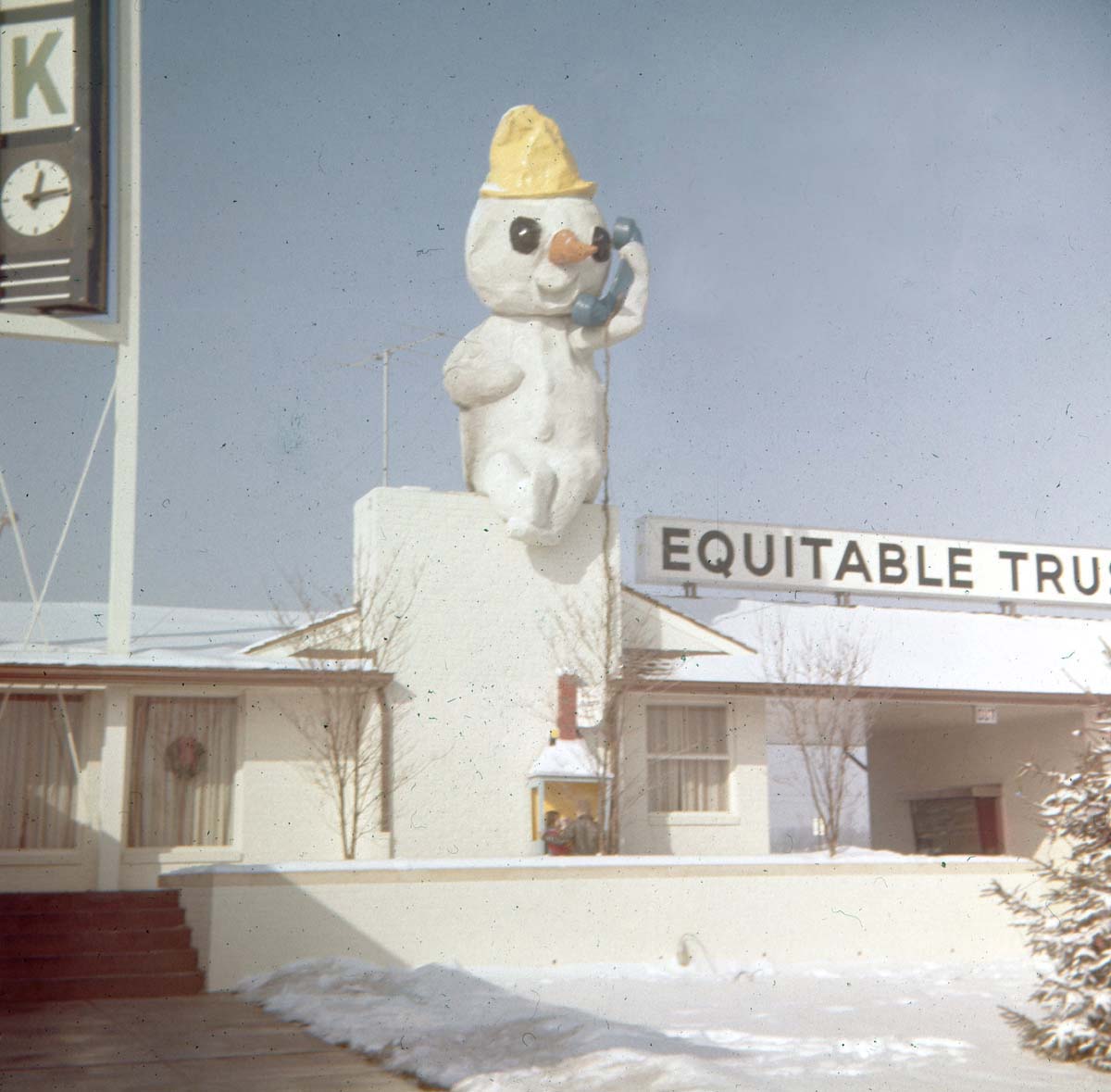
A 35mm color slide from an undated winter during the bank’s Equitable Trust era gives us a peek at the front of the building; although it’s somewhat difficult to focus on anything other than the massive, lumpy, telephone-wielding snowman perched atop the bank. During this phase, the bank had been painted white. We can also see the addition of a clock in the lower portion of the large, vertical sign—the lettering of which was also obviously changed. (I’m assuming it simply said “BANK”).

The file photo below shows the aftermath of the shooting—just after Wallace had been whisked away by ambulance. (John Floyd noted that prior to the assassination attempt, the entire parking lot between the bank and Woolworth’s was packed with spectators). In the photo, we also have a distant glimpse of some of the other businesses that were there at the time—most notably, Hecht’s in the top left corner behind the bank; the original International House of Pancakes, with its gabled roof; the Laurel Car Wash (originally owned by former Laurel Mayor Harry Hardingham, and still in business today!); a BP gas station; and a Fotomat booth.

(Photo: file, Laurel Leader)

To that point, let’s look at what else comprised Laurel Shopping Center at that time. The following directory came out a few years later, but many of the businesses listed had been open at the time of the shooting.

Greater Laurel Area Community Guide, 1976

Another view of the shopping center from this era comes from an apparent protest of, well, pants. This demonstration, apparently calling for the boycott of Farah Pants at Hecht’s, occurred in December 1973.

Photo: Reading/Simpson

It’s also worth noting that one of the more dramatic photos that came across the AP Wire—showing a motionless Wallace lying in the back of a station wagon while awaiting an ambulance—was taken by a Laurel photographer, J.A. Bowman.

Recently, I found a photo that appeared in the October 16, 1977 issue of the Washington Post, recalling the shooting five years later. The article featured Mabel and Ross Speigle, between whom the would-be assassin literally reached while firing. Ross was the gentleman in the ball cap, whose tattooed arm you can see grabbing Bremer’s arm. The couple recalled their incredible experience, and were photographed in the spot where it all happened.

Back in January, I’d noticed a discussion thread on another Laurel-themed Facebook page. Susan Poe commented on a video link of the shooting: “The man wrestling the shooter to the ground was my neighbor, when I lived on 4th Street—Ross Speigle, and his wife Mabel was beside him… for anyone who remembers. I remember that day very well.” I posted the photo for Sue, who’d never seen it. She quickly replied, “OMG! Tears in my eyes… I haven’t seen their faces in over 20 years. Thank you so much. Wow. You have no idea. They were like family to me.”

She went on to tell me that Mabel (or “Mabe”, as she was known) had passed away from cancer, and Ross followed her a few years later. It was clear that this had been a very special couple, even without their unexpected involvement in the Wallace incident. Ross had acted out of instinct in grabbing Bremer’s arm—an action that could very well have been the reason why no one was killed that day. But the Speigles’ courage didn’t end there; Mabel proved to be a dynamic witness who helped seal Arthur Bremer’s fate:

Given this significant anniversary, I thought it only fitting that Mabel and Ross accompany me (in a manner of speaking) back to the site one more time.

***

Postscript:
There’s at least one other camera angle showing the Wallace shooting—this one with a brief glimpse of the Equitable Trust Bank itself, giving the surroundings more context. In this particular upload (set to Lynyrd Skynyrd’s Sweet Home Alabama) the footage doesn’t begin in earnest until the 1:34 mark. However, it’s in color; and it has sound. You can easily get a sense of the chaos in the immediate aftermath on that incredible day.

And lastly, there was a film made about the life of George Wallace. It’s titled, (you guessed it) George Wallace. Gary Sinise starred in the title role, alongside Angelina Jolie as his then-wife, Cornelia. The filmmakers did a decent job recreating the “Laurel Shopping Center” stage from which Wallace spoke before the shooting, but anyone who’s familiar with Laurel will immediately notice the surroundings and realize that the scene wasn’t shot (no pun intended) at Laurel Shopping Center. Interestingly enough, Gary Sinise won an Emmy for the performance—on the very night that the real George Wallace passed away.

Tagged , , , , , , , , , , , , , , ,

Hecht’s, version 2.0: Laurel Centre

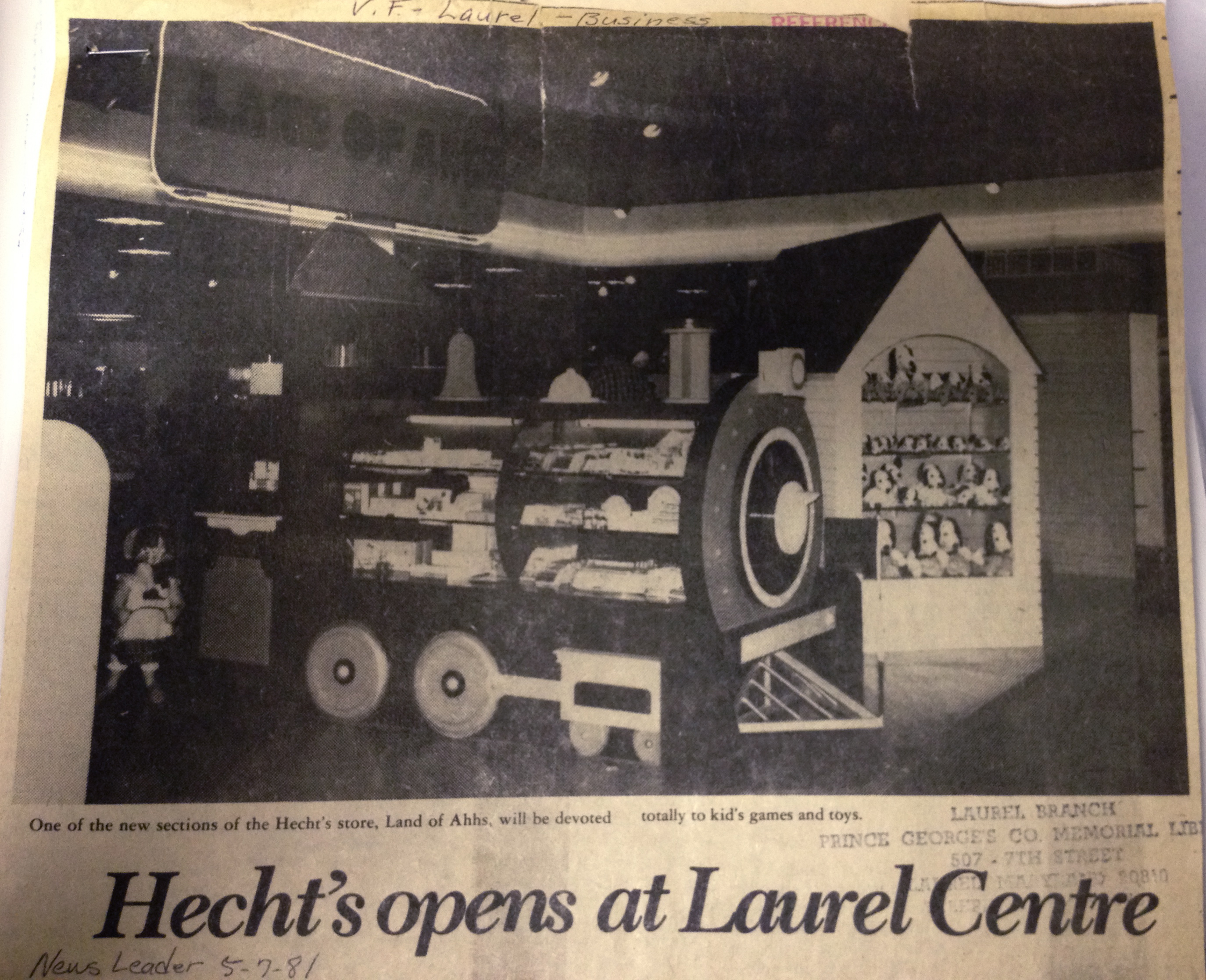
Thirty-one years ago this week, the Laurel Leader noted the opening of the brand new Hecht’s at Laurel Centre—completing the relocation from its original building in the open Laurel Shopping Center, where it had been since the early 1960s. It would go on to be the sole occupant of the new building until Hecht’s eventually folded, and became Macy’s.

The new store had upper and lower levels, and included the popular Edgar’s Restaurant and an in-house beauty salon. As the above photo will attest, it also featured a small but beguiling kids’ section called the “Land of Ahhs”, where stuffed animals and board games filled whimsical display cases, including the locomotive and Snoopy’s doghouse seen here.

A clipping from October 1980 (seven months earlier) showed the building still under construction just beyond the Laurel Shopping Center:

What I remember most about the store wasn’t so much the displays or the wares themselves, but the floors. Weird, I know.

But the distinctive parquet flooring was something new to me as a child; something I’d probably only seen on TV during Boston Celtics games before. And the flooring layout in the new Hecht’s wasn’t traditional, either. Other department stores had rudimentary walkways; typically around the perimeter of the store and intersecting at central points throughout. The new Hecht’s, however, utilized these new parquet pathways differently—weaving throughout the store in short straight lines and 45-degree angles. In a video posted on YouTube in late March of this year, (shortly after Macy’s closed) I was surprised to see that the flooring was, in fact, still there. You can also get a sense of how these angling pathways once encouraged shoppers to explore the countless nooks and crannies the store had to offer.


Screenshots from “Tour of the Dead Laurel Centre Mall”, by CaltecCenter (YouTube)

Apparently, Macy’s didn’t do a whole lot of upkeep over the years after inheriting the building.

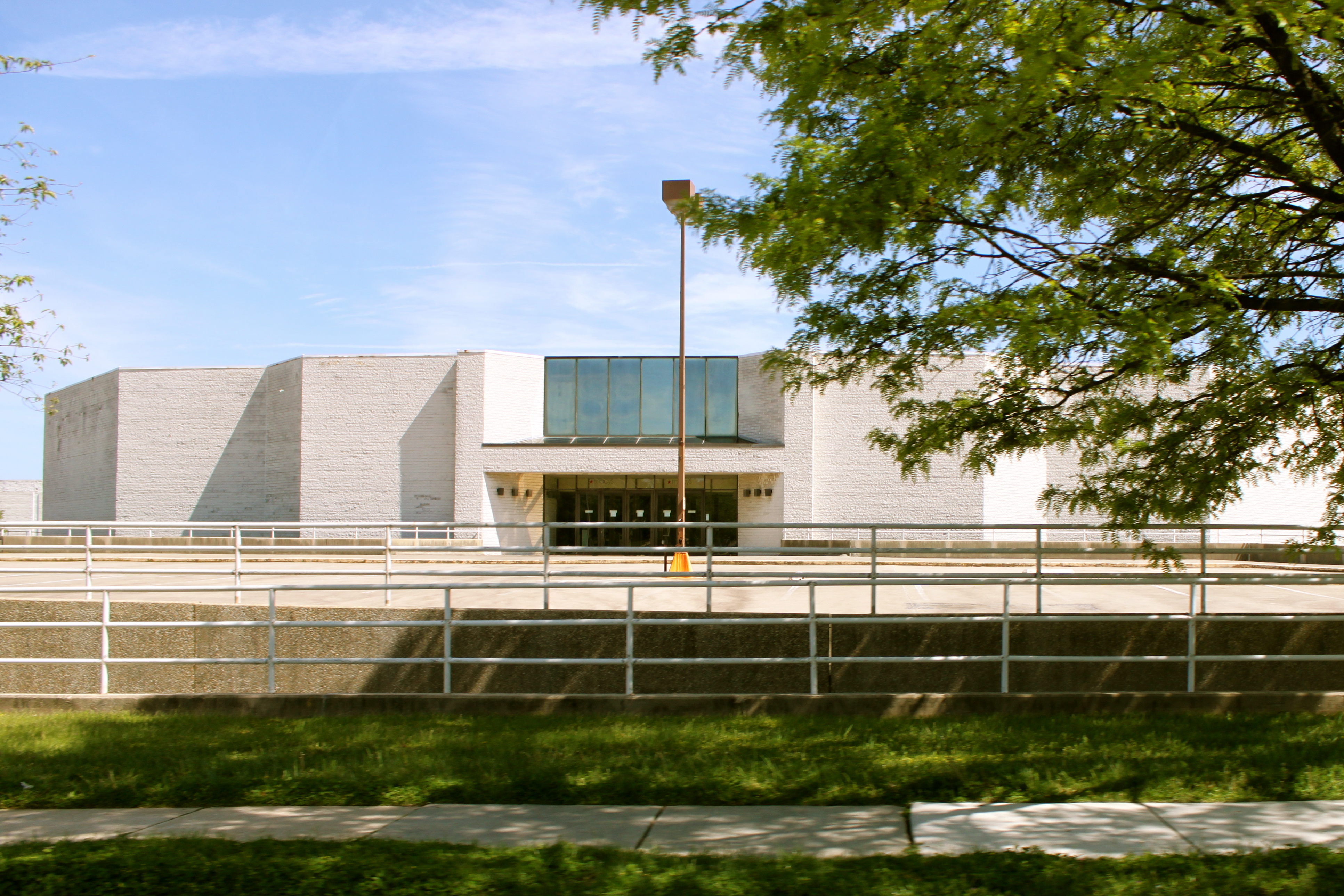
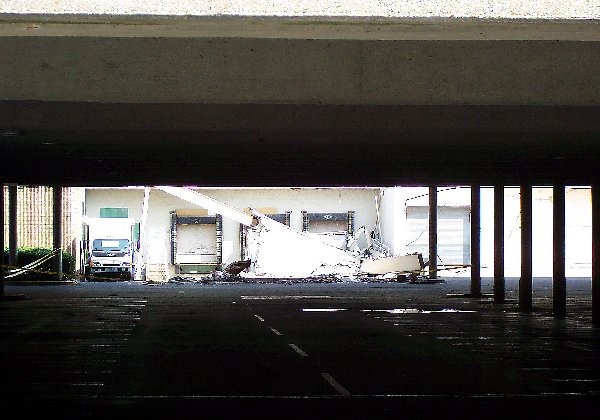
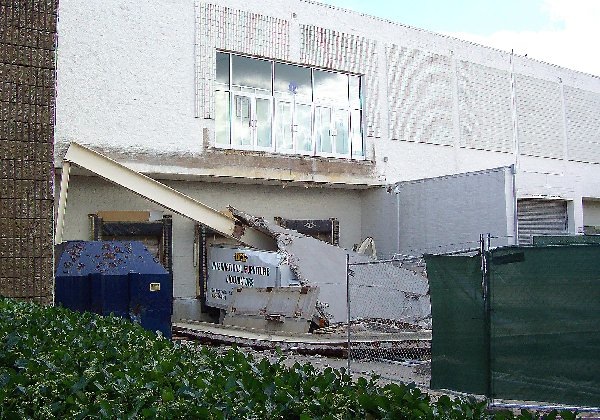
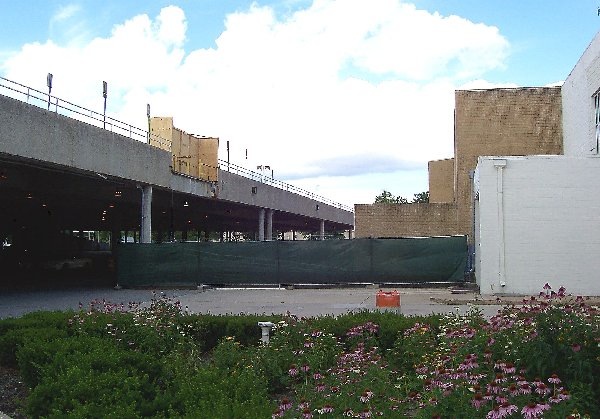
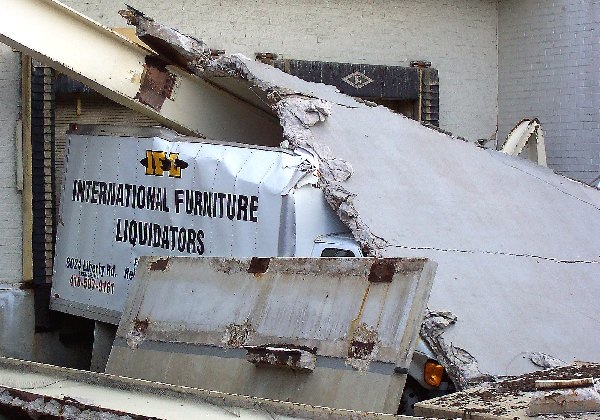
And driving past the old mall last week—just days after its official May 1st closing—the building looked essentially as it has since that upper parking deck spectacularly collapsed back in July 2005. Empty.


(6 digital images by John Floyd II, 2005)

Now that mall has been formally closed, (and just as ominously, a double-wide construction crew trailer set up in the parking lot) the building that once housed both Hecht’s and Macy’s will probably be disappearing soon. More likely, what’s left of those fragile parking decks surrounding it will be the first to go.

But oddly enough, one Hecht’s-related item that never seems to completely disappear are those cardboard gift boxes, especially at Christmas. I’m kind of glad for that. It’s like seeing an old friend.

Tagged , , , , , , , , , , , ,

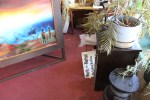
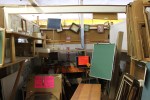
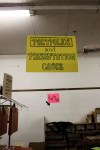
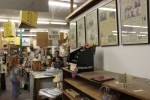
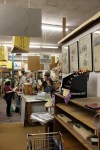
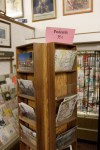
Laurel Art Center: The Final Weekend

This weekend, the Laurel Art Center reopened its doors (shuttered since February, when the Emery family announced their intent to close the iconic 35-year-old business) for a massive liquidation sale.

I visited with the intent of picking up copies of the few remaining Marian Quinn pen & ink reproductions of vintage Laurel landmarks that I hadn’t already purchased this past year—including one of the Laurel Art Center itself. (I’d superstitiously delayed buying it for fear that it too would become part of Lost Laurel.)

I anticipated quite a turnout after the sale was publicized in the Laurel Leader, and was right. By 10:30 Saturday morning, the line of paying customers was already to the back of the store. Needless to say, it was probably the longest line they’ve seen since the store’s inception. If only they could’ve had such lines all the time, but I digress.

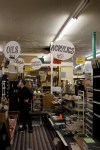
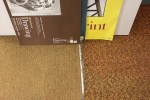
And the wait to pay at the register was upwards of 45 minutes, but worth every second—not just for the incredible 75% discount, but for the time it provided to reflect on just how many visits I’d made to this wonderful store over the years. Even the carpet—that old, patchwork of mixed fabrics—caught my eye and brought back memories.

While standing in line, it was fitting that I noticed a few remaining watercolor sets—much like the little sets my parents first bought for me back in the late 1970s and early 80s, which undoubtedly fueled my early artistic ambitions. Of course, it would eventually be this very store that provided everything I’d need for drawing and painting, including the tons of supplies I required during my time at the Corcoran College of Art + Design.

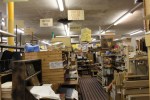
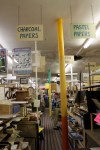
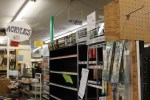
The Laurel Art Center has honestly been a key part of my life for as long as I can remember. From my early childhood love of drawing and painting, to my college and professional career as a graphic designer, and even today as a casual historian of all things Laurel. So while I couldn’t pass up the opportunity to stop by on Saturday to make sure I bought every last thing I could (and I did score some fantastic pieces, including some Marian Quinn originals for less than I’d paid for some prints), I knew I wouldn’t be able to properly photograph the store one last time with just my iPhone—not to mention with the crowds of other enthusiastic shoppers milling about. A return trip was in order today with a real camera, for one final walk through in an effort to document the countless details of the old store; to try to convey the experience of browsing through this 10,000 square foot eclectic treasure trove.

Both the inventory and the crowds were sparser, but the unmistakeable ambiance was still there.

(You can also view the complete photo set here on Flickr.)

While photographing each aisle, a vaguely familiar looking gentleman approached—also with a camera. “Looks like we had the same idea today,” he said. And within seconds, I realized that this must be John Floyd, II—the long-time Laurel resident who’s provided not just me, but the Laurel Leader and many others over the years with so many great photos and insight to the town’s history! “John?” I asked. “Rich?” He replied. We’ve been corresponding via email for the past year, but hadn’t had the chance to meet in person until today. Leave it to the Laurel Art Center to create one more memorable moment for me—on its final day, no less.

Such a treat finally meeting John Floyd II, who just happened to be here at the same time!

Main Street certainly won’t be the same without the store, nor will its legions of fans ever forget what it has meant to them over all these years. As one of the youngest members of the Emery family helped bag up my final purchases, (including a Marian Quinn original pen & ink of Petrucci’s and Pal Jack’s Pizza that I got for $18.75—I can’t believe no one else spotted that on the wall before I did) I took one last look at the thank you note on the counter.

No, thank you, Laurel Art Center. For everything.

***

Postscript: One additional print I made sure to buy today was that of The Gallery—the other Emery family-owned art and framing business just one block up on Main Street. Yesterday, I stopped by and spoke with Cathy Emery, who has been pulling double duty handling the fallout from the Art Center’s closing. Since February, The Gallery has been fulfilling orders that were placed through the Art Center. I remarked, half-jokingly, that I hope they aren’t planning on leaving anytime soon. You can imagine my surprise to learn that they were actually planning to do just that—even before the Art Center pulled the plug. Yikes.

While I’d love to hope that The Gallery will persevere and continue the Emery family’s wonderful artistic legacy in Laurel, it sounds as though their time may also be short. Be sure to visit their shop at 344 Main Street for all of your framing needs, and for both originals and reprints of Cathy’s amazing work documenting Laurel’s places past.

Tagged , , , ,

Cook’s Laurel Hardware Co.

Long before Laurel’s labyrinthine Home Depot—and even Hechinger—there was a small hardware store on Main Street that seemed to carry everything. Just as importantly, they knew were everything was.

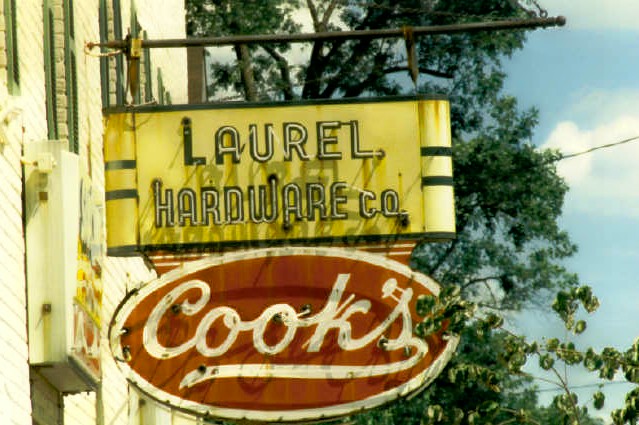
Perhaps, like me, you weren’t particularly handy with power tools (growing up in an apartment complex like Steward Manor with a highly-capable maintenance team can have that effect, you know.) But even if you’d never ventured inside Cook’s Laurel Hardware Company, chances are you remember seeing their iconic neon sign—a throwback to their 1938 origins—every time you passed by.

If you did go inside, chances are you remember the creaky wooden floors, patched together with metal flashing—also a testament to Cook’s 59 years of service to Laurel. Former customers of all ages fondly recall visits with parents, grandparents… and even dogs, which were welcomed inside.

For most of its long tenure on Main Street, the store was identifiable by that distinctive neon sign at least as much as its red brick exterior. Until 1983, however, when the store’s facade underwent a dramatic makeover—ivory and dark green paint brought new life to the Main Street classic.

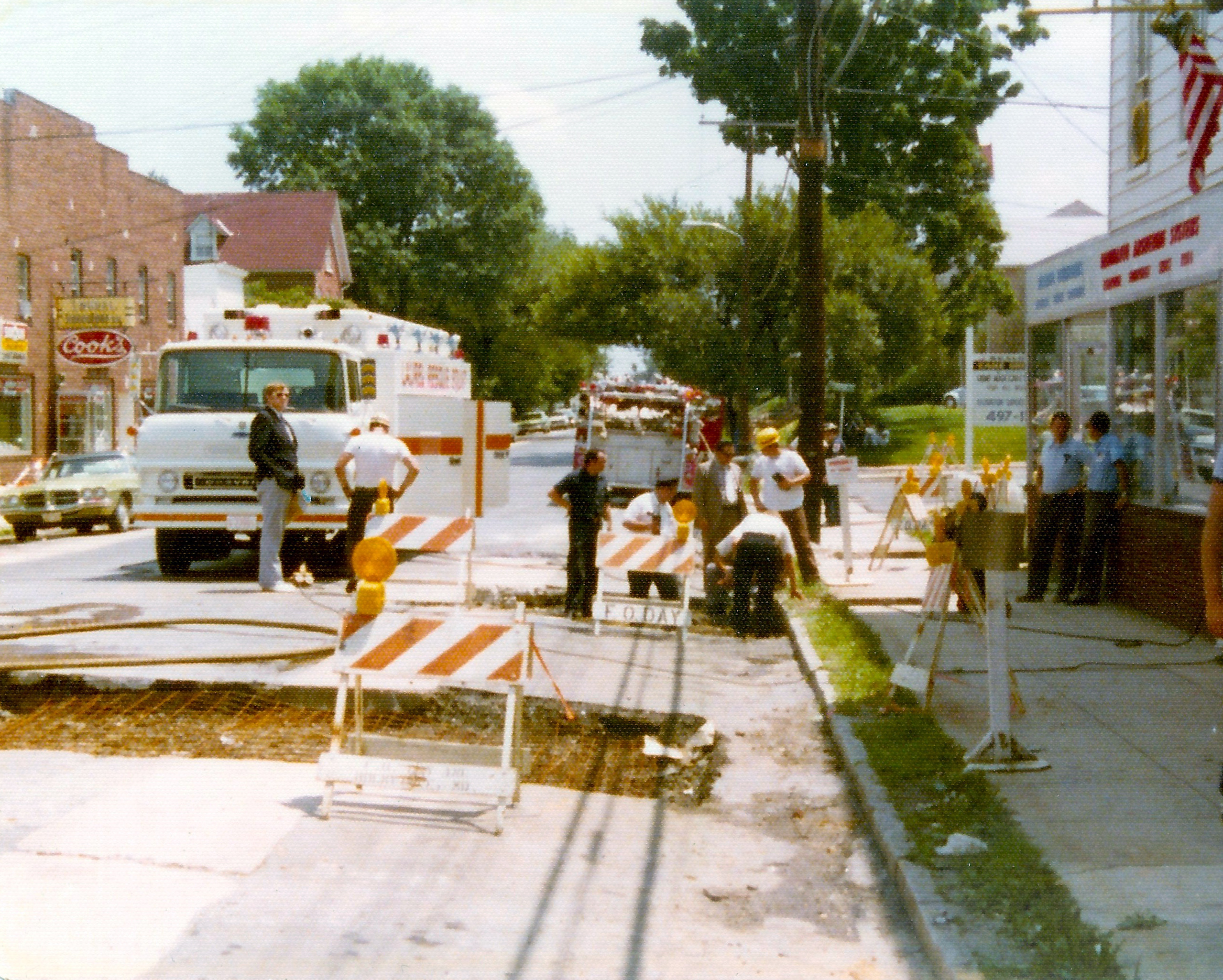
Cook's original red brick facade can be seen in this 1975 photo of Laurel Rescue 19 and Engine 101 responding to a gas leak at 5th & Main Steets. (Photo: John Floyd II)

Laurel Leader, 1983

Cook's—with it's new paint—as it appeared in a 1987 Citizens National Bank courtesy calendar (Photo: Susan L. Cave)

But by the mid-1990s, Laurel was in full transition mode—adapting to the arrival of discount retailers such as Walmart, Sam’s Club, Target, Kohl’s, and The Sports Authority, among others. Main Street’s small shopkeepers struggled to secure their niche market amid the flurry of large-scale retailers. And ironically, it wasn’t the big box stores that ultimately doomed Cook’s—not completely, anyway. Technically, it was old people. Upon closing in the summer of 1997, the building was razed to make room for a 124-unit apartment building for senior citizens—Selbourn House.

In a Washington Post article that noted the impending closure, owner Bob Cook—a longtime member and president of the Laurel Board of Trade—regretted shuttering the old hardware store that bore his name, but he remained surprisingly optimistic for the town:

While he laments the store’s closing, Cook views it as part of the transformation begun three years ago by Laurel’s government and business leaders to boost employment, spur economic development and make the most of Laurel’s location, halfway between Baltimore and the District. Cook believes the proposed senior housing complex will help draw people to city streets, where eventually they will shop with tourists who are drawn to stores selling antiques and crafts.

Washington Post, 1997

Cook’s Laurel Hardware Company has been gone now for some 15 years, but in many ways, it lives on—and not just in memories.

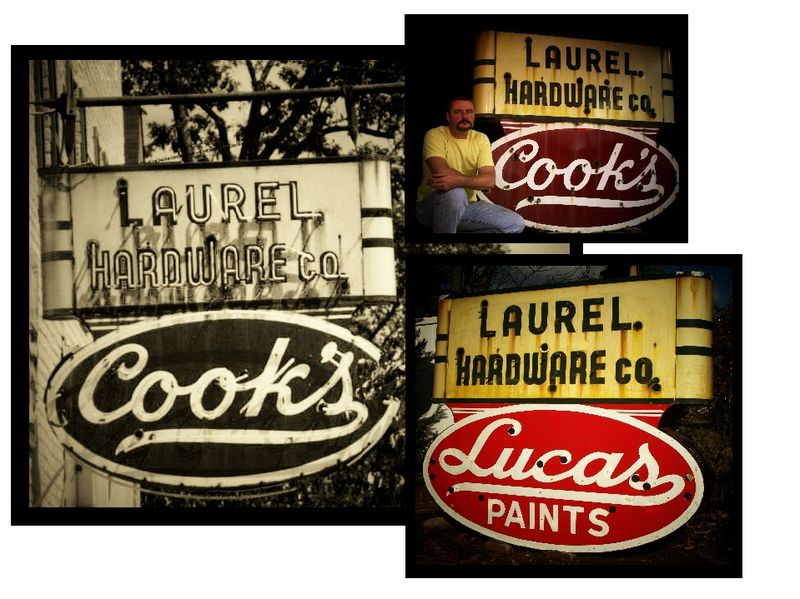
Norman James, Jr. is an accomplished sign maker whose passion is in documenting, rescuing, and restoring classic neon signs of the Baltimore/Washington area. He then showcases the old beauties he’s rescued (as well as some that he couldn’t) on his website, often with fantastic historical notes that may have otherwise been lost to the ages.

Norm lost his bid to procure the Cook’s sign in 1997; and for the next 11 years, it sat in the coffee shop just across the street from the old hardware store itself. But, fast-forward to 2008—and the coffee shop itself was closing. Better late than never, Norm was more than willing to once again give the 400-pound, 6′ x 6′ sign a good home.

Courtesy of Norman James, Jr. (http://www.normanssigngarden.mysite.com)

During his restoration, Norm uncovered (literally) an old secret behind the Cook’s sign:

“HIDDEN MESSAGE! I discovered the lower portions, or ‘Cook’s’ panels were lay-overs, concealing the original message. Lucas Paints were manufactured in Pennsylvania for about 75 years when bought out by Sherwin-Williams, in the early 1950’s. The owner of Laurel Hardware had his name added to the sign to cover over the Lucas paints portion, which only was exposed for about the first ten years of the life of the sign. I also discovered the faded nameplate of the original manufacturer of the sign…Triangle in Baltimore. The ‘John Tingen’ lettering was probably from the time the ‘Cooks’ layovers were created.”

You’ll often hear folks talk about the experience of walking through a mom & pop hardware store, and its ambiance: the smell of cut plywood and 2 x 4s; the close proximity of shelves full of nails, drywall screws, and countless other fasteners; the sound of a paint mixer. Nowhere was that experience more appreciable than Cook’s. Sure, Home Depot probably has everything and then some; but sometimes, what a customer really wants is the chance to browse at his or her own pace in a welcoming environment. Preferably one with an old, creaky wooden floor.

Tagged , , , , , , , ,

One building, two grand openings… exactly 30 years apart

Photo: Don Knieriem

Today marked the long-awaited grand opening of the new LA Fitness at Laurel Shopping Center.

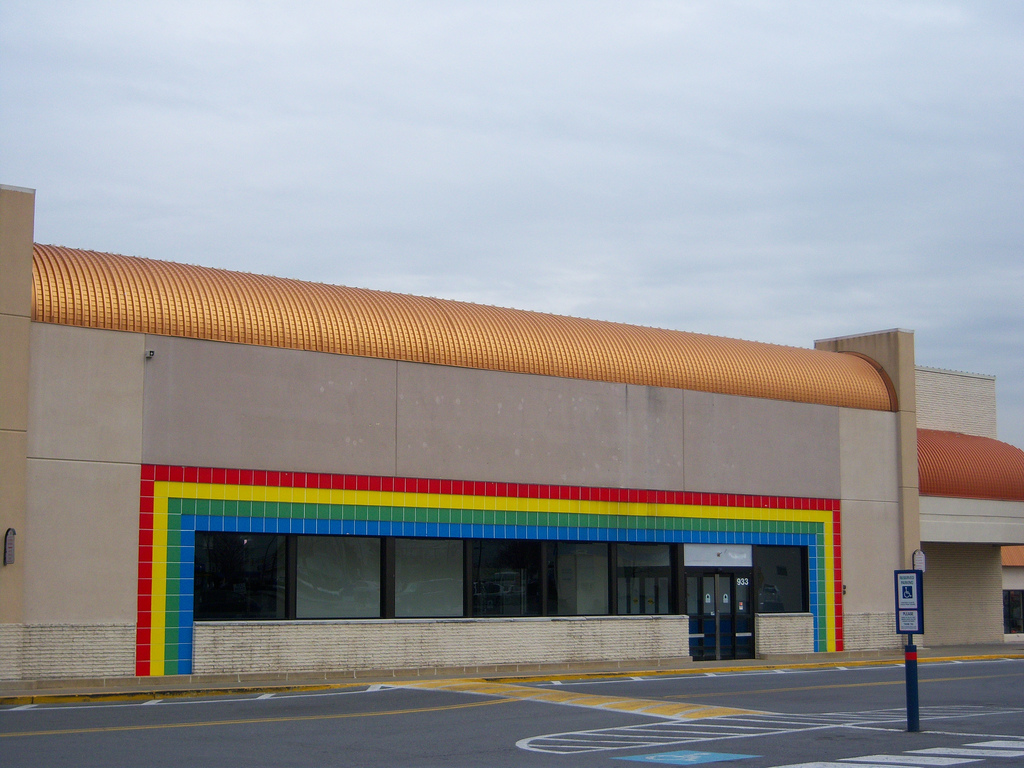
The new fitness mega-center occupies the site of the original Hecht Co. building; but with its massive architectural makeover, it bears little to no resemblance to Hecht’s—or to Toys R Us, which most recently left a lasting label scar on the building that once also housed Woolco and Jamesway.

Photo: Benoit6 (Flickr)

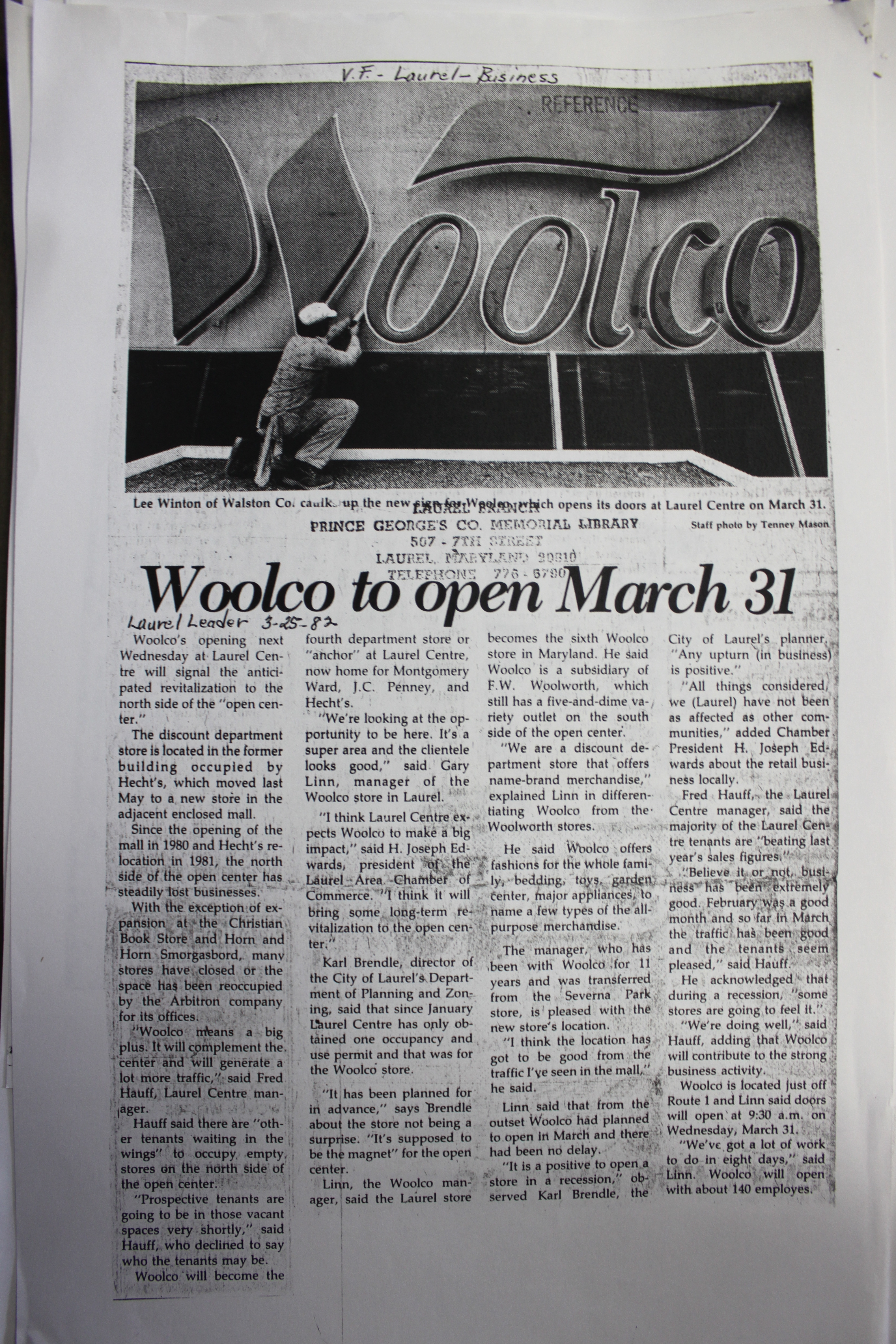
And speaking of Woolco, it was actually 30 years ago this very day when it had its grand opening in the very same building—March 31, 1982.

Let’s hope for the sake of LA Fitness (and more importantly, for the city of Laurel) that this new tenant proves to have considerably more long-term success. Woolco, unfortunately, went on to occupy the building for just one year before closing. But then again, they never had a swimming pool, basketball courts, and tons of gym equipment.

Tagged , , , , , , , , , ,

American National Bank: Demolition Update

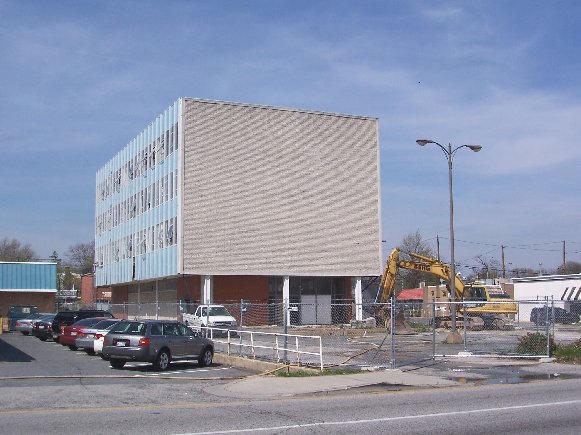
The old blue building just north of Gorman Plaza is finally coming down.

Originally the American National Bank building, it’s been vacant and doomed for some time now; but last week, demolition began in earnest—starting from the inside out, apparently. Thanks to John Floyd II for these photos that document the beginning of the end, which will likely happen this week.

Photos: J. D. Floyd II, Royal Blue Ltd. archives

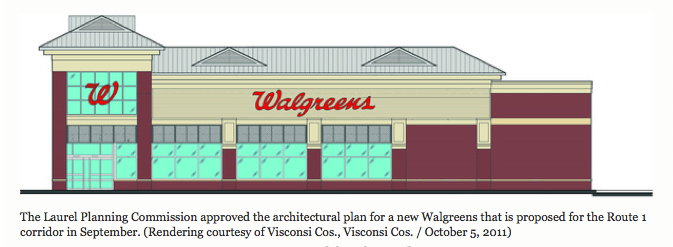
I can’t help but think that in another thirty, maybe fifty years from now, someone will spot a photo of this classic mid-century modern building in one of the Laurel Historical Society’s publications or exhibits (or on an antique roll of Laurel Leader microfilm still languishing in the library’s basement) and wonder, “Wow—why did they ever get rid of that?!” Odds are, the Walgreens that’s slated to take its spot won’t have quite the architectural pedigree.

It’s not only replacing the old blue building, but the rest of the 600 block of Washington Blvd. to its north—which most recently included Irene’s Restaurant (the former Kenny Rogers Roasters and Rustler Steakhouse), Mango’s Grill, and Ace Cash Express (a location that once housed Murry’s Steaks).

Granted, the block has certainly seen better days. In fact, it’s seen better decades. And the new Walgreens will undoubtedly be much more aesthetically pleasing than what passing motorists have been subjected to in recent years. But my real question is this—why was a building like this ever allowed to become an eyesore in the first place? This kind of architecture deserves to be repurposed, not replaced.


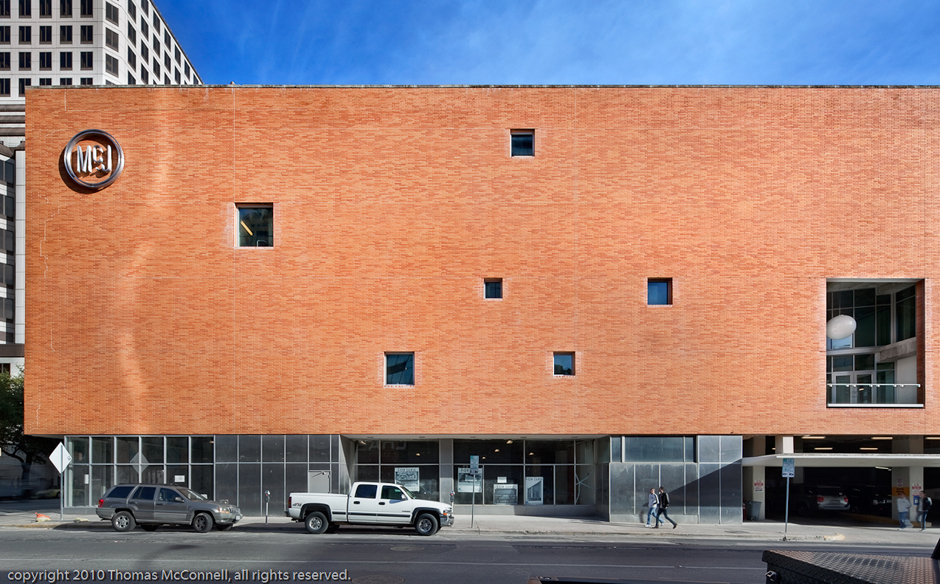
Case Study: The Starr Building, Austin TX

A very similar building in Austin, TX (also originally an American National Bank, coincidentally) recently survived a proposed demolition and is now enjoying a fitting new life as an ad agency.

A Texas preservation society recognized the The Starr Building’s architectural significance and promise, and added it to an endangered list in 2009. Later that year, Austin-based Kemp Properties purchased the building, and advertising firm McGarrah Jessee signed on as its lead tenant. It was a perfect match if there ever was one—and the ad agency literally built their own brand around the building, which clearly inspires them:

McGarrah Jessee absolutely showcases the building on its website, as it should. They include a fascinating video piece highlighting its unlikely history… an arc that could just as easily have applied to Laurel’s old American National Bank building, had the right minds been in place.

A slide in the video reads:

“Kemp Properties and McGarrah Jessee were among the few suitors who recognized that great bones lay beneath the carpet and cubicles. They had a vision that the building could be restored and rehabilitated—that it could make the same kind of statement in 2010 as it did in 1954.”

And it has. Kudos to all involved.

***

When I first heard of plans to demolish the Laurel building (and that entire block) for a Walgreens, I wasn’t surprised. But it made me wonder why the city of Laurel (or Prince George’s County, or even the state of Maryland, for that matter) apparently never considered stepping in when the building began to slide into decline—over ten years ago.

At a time when the city itself was outgrowing its own municipal buildings, did no one see the potential that lay within this distinctive blue building in the center of town—one of just a few spacious, vertical structures in the city limits?

At some point during its decline, you think the city would’ve at least considered how they might have been able to capitalize on preserving it. With a proper facelift, it could’ve been any number of municipal buildings to be proud of. Think of the facilities that were already outgrowing their original spaces: the library (even after a costly expansion in 1992) and the police department immediately come to mind. The old blue building could’ve accommodated either, and made a bold architectural preservation statement in the process.

Ironically, one of the locations considered for this latest library expansion was the former Laurel Police headquarters off of Main Street—which the police department itself had outgrown. (Coincidentally, I hear they’re also planning to demolish that soon, as well. Stay tuned.)

Getting back to the Starr Building comparison for a moment, perhaps you were wondering why it was called “the Starr Building”. Perhaps not, but just humor me for another couple paragraphs or so. There are just a few more parallels worth noting.

After the American National Bank failed in the 1990s, the State of Texas took over the building and made it the headquarters of the State Comptroller of Public Accounts. They christened it the Starr Building after James Harper Starr—physician, treasurer of the Republic of Texas, Land Commissioner, and banker. Then they did what most government agencies do to government buildings—they filled it with cubicles and bad carpet. But it got even worse. In 2005, the Comptroller’s Office moved out and gave control to the state’s General Land Office—who allowed it to sit vacant for the next four years, coming dangerously close to demolition. Interest in the building came and went; with most of the proposals involving tearing the building down and putting up something new.

Sound familiar?

Laurel isn’t exactly Madison Avenue, of course—it’s an unlikely locale for a top-level advertising agency to base its headquarters. It’s not Austin, Texas, either. And to be fair, the state of Texas didn’t do a great job stewarding the Starr Building itself. It took a preservation society and visionary developers to recognize the potential in salvaging that building.

But couldn’t Laurel’s own mid-century modern American National Bank building have been converted to something, other than a decaying eyesore? Something that could’ve inspired new tenants, rather than hinder them with repair costs and tax burdens? Did it really have to reach the point to where we’d read a quote like this from the city’s own longtime planner:

“I’m excited about getting that blue (office) building down, which was in bankruptcy,” Laurel Economic Director Karl Brendle said. “This is going to be great.”

There was a time when the city of Laurel was proud of that building, and of itself.

Tagged , , , , , ,