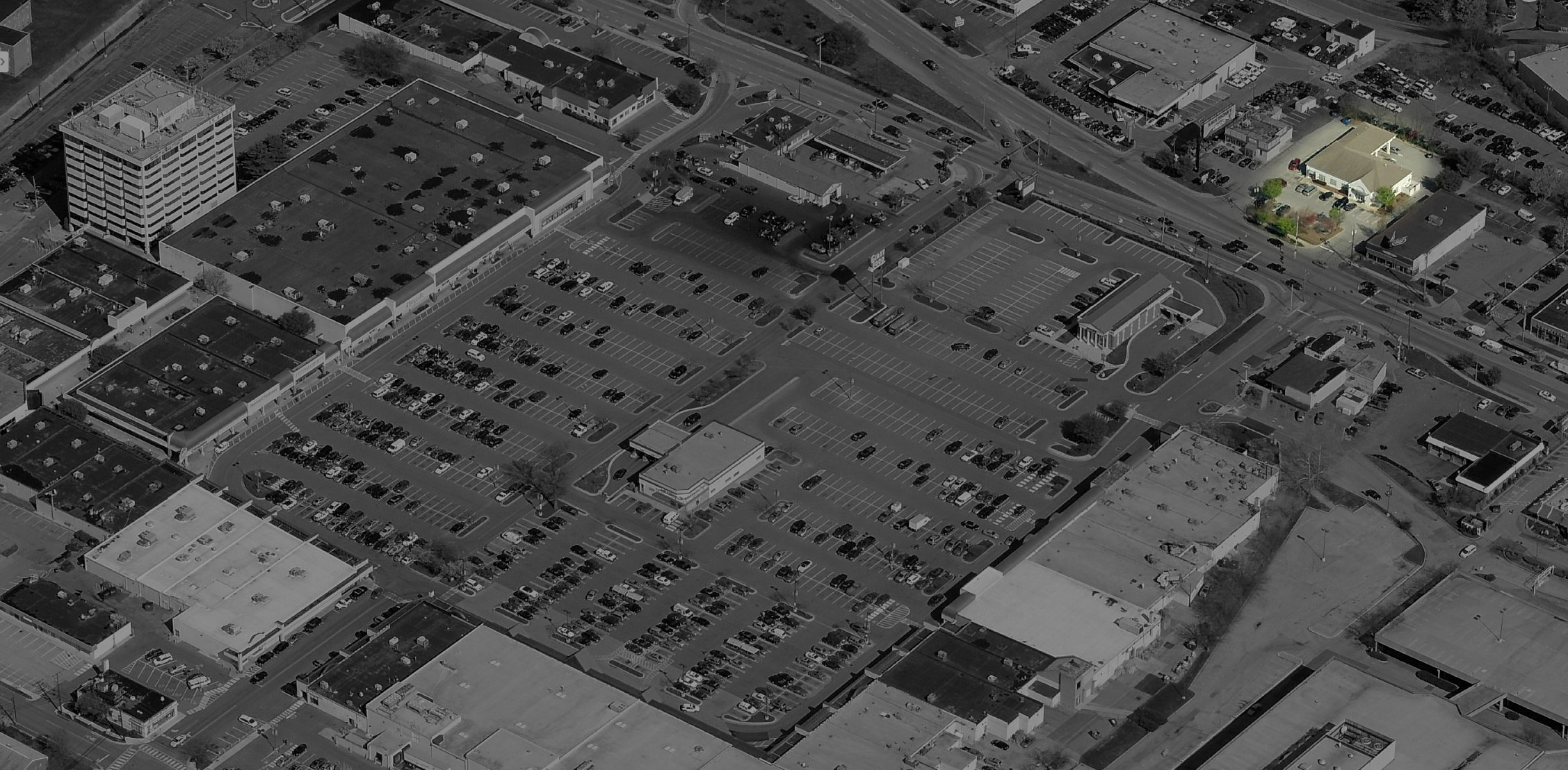
Pappy’s opened in 1976 in what is currently the Wells Fargo Bank on Route 1, directly across from Laurel Shopping Center.
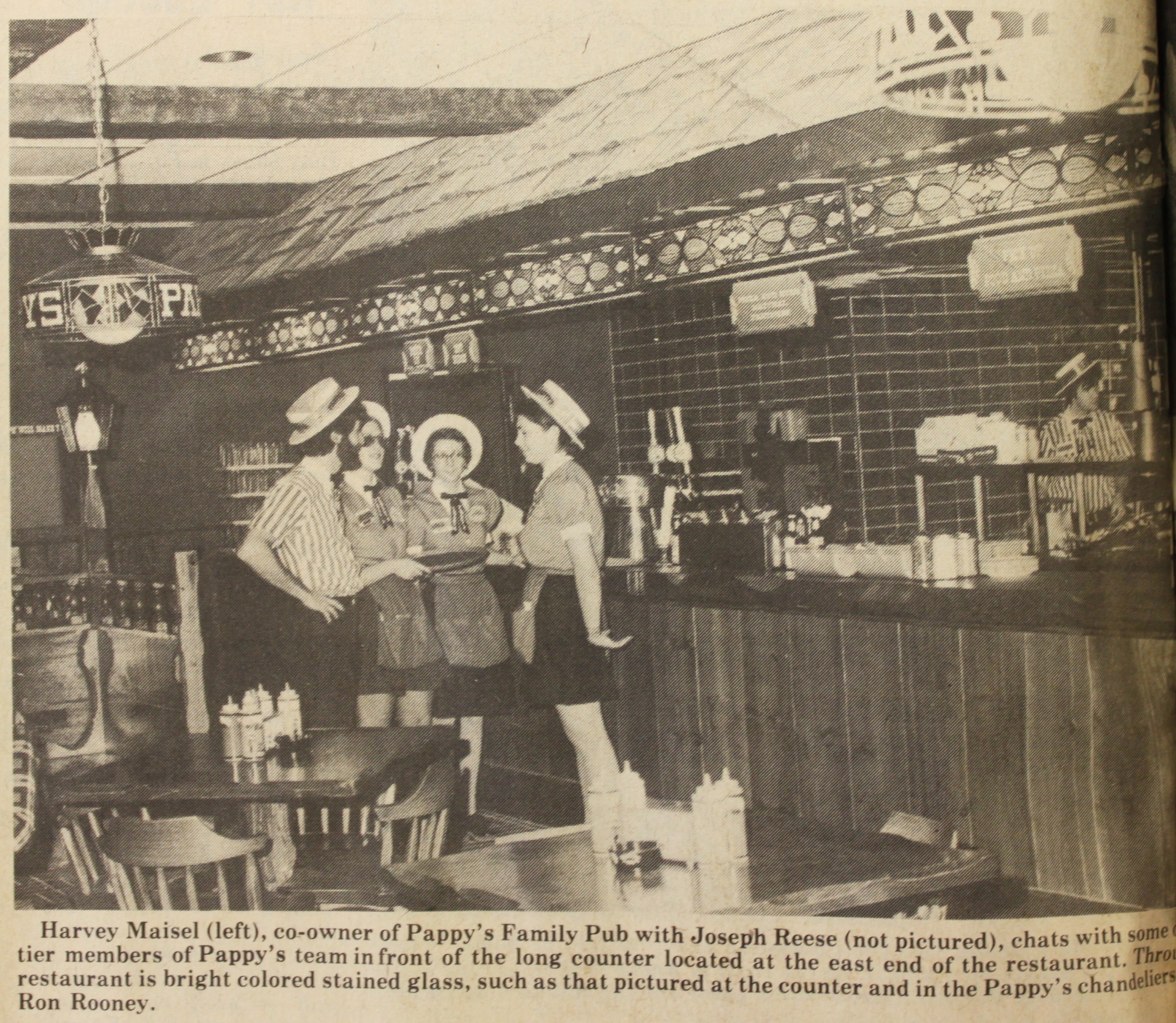
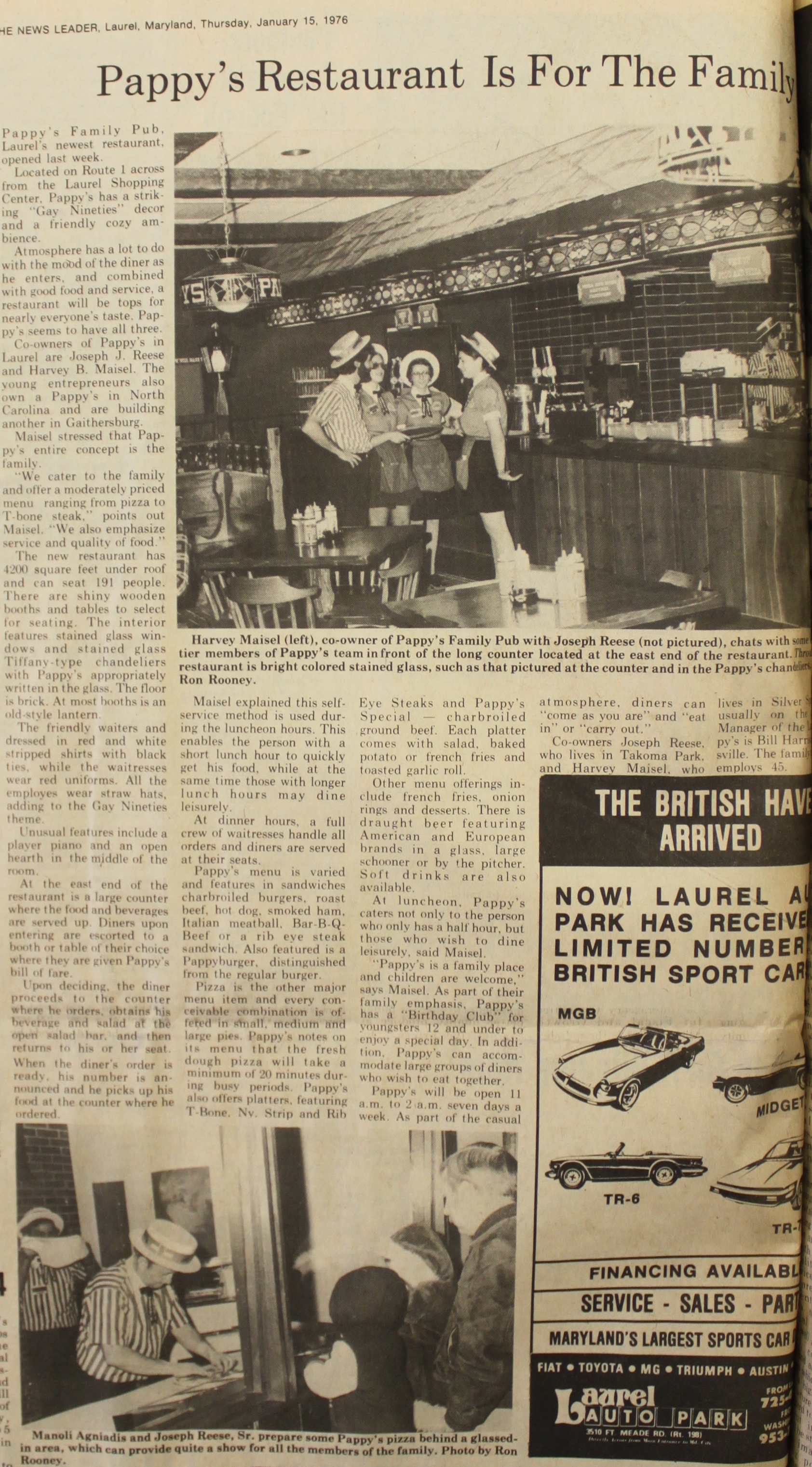
Shortly after the restaurant opened, the Laurel News Leader ran a feature on it, which included a couple of interior photos—including that memorable glass window where you could watch the pizza magic being made.
(Laurel News Leader, 1/15/76)
(Laurel News Leader, 1/15/76)
The full article appears below (click for full size).
Local yearbooks included a few ads and photos, as well:
(1976 Laurel High School Rambler; Laurel Historical Society archives)
While these pictures provide a rare and nostalgic interior view of the actual Laurel location, they still don’t completely do justice to the full Pappy’s experience—a sensory overload of delicious pizza aromas and colorful, old-timey fun.
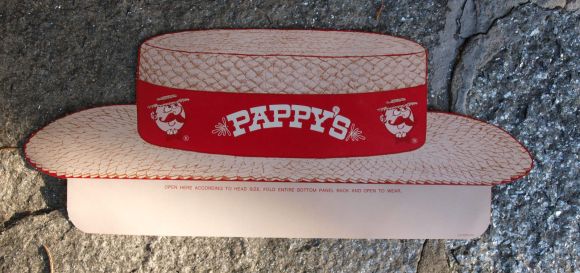
What most people tend to recall at the first mention of Pappy’s are those styrofoam hats—which were worn by staff members and available for kids. After years of searching for one, I’ve finally tracked down a pair of the original hats! One of them will soon be at the Laurel Museum, as part of the ever-expanding Lost & Found Laurel exhibit. Hmm… They’re a bit smaller than I remember.
I’ve also found one I didn’t realize ever existed—a cheaper, flat paper alternative. Apparently, these became the more cost-effective giveaways, while the employees continued to wear the real thing.
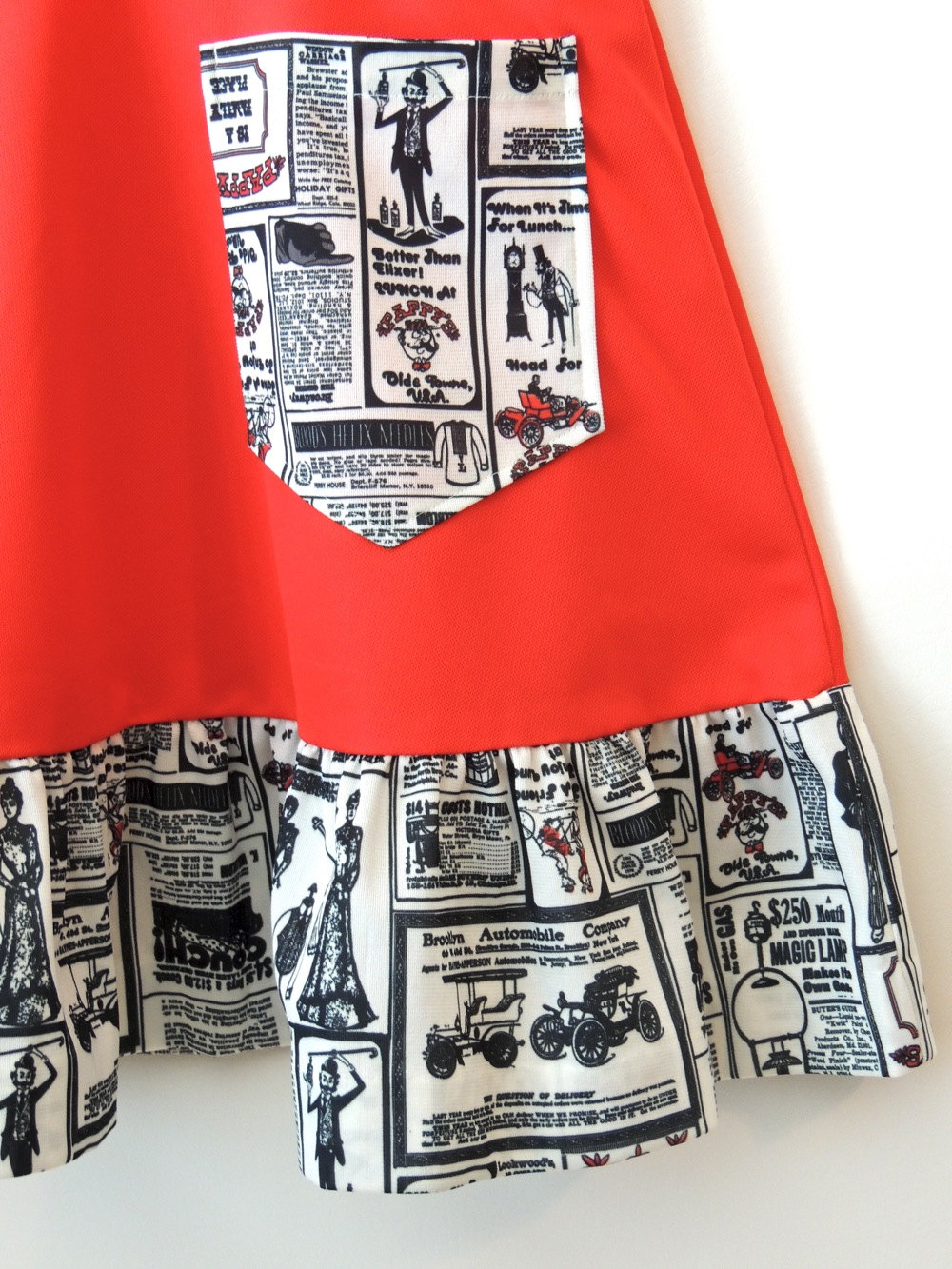
And speaking of employees, Francesfoxvintage, a seller on etsy.com, actually has an original Pappy’s waitress uniform for sale—the likes of which probably hasn’t been seen since the 1970s ended. It provides an even better sense of the vivid red and black color palette that permeated Pappy’s.
Pappy’s didn’t only serve pizza, of course; and now we’ve got the hot dog containers to prove it.
A pair of matchbooks from Laurel’s Pappy’s, courtesy of Kevin Leonard:
Last, but not least, the crown jewel of plastic toy rings. Behold!
As convenient as delivery has become with the likes of Domino’s, et al, there will always be something about a genuine old pizza restaurant experience that just can’t be topped. No pun intended.
When I was about 11 years old, I started collecting baseball and football cards. As a sports fan, the early 1980s was an exciting time to be living in Laurel, Maryland—literally midway between the 1982 Super Bowl Champion Washington Redskins and the 1983 World Series Champion Baltimore Orioles.
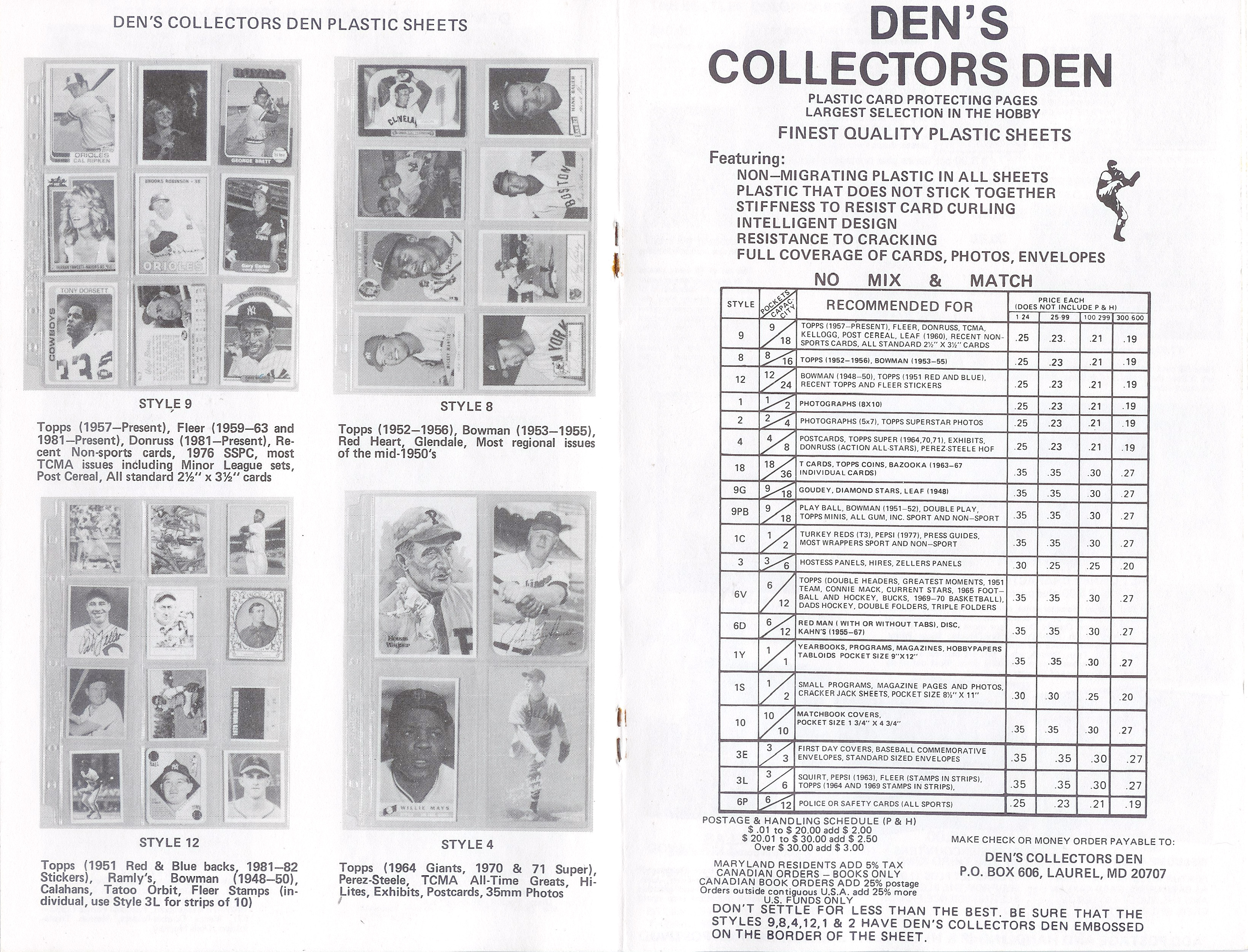
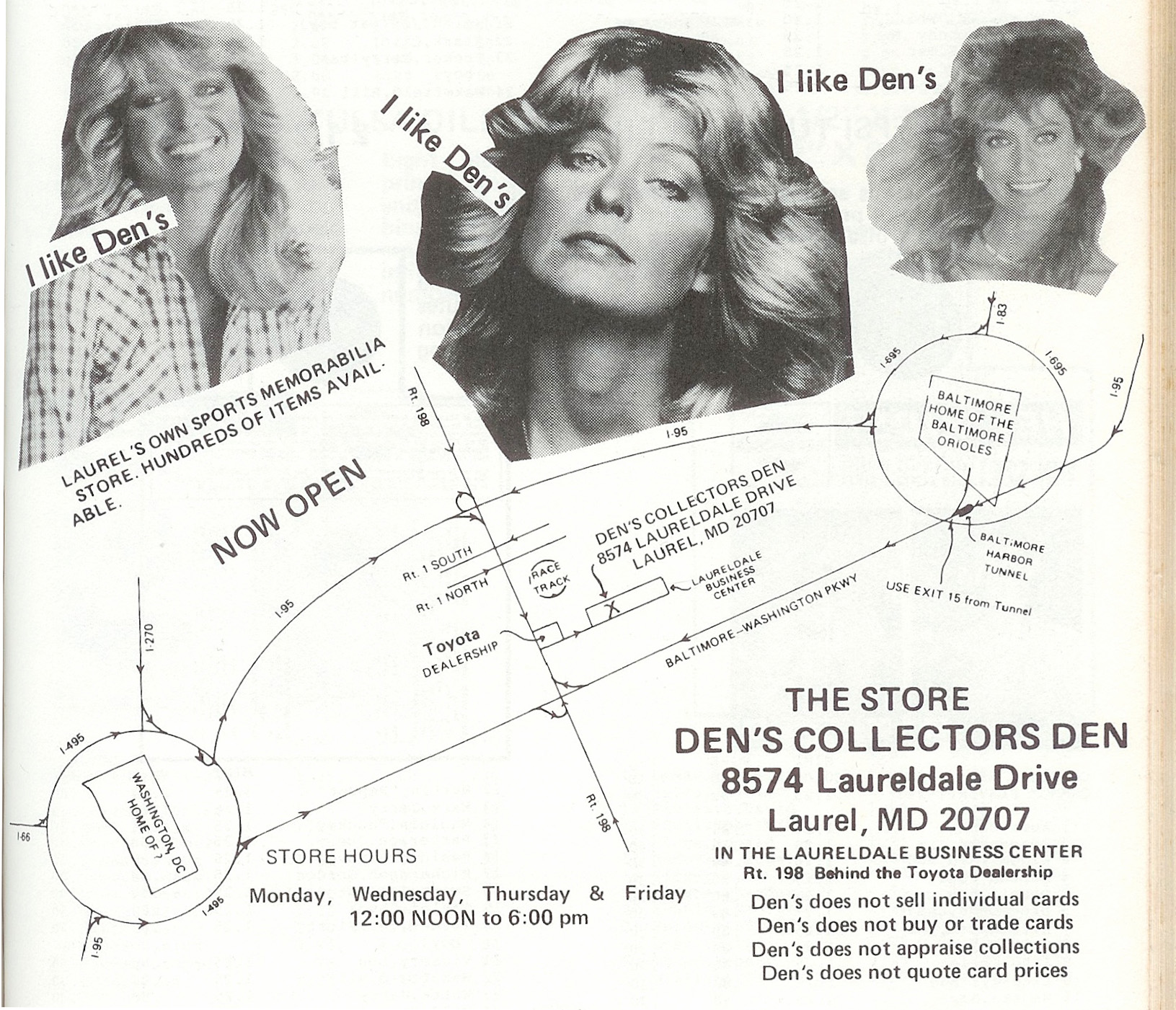
It was around that time that Mike McNeal, one of my best friends in the neighborhood, gave me something that upped the ante: a handful of plastic protector sheets for my collection. He’d found them at a place called “Den’s Collectors Den”, which was tucked away in the Laureldale Business Center off Rt. 198 in Maryland City, just behind what was then the Toyota dealership on Laureldale Drive. How he ever found it, I still don’t know; but one day, his mom drove us both there to stock up.
These plastic sheets are common today, and come in more shapes and sizes than ever—in fact, I use Ultra Pro Platinum sheets for the bulk of my Lost Laurel stuff: 8″ x 10″ photos, matchbook covers, 4″ x 6″ postcards… and, of course, Bob Windsor football cards.
But those early sheets from Den’s Collectors Den are even more special today—the name and Laurel address were embossed right into the plastic!
Admittedly, I was never what you’d call a serious collector. I liked finding cards of my favorite players, and trading with friends; and to some degree, the design of those old cards might have even played a small part with me eventually becoming a graphic designer. But at the time, the concept of “value” never really entered my mind. I knew that older cards were certainly worth more, but that was about the extent of it. Of course, now I cringe at the memory of the countless rookie cards I let slip through my fingers… Cal Ripken and Rickey Henderson… Joe Montana and John Elway… *sigh* But I digress.
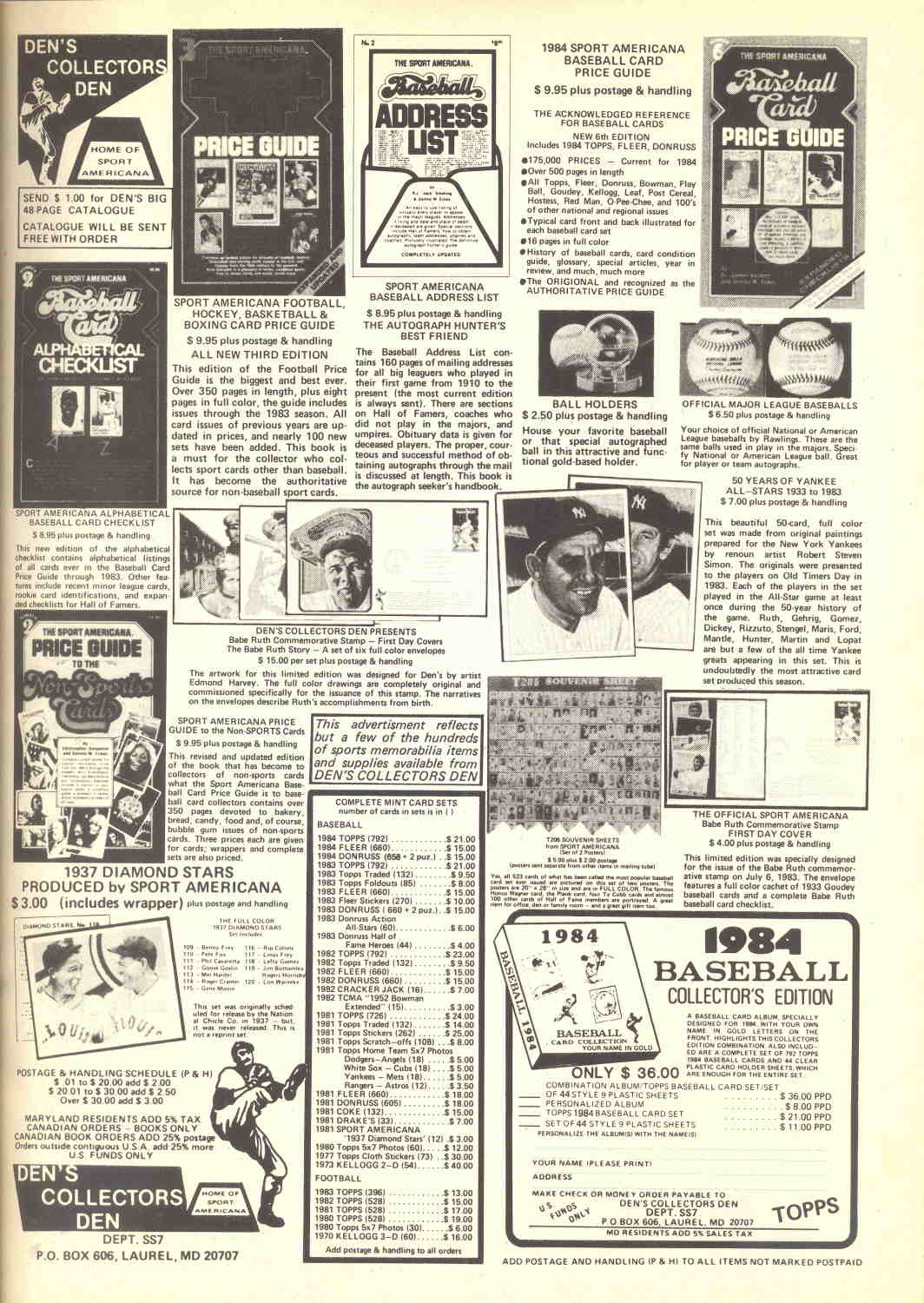
No, back then it was all for fun—as it should be. And part of the fun was discovering the tools of the collecting trade itself, and there was no better guide to such things than a catalog from Den’s Collectors Den.
Absolutely stuffed with products and information, the catalogs themselves were something to behold. More than anything, Den’s promoted an array of baseball card pricing guides—which were updated every year to give collectors (even amateurs like me) a guideline for card values. It was an added thrill to look up a particular card in your collection, and find that it was more valuable than others. In my case, this usually meant a difference of about 40¢. But again, I digress.
These price guides also included a “condition guide”, which showed you the basics for grading cards—everything from “mint condition” to “poor”.
What I didn’t realize at the time (and, in fact, only recently learned) was that the whole concept of sports card pricing guides essentially began with Den’s Collectors Den—specifically, the owner, Dennis “Denny” Eckes.
Dennis W. Eckes, 1983 (Photo: The Sport Americana Baseball Card Price Guide Number 5)
Denny had produced a rudimentary handbook between 1975 and 1978, called “The Sport Americana Checklist”—a nearly 100-page, saddle-stitched black and white booklet that was a mishmash of typeset lists, thumbnail images to represent each card type, and numerous late additions clearly made with a common typewriter. It was exactly what the title claimed—a basic checklist of every baseball card issued since 1948, and some generalized pricing information added to the backmatter. But in this completely uncredited book was the basic formula for what would become the modern sports card price guide.
The 1975 checklist booklet.
Detail from the 1975 booklet. Hmm… I should check into whether or not I’m related to #392 Bob Friend.
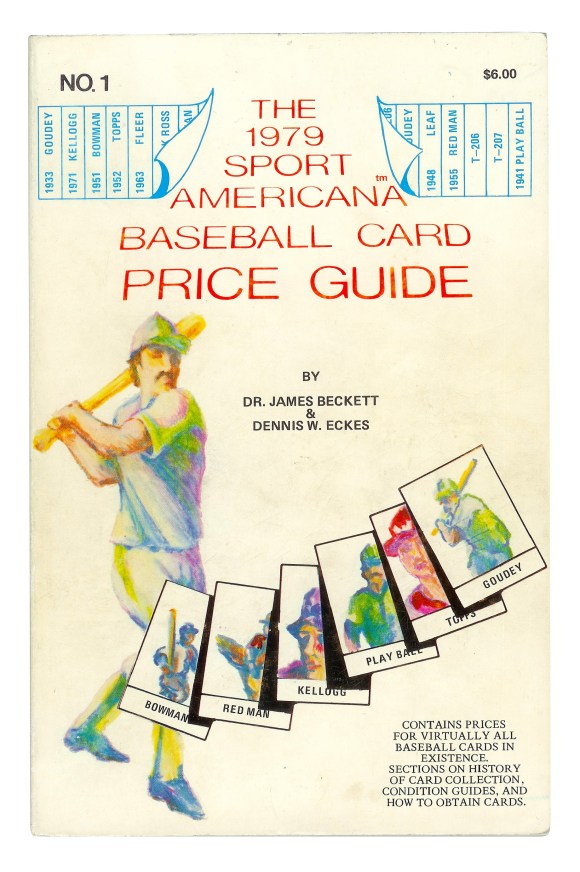
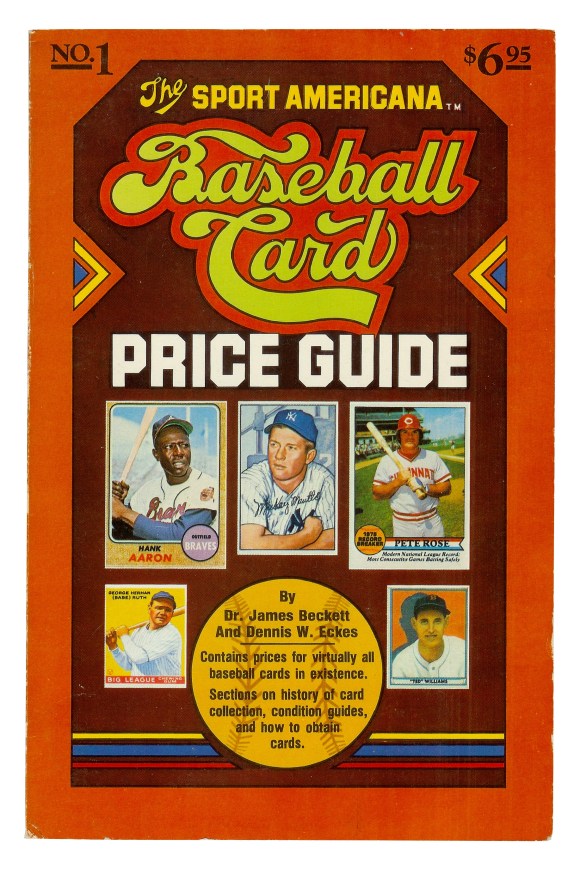
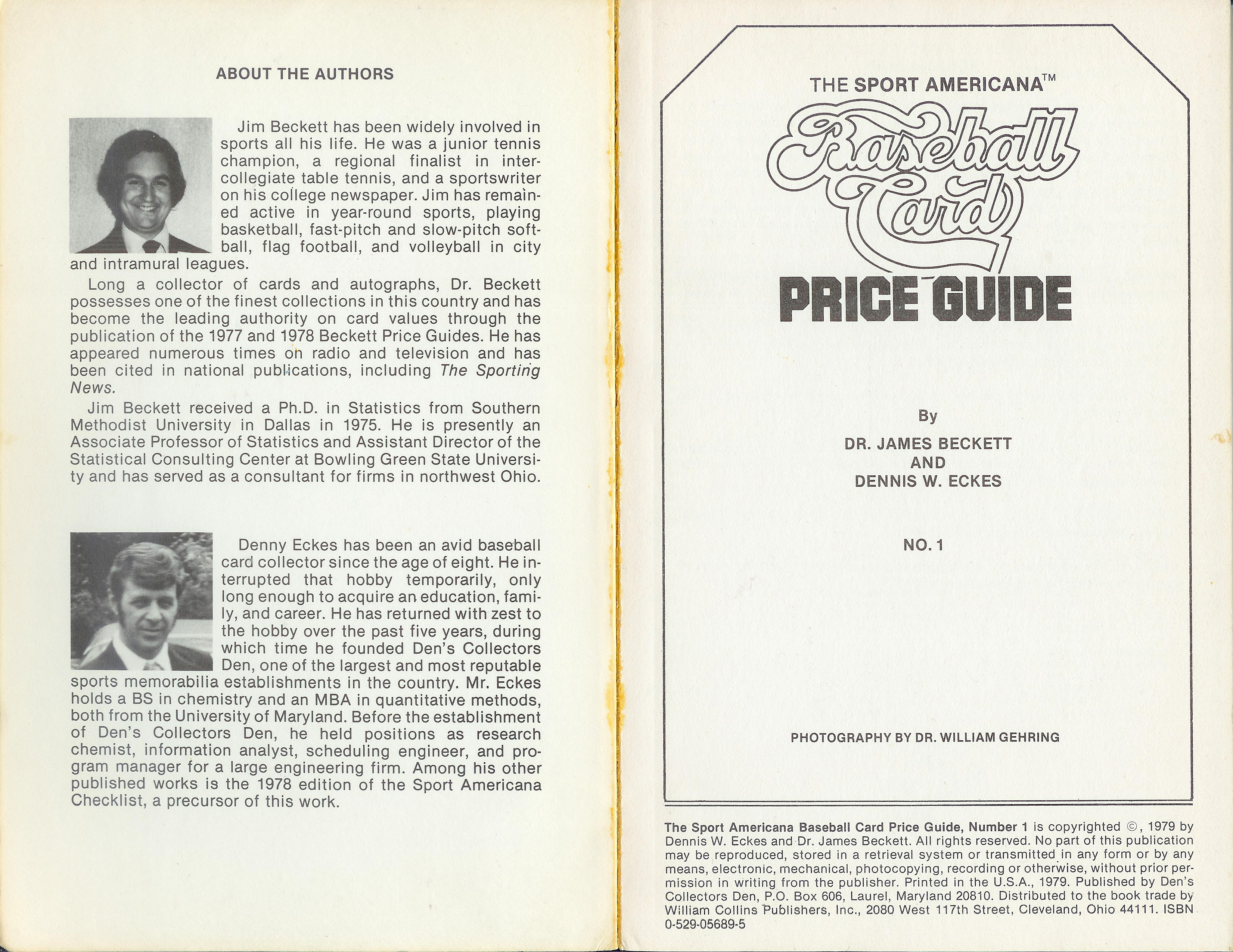
Everything changed the very next year, when Denny teamed up with a statistician and fellow collector named Dr. James Beckett. Yes, that Dr. James Beckett—the one who would eventually launch Beckett Media, the world’s preeminent authority on collecting. In 1979, they produced what is today universally acknowledged as the first price guide of its kind. And as you can see on the title page, it was published and distributed by Den’s Collectors Den of Laurel, Maryland.
Due to demand, there were actually two versions of the first Sport Americana Baseball Card Price Guide in 1979. And when I say “in demand”, I mean it—kids and adults alike clamored for the book, and most weren’t exactly gentle with it in their haste to discover the value of the hidden gems in their collection:
Someone was determined to hold this copy together by any means necessary. (Photo: eBay)
The edition with the white cover was the original, and is the Holy Grail of price guides if there ever was one. But shortly thereafter, an alternate cover was designed that included the “Baseball Card” logo in a custom typeface—this would appear on all subsequent issues under the Sport Americana banner. And on the back cover of both was a full-page, full-color ad for Den’s Collectors Den.
Inside cover & title page of the updated version, which included author bios.
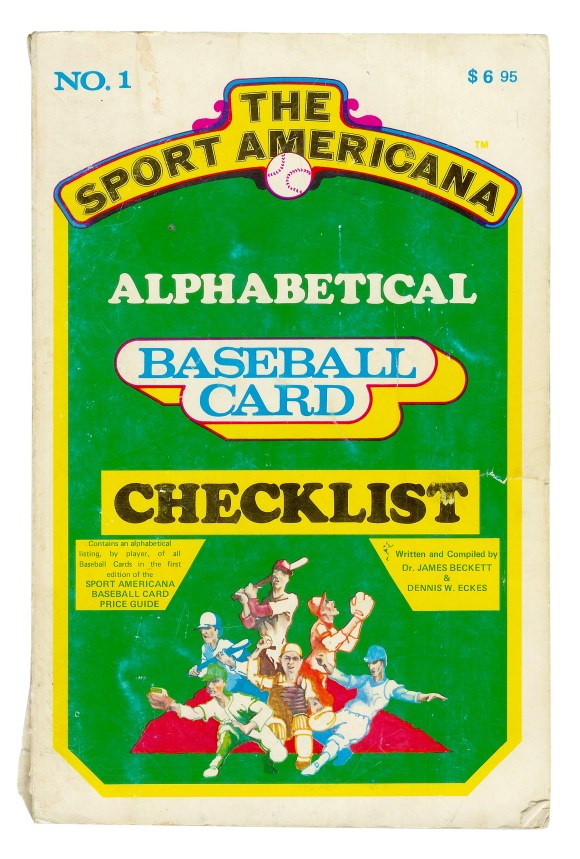
Eckes and Beckett didn’t stop there. Throughout the early 1980s, they expanded the Sport Americana brand with additional books, including the Alphabetical Baseball Card Checklist (1979) and the Baseball Memorabilia and Autograph Price Guide (1982).
All the while, Den’s Collectors Den—the physical store in Laurel—continued its success. The price guides, plastic protector sheets, and other goodies were hot sellers.
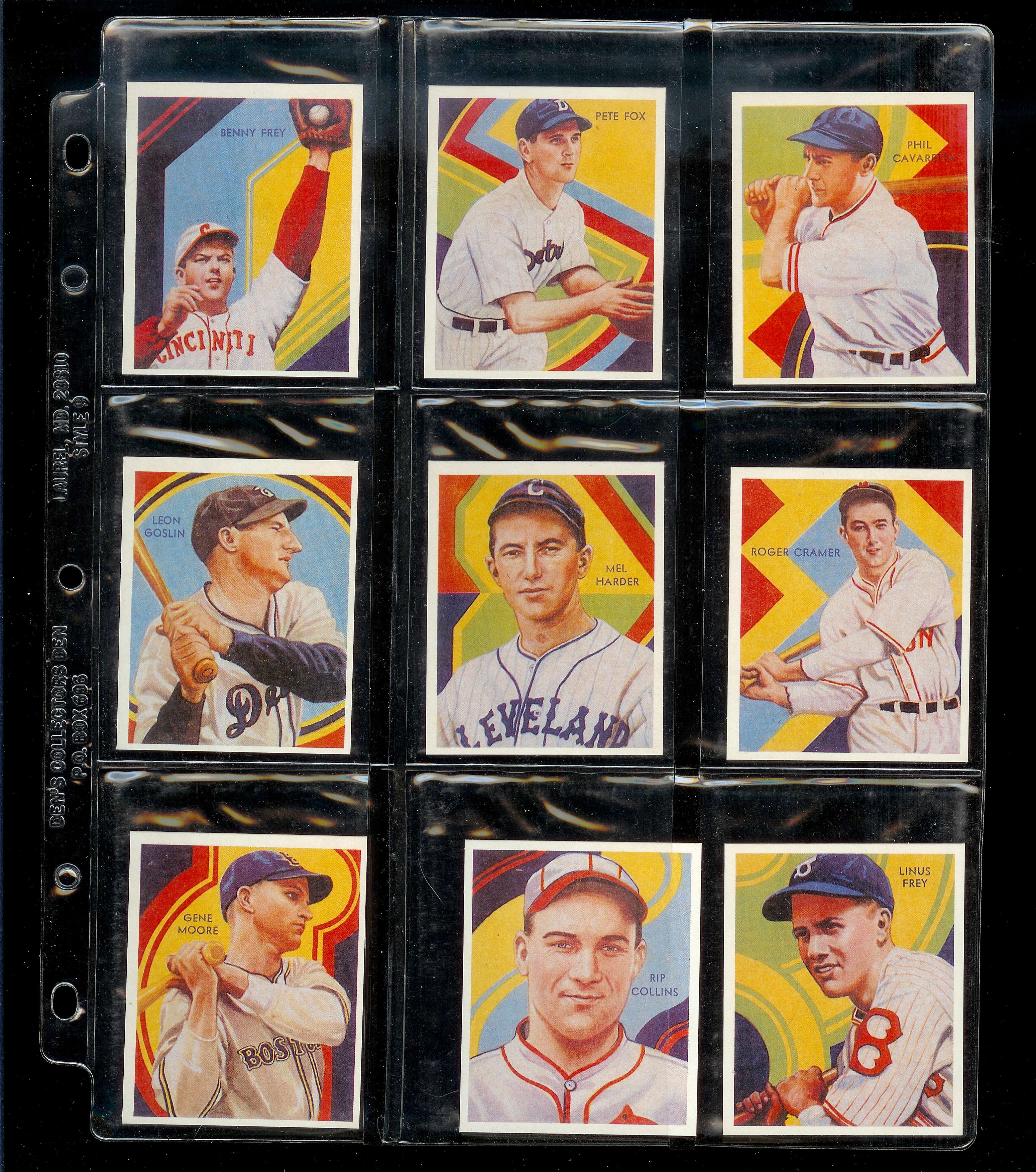
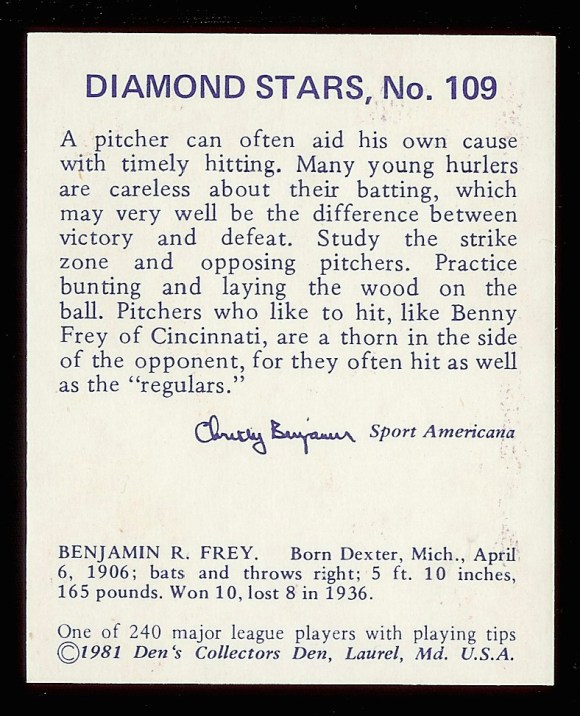
Always the collector, Denny traveled the country, participating in the fledgling sports card trading show circuit—which itself is a massive industry today. In his dealings, he’d frequently unearth rare items which he’d typically manage to share with the collecting community in some shape or form. A perfect example was his discovery of previously unpublished artwork that matched the 1934-36 series of the National Chicle Company’s popular Diamond Stars set. A blank-backed proof sheet of 12 additional cards was determined to be the series’ 1937 extension that never was; and Denny ultimately had the proof reproduced and the cards brought to life in 1981. He even reinterpreted the classic wrapper itself, which bears his company’s name and Laurel address.
For $3, you could buy a professionally-printed set of 12 cards that completed a legendary collection that had been cut short some 45 years earlier.
This type of “reprint” was extremely rare at the time, and it inspired Denny to create yet another niche in the market. Den’s Collectors Den also carried similar extension sets and reprints produced by other manufacturers, such as the 1952 Bowman set by TCMA.
I’ve heard from a number of collectors and hobbyists who knew Denny Eckes personally, and I’ve never heard a negative thing about the man. Naturally, I was curious as to what became of him, as there seemed to be very little information beyond the final books he produced in 1990—expanding into football and basketball price guides, as well as a book of baseball players’ agents’ mailing addresses for autograph hunters.
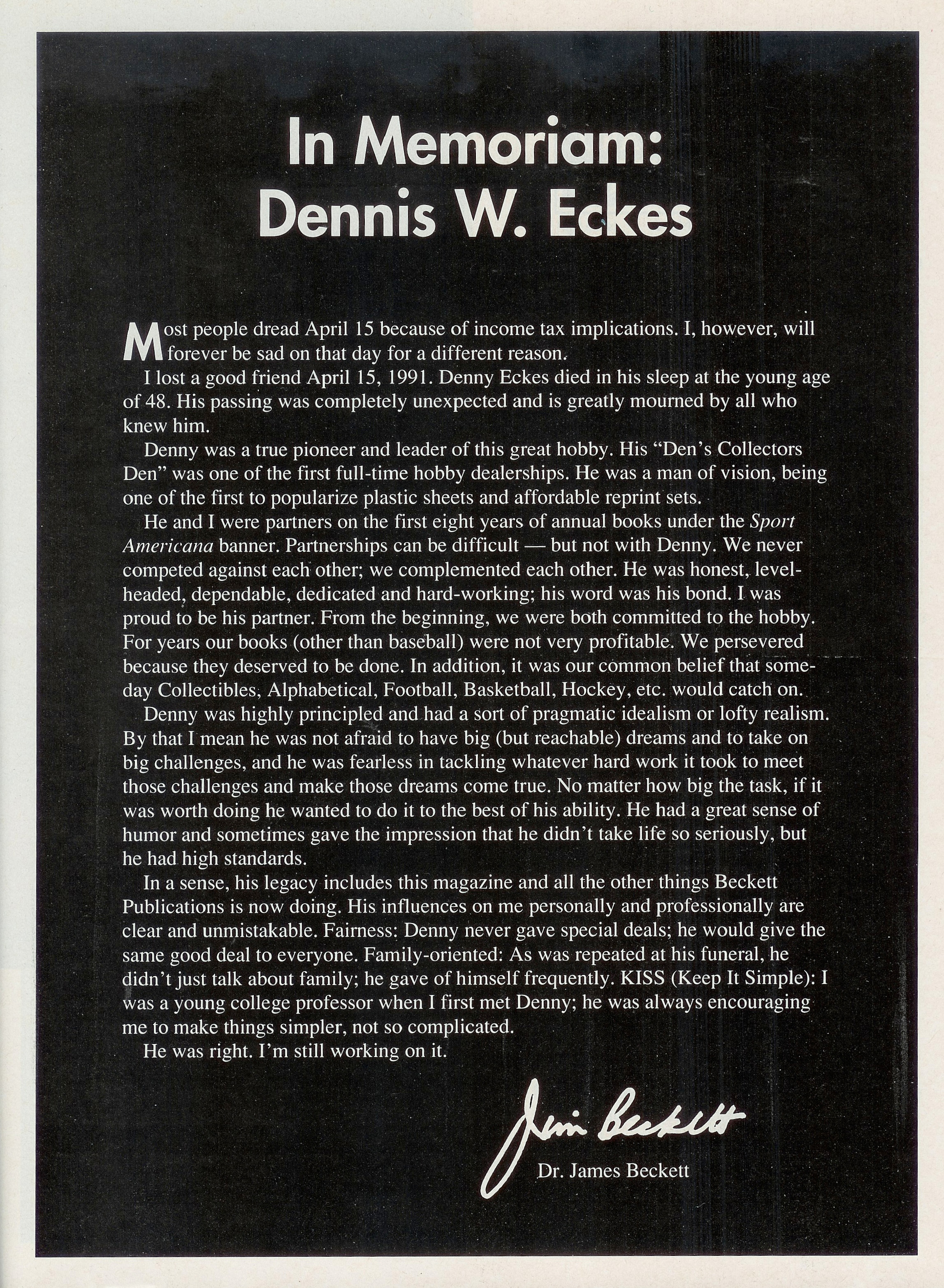
Unfortunately, I found the answer in the June 1991 issue of Beckett Baseball Card Monthly, one of the many expanded publishing efforts that James Beckett had taken on after his early success with Denny and Sport Americana. Filling the first page of that issue is a moving tribute—a eulogy to Dennis W. Eckes, who’d passed away unexpectedly in his sleep on April 15, 1991. He was only 48. The eulogy was written by Dr. Beckett himself, and paints a glowing portrait of a true visionary whose influence is still being felt in what has become a bigger business than ever before.
Denny Eckes, who ran the inconspicuous little sports memorabilia shop in a Laurel industrial park, made quite a splash in his short lifetime. My only personal experience with him was some 30 years ago—as a kid at his glass display counter, eager to plop down my meager allowance at 25¢ per plastic sheet for my football cards. But the products he sold and the pastime he promoted have certainly stuck with me all these years, and I’m grateful to finally know and share a bit more about his legacy. Hopefully, someone who knows his story better than I do will be able to help shed even more light on this remarkable man.
If you’ve been perusing the front page of the Laurel Leader‘s online edition this week, you’ve seen something extraordinary—a LOT of coverage of the new Lost & Found Laurel exhibit, which enjoyed a tremendously successful grand opening this past Sunday at the Laurel Museum!
Most importantly, the reviews are unanimously positive. An unprecedented 150+ attended the opening, and their enjoyment could be both seen, heard, and felt in the oldest house in Laurel. Jeff Dudley, who manages the Tastee Diner and writes the “Old Town Laurel” column for the Leader said it best:
“…it felt more like a family reunion than a museum event.”
Here’s a selection of articles that have come out so far:
The Museum is open Wednesdays and Fridays from 10AM–2PM and Sundays from 1PM–4PM, and the exhibit runs until December 21st. And even if you’ve seen it once, you’ll want to go back—plenty of “new” pieces will be rotated in throughout the year.
If you were around during the era of small racetracks that regularly hosted local races, demolition derbies, and monster truck events, you undoubtedly remember the radio announcer’s rallying cry of “Sunday! Sunday! Sunday!” For Lost Laurel, tomorrow—Sunday, February 9th—is every bit as exciting. And then some.
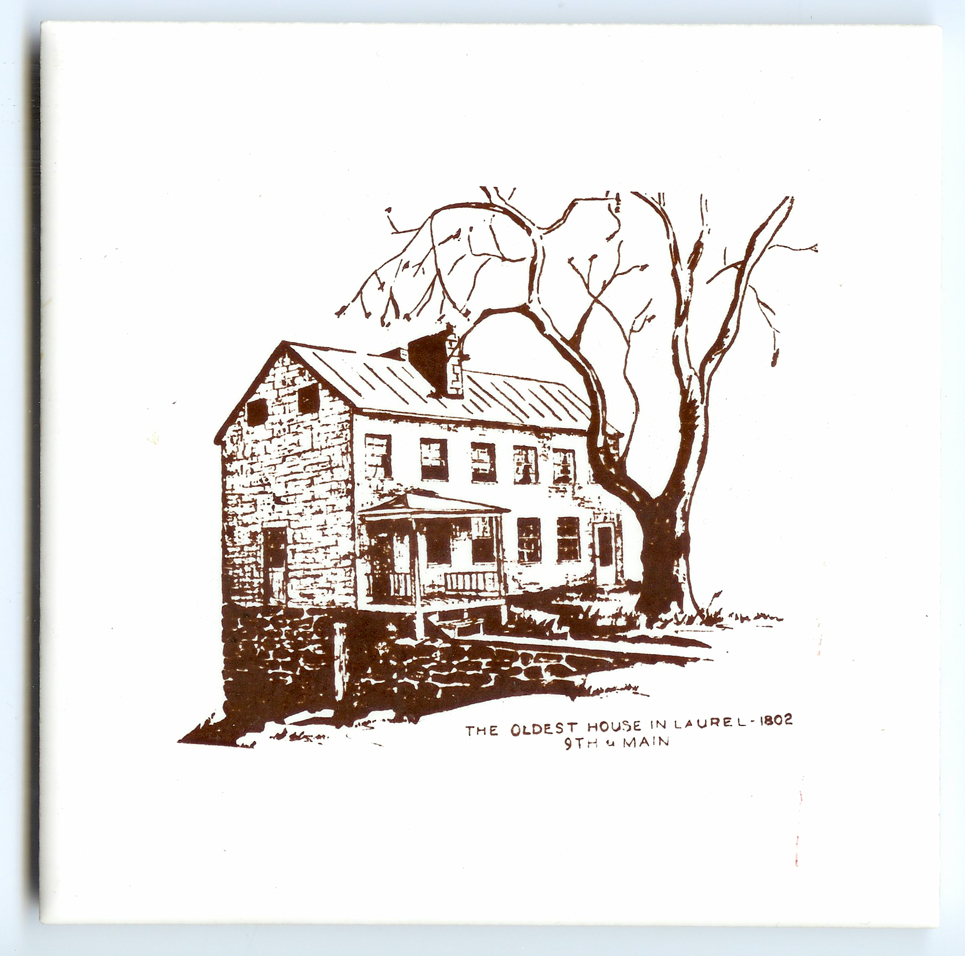
The museum, located in what is believed to be the oldest house in Laurel (dating to at least the 1840s, with some estimates going back to 1802) is at the corner of 9th & Main Streets. Admission is free.
Even before it was the Laurel Museum, the oldest house in Laurel was a landmark. (Ceramic tile courtesy of Peter & Martha (Kalbach) Lewnes).
Both the Laurel Leader and The Gazette have been spreading the word this week, and the Leader will be covering the grand opening, as well! Here are a few of the media links to date:
While I did have the chance to get a few sneak peeks along the way, I’ll be experiencing the opening for the first time along with everyone else. When I was at the Museum last weekend, the exhibit panels had been printed but not yet installed, and many of the displays were only just beginning to take shape.
I won’t even attempt to list the full variety of things you’ll discover, but yes—that is the original Hershey’s Ice Cream sign that hung from Keller’s/Knapp’s Laurel News Agency for decades. Beside it (partially hidden behind the glass showcase with the fleet of Lost Laurel toy trucks) is the cash register from Cook’s Laurel Hardware. Both of these treasures have been in the Laurel Historical Society’s archives since the businesses closed.
***
I also have an update on the Lost Laurel book, as we’re all anxiously awaiting the printed shipment.
The cargo ship carrying the books arrived in New York yesterday, and I was told to allow an additional 7–10 days for customs clearance and delivery; so I’m expecting to have the books in hand the week of February 17th, at which point I’ll begin mailing out the pre-ordered copies.
But remember, you can also win one of the very first copies of the book at the grand opening tomorrow! I donated the two advance copies I’d received (one paperback and one hard cover edition) to the Museum for this purpose, so be sure to come out and take a chance! I look forward to seeing many of you there and hearing what you think about the exhibit!
It’s a particularly busy and exciting week for Lost Laurel!
I’ll be giving a presentation with Kevin Leonard (writer of the popular “History Matters” column in the Laurel Leader) Thursday night (February 6th) at 7:30 at the Women’s Club of Laurel on Main Street. We’ve put together a fun and informative talk called “Lost Laurel Leader”, on behalf of the Laurel Historical Society Speakers Bureau.
Kevin will discuss the Laurel Shopping Center’s unique development and promotions, covering it’s grand opening in 1956 to the addition of Laurel Centre Mall in 1979. I’ll be talking about the origins of the Lost Laurel blog and Facebook page (and the soon-to-be arriving book), some of the pitfalls a historian faces when researching these things, and how one goes about becoming a collector of Laurel “memorabilia”.
If you’re in the area, stop by and check it out! The Women’s Club is located at 384 Main Street, in the small building beside the former Citizens National Bank. Believe it or not, the clubhouse building was originally the Laurel Library, before it relocated to 7th Street—where it’s entering its final days before meeting the wrecking ball, as construction will soon begin on yet another new facility. But that’s another story for another day—back to this busy and exciting week!
The bigger event occurs this Sunday, February 9th, when the Lost & Found Laurelexhibit open this Sunday at theLaurel Museum!
I’ve had the pleasure and honor of lending a hand (and quite a few pieces from my collection) to this exhibit, which is about much more than just past businesses. Here’s the Museum’s description:
How do You See Your home town? How do you remember it? Lost & Found Laurel, a new exhibit that takes visitors on a trip down memory lane opens February 9, 2014 at the Laurel Museum. Focusing on the 1960s through the present, the exhibit explores the shops, schools, restaurants, activities and celebrations that created a fondly remembered community. One section: “The Good Old Days…?” focuses on racial tensions, as a reminder that not all memories were good ones. As part of the Grand Opening celebration the first copies of Lost Laurel: The Book have been donated by author Richard Friend and will be raffled off February 9.
That’s right—the two advance book copies I received from the printer (one signed paperback and one signed & numbered hardcover) will be raffled off at the grand opening. Whomever wins them will literally have the very first copies produced, as the full shipment won’t arrive to me for another couple of weeks!
There’ll be much more to come on the exhibit, which will run all the way through December. But for now, mark your calendars and try to join us (weather permitting) for these fun events! Also, keep your eyes peeled this week for news in both the Laurel Leader and The Gazette on the exhibit.
There are still plenty of great rewards available, too—many of them exclusive to backers of the project on Kickstarter.com.
Also, you don’t have to purchase a book to be able to contribute; even a $5 pledge will get your name printed in the book’s acknowledgments. Every dollar helps, as evidenced by the over $17,000 this campaign has raised. That money has elevated the book from a 152-page print-on-demand paperback that may have yielded less than 300 total copies, to a 192-page book that will be printed on premium paper with high-quality binding; with a minimum 1,000 softcover copies to be available, as well as a limited-edition run of 200 hardcover books. It’s a huge upgrade that never would have been possible without your support.
You can see a preview of the scope of the book in this sample copy I had printed, but the final version will be even bigger and better. Over 20 pages have been added since!
If you haven’t done so already, please visit the campaign page soon and contribute before the clock runs out!
Here it is—a sneak peek at what’s in the works: the very first LOST LAUREL BOOK!
Sometime in the next few weeks, I’m planning to launch a Kickstarter.com fundraiser to cover the expenses of a first-run printing of the book I’m designing myself; and I’m making sure there will be a lot of very cool Lost Laurel rewards available for everyone who contributes to the project.
The Kickstarter campaign will feature tiered contribution levels—everything from $1 and up! For example, a $5 contribution might get your name printed in the acknowledgments section; a $10 contribution might get you the acknowledgement, plus a Lost Laurel postcard in the mail, updating you on the book’s progress.
On the larger side, a $100 contribution might not only get you one of the limited-edition hardcover books, but I’ll deliver it in person, treat you to lunch at the legendary Tastee Diner, and take a group walking tour of nearby Main Street. You get the idea. But most importantly, the more I can raise through Kickstarter, the bigger, better, & more affordable the book will be.There’ll be much more info to come; but in the meantime, I’ve been getting fantastic feedback in terms of how many folks are interested in contributing—I’m happy to say that the demand is definitely there!
On a related note, now is also the time to go through your own photos and artifacts—you may have something that would be an excellent addition to the book! If so, you’ll receive a photo credit (and, of course, a free copy!) If you have any photos to share, please email me at richard_friend@mac.com with details.
As always, many thanks for your support! Stay tuned, and check the Facebook page for updates!
Sometimes, the truth really does turn out to be stranger than fiction. And as the other old truism goes, life really does often imitate art.
Although, sadly, there wasn’t actually anything fictional or artful about the 1982 murder of Stefanie Watson. It was all too real, and all too disturbing; and for three decades, not only was the crime unsolved, it was as cold a case as one could ever imagine—virtually nothing had been written about it for nearly 30 years. Growing up, I’d always felt it should have been a national news story—it certainly had all the elements of a Hollywood whodunit or a New York Times bestseller.
Last summer, in the midst of curating Lost Laurel, I realized that the 30th anniversary of Stefanie’s death was approaching. I wanted to not only mark the occasion, but somehow generate interest and possibly even rejuvenate the investigation into her murder. In the process, I developed what I thought to be a compelling theory—albeit an unlikely one. I became convinced that Stefanie’s killer(s) were the notorious drifters, Henry Lee Lucas and Ottis Toole—the latter having been the murderer of young Adam Walsh, son of America’s Most Wanted host John Walsh, almost exactly one year earlier in 1981. Erratic travelers active primarily in the south, both had connections to Prince George’s County, the opportunity, and certainly the will and the means to commit such a crime. They’d been free at the time of Stefanie’s disappearance, confirmed having traveled through Maryland in the summer of 1982, and owned a car at that time matching the description of the one seen that fateful night on Larchdale Road, dumping partial skeletal remains—Stefanie’s only remains ever recovered, to this day.
The question I posed was simple: could there really have been anyone else even capable of such a horrific crime, not to mention the numerous coincidences? As it turns out, there really was. And in yet another incredible coincidence, his name is John Walsh. But we’ll get to him in a moment.
Learning the news
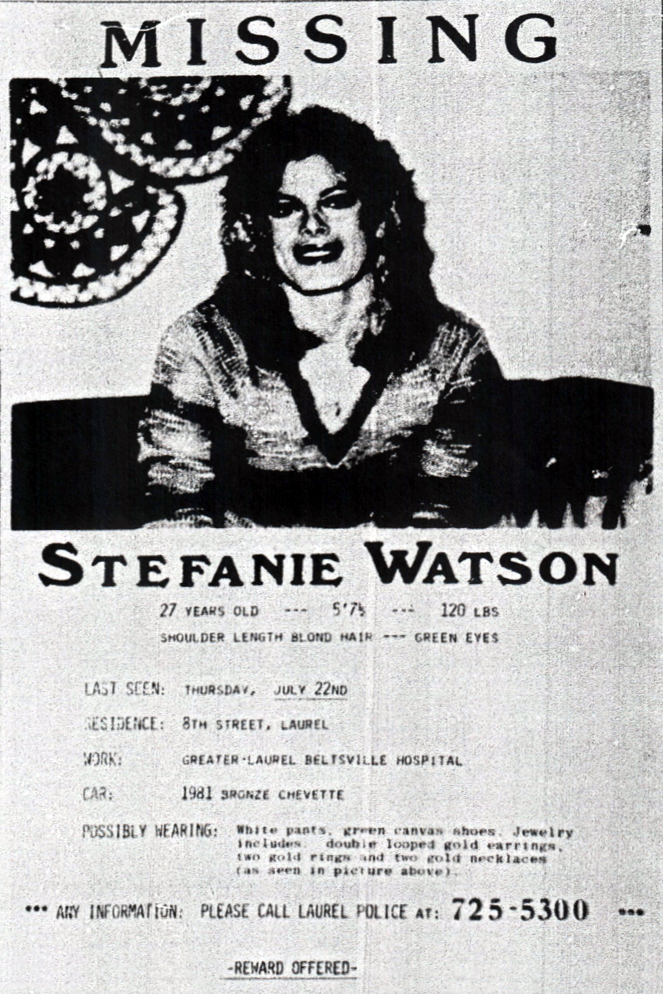
In addition to bringing the case back to the public consciousness among Laurelites last summer, one of the unexpected blessings has been making contact with the family of Stefanie Watson. I was only 9 years old when she died, and had never met her. But as I explained in the original post, I’ve never forgotten the summer of 1982, and the feeling of dread standing for hours near the missing person flyer taped to the large window at the entrance to Zayre. Stefanie Watson’s face—still strikingly pretty through that faded Xerox photocopy—was the first and last face I saw each day at Zayre, as I manned my post outside—a shy kid trying to sell Olympic Sales Club products to approaching customers. For long, lonely stretches at times, it was just me and that flyer; just me and Stefanie Watson.
Before I published the article, I had considered trying to contact Stefanie’s family for information. But the fear of opening old wounds for them was great, and being neither a journalist or investigator, I just didn’t feel comfortable doing that. Instead, I spoke to Laurel Chief of Police Rich McLaughlin first, and he directed me to Prince George’s County Homicide’s cold case division. There, I spoke to Sgt. Rick Fulginiti. I explained to them that in writing the piece, I wanted to make sure I didn’t do anything that would impede their investigation, or upset Stefanie’s family, should they happen to come across it. Both men encouraged me to write it.
Surprisingly, Stefanie’s family did come across it. I first received an email from her cousin, Leanne last October, and it was such a relief to hear that they were grateful for what I’d written. I learned that Leanne’s older sister, Chris, had been Stefanie’s best friend. Chris was, in fact, the one who had the unthinkable task of reporting her missing.
Leanne and I corresponded a bit, and the blog posting continued to get its share of comments over the next several months. Then, on Friday, June 21st, I got an email from Leanne that I never could’ve expected. She was letting me know that there had been an arrest in Stefanie’s murder, and that the DNA matched an inmate named John Walsh. “No kidding,” she added.
And then, on Sunday, June 23rd, I got a call from Sgt. Fulginiti, confirming this stunning news. “I’ve spoken to Stefanie’s family, and I wanted to call you next,” he said; and in what was a tremendous honor, he told me that the Lost Laurel article had indeed helped breathe new life into the cold case. He let me know that he would be issuing a press conference in the following days, formally announcing that charges have been filed against John Ernest Walsh, a 68-year-old inmate who has been incarcerated on an unrelated charge since 1989. Preserved DNA from the back of the driver’s seat of Stefanie’s blood-soaked 1981 Chevette unequivocally matched that of Walsh. Stefanie, it’s clear, put up an incredible fight in that small car—as a significant amount of that blood evidently belonged to Walsh, whom Sgt. Fulginiti reports still bears distinct scars.
The press conference came on Tuesday, June 25th, and a lot of local minds were thoroughly blown—including my own.
For the remainder of the week—and for the first time since this unspeakable crime occurred back in the summer of 1982, there was no shortage of news coverage. The Laurel Leader, rightfully, was one of the first to break the story. Fox5 aired a report, as did WJLA 7, and plenty of others. (Just Google it).
John Ernest Walsh, we learned, had been arrested in 1969—when he was only 24 years old—for the kidnapping, rape, and attempted murder of a woman in Prince George’s County whose throat and wrists he cut before literally leaving her for dead in the woods. Against all odds, she survived; and Walsh was sentenced to 72 years in prison. But unfortunately for society, this was just the beginning of his story.
John Ernest Walsh (Photo: Prince George’s County Police)
Walsh was deemed a psychiatric patient, naturally, and was handpicked by the Patuxent Institution in Jessup “for rehabilitation”. After serving only 8 years, he was deemed “rehabilitated”—at least enough to be allowed out on work release. That was in 1978. Two years later, in 1980, he was paroled outright. You read that correctly—this man kidnapped, raped, and cut a woman’s throat, then ended up really only serving 8 years of a seventy-two year sentence. And so it came to be that on July 22, 1982, John Ernest Walsh—the “rehabilitated” kidnapper/rapist/attempted murderer—crossed paths with Stefanie Watson. The exact circumstances of just how their paths crossed may only be known to Walsh himself, and so far, he claims he “doesn’t remember”.
Having had his parole revoked in 1989 for failing a drug test, Walsh has had the last 24 years to think about it in Eastern Correctional Institution, where he is Inmate #113067. That may bring some solace to the family and friends of Stefanie Watson, but it raises even more questions—not the least of which is, how many other people did this man kill during his years of “rehabilitated” freedom, between 1978 and 1989? And what about the Patuxent Institution itself? Surely, there is a record somewhere that bears the signature of a fatally misguided psychiatrist who literally released this monster on the public. The individual (or group) who made that decision is, in my opinion, just as responsible for Stefanie Watson’s death as John Ernest Walsh is, and should rightfully pay for it.
Shifting focus
Watching the press conference and news coverage last week was surreal for a number of reasons. Honestly, it still hasn’t sunken in yet that the case has actually been solved; and that the killer has been sitting in prison for the past 24 years thinking he’d otherwise gotten away with it. In fact, in January 2000, he actually tried to petition the U.S. Court of Appeals to return him to the cushier confines of Patuxent, feeling that he’d been unfairly sent to a more “punitive” environment. Again, fortunately for society, that was overruled.
That being said, I’ve written all I care to write about this man. I trust that he’ll be in court soon to face the charge of first degree murder, and when he does, he’ll return to the spotlight of our local news. My wish, however, is that the spotlight returns to the rightful person—Stefanie Watson.
With the news of the arrest came another pleasant surprise—the first fairly clear color photo of Stefanie I’d ever seen.
Stefanie Watson (Photo: Prince George’s County Police)
It was her driver’s license photo, used by police during the investigation. Granted, few people are particularly fond of their driver’s license photos, but this one came into focus on television screens and computer monitors like a breath of fresh air. For nearly 31 years, Stefanie Watson had been a fading name and a grainy, black and white image on a photocopied missing person flyer. Suddenly, there she was again—this time in full color. It gave me a wonderful idea for my follow-up story, which I wanted to focus primarily on Stefanie herself, rather than the man who killed her.
I immediately contacted her cousin, Leanne again, and inquired about writing a piece that really showed who Stefanie was as a person: the music she listened to, the shows she watched, etc. Leanne had her older sister, Chris, give me a call—and for nearly an hour and a half, I was treated to a first person account of growing up with Stefanie—not only as her cousin, but as her best friend.
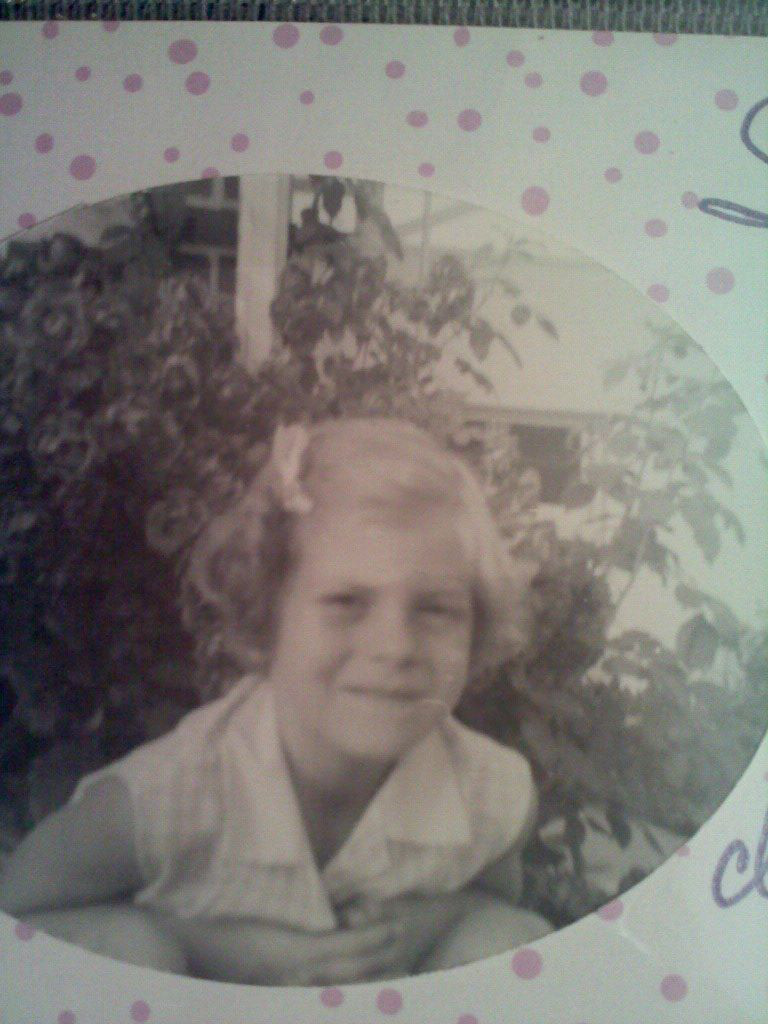
Invaluable help came from even more of Stefanie’s family. Her niece, Kate—who had only been three months old at the time of her aunt’s disappearance—shared a treasure trove of photos of Stefanie through the years:
Family photo courtesy of Stefanie’s sister, Peg, and niece, Kate.
Family photo courtesy of Stefanie’s sister, Peg, and niece, Kate.
Family photo courtesy of Stefanie’s sister, Peg, and niece, Kate.
Stefanie (left) with older sister, Peg. (Family photo courtesy of Stefanie’s sister, Peg, and niece, Kate).
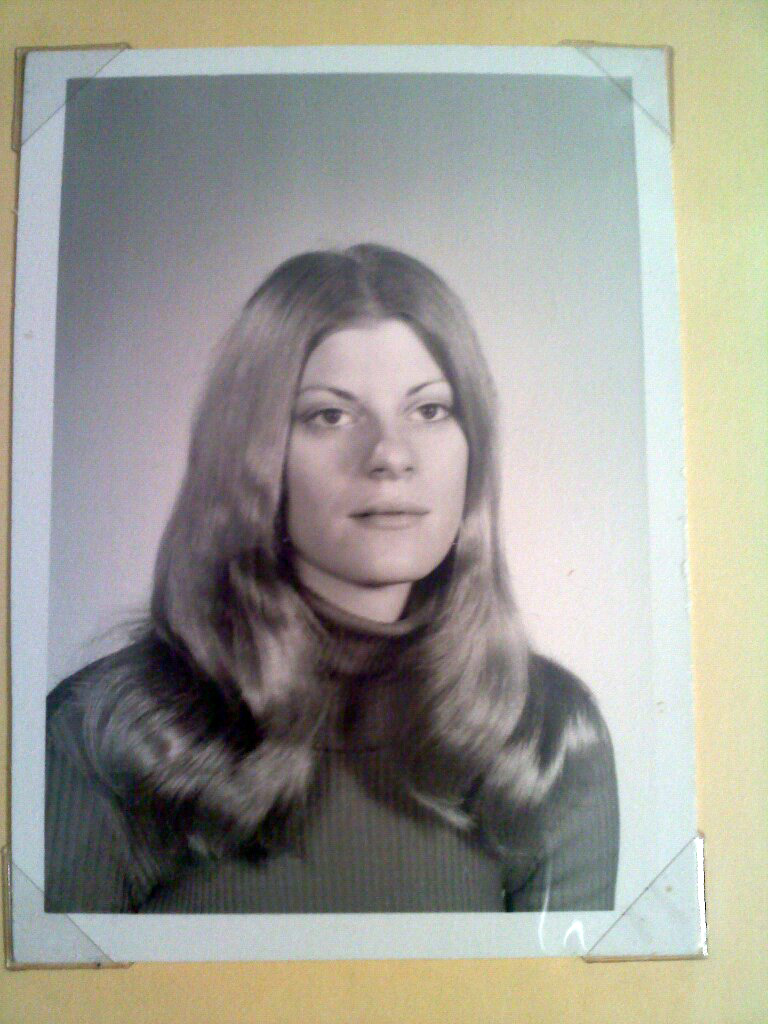
Stefanie’s senior high school photo, 1973. (Family photo courtesy of Stefanie’s sister, Peg, and niece, Kate).
Family photo courtesy of Stefanie’s sister, Peg, and niece, Kate.
Stefanie was only two years older than her cousin, Chris—an obvious factor in their closeness. Her sister, Margaret (known as Peg)—while undoubtedly close herself—was seven years older than Stefanie. But Stefanie and Chris were, by all accounts, inseparable best friends. Speaking to Chris on the phone all these years later, the joy in her voice was palpable, as were the memories. “Oh, she was a good time. Just a really good time,” she said—clearly smiling while recalling the days leading up to the summer of 1982. And in particular, Stefanie’s all-too brief time in Laurel. She arrived in September 1981, and Chris would frequently make the drive down from Pennsylvania to visit. Coincidentally, it was Stefanie who taught Chris to drive some years earlier, in what Chris remembered as an orange Buick Skylark.
“She had a wicked sense of humor,” Chris mused, “and she loved the beach.” To that point, Deborah Moore, an 18-year-old neighbor who lived in the building beside Stefanie’s in 1982, even remembers her sunbathing on the 8th Street Field right in front of her apartment. “She was fearless,” Chris reiterated. “She would walk her dog along those fields early in the morning and late at night.” Her dog, a striking red Siberian Husky, was named Kito. Chris sent me the following photos, which beautifully capture them both.
Stefanie with Kito. (Family photo courtesy of Stefanie’s cousin, Christy).
Stefanie with Kito. (Family photo courtesy of Stefanie’s cousin, Christy).
“That’s more Stefanie than most other pictures,” Leanne replied, fondly recalling her “cool cousin”:
“I look at her face, and still see the girl that I thought was so pretty, and had great clothes… I would sneak them out of her bag when she spent the night, wear them to school, and have them nicely folded and back in her bag before she and my sister got home from work. They were older than me—Chris is four years older and Stefanie was six years older. Chris always thought of me as her pesky little sister and would tell me to get lost, and Stefanie would tell her to stop being so mean.”
Chris also attested to Stefanie’s fashion sense, and how she was always “super-neat, and had to make sure everything was clean and pressed”.
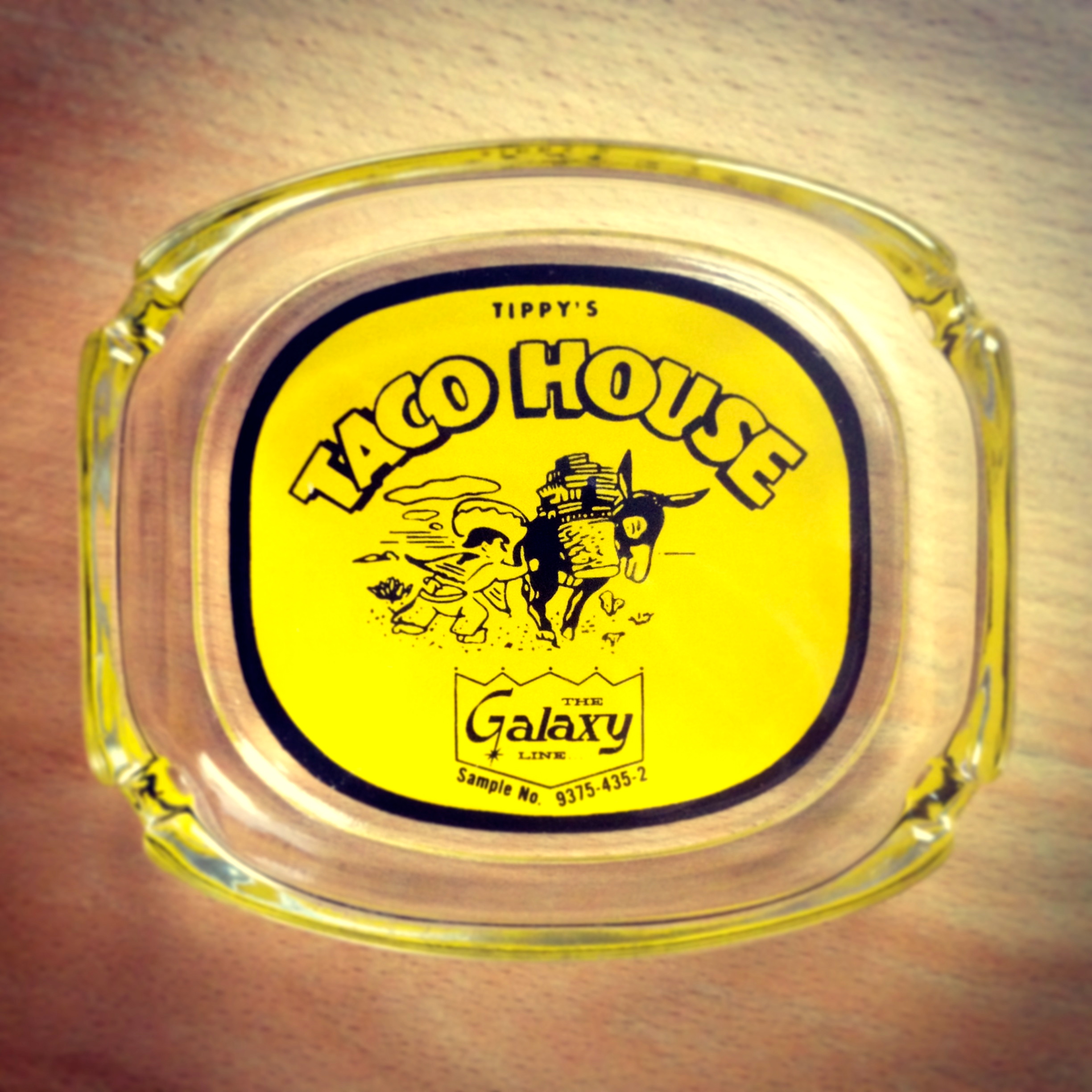
I asked about Stefanie’s favorite foods, and with a laugh, Chris explained that Stefanie “could eat like a hog and never gain weight!” She added that they would often eat frequently and at odd times, undoubtedly due in part to Stefanie’s late work schedule at what was then called Greater Laurel Beltsville Hospital. She would typically report to work at 11:30 PM, where she was the overnight admitting clerk in the busy emergency room. Chris thought about restaurants they frequented together in Laurel, and one name came instantly to mind. “Tippy’s Taco House,” she said, knowing that it’s still open at 315 Gorman Avenue, albeit under the name Toucan Taco since 1992. The girls would get their Tex-Mex fix, and Chris would even buy more for the trip home to Pennsylvania.
Chris and I talked about TV shows that Stefanie watched, too:
“I remember she loved Tom Selleck in Magnum P.I.… Happy Days, Laverne & Shirley, One Day at a Time, TheLove Boat, Saturday Night Live—when Saturday Night Live was good, of course”.
Music was a big part of Stefanie’s life, and she and Chris frequented concerts—including several at Merriweather Post Pavilion in nearby Columbia. “We’d go to any concert,” she said. “It really didn’t matter who was playing—we just loved to go”. She cited a number of Stefanie’s favorite recording artists, and while the list paints a veritable time capsule of the era, it also attests to her diverse taste in music. Rod Stewart, I expected. Charlie Daniels, I did not. But Chris said they were both part of Stefanie’s playlist:
“The Bee Gees, Blondie, Rod Stewart, Charlie Daniels, Marshall Tucker, Christopher Cross, Elton John, David Bowie… and how could I forget Todd Rundgren, and her all time favorite Dan Fogelberg—loved him. She was also a huge Steely Dan fan!”
With Christy’s help, I’ve put together a little playlist that Stefanie would approve of:
A few years earlier in Pennsylvania, she’d also had a dog named “Jackson”—because she also loved Jackson Browne.
It’s easy for us to use the term “playlist” today, and forget that it wouldn’t have been part of Stefanie’s lexicon 30+ years ago. Chris and I talked about this as well; how there were no cell phones, no internet, no MP3s—none of the modern conveniences that we take for granted today. Consider the things that Stefanie missed out on within just that first year alone: Michael Jackson’s Thriller. Return of the Jedi. A Christmas Story. Friday Night Videos. Flashdance. Madonna. Then consider everything she missed over the next thirty years. It’s staggering.
Stefanie would have just celebrated her 58th birthday on July 3rd, and it’s hard to fathom that she’s now been gone longer than she was here. This is especially true for Laurel, where she was really only a resident for a total of 10 months. Even if the unspeakable crime hadn’t occurred, she was literally just days away from relocating to Fort Worth, Texas.
I’m 40 years old today. That’s 13 years older than Stefanie was at the time of her disappearance. It really is amazing how time flies by. And while the rest of us continue to get older and live our lives, Stefanie will always remain that beautiful and kind 27-year-old who loved the beach, her dog, and concerts. And she’ll forever be a part of Laurel. Personally, I like to think that had she lived, she would even be an active Lost Laurel follower on Facebook—reminiscing over photos and artifacts she’d recall from her time in our hometown.
Glass ashtray, circa 1980s. (Lost Laurel collection).
Ballpoint pen from Greater Laurel Beltsville Hospital, circa 1980s. (Lost Laurel collection, courtesy of John Floyd II).
T-shirt from Laurel’s 4th of July Celebration, 1982. (Lost Laurel collection, courtesy of John Floyd II).
This banner from the 1982 celebration adorned the 8th Street Field fence directly across from Stefanie’s apartment. Coincidentally, the day also marked Stefanie’s 27th birthday. (Laurel Historical Society collection).
I never would’ve dreamed, as a little kid nearly 31 years ago, that I’d grow up and contribute a small part to finally catching the monster responsible for Stefanie Watson’s death. That has been a truly unexpected blessing, and it’s only through the diligence and cooperation of the Laurel Police Department, the Prince George’s County Police Department, and these amazing P.G. County cold case detectives that we’ve finally seen this case resolved.
Plenty of questions remain, but even after all this time, we may finally be about to learn the answers. The main question, however—who did it?—has finally been put to rest. Thirty years removed, the man responsible has been living a miserable existence behind bars; an existence that, as we speak, is only becoming increasingly more miserable. I’ll drink to that.
The coincidences that permeate this chapter in Laurel’s history continue to astound me: the sheer randomness of the crime; the timing of Stefanie’s last night at work and plans to relocate; and now the very name of the killer. As they say, you couldn’t make this stuff up. Nonetheless, it happened, and those of us who lived in Laurel during the summer of 1982 have never forgotten. Nor will we ever.
As Laurel celebrates another 4th of July, let’s remember Stefanie as more than just a victim. Her family has been kind enough to share photos and memories with us that we otherwise wouldn’t have seen, and it’s my hope that it paints a clearer picture of who this young woman was. There’s a line from an Elton John song—whom we now know was one of Stefanie’s favorites—that best sums up my feelings, and probably those of everyone else from my generation who grew up in Laurel:
“And I would have liked to have known you
But I was just a kid.
Your candle burned out long before
Your legend ever did”.
*****
My immeasurable thanks to Sgt. Rick Fulginiti and his team of cold case detectives at the Prince George’s County Police Department, for taking the time to not only talk to me about a haunting case that predates their careers, but for then going out and actually breaking it wide open once and for all. Thank you, DNA evidence! And most of all, thank you again to Stefanie’s incredibly strong family members: her sister, Peg; her niece, Kate; and her cousins Leanne and Chris—for helping us remember the Stefanie that you knew and loved.
The Laurel Historical Society is planning its 2014 exhibition, and it’s inspired in part by Lost Laurel! Executive Director Lindsey Baker and I have begun discussing possible ideas for an exhibit that would shine a light on many of the past businesses documented here, as well as some of the great new places that have emerged in recent years—perhaps sweet spots like The Double Dipper Ice Cream Parlor, for instance. The exhibition is tentatively being called “Lost…and Found Laurel”, and here’s what they’re saying:
We’re planning our next exhibit and we want your help! Tentatively titled “Lost…and Found Laurel,” it will explore how Laurel has changed over the years. What’s been “lost” in the community but also what great new things have been “found.” So whether you’re new to Laurel or have been here for years, your opinion counts! Help us plan our next exhibit by taking this quick survey! http://www.surveymonkey.com/s/R9J2GDY
Please take a moment to check out their survey to help give them an idea of the types of places you’d be most interested in seeing represented. More importantly, let them know if there’s anything you might be able to share—this exhibition is a fantastic crowdsourcing opportunity, and while I’ve already pledged to loan anything in the Lost Laurel collection, that’s merely the tip of the iceberg.
Also be sure to follow the Laurel Historical Society on Facebook, and tell them that Lost Laurel sent you!
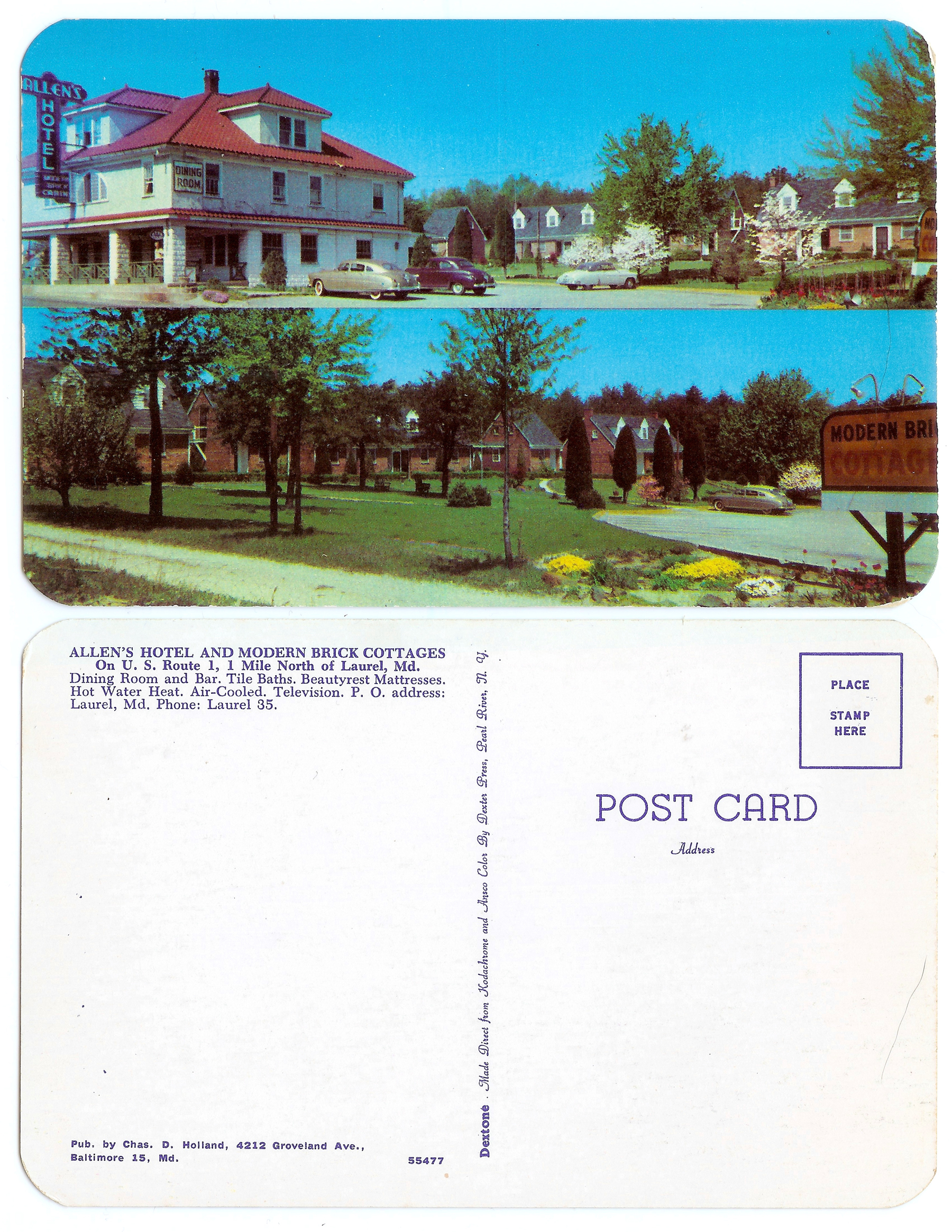
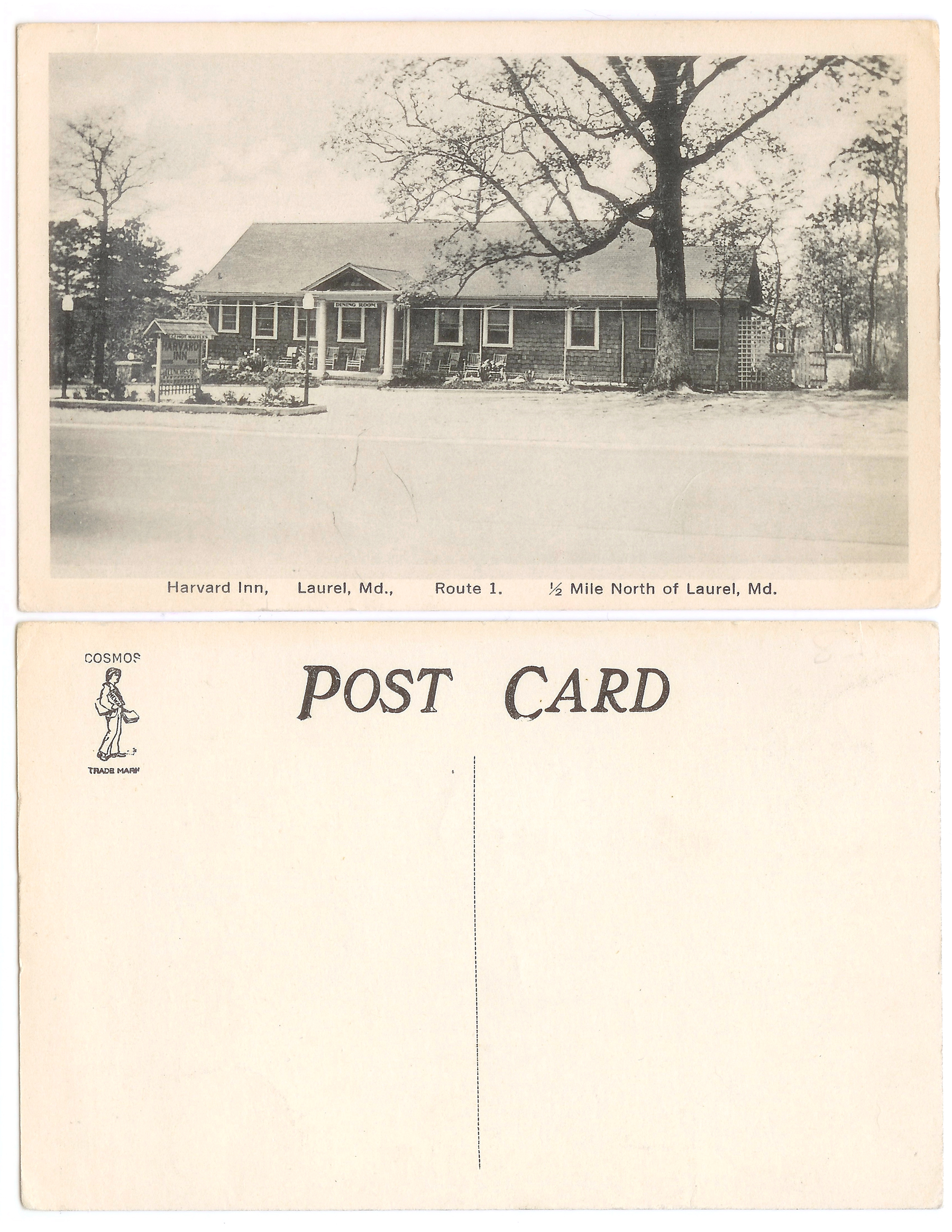
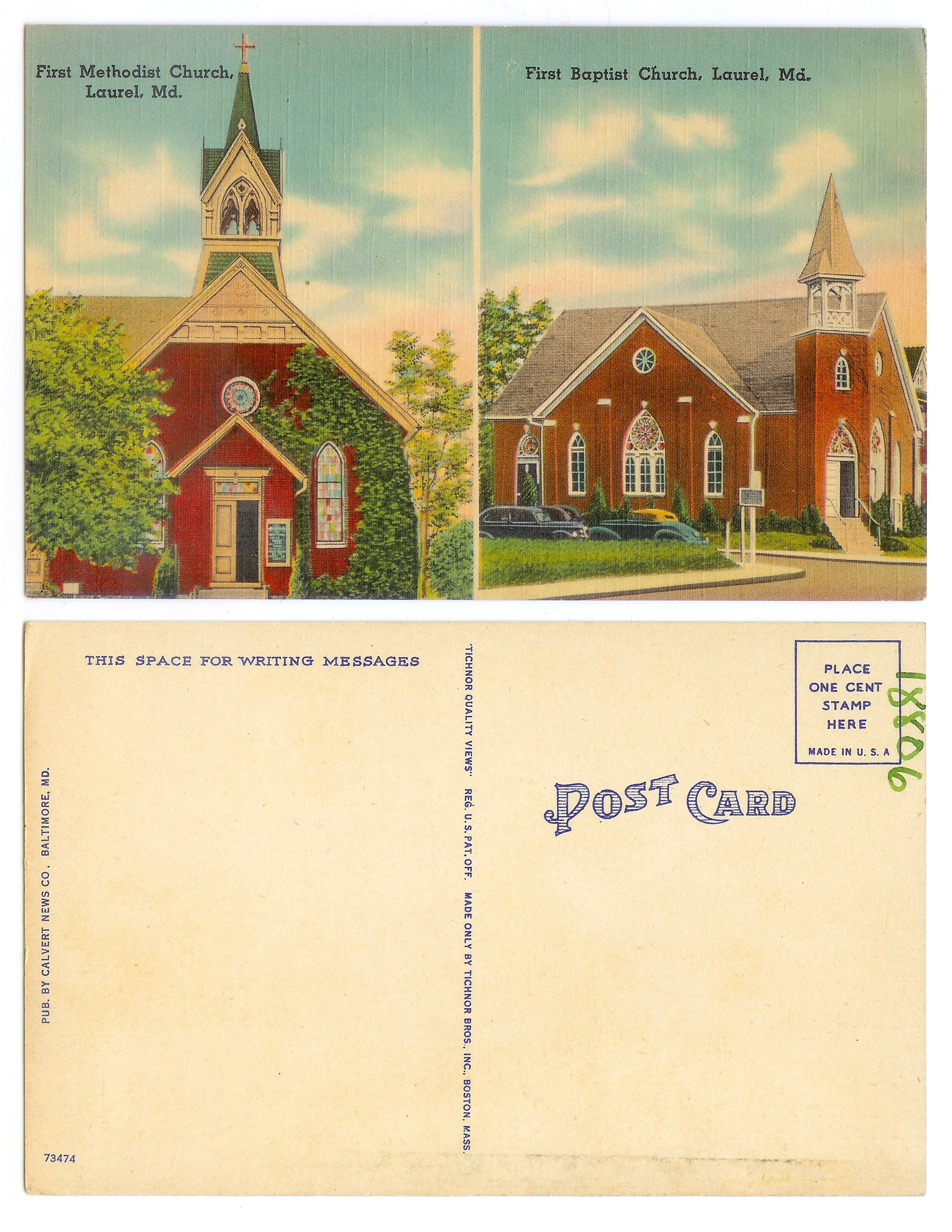
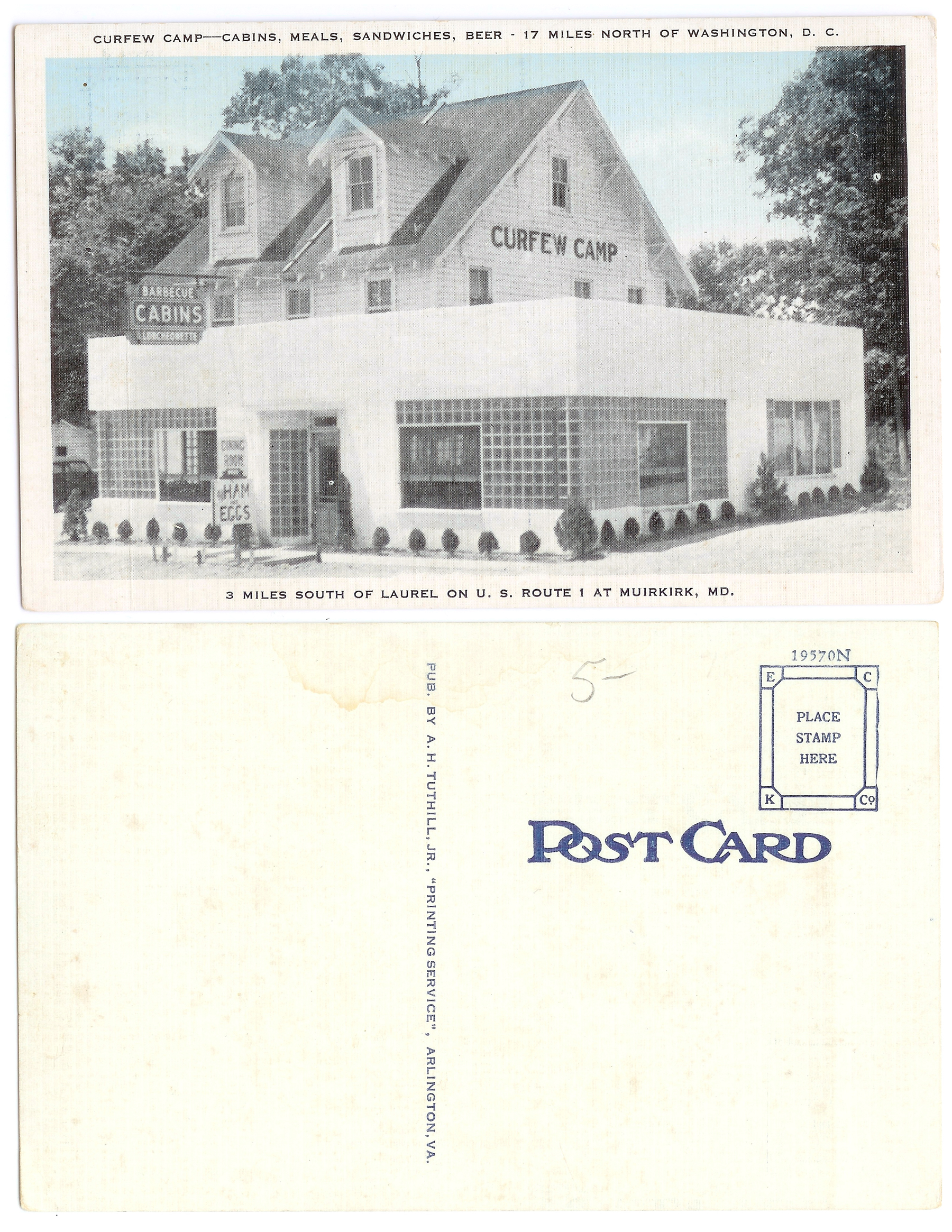
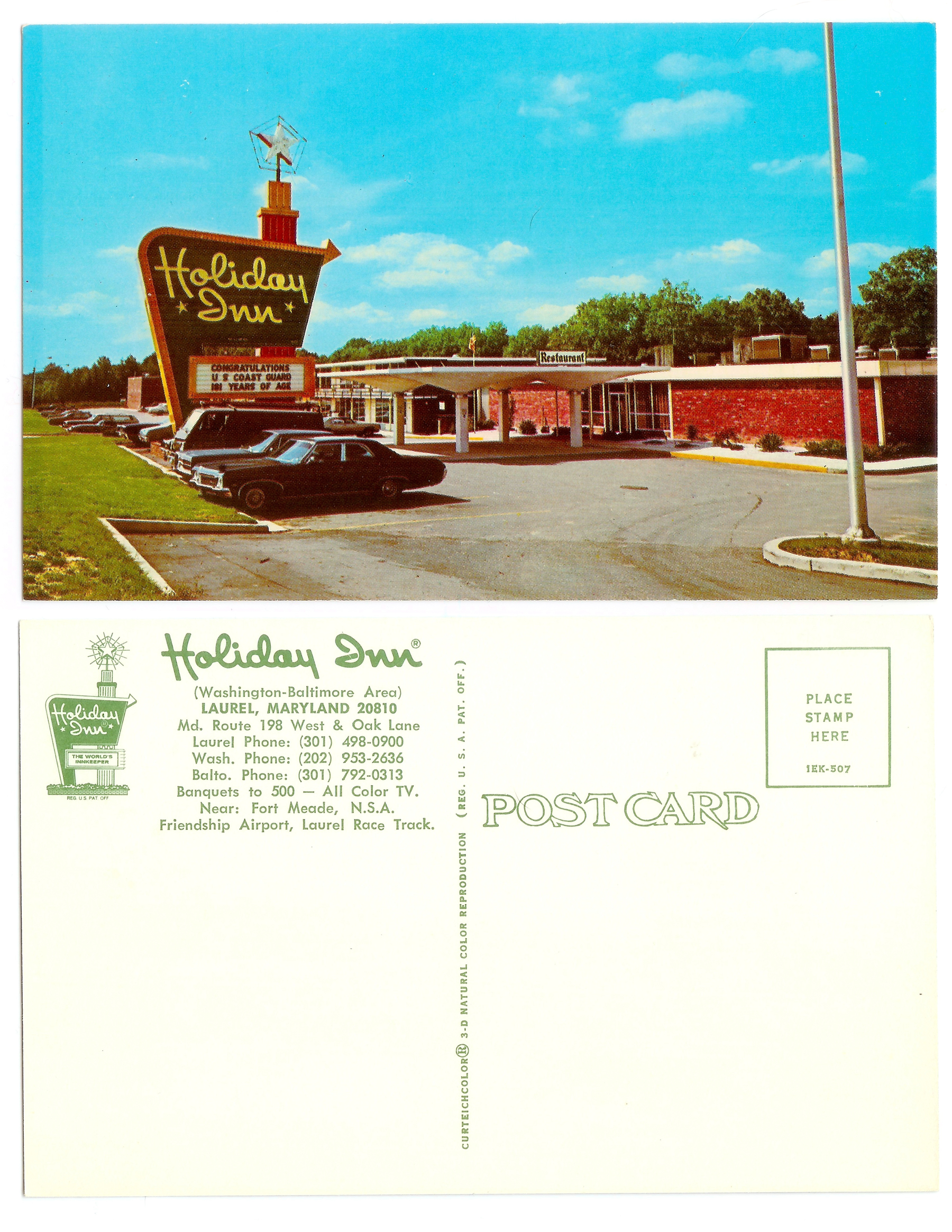
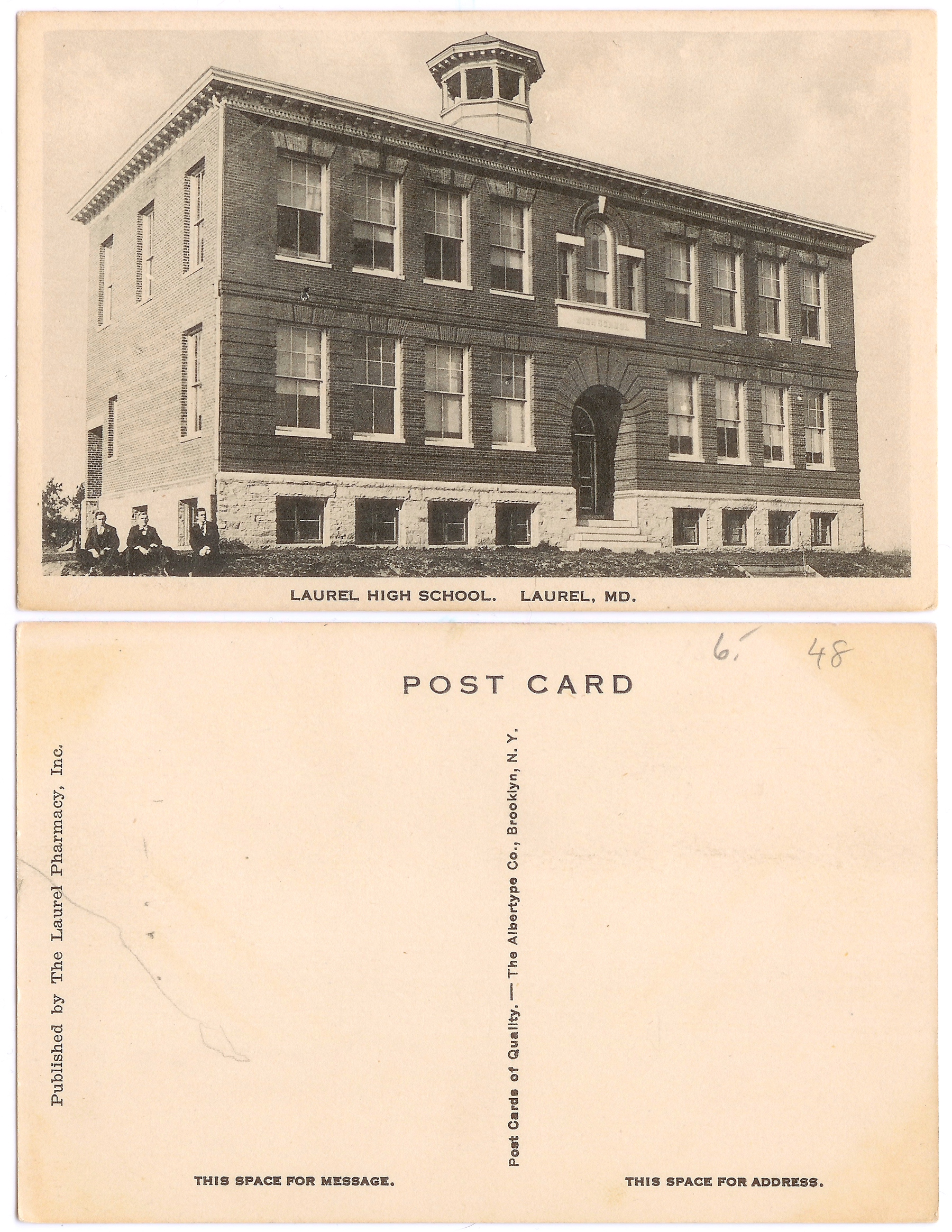
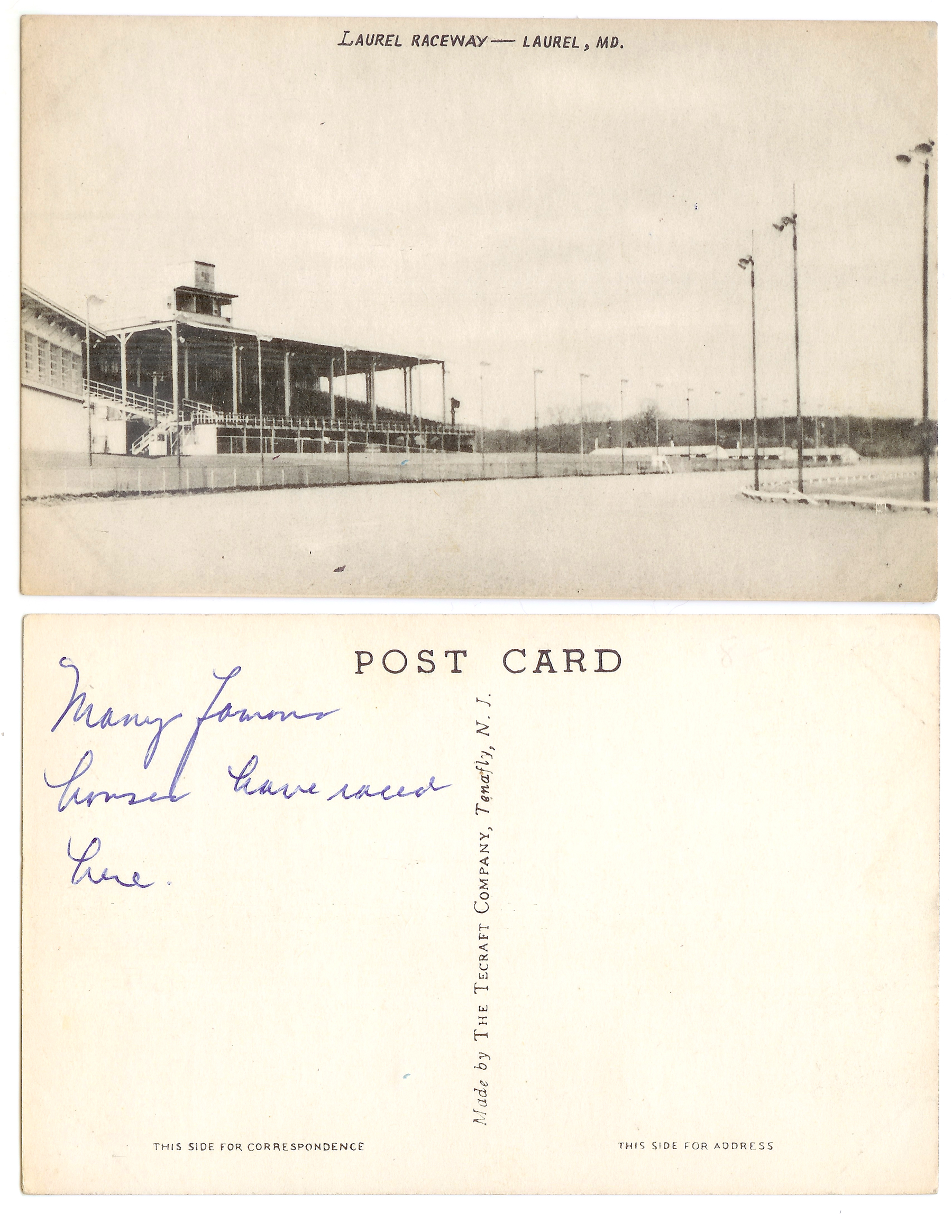
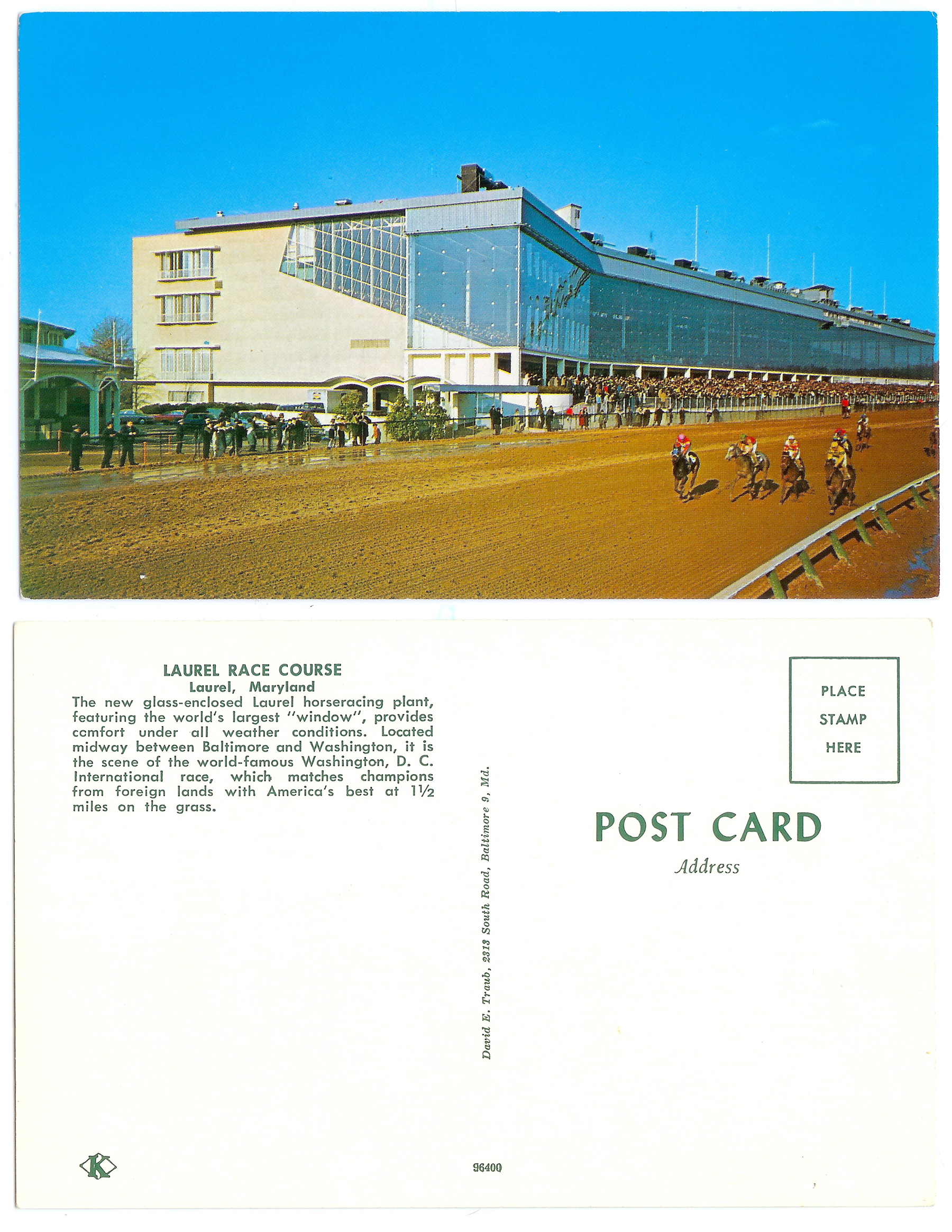
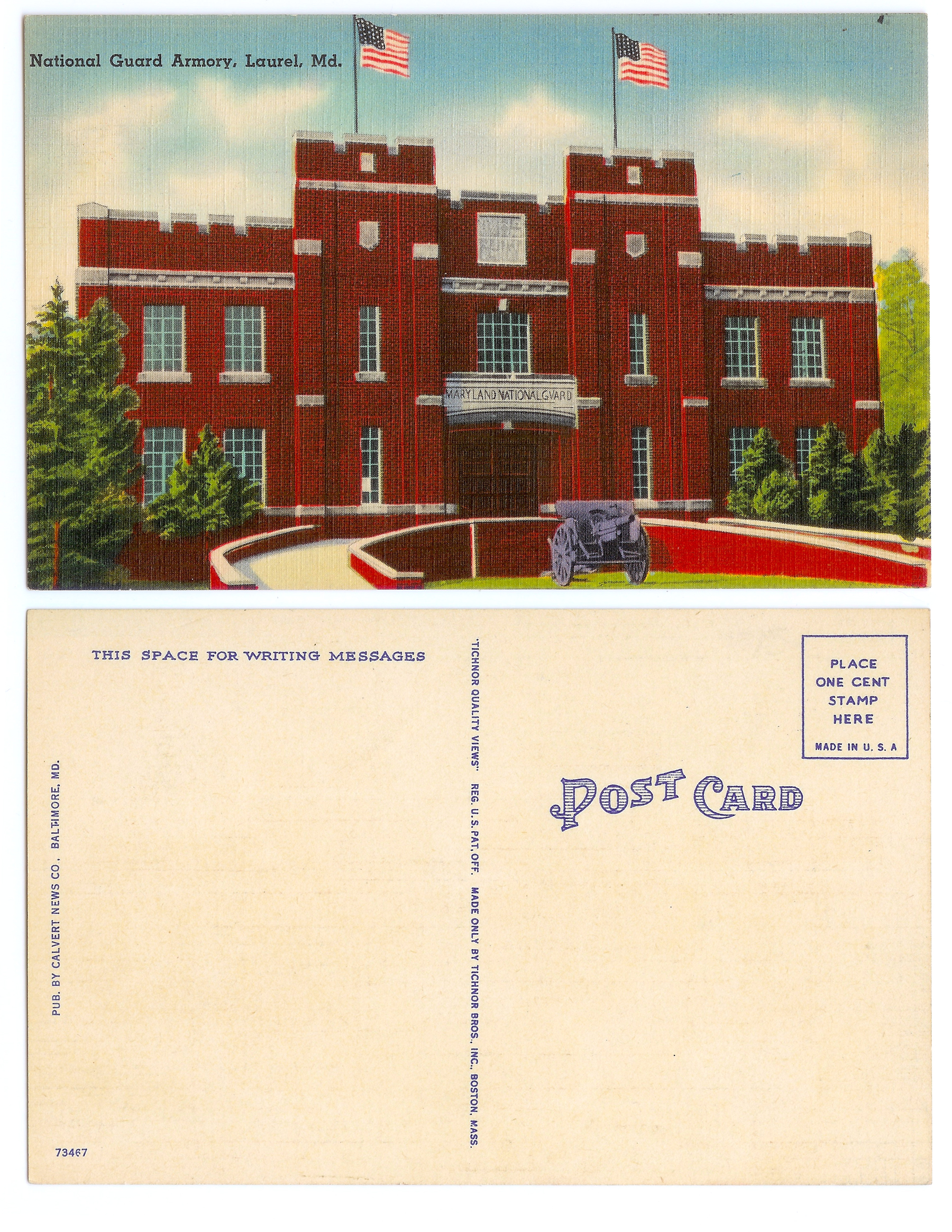
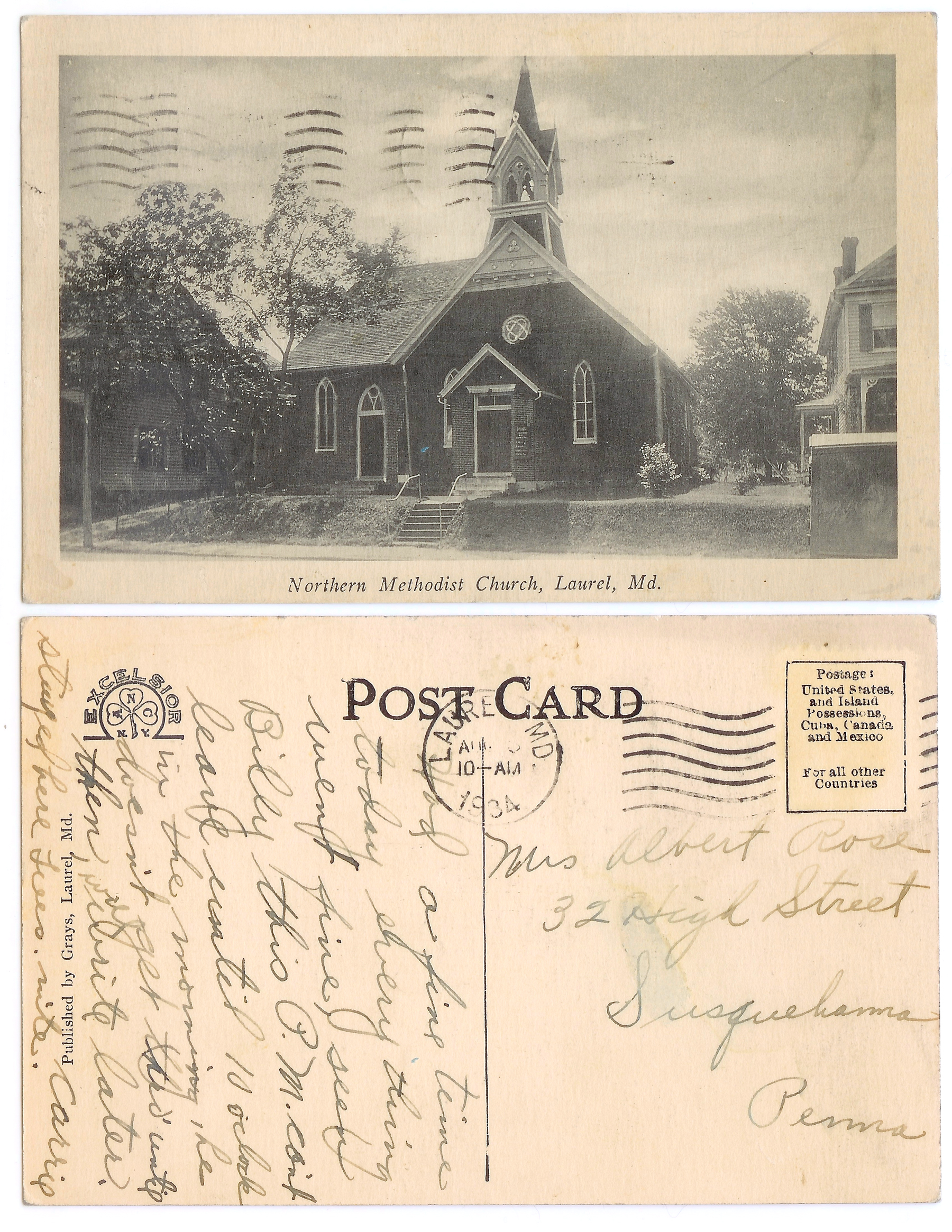
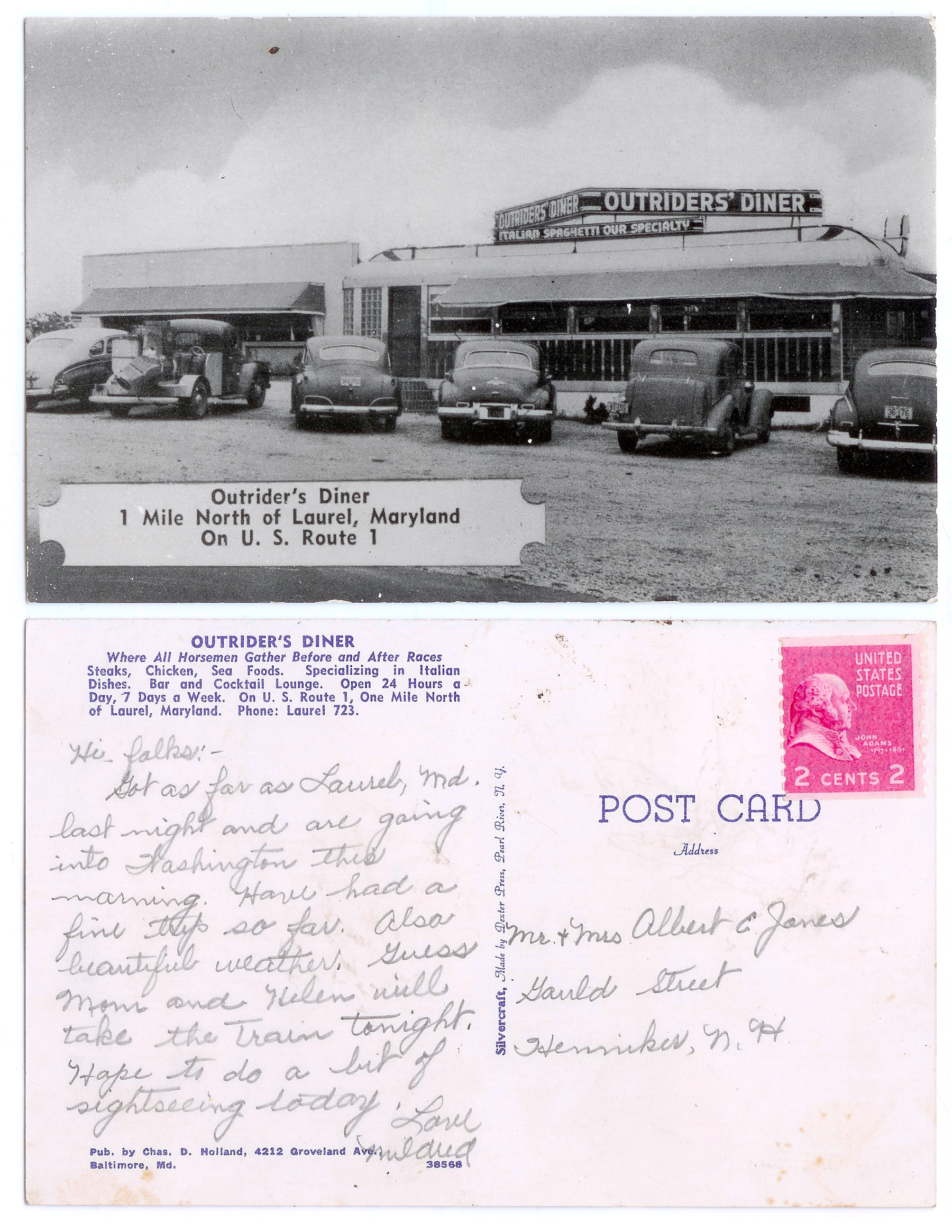
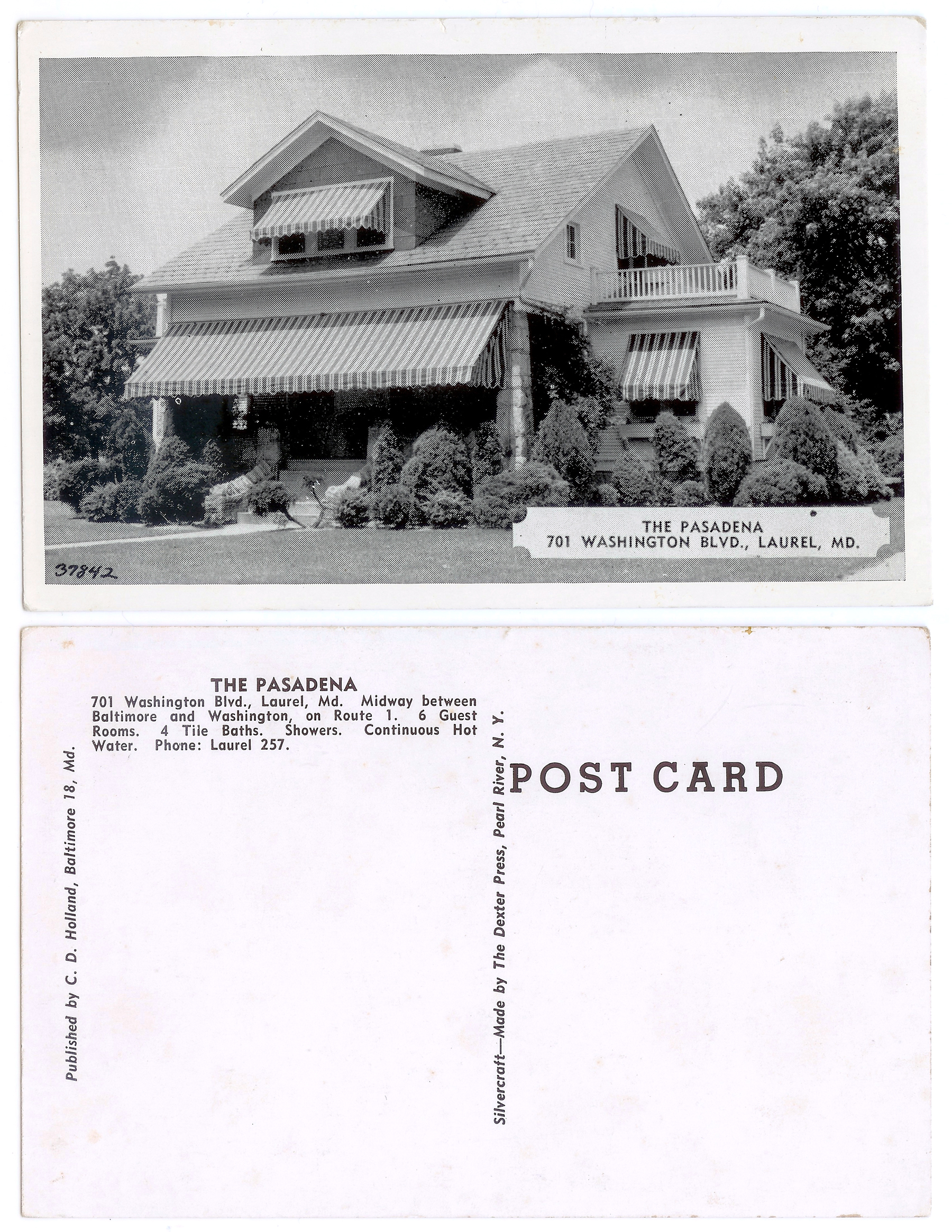
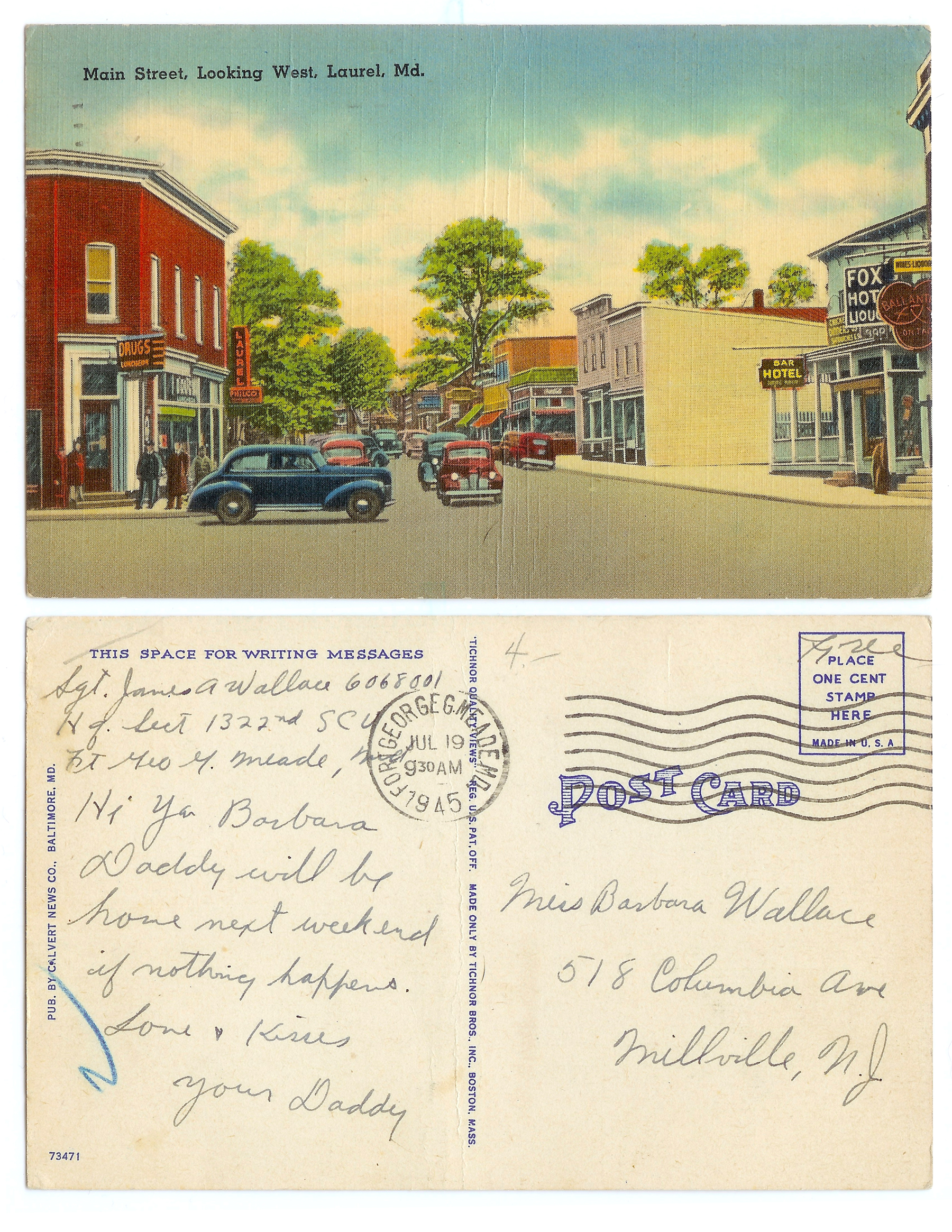
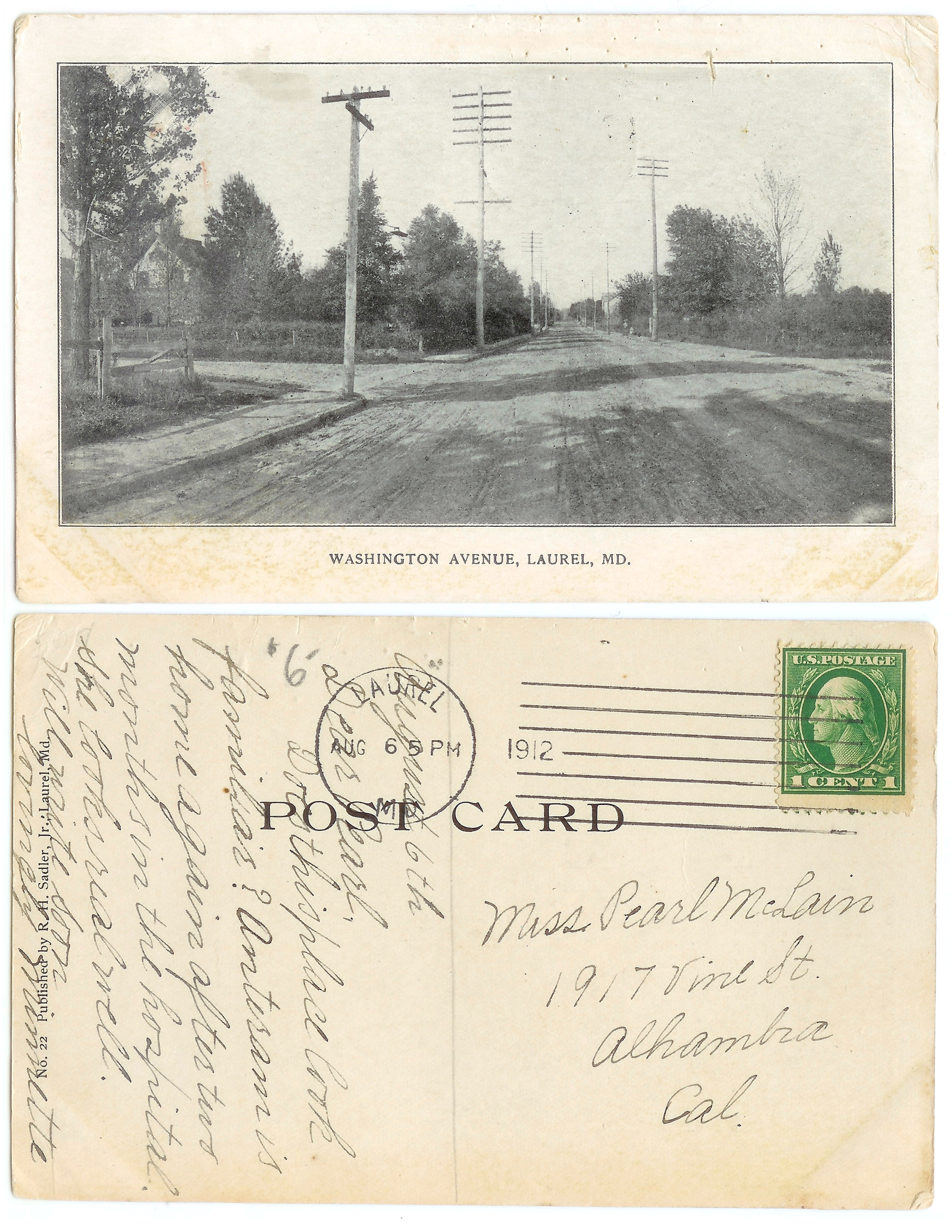
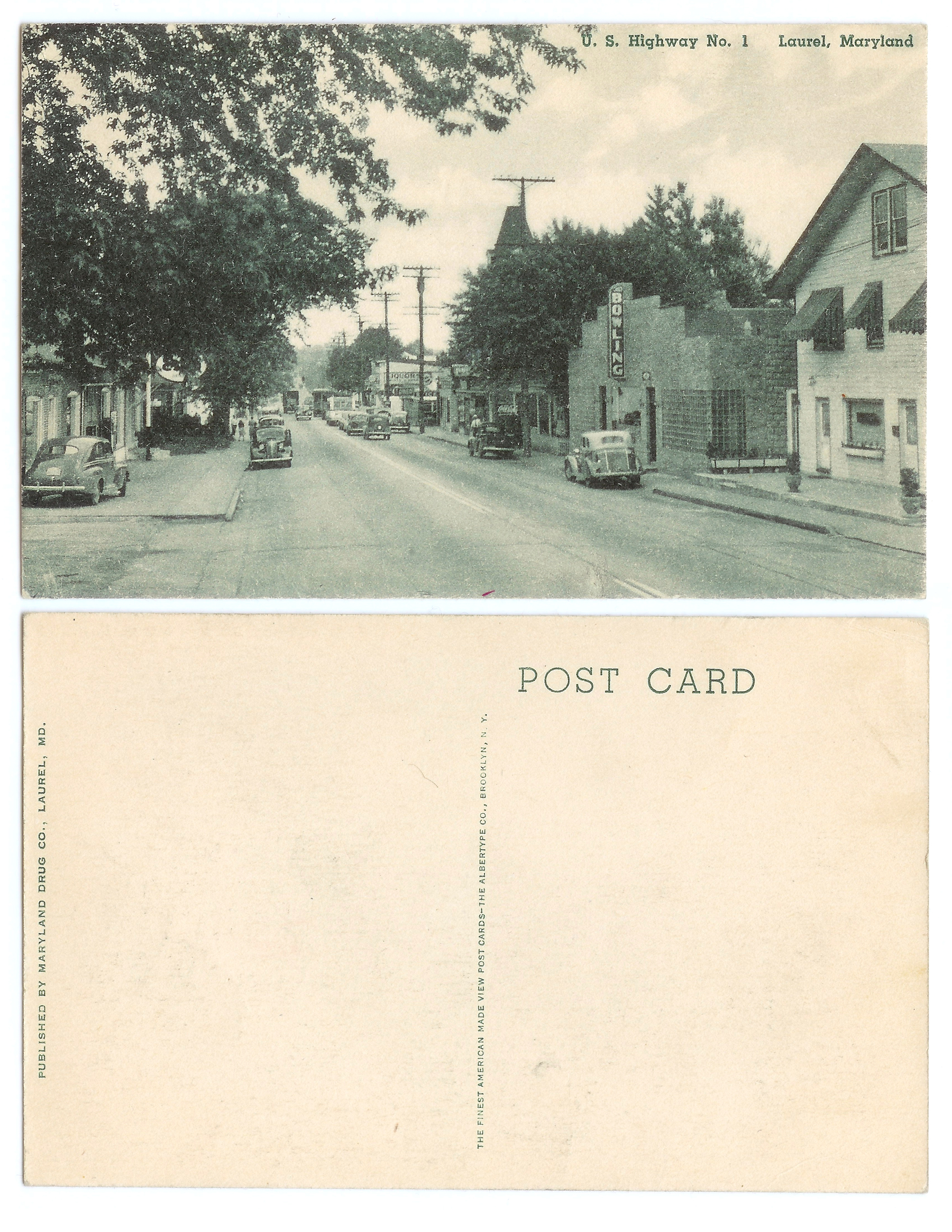
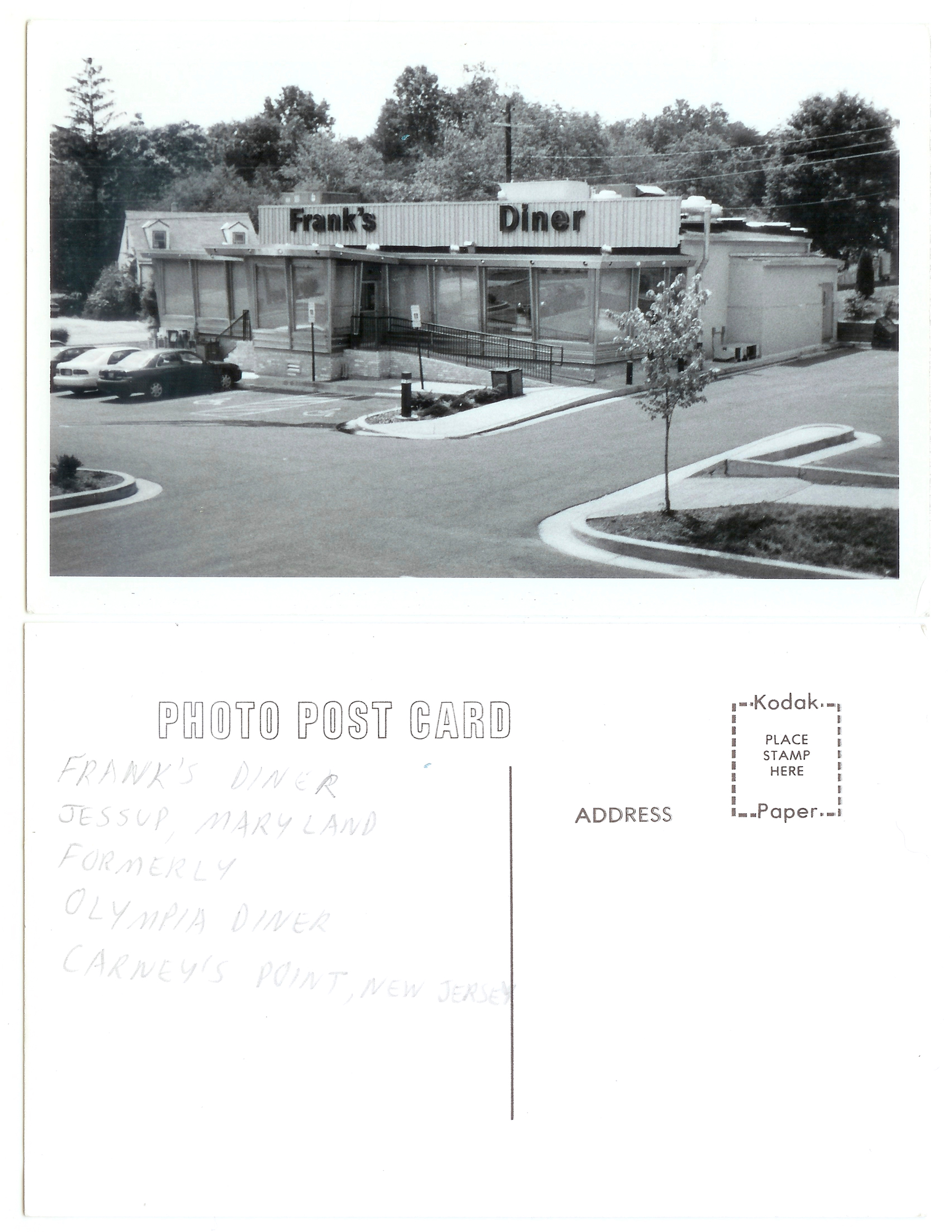
Chances are, you’ve seen at least one vintage Laurel postcard in your life before. Maybe it was a 1950s picture of the Laurel (Tastee) Diner. Or more likely, it was a memento from Laurel’s most popular attraction throughout the past century, Laurel Park Racecourse.
Admittedly, I can’t recall having seen any postcards of Laurel while I was growing up there in the 1980s. By then, most had been relegated to personal scrap books (and unfortunately, quite a few probably ended up in garbage cans). The Laurel Historical Society has undoubtedly preserved many, and the Laurel Library has at least thoughtfully photocopied some of the oldest examples.
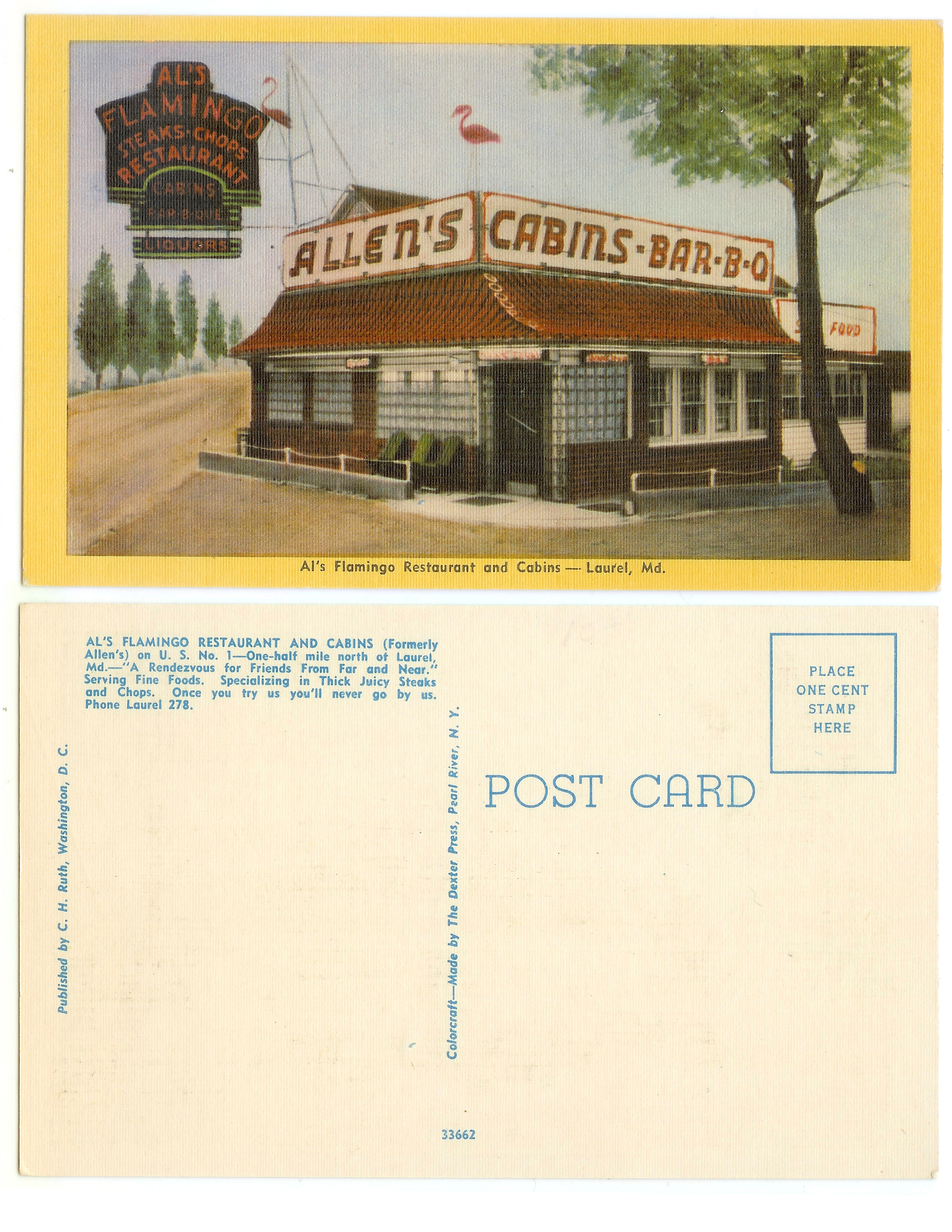
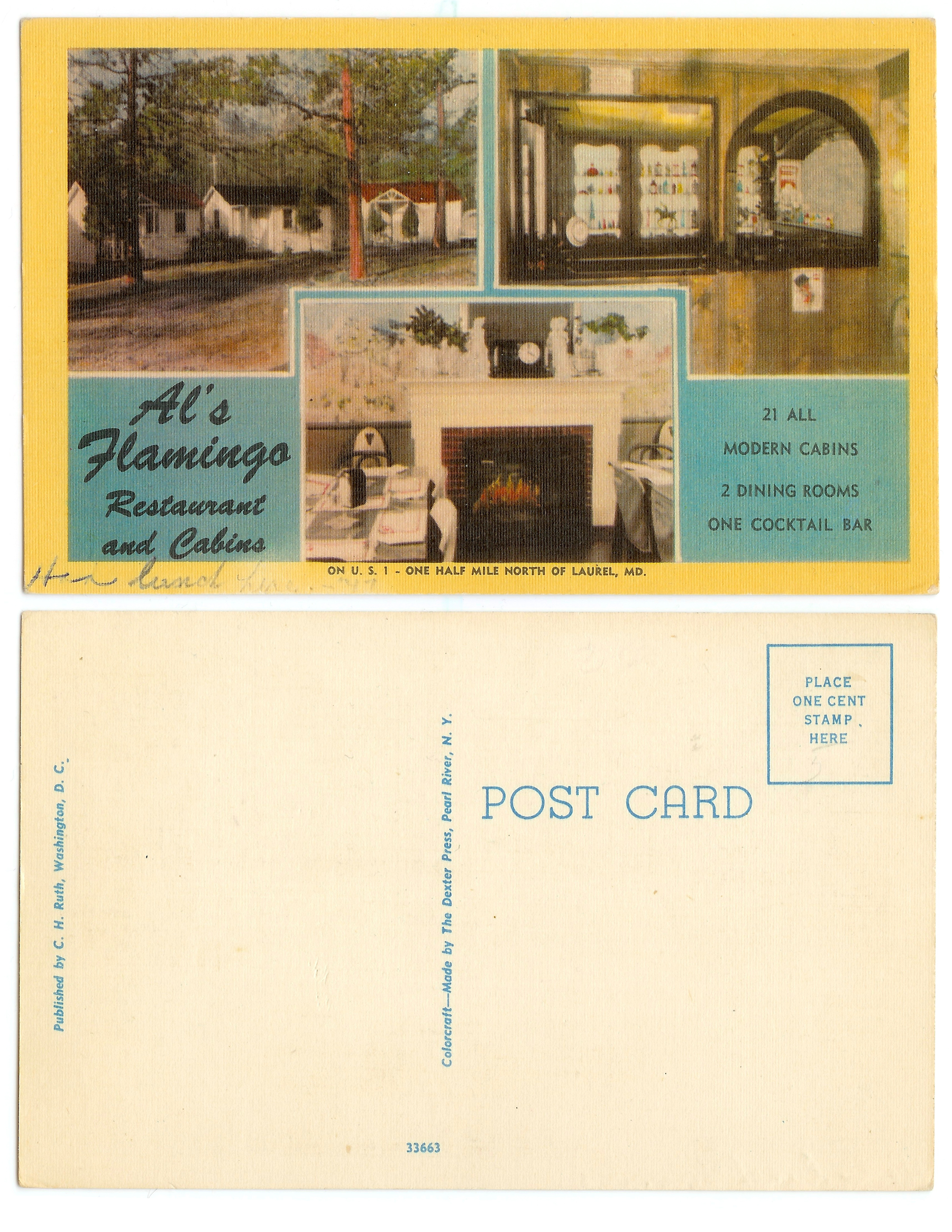
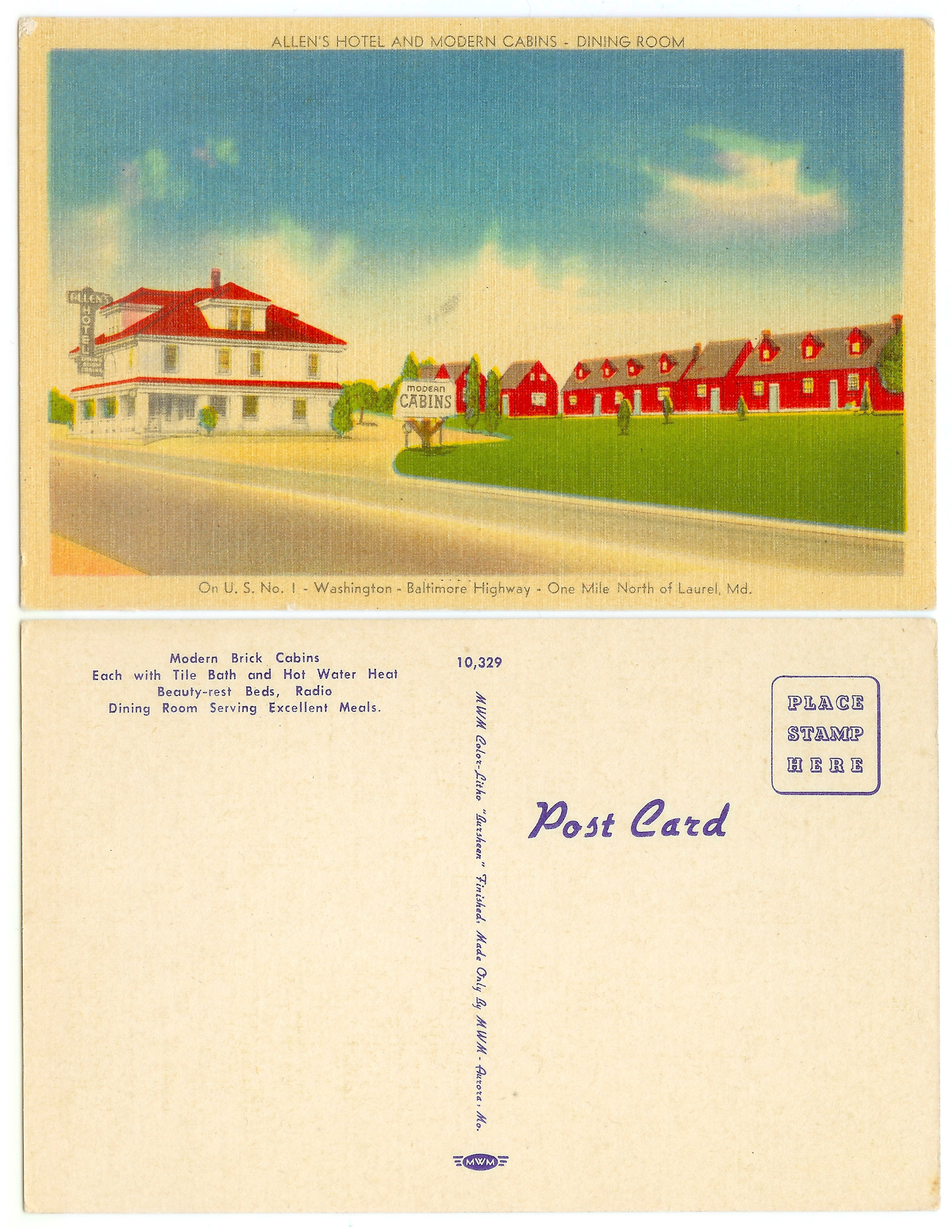
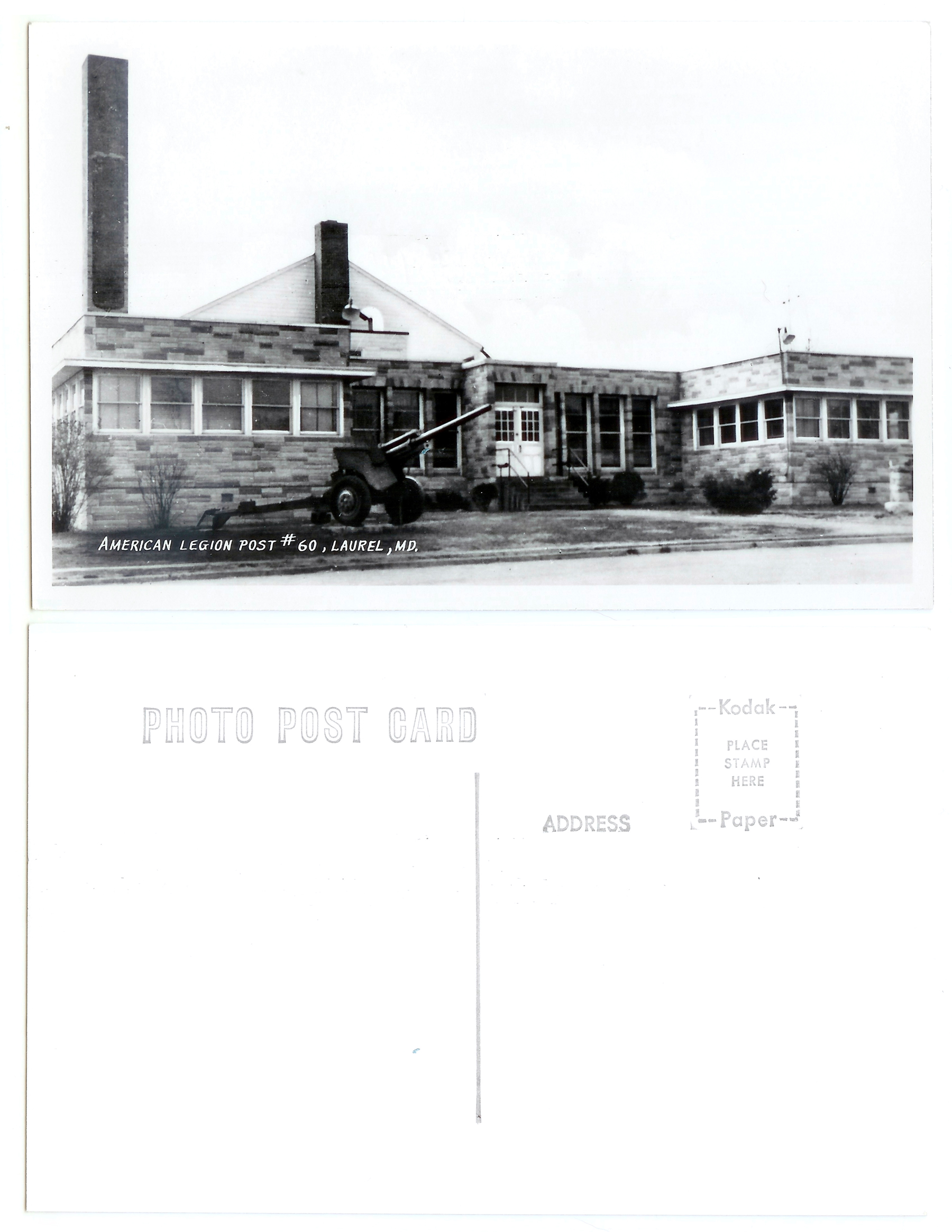
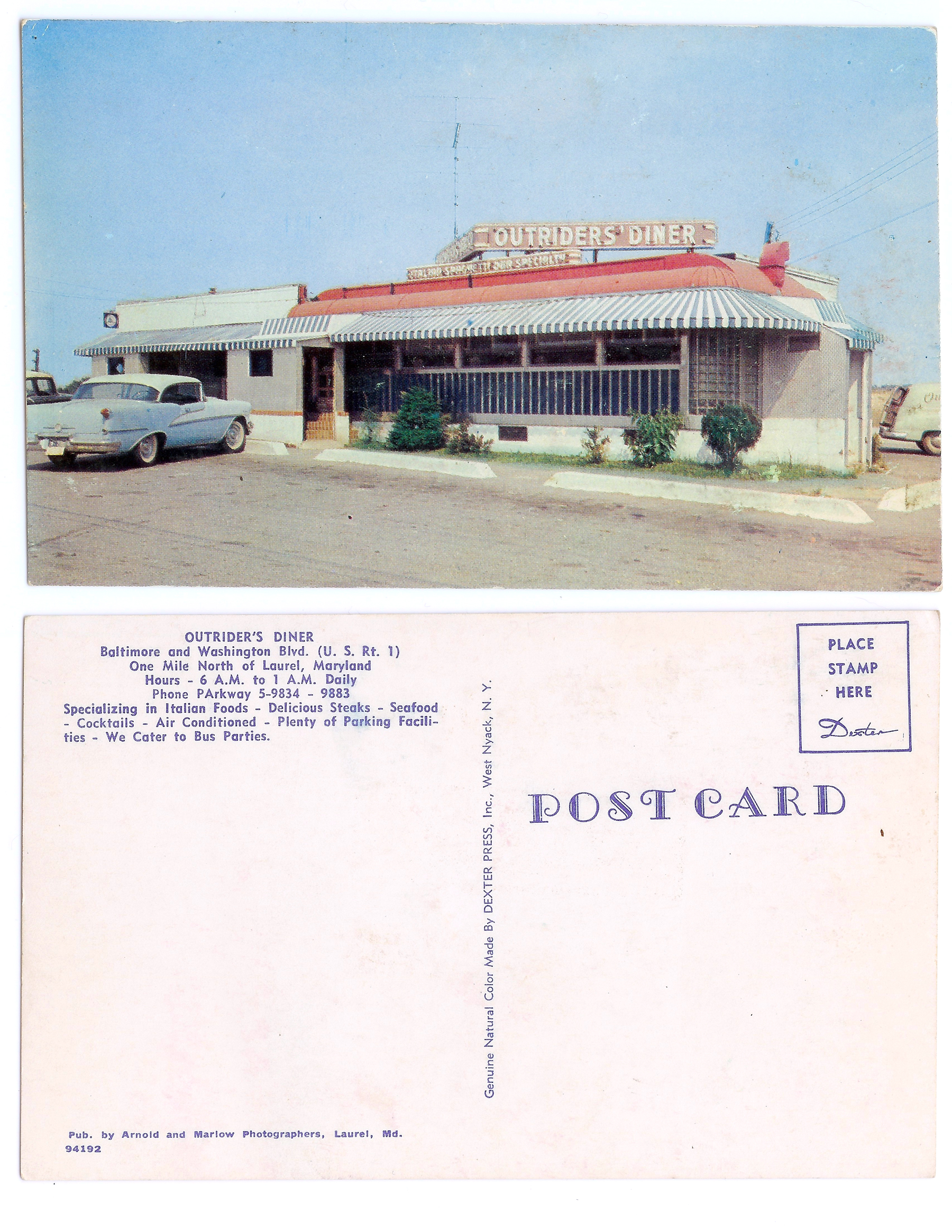
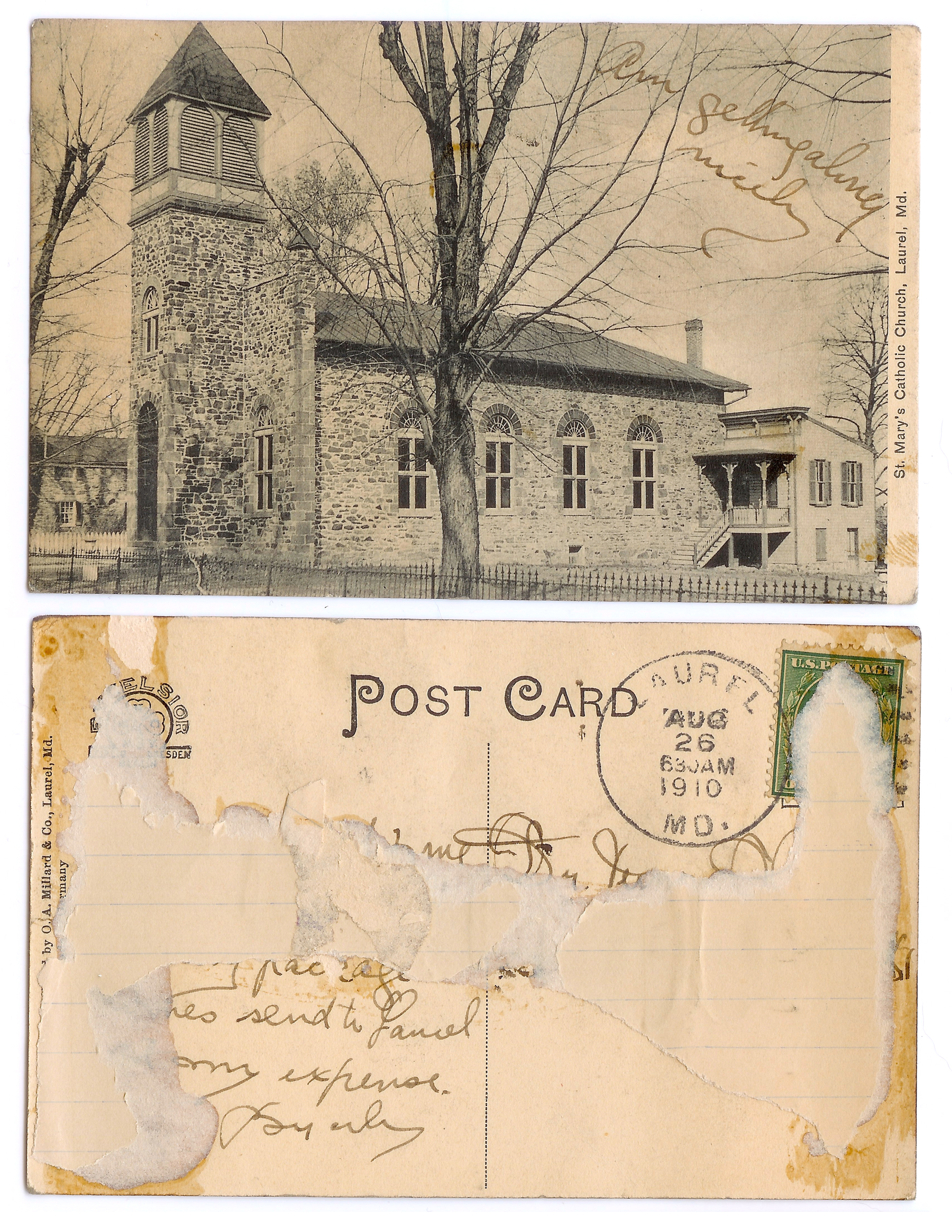
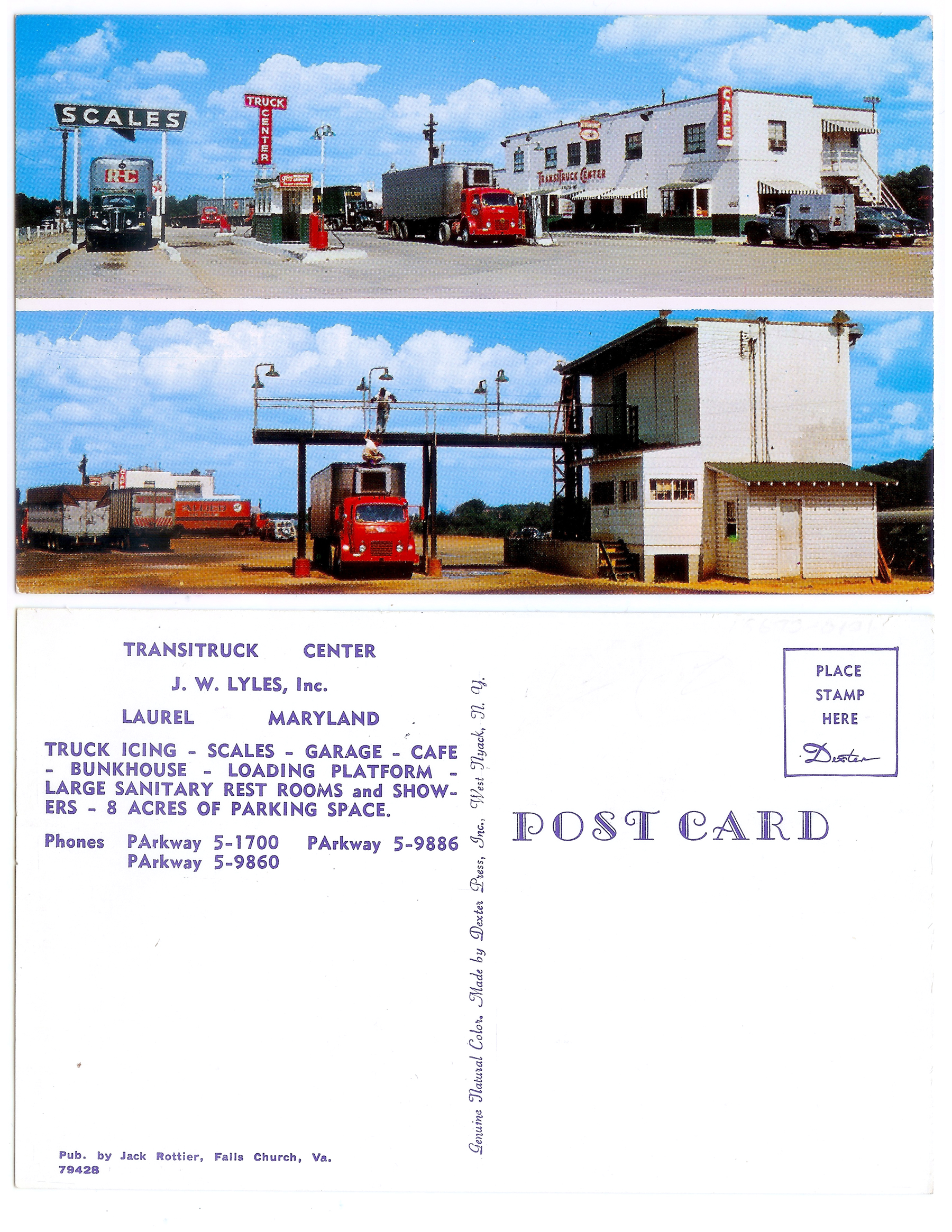
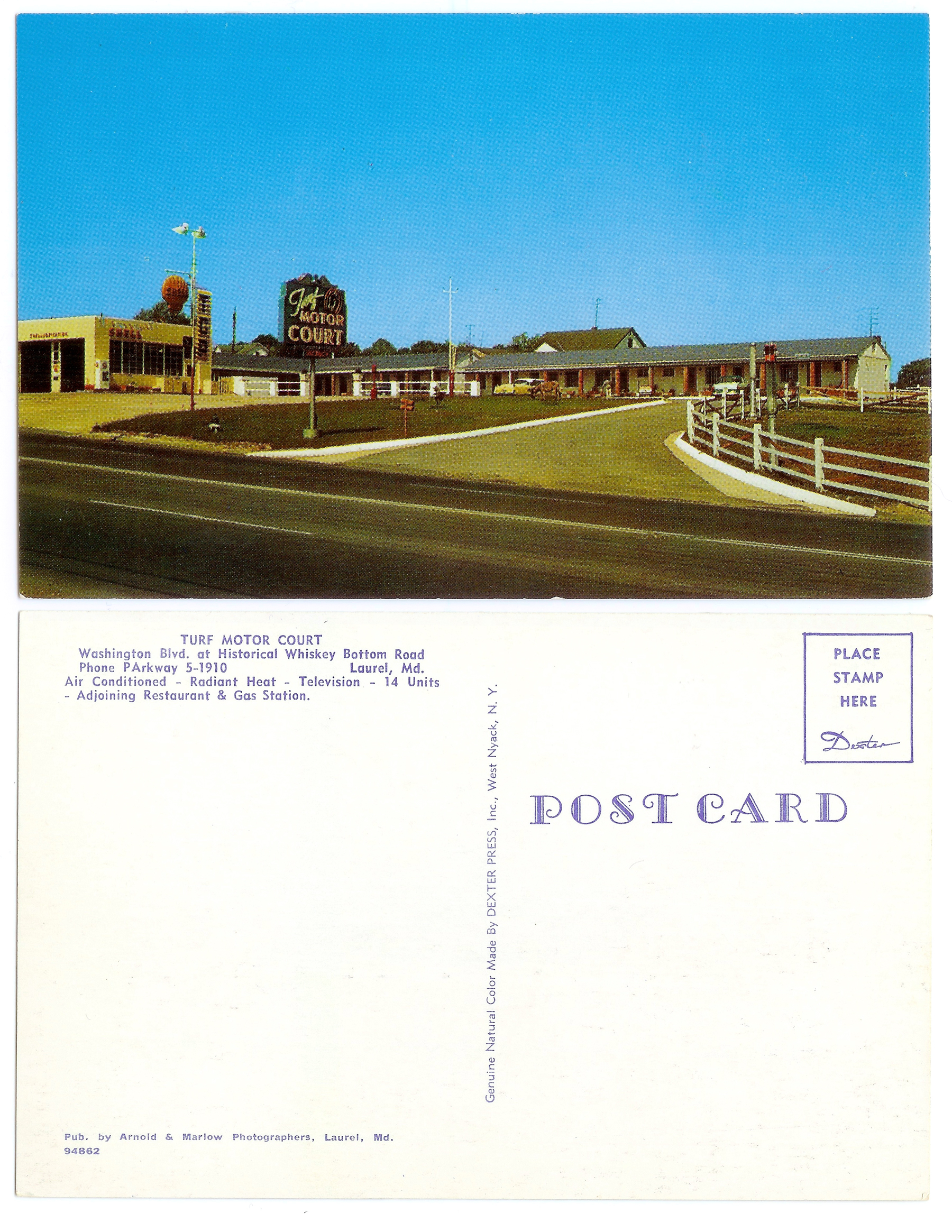
But what if I told you that there have likely been well over 100 picture postcards of Laurel, Maryland produced since the early 1900s? Many of them featuring motels, restaurants, and street scenes that have long-since disappeared… and a few that actually still exist today.
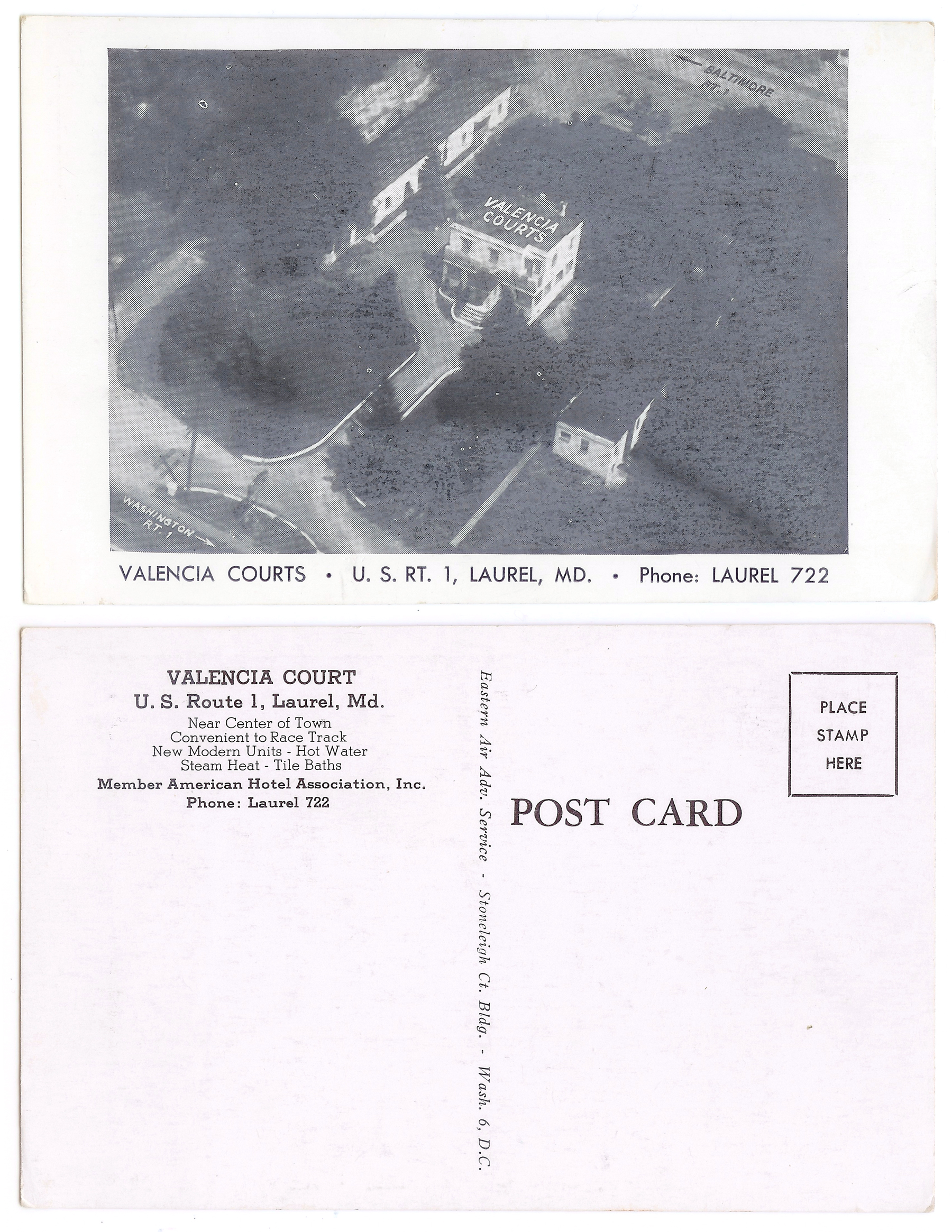
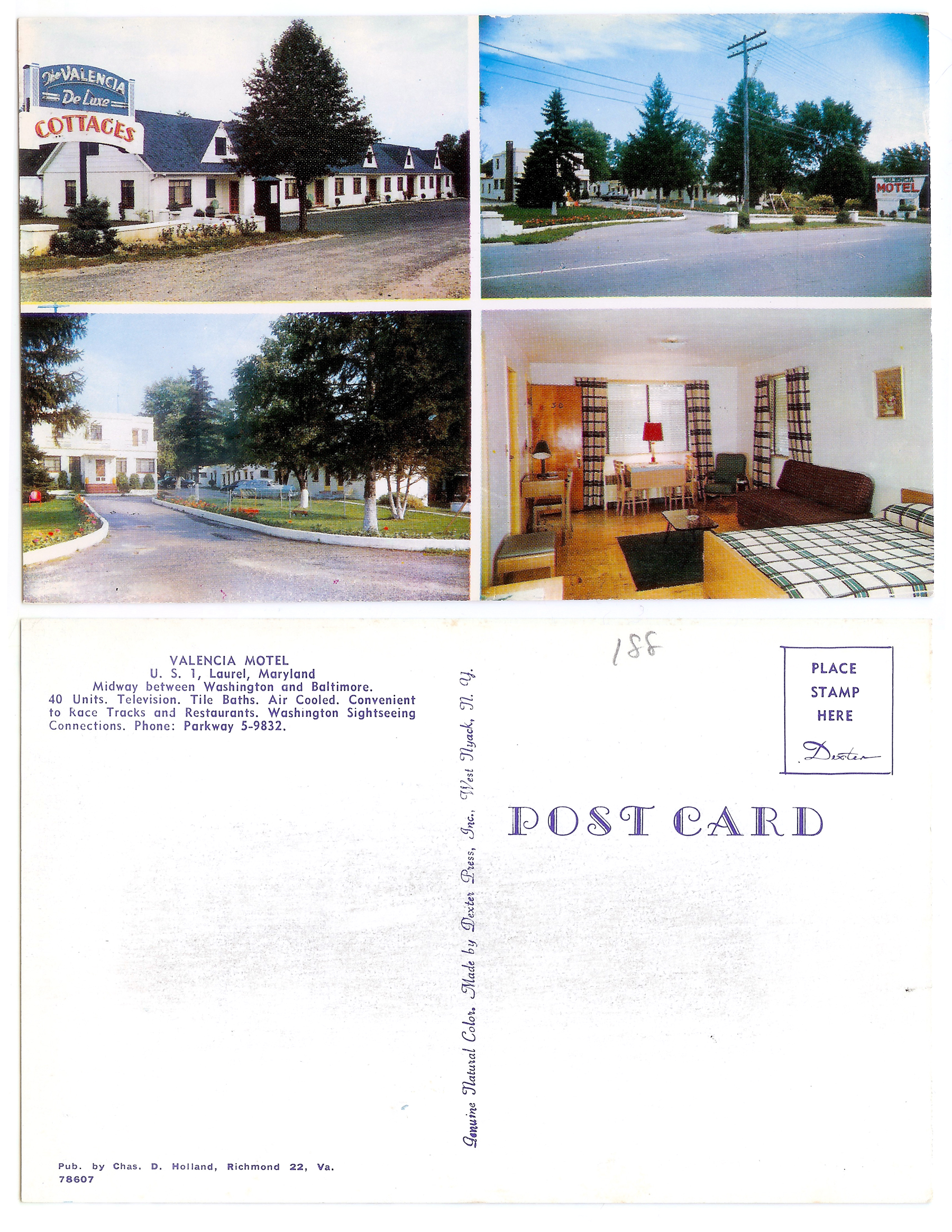
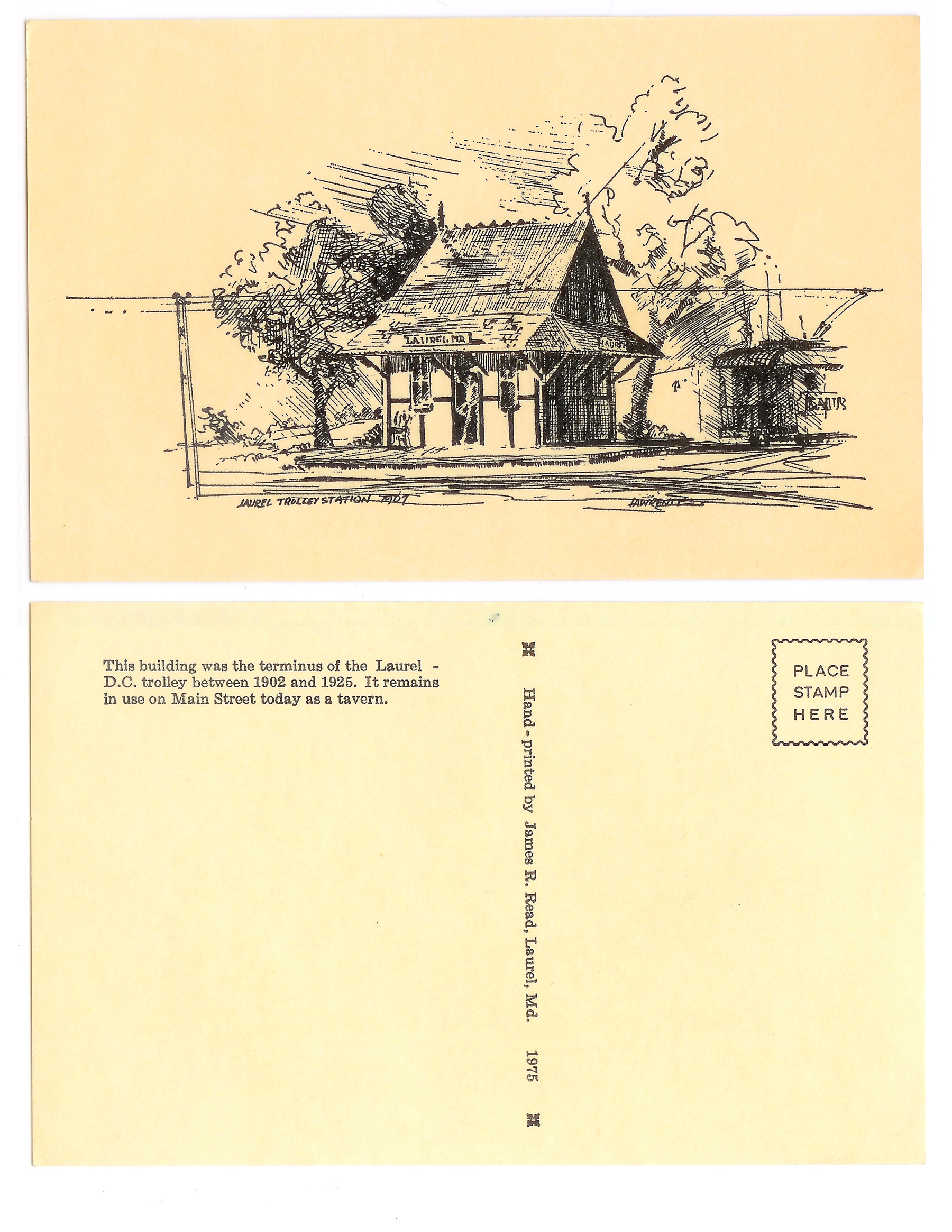
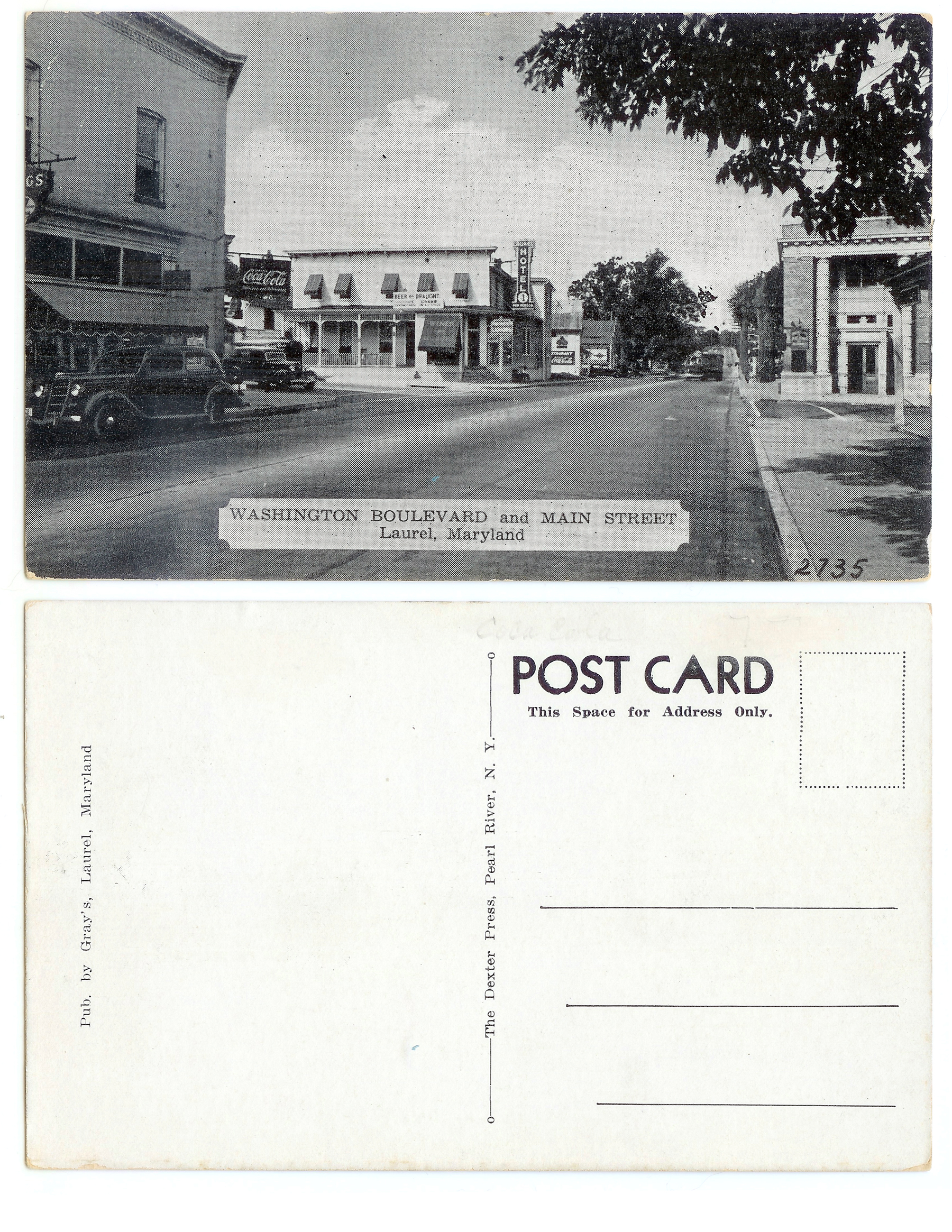
John Floyd II has amassed a tremendous collection of original Laurel postcards over the course of several years, and was kind enough to lend me his entire album to be scanned and shared. Here now are over 80 cards, front and back. Some bear interesting correspondence and postmarks, others are as blank as they were the day they were first purchased—undoubtedly in Laurel.
All postcards courtesy of J.D. Floyd II, Royal Blue Ltd. archives


























































 Lost Laurel